Day One

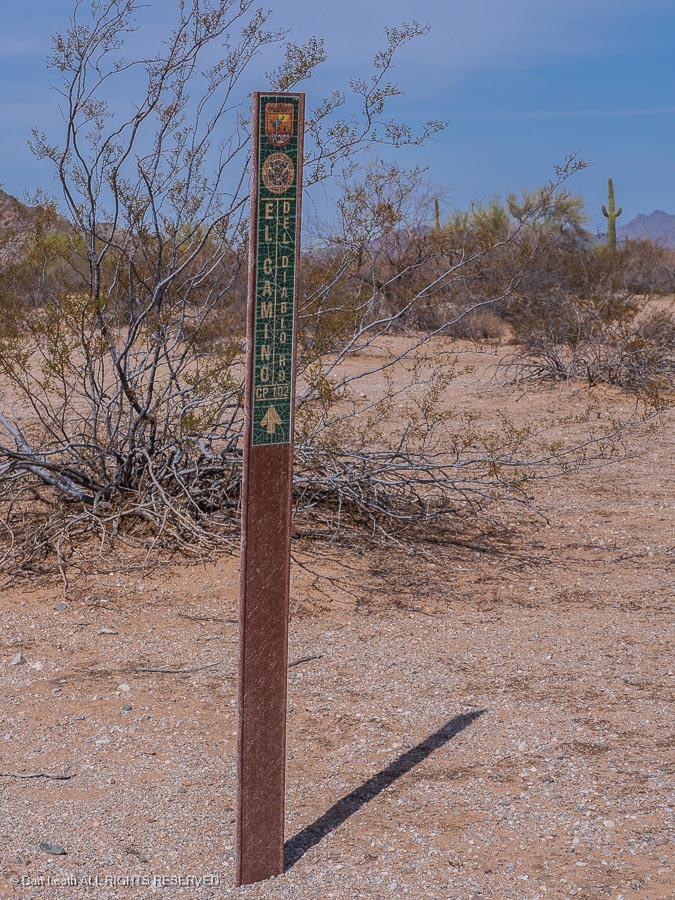
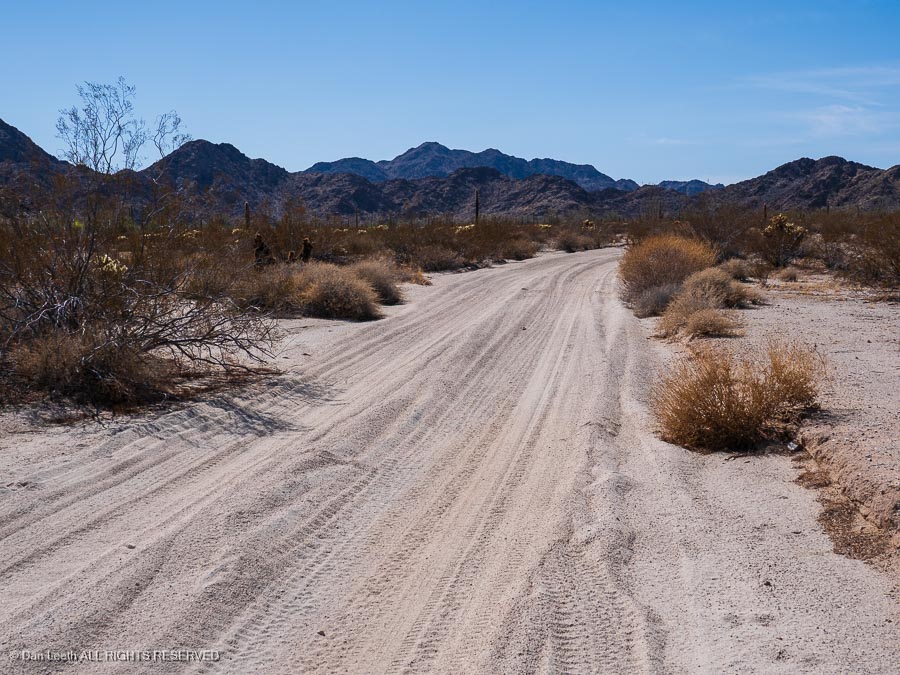
The entire reason for this trip to Southern Arizona was to drive this old route through the desert.
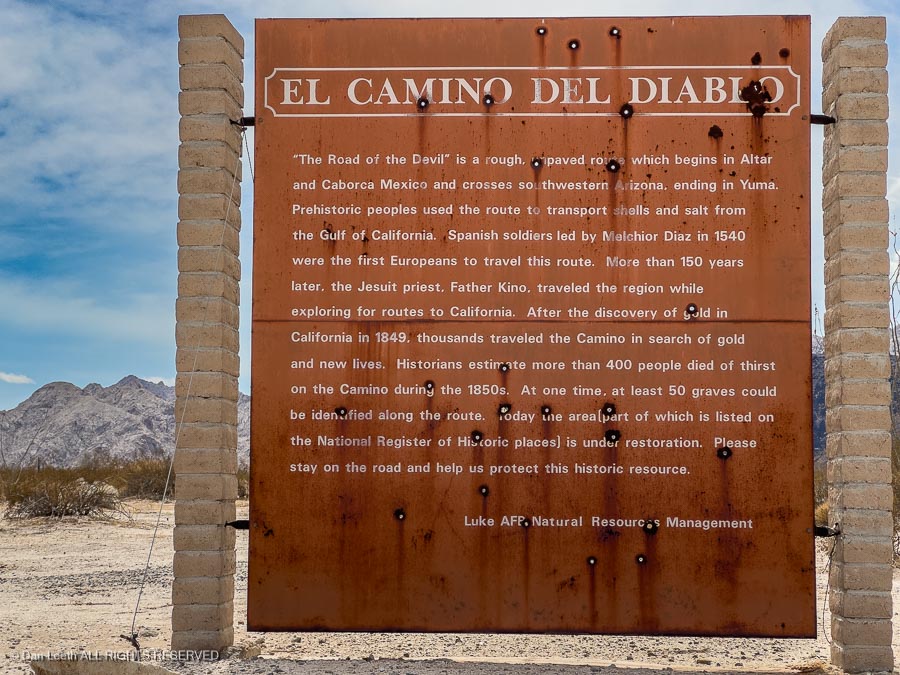
The road is labeled as a rugged, high-clearance, four-wheel-drive route. Our original plan was to tackle it in our Subaru Outback Wilderness…
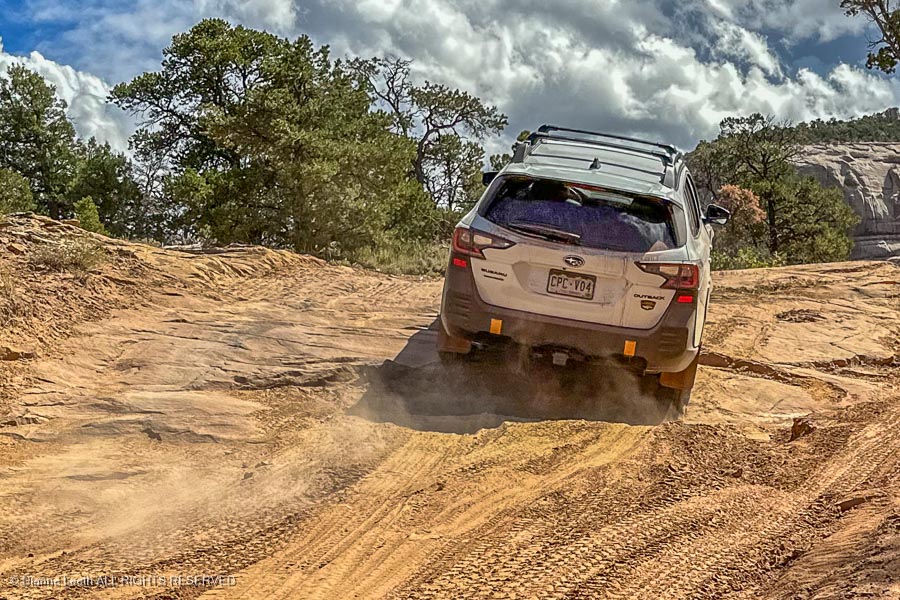
…but there was no way we could fit all of our gear in the Subie…
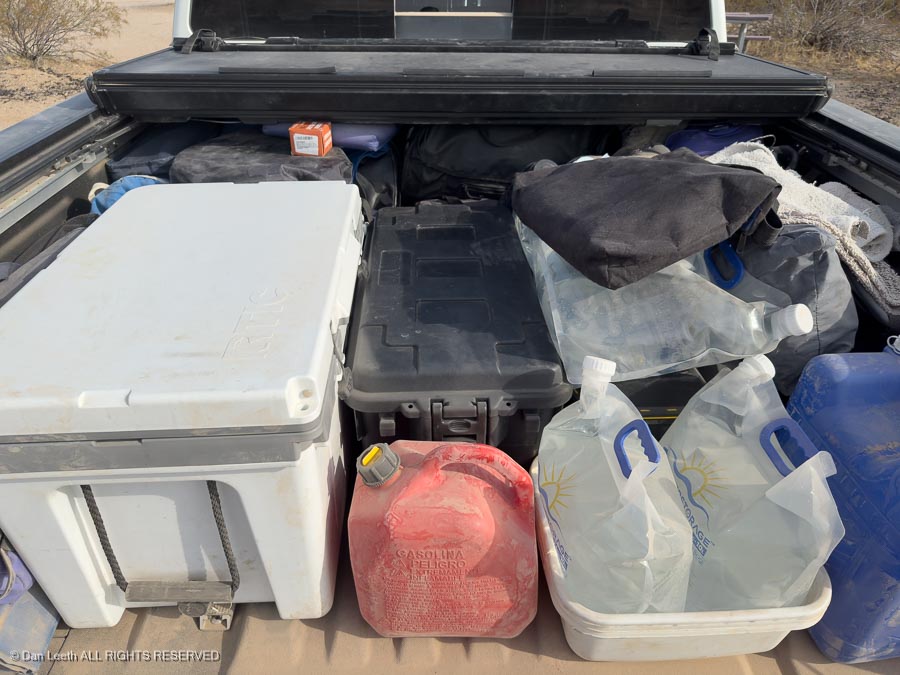
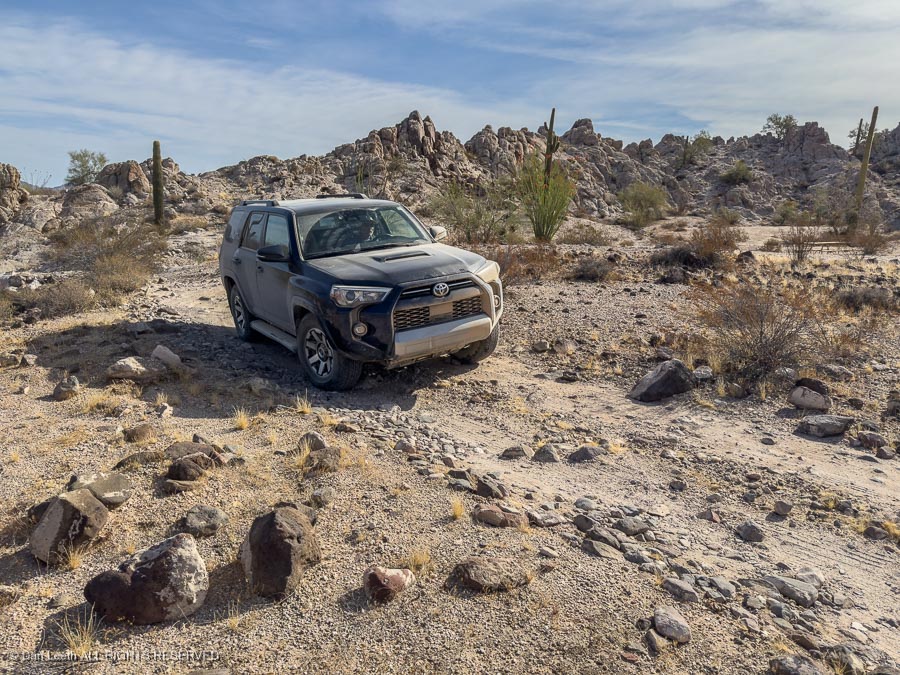
…we took the truck.
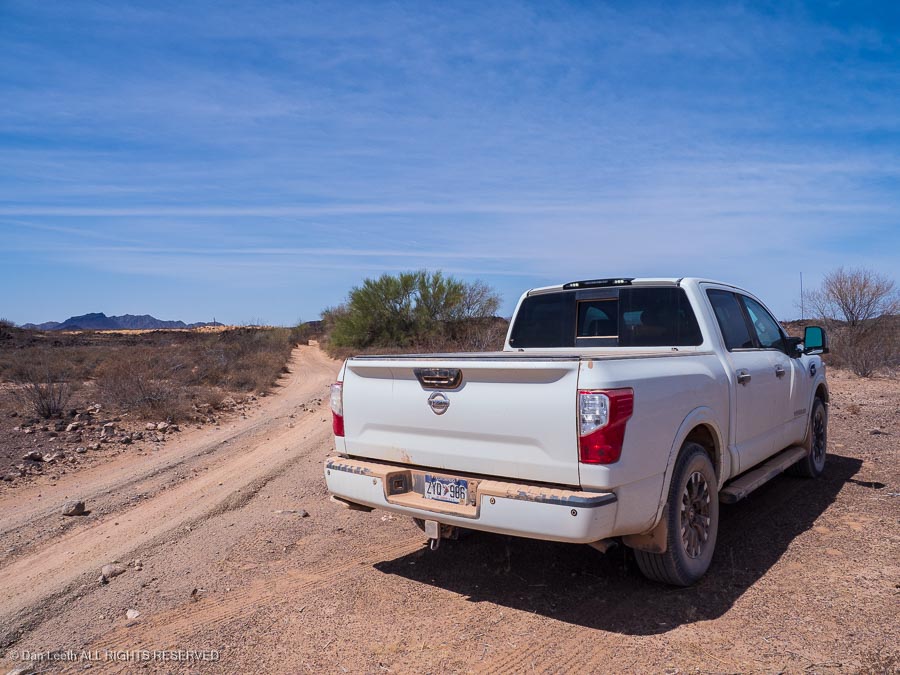
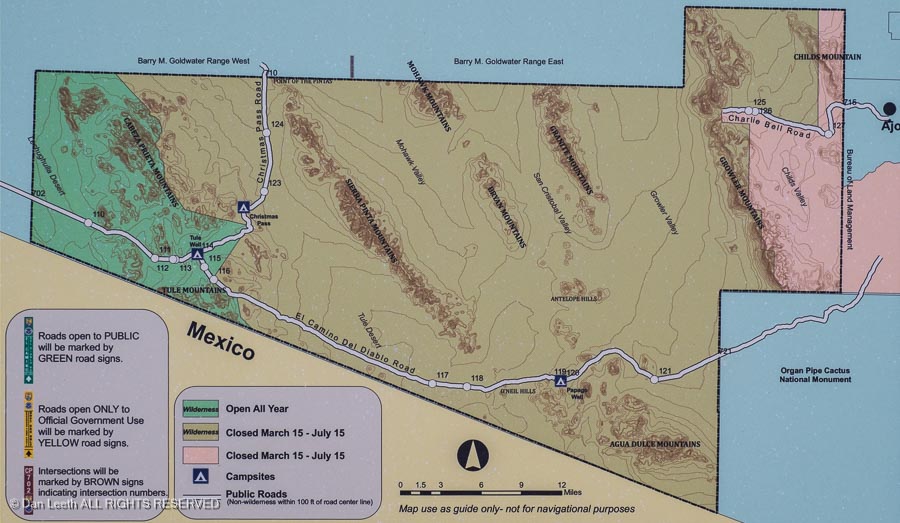
The 130-mile roadway begins back in Ajo on a road that skirts the tailings of the town’s copper mine.
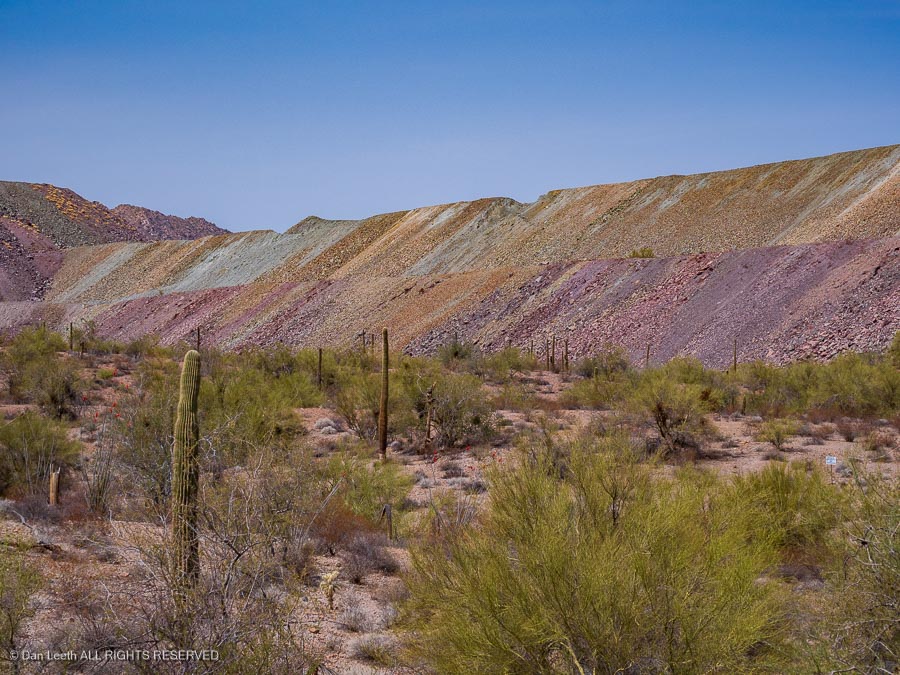
The first stop was Bates Well where Henry Gray, last of four generations of ranchers, lived until his death in 1976.
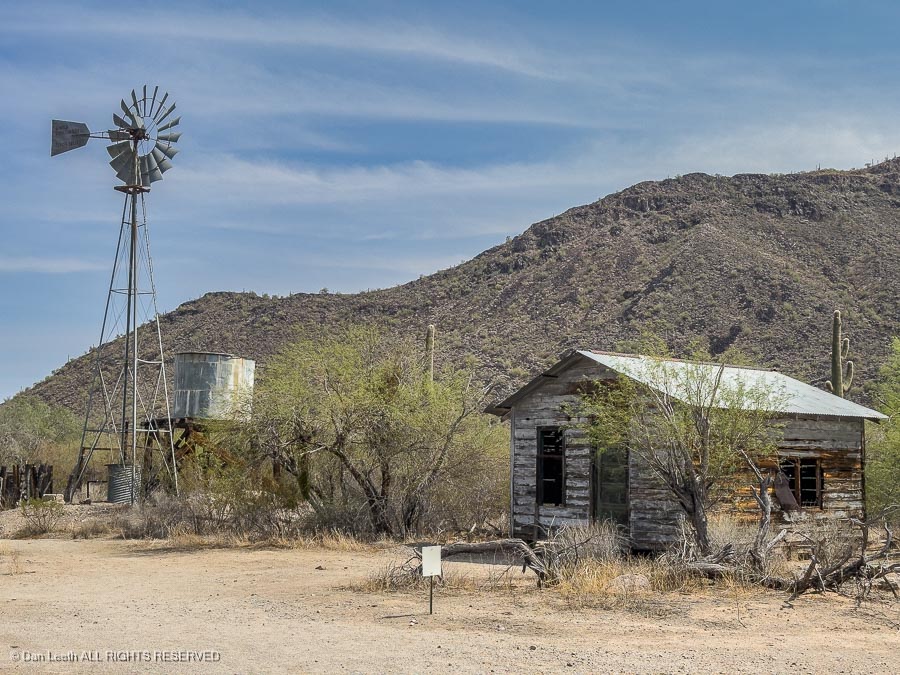
We soon reach the boundary of the Cabeza Prieta National Wildlife Refuge. A permit is needed to travel beyond here. Nearby sits a Border Patrol Station.

We signed in and continued on our way down the Camino, which was nicely graded out here to facilitate Border Patrol activities.
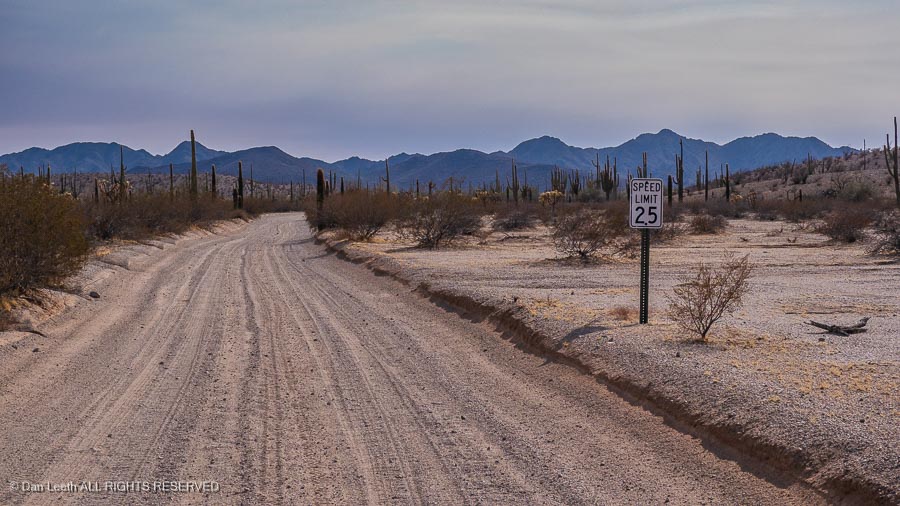
Several primitive campgrounds lie along the route through the wildlife refuge…
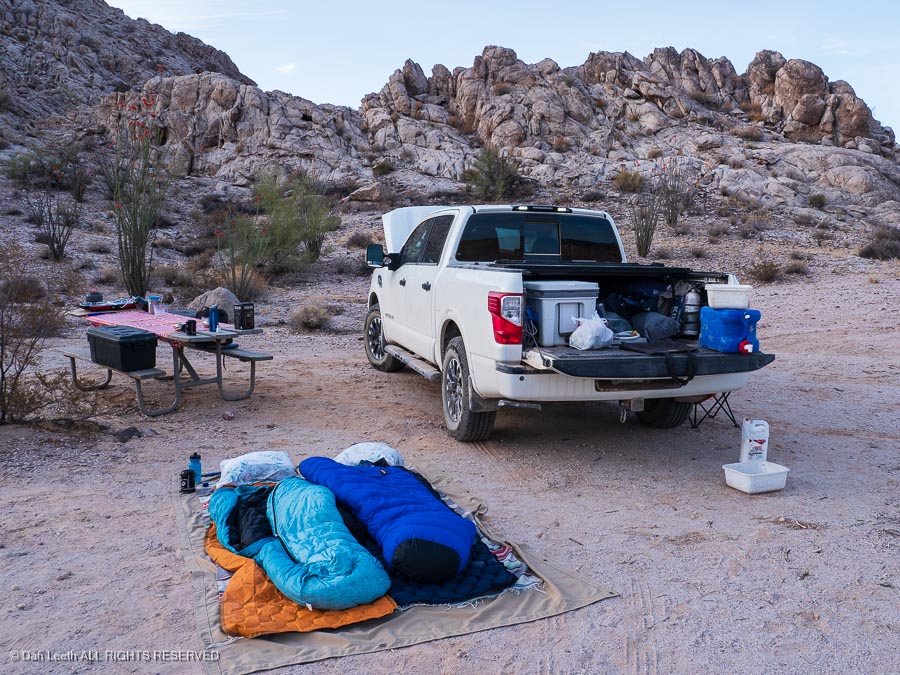
They aren’t much, but they do offer picnic tables…
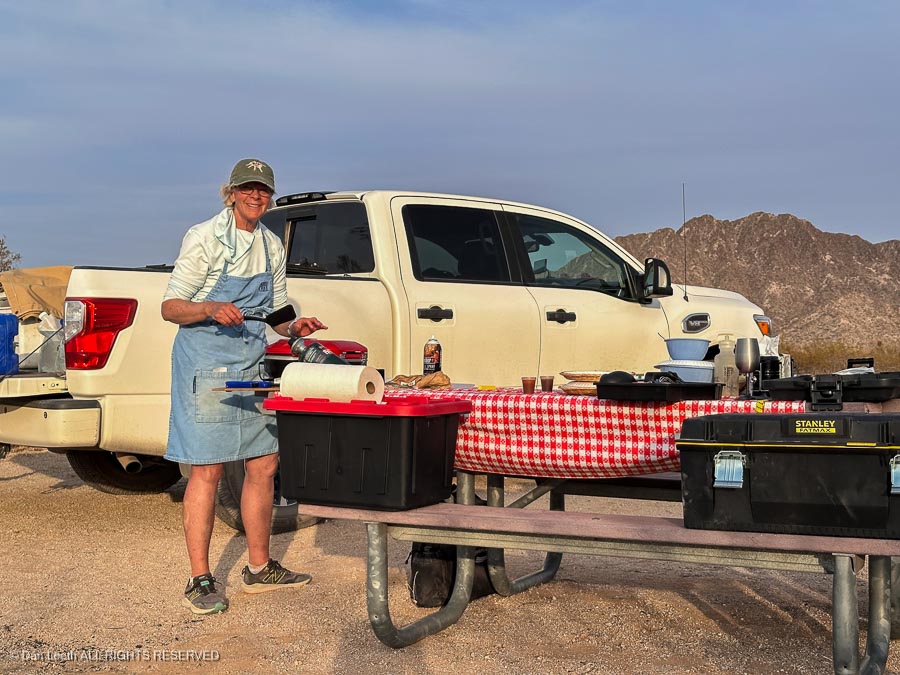
…and flat ground to roll out the sleeping bags.
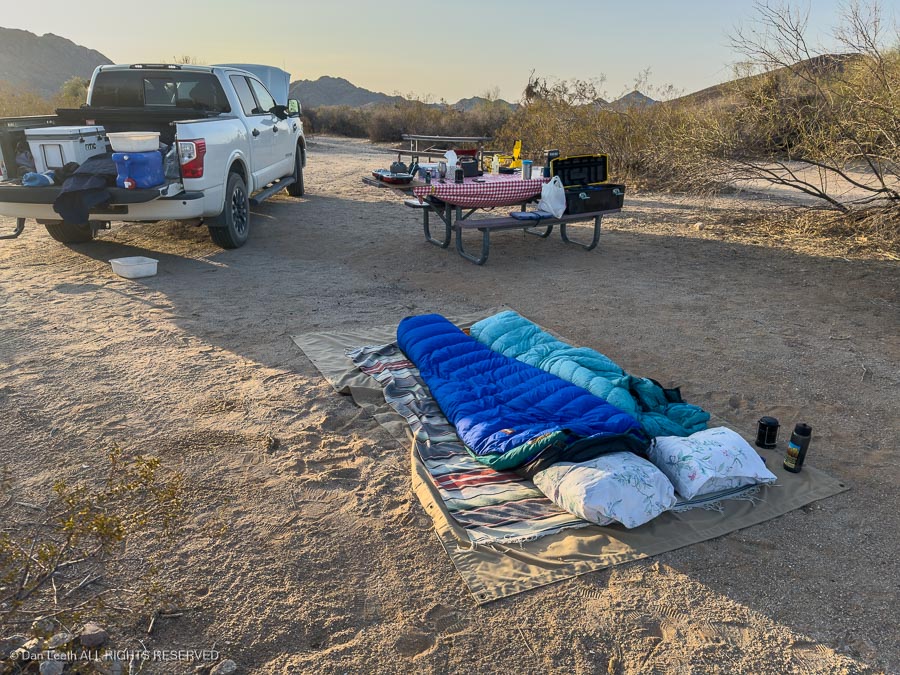
The difference between eastern and western campers is that easterners like our friends prefer to sleep in a tent at night…
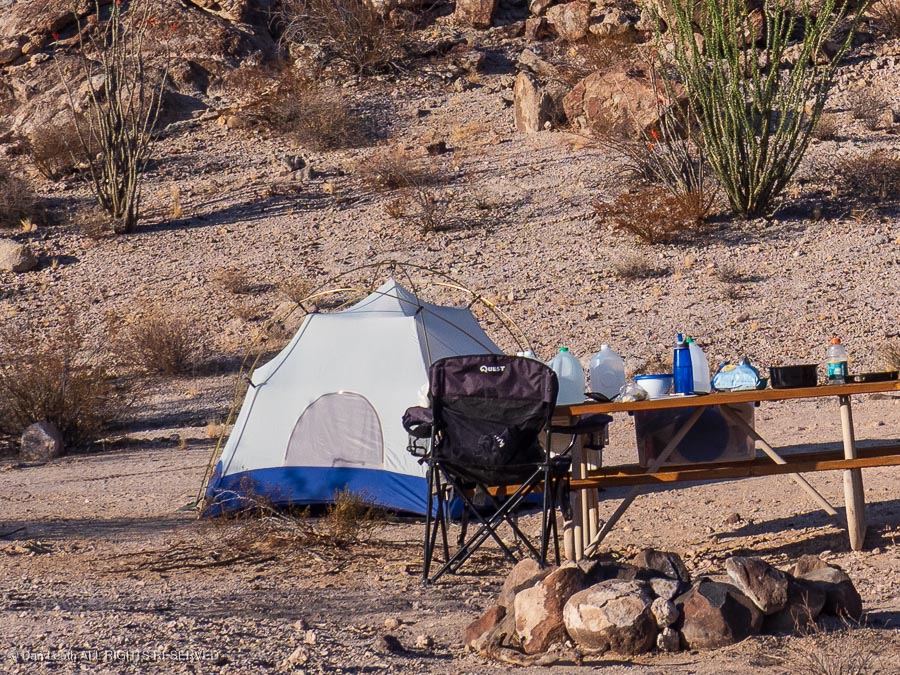
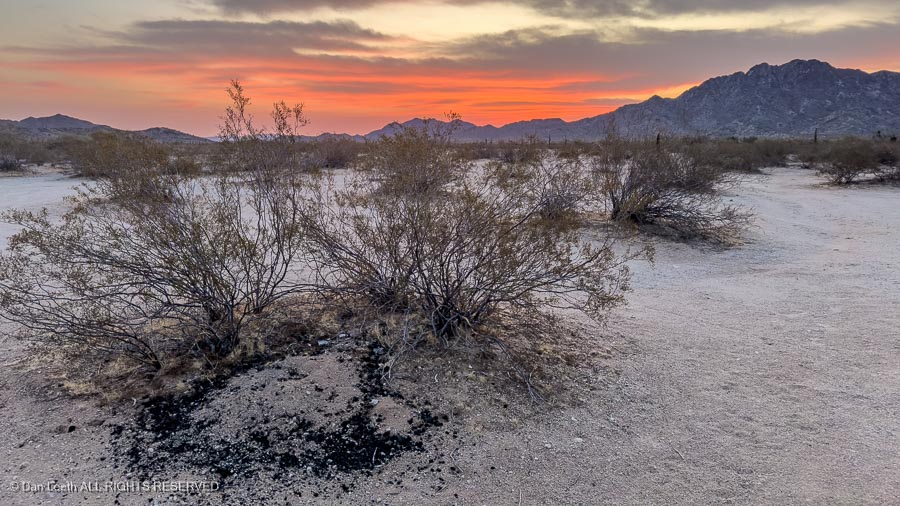
…while we prefer to bunk outdoors where we can watch sunsets from our sleeping bags…
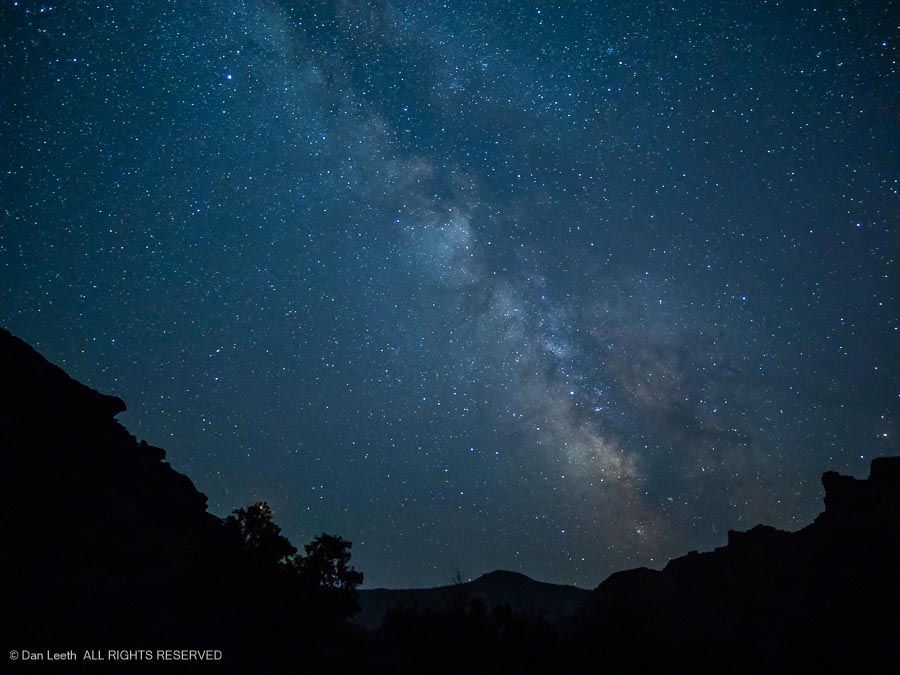
…and gaze up at the Milky Way after dark.
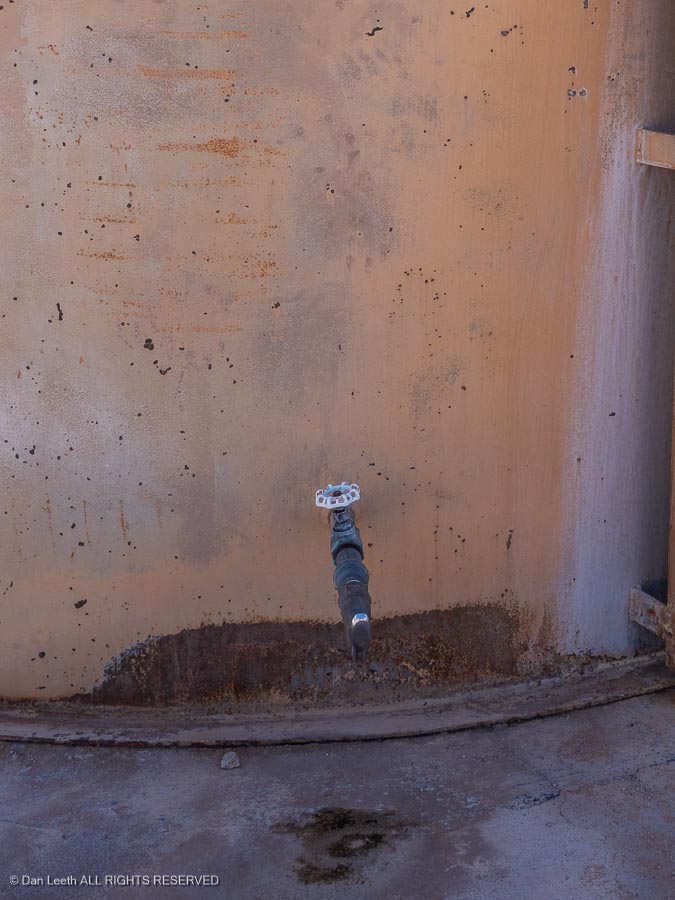
Our first night’s campsite lies near Papago Well. The blue flag flying above the tank informs anyone out in this parched desert that water is available here.

It may not be of Evian quality, but it can save the lives of folks, whether they are here legally or not.
Day Two

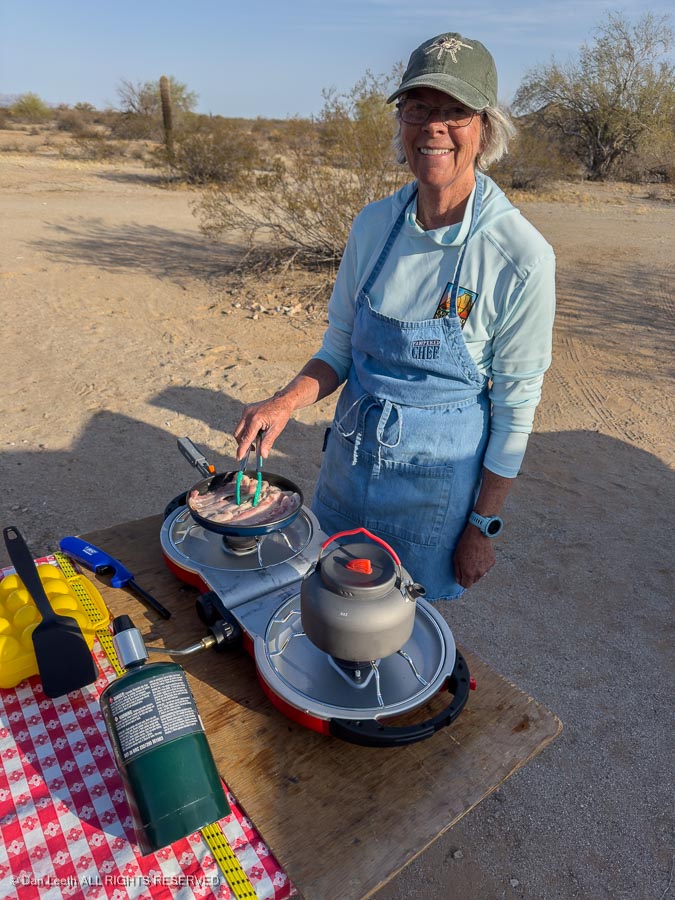
After devouring a delicious breakfast prepared by the cooking crew…

We headed back to the Camino.

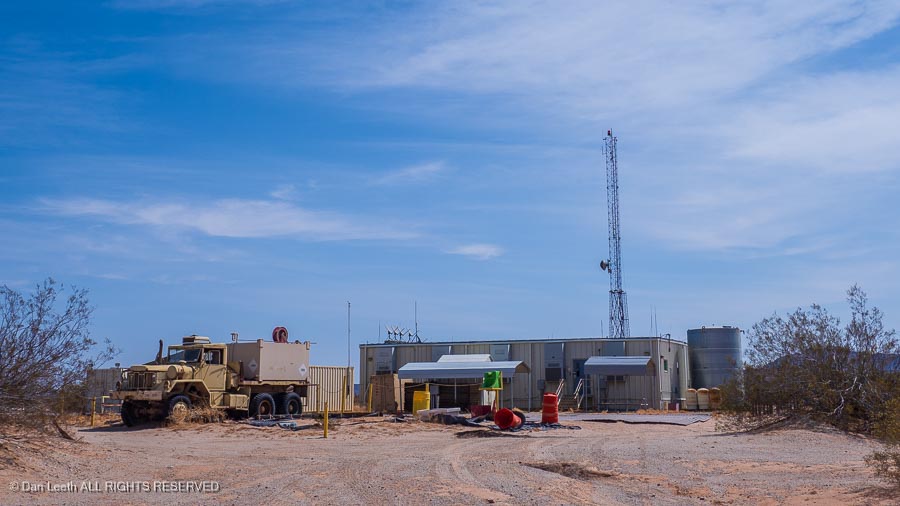
Today, we passed Camp Grip, another Border Patrol Station. As I look at the facility, I wonder how badly does a Border Patrol officer have to screw up to get stationed out here.

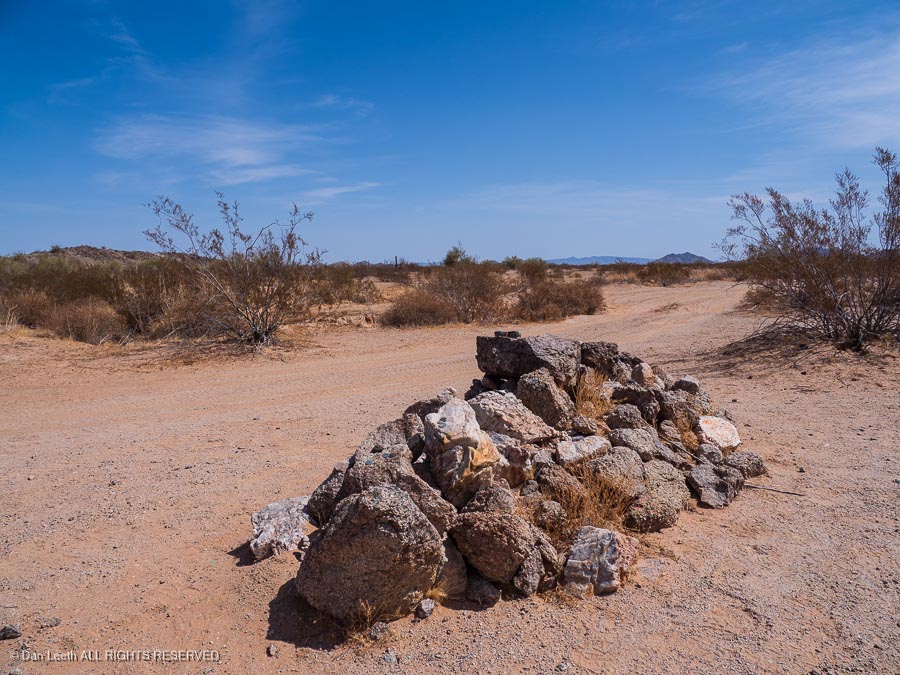
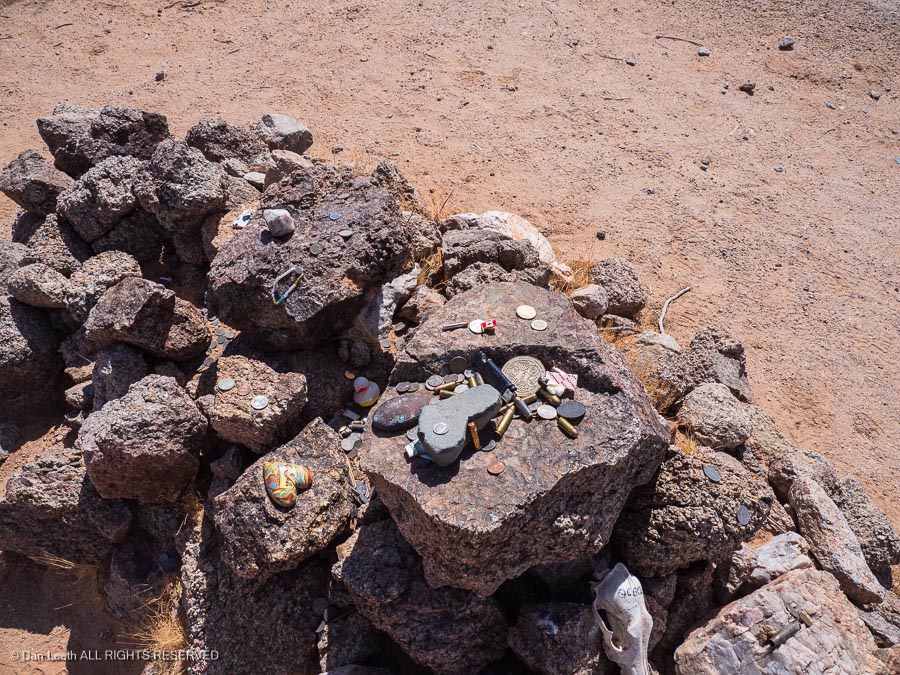
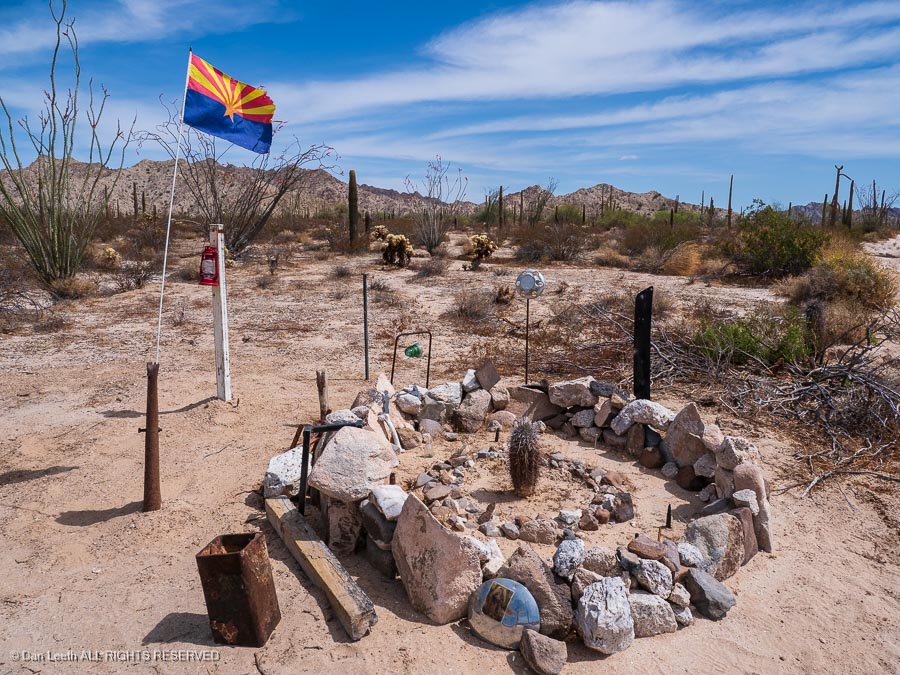
We soon come to the grave of prospector Dave O’Neill who died around 1916. He was buried here by two friends. Two weeks later, when the friends ran out of tobacco, they remembered that O’Neill still had his tobacco with him when they laid him to rest. Of course, they returned, dug up the grave and retrieved O’Neill’s stash.

The custom is to place a token on the grave to honor the deceased. I brought along some Colorado pins for that purpose.

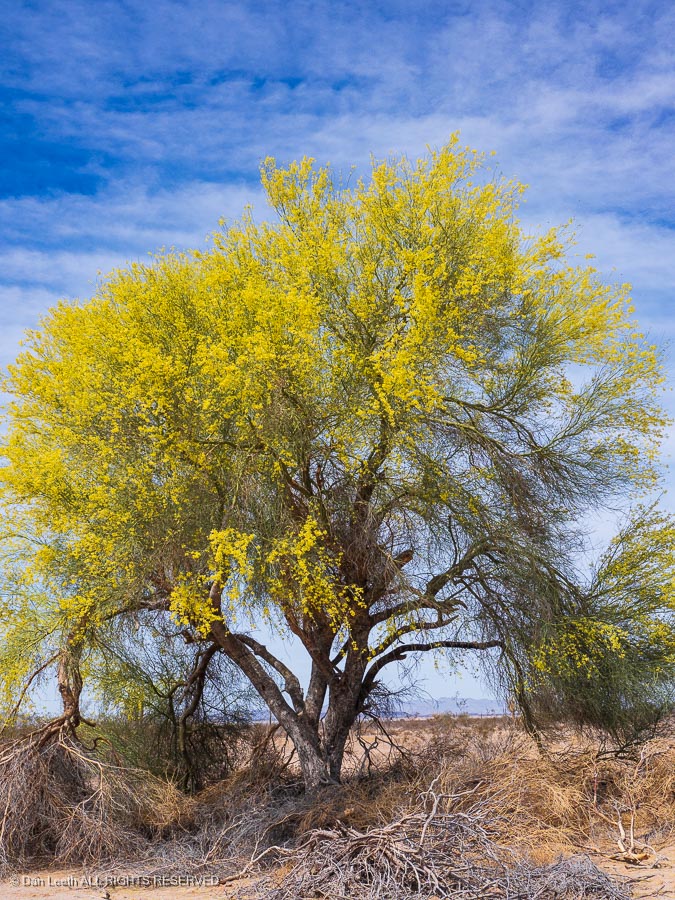
We continued onward, passing paloverde trees in bloom…

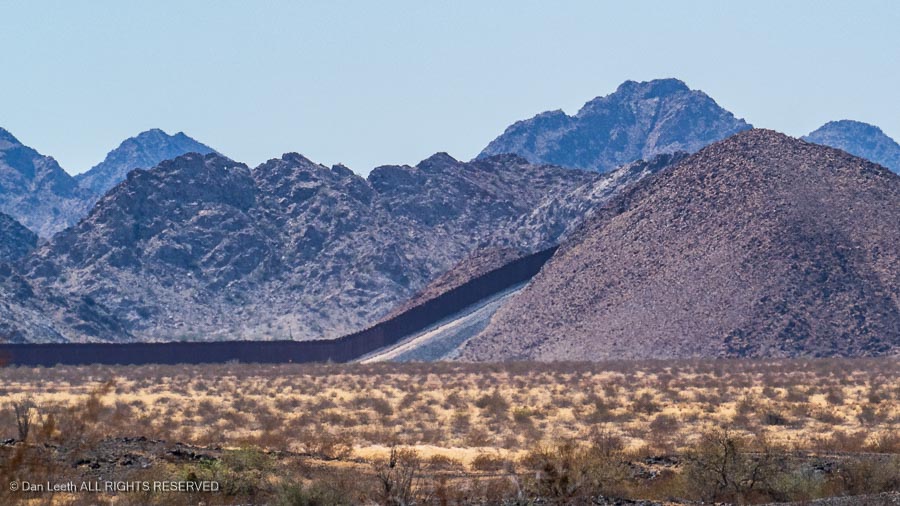
…gazing south at the Trump Wall climbing over mountains…

…and keeping an eye out for traffic cops enforcing the speed limit.

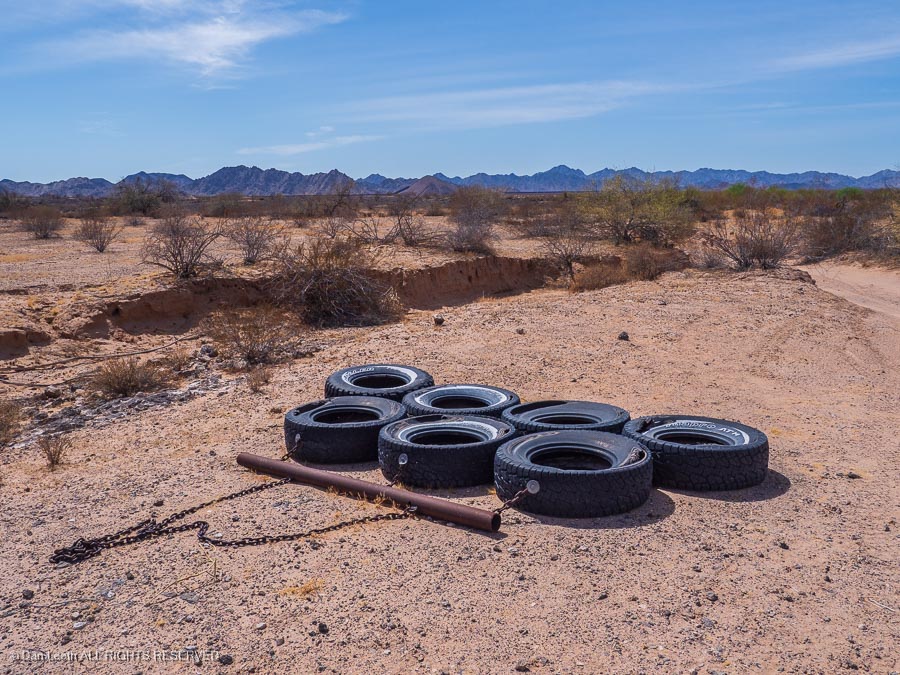
Portions of the Camino route traverse wash bottoms and stretches of deep sand. In these areas, the Border Patrol will drag tires down the road to smooth the sand.

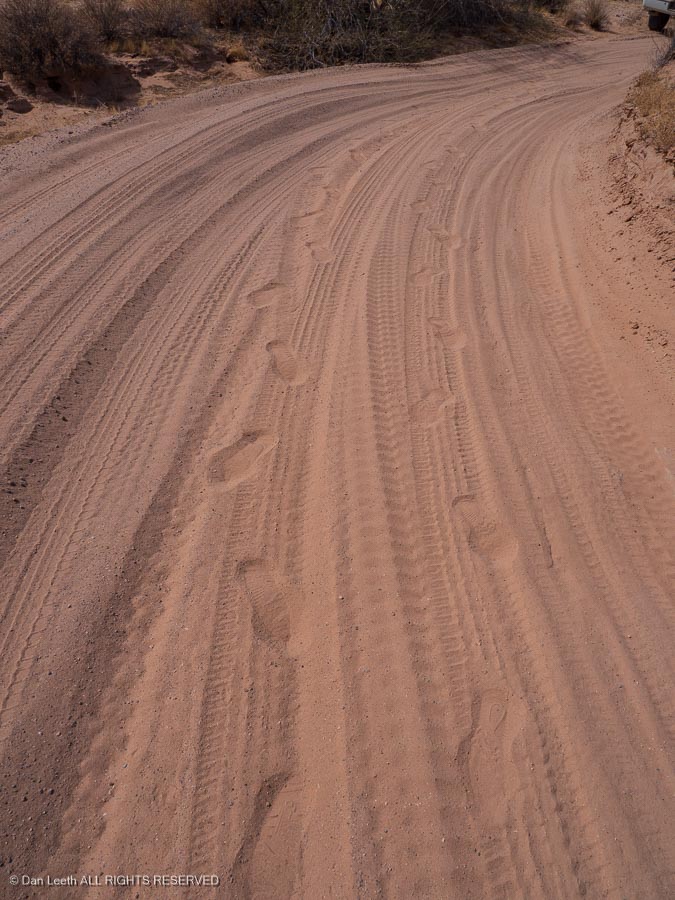
Anyone out here illegally crossing the road will leave footprints in the sand. (These, however, are ours.)

Driving through some of these areas required engaging four-wheel-drive and motoring through nonstop. Stop and you’re stuck!

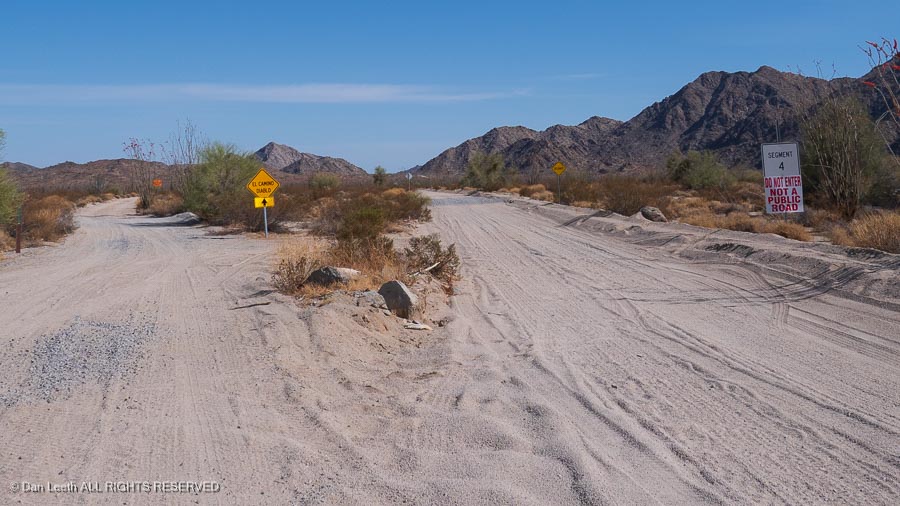
El Camino soon merged with another road, which was prominently labeled “Do Not Enter, Not a Public Road.” It was a construction road for building Trump’s border wall. We legally continued forward on the merged roads.

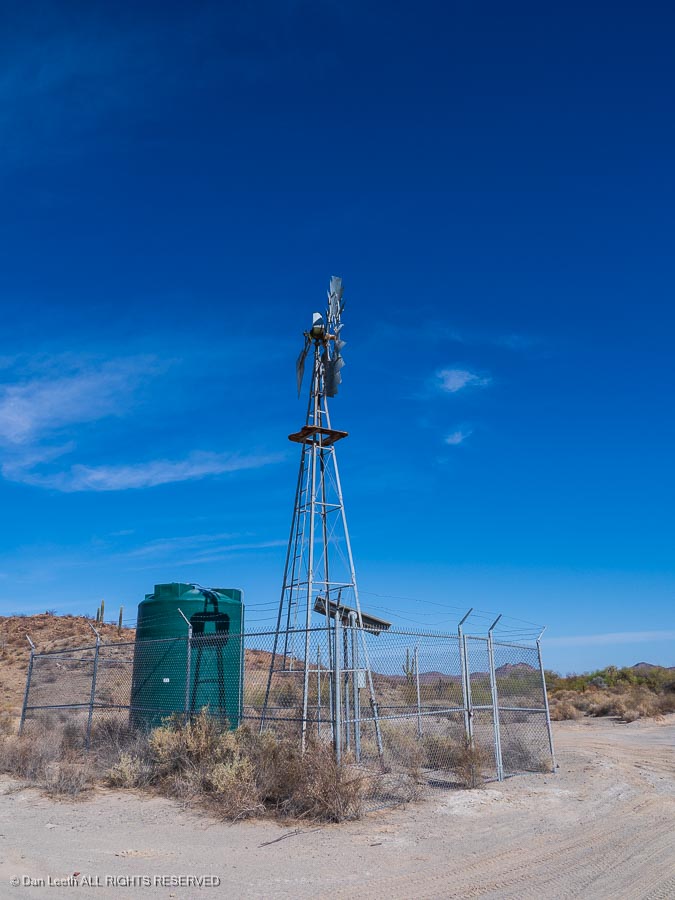
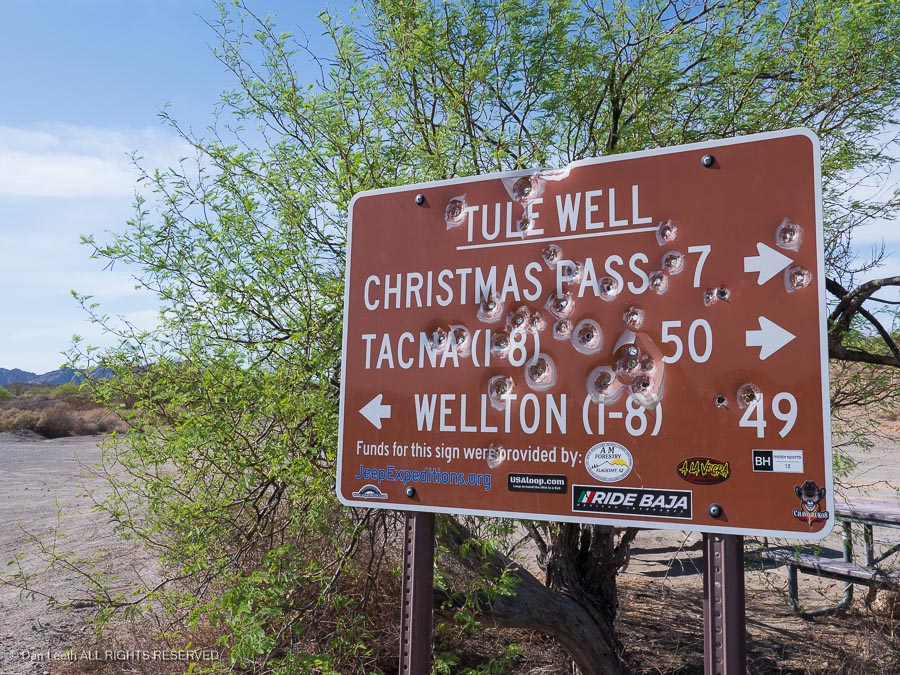
We soon reached Tule Well, complete with a windmill-filled water tank…

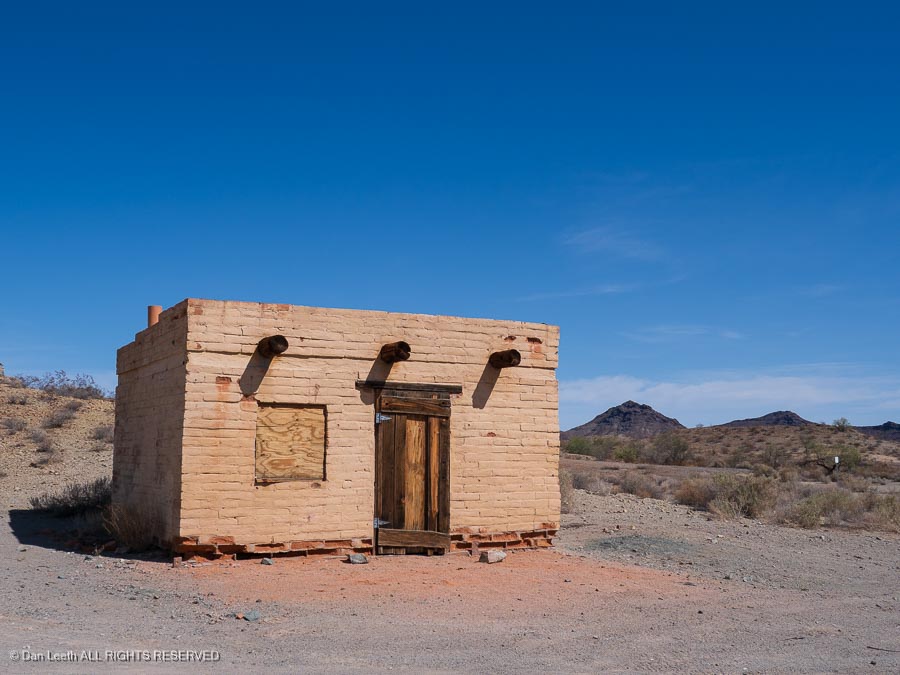
…an abandoned building…

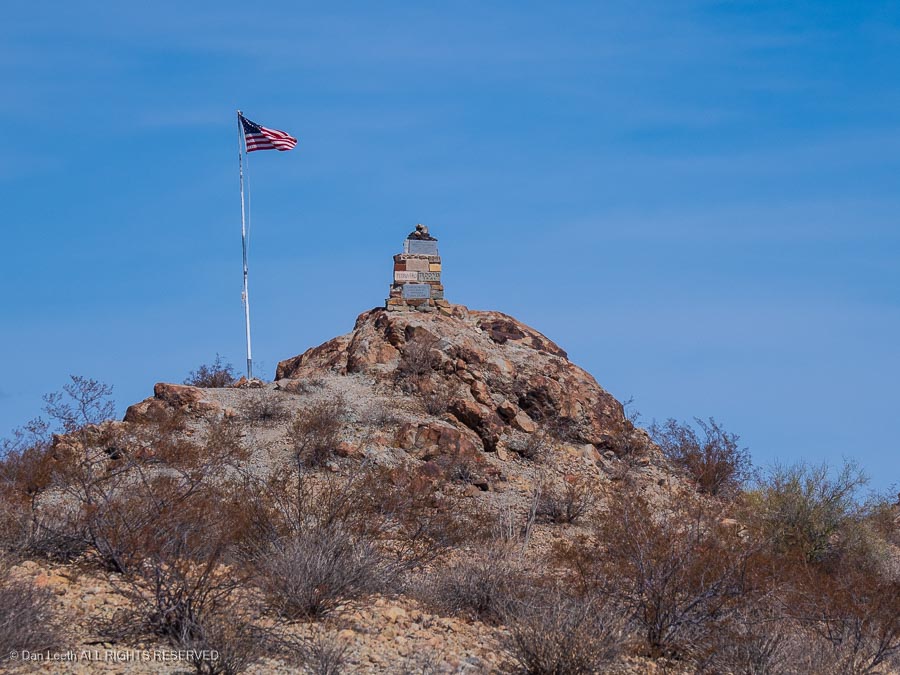
…and a Boy Scout memorial atop a nearby hill.

While there was camping available here, we chose to head seven miles up to a campsite on Christmas Pass.

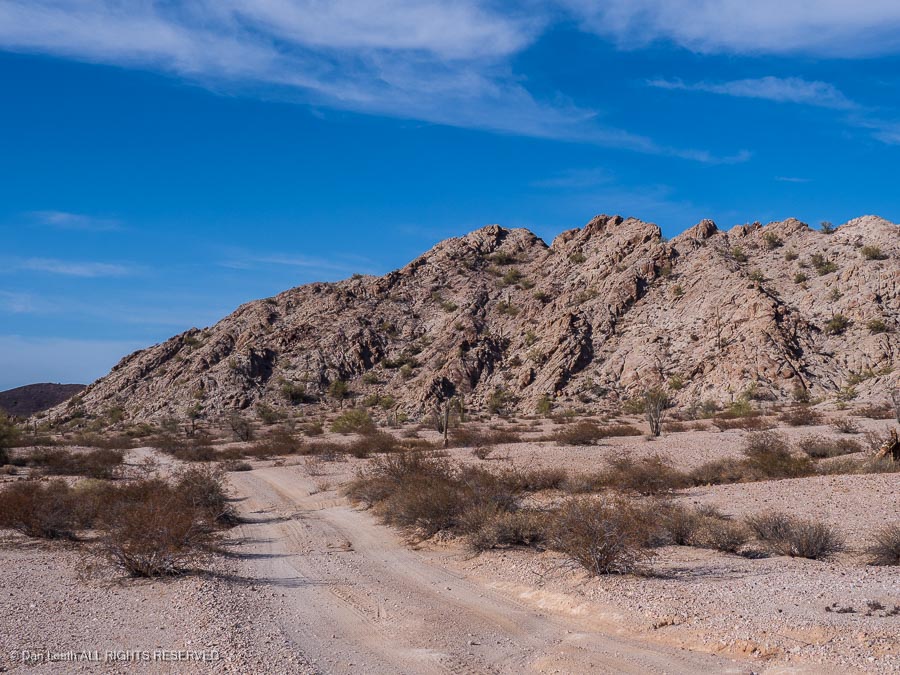
The road started out nicely…

…and then got a bit more interesting as we neared the pass.

The campsite was lovely and came complete with picnic tables…

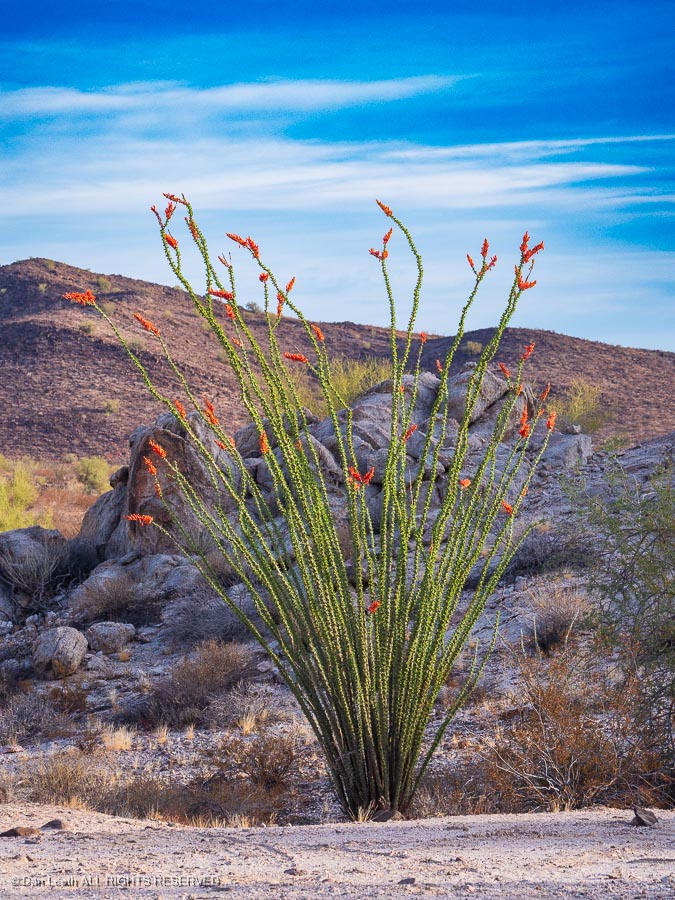
…and ocotillo in bloom.

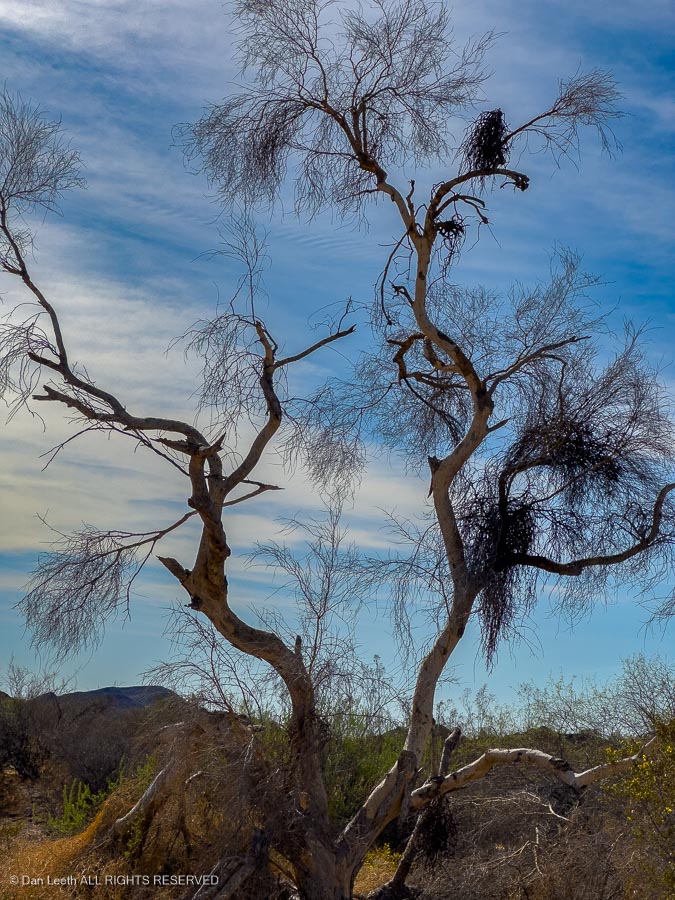
While there was plenty of mistletoe hanging off a paloverde tree, there was no Santa on Christmas Pass.

Day Three

We followed our friend’s 4Runner down from Christmas Pass to the Camino and turned toward Yuma, trail’s end.

Heading up the Camino, we passed roadside memorials…

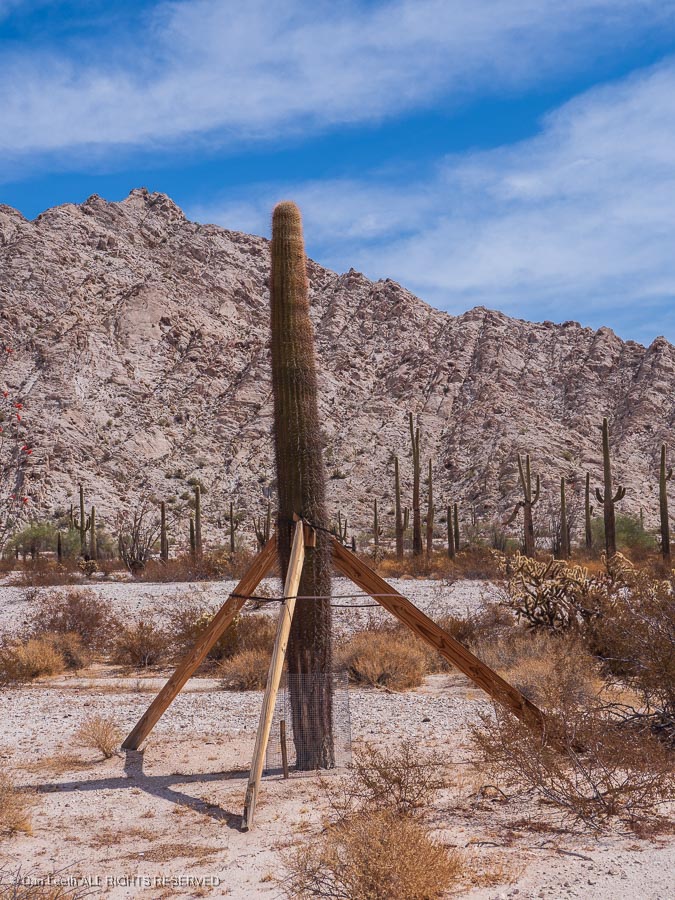
… and saguaro cacti propped up with 2x4s.

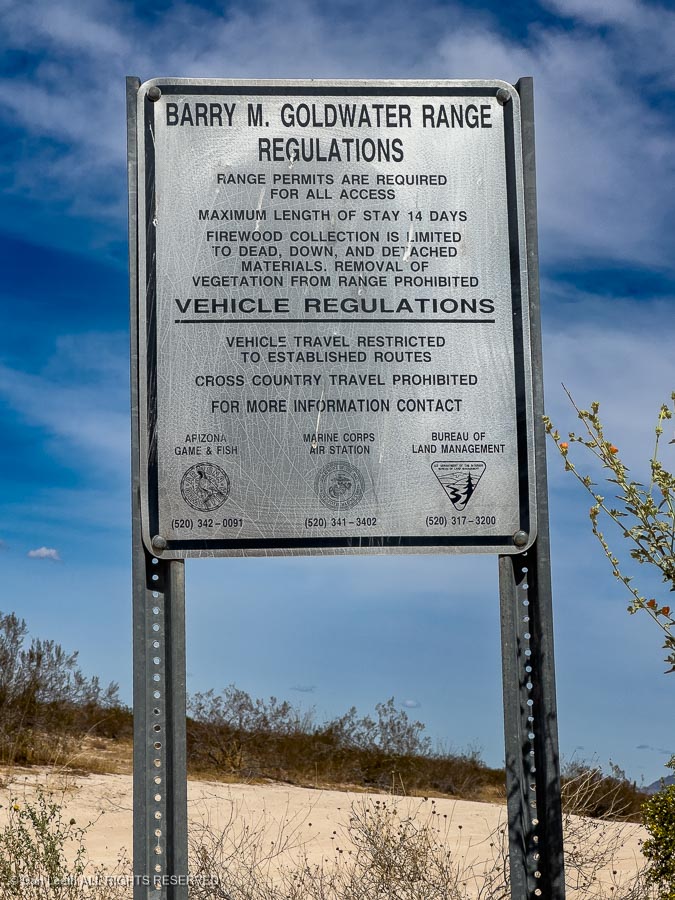
We soon entered the Barry M. Goldwater bombing range…

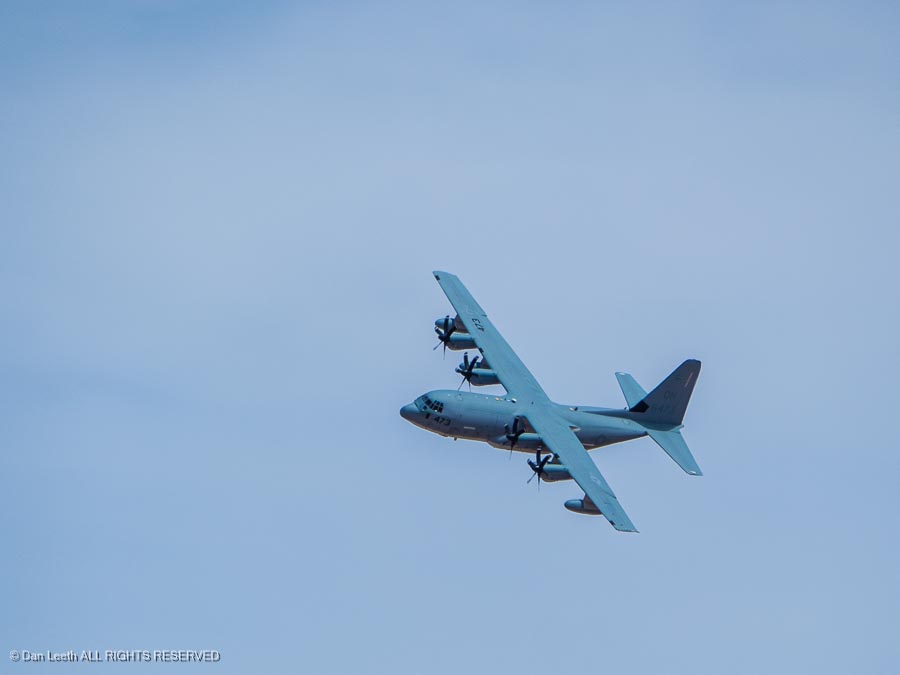
…and tried not to get too nervous about the plane circling overhead.

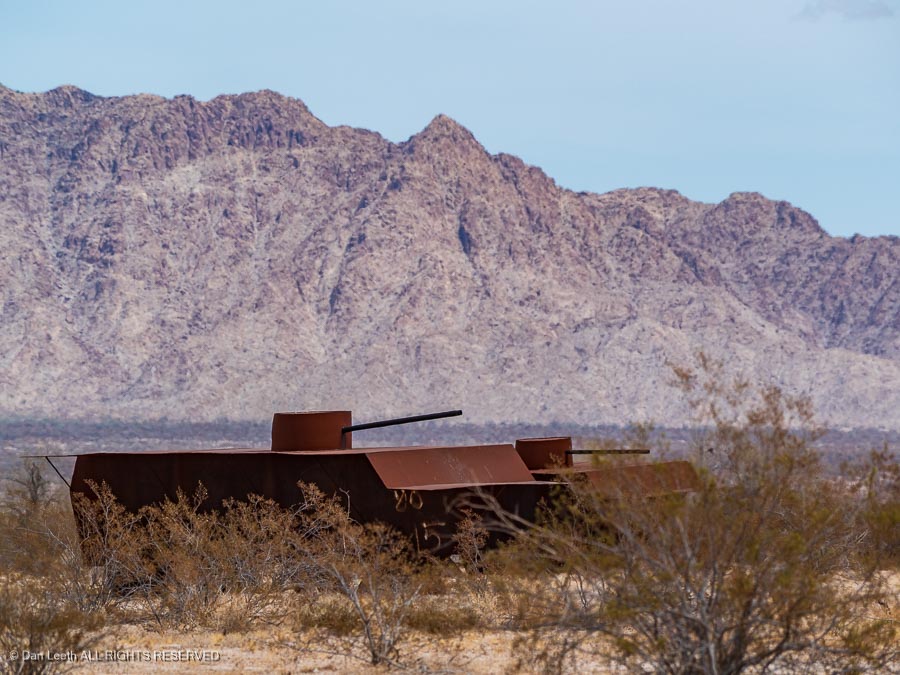
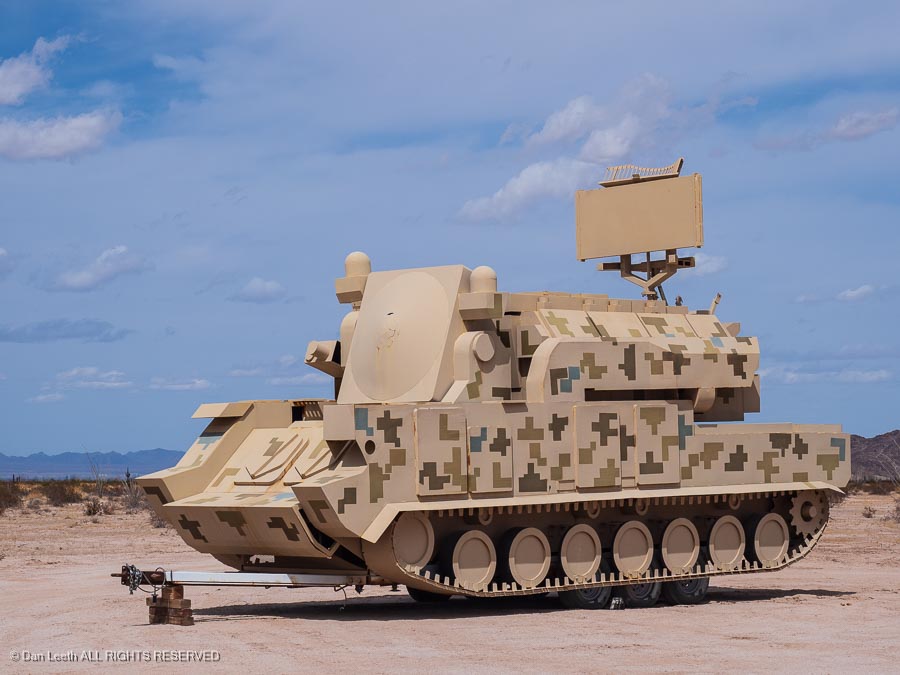
Along the roadway stood pretend tanks…

…more pretend tanks…

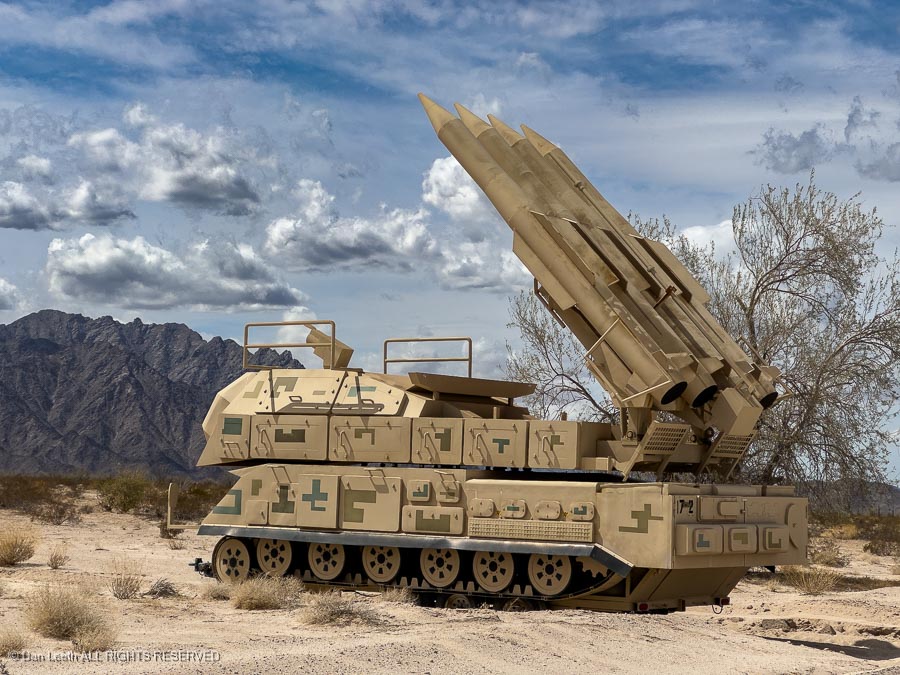
…pretend rocket launchers…

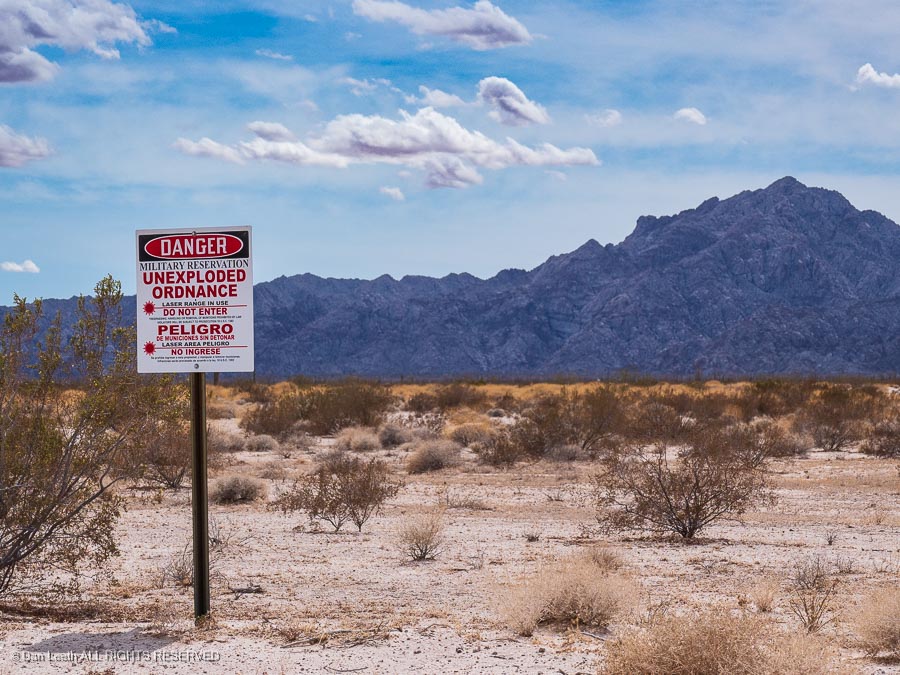
…and signs warning us not to pick up any “unexploded ordnance.”

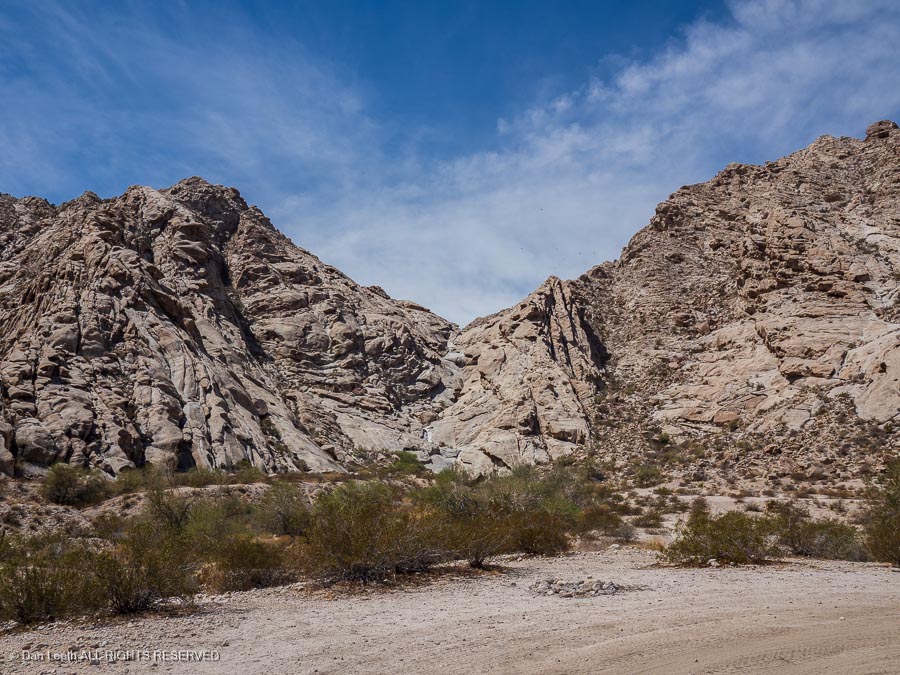
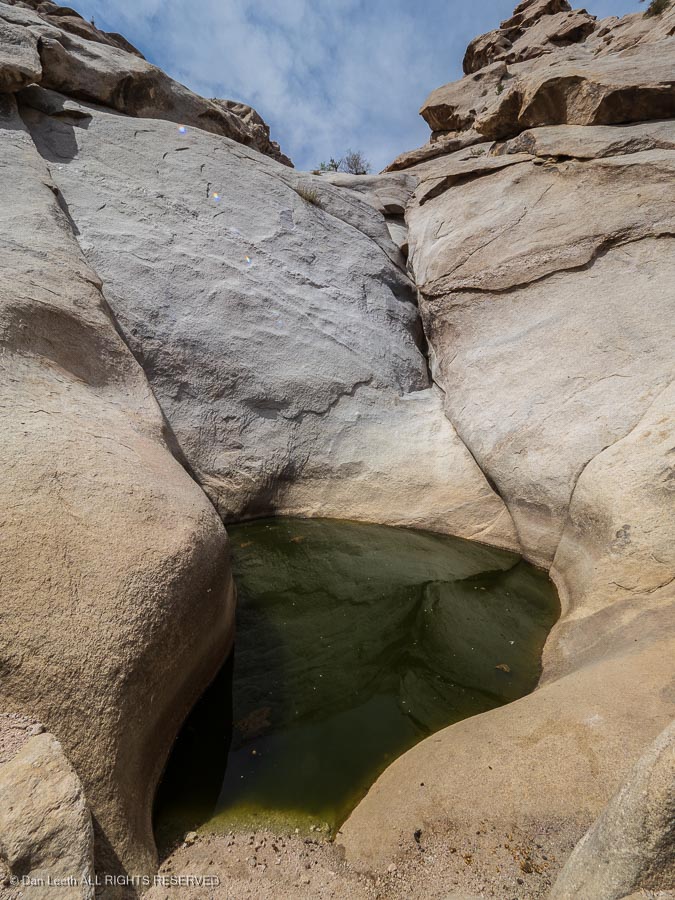
Our goal here was to get to the tenajas in the Tenajas Atlas mountains. These plunge pool tanks hold water for both the local wildlife and the those pioneers who followed El Camino del Diablo out west.

A short walk up a less-than-friendly trail and wash bottom lead to the first tank.

From here, we continued into Yuma and checked into the Super 8 Motel we had pre-booked. We’d have showers, a comfy bed, a flush toilet and waffles for breakfast.

Tomorrow, weather permitting, we will head off to the Kofa National Wildlife Refuge, which lies northeast of Yuma and south of Quartzite.

Heading Home

Weather permitting, we were next planning to head out for a short week of camping in the Kofa Wildlife Refuge. Unfortunately, the weather gods did not cooperate. We had been dealing with strong winds for this entire trip and it didn’t let up . Rather than bail, we decided to endure one more night in a motel room (real bed, TV, in-room coffee and flush toilet 15 feet away) and hope tomorrow would offer a break from the breeze.

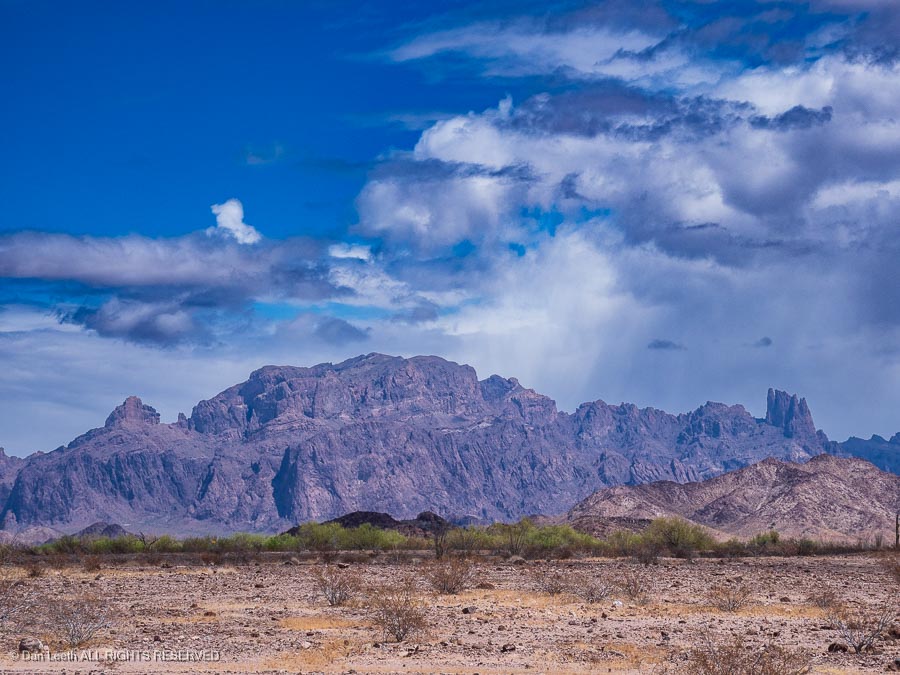
We awoke to find the wind is refusing to abate. After careful consultation with our alter egos, we did the unthinkable and whimped out. Instead of the hills, we set off for home, gazing at the Kofa Mountains as we blew past on our way north. We’ll make another attempt to camp here, we promised ourselves, sometime in the fall.

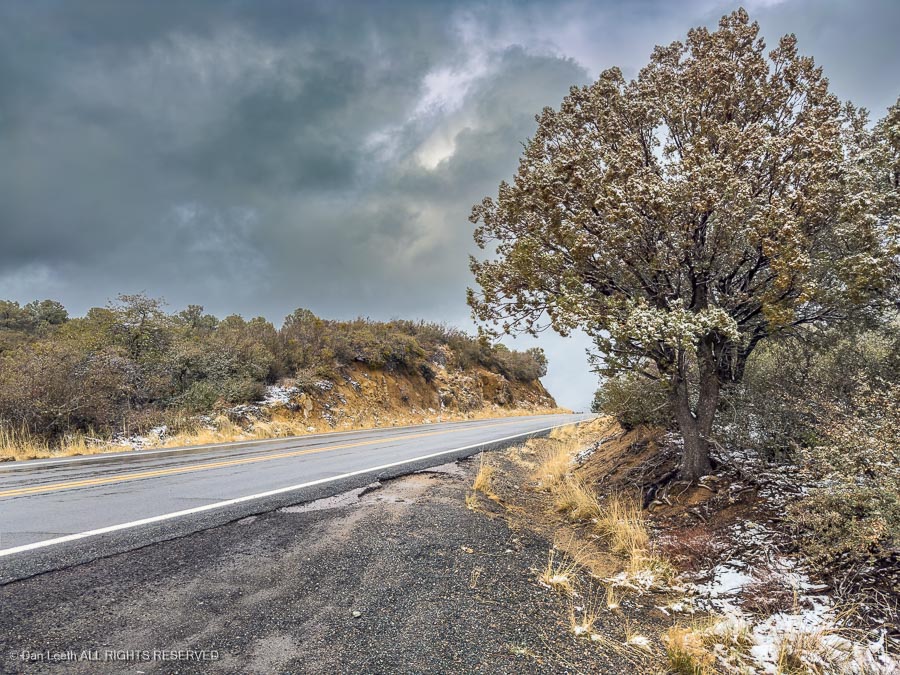
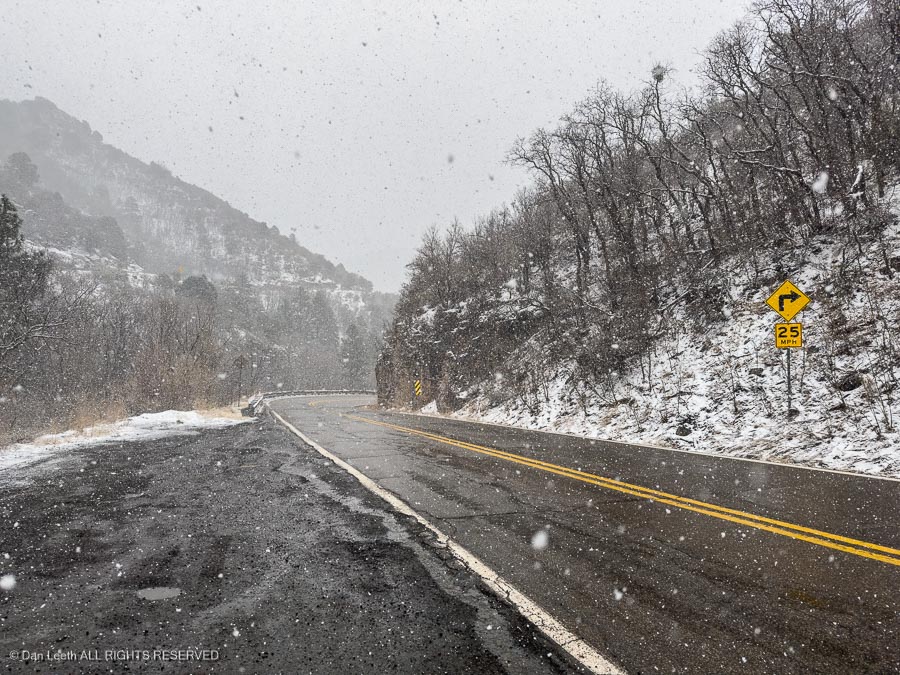
We had a motel reservation in Prescott. As we headed in that direction, we were greeted with snowfall.

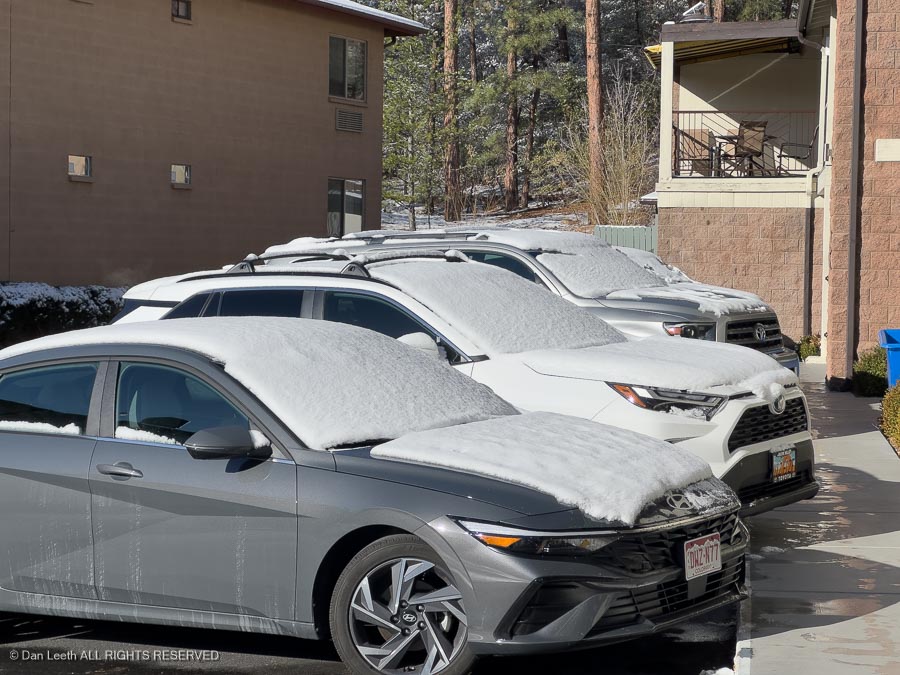
Come morning, cars in the motel parking lot were blanketed with an inch or so of the white stuff.

We drove through more snowfall on our way through the mountains as we headed in the direction of home.

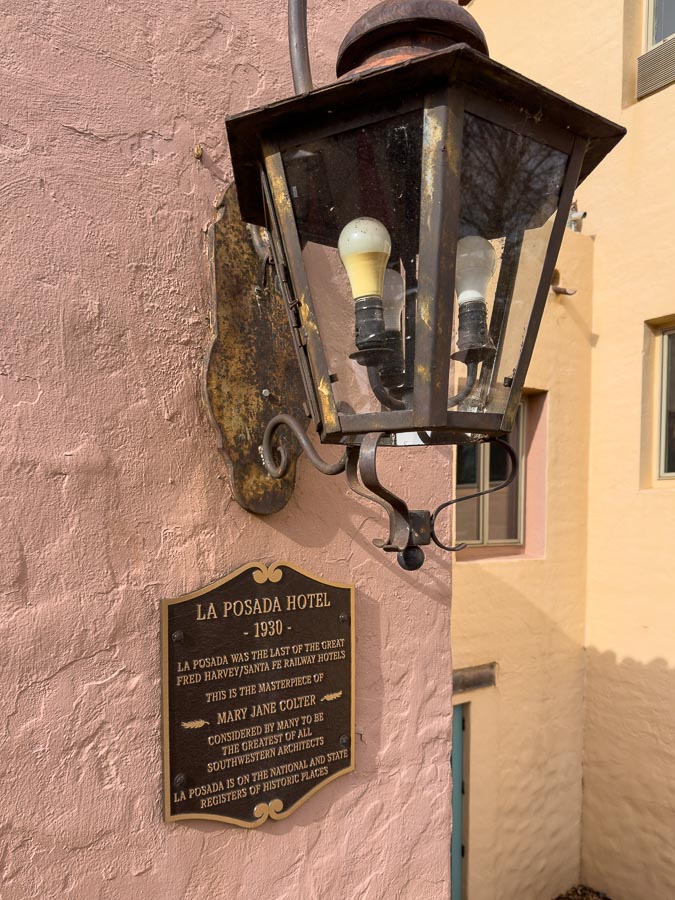
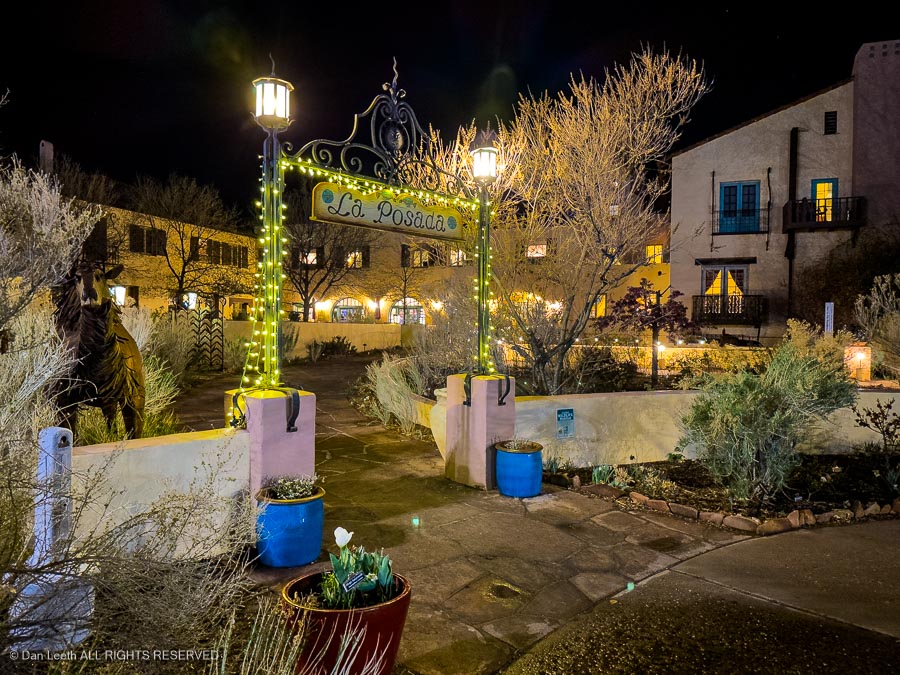
Our final night on the road would be spent at La Posada Hotel in Winslow.

The hotel was designed by Mary Colter for the Santa Fe Railway, and while a bit pricey, it’s become a favorite of ours.

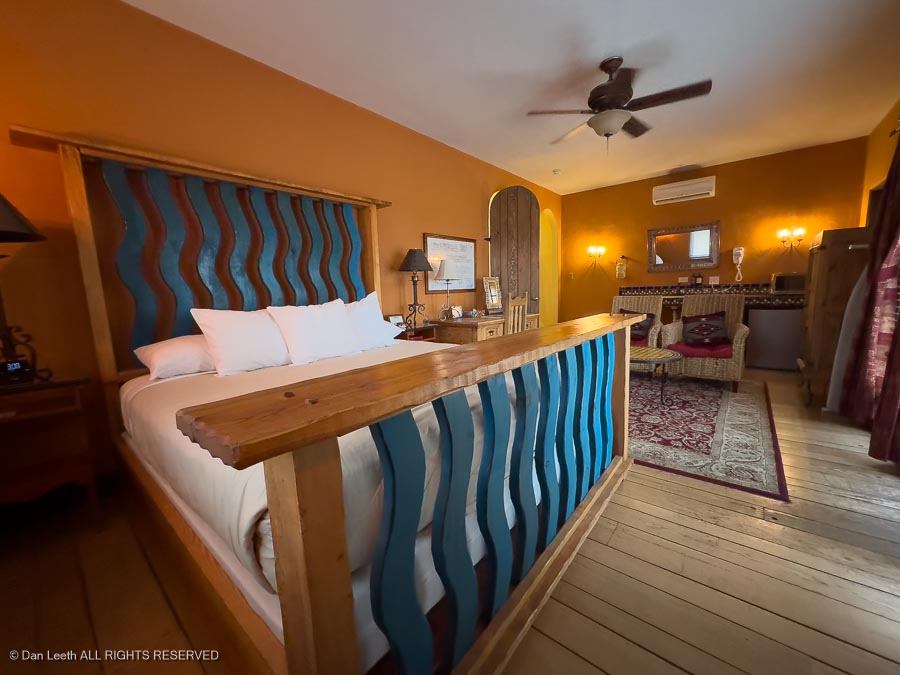
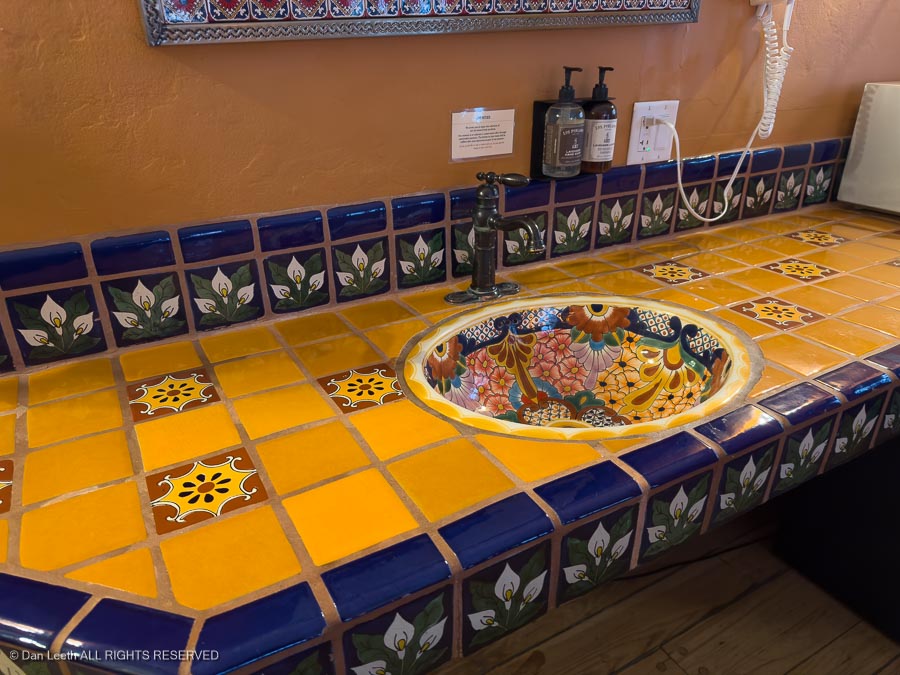
The rooms are beautiful…

…with classic Southwest touches.

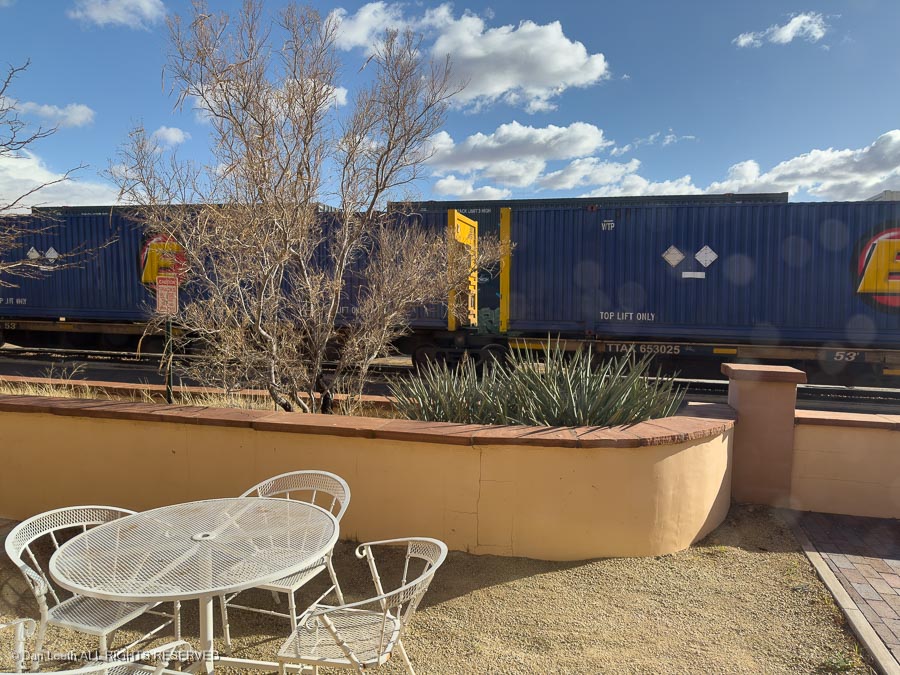
For us train buffs, tracks run by the back of the hotel, which also serves as the local Amtrak depot. We didn’t see the Amtrak train (it was probably late), but we did catch several freight trains rumbling by.
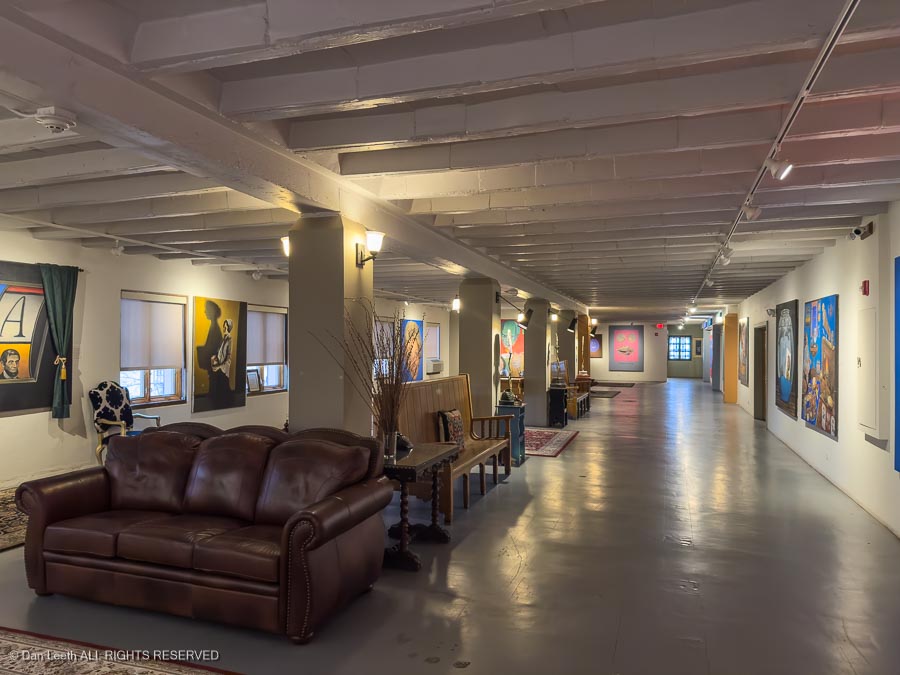
Inside the hotel, the “somewhat unusual”interesting” paintings by contemporary artist and La Posada owner Tina Mion grace galleries…

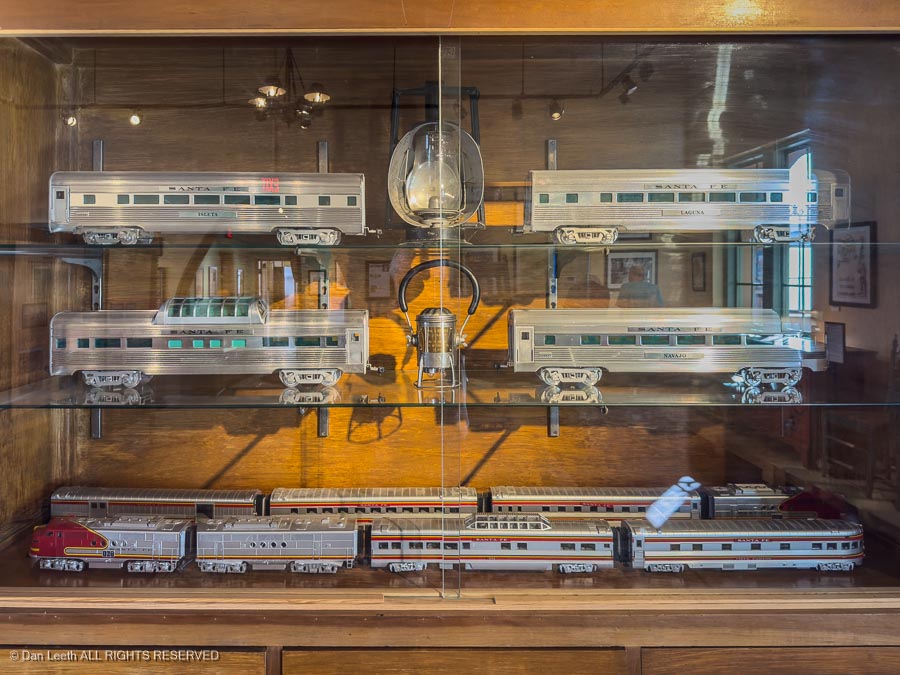
…and there’s a museum with train displays and artifacts…

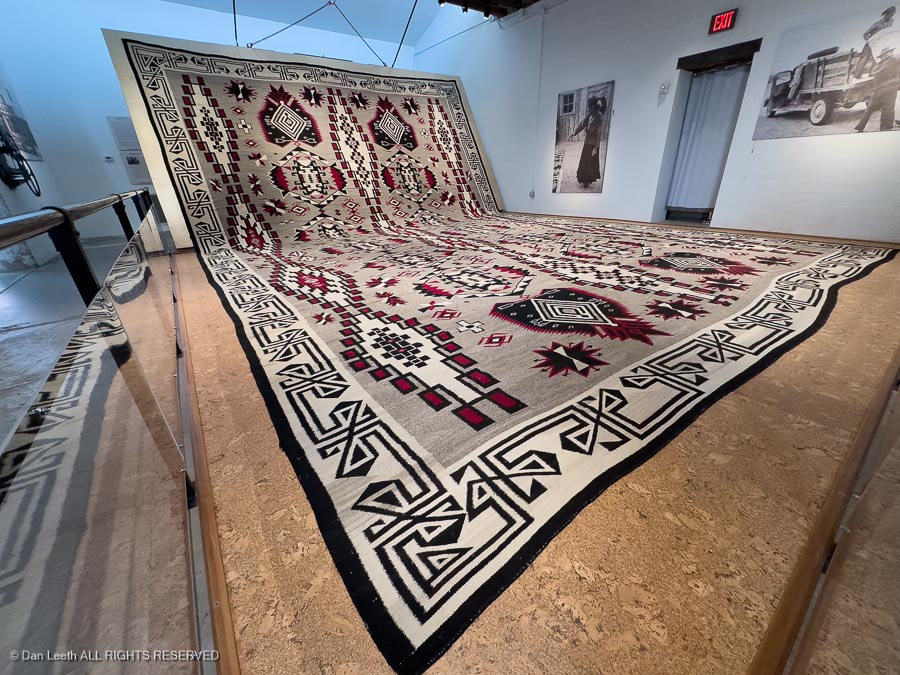
…plus world’s largest (26 feet by 36 feet) Navajo rug.

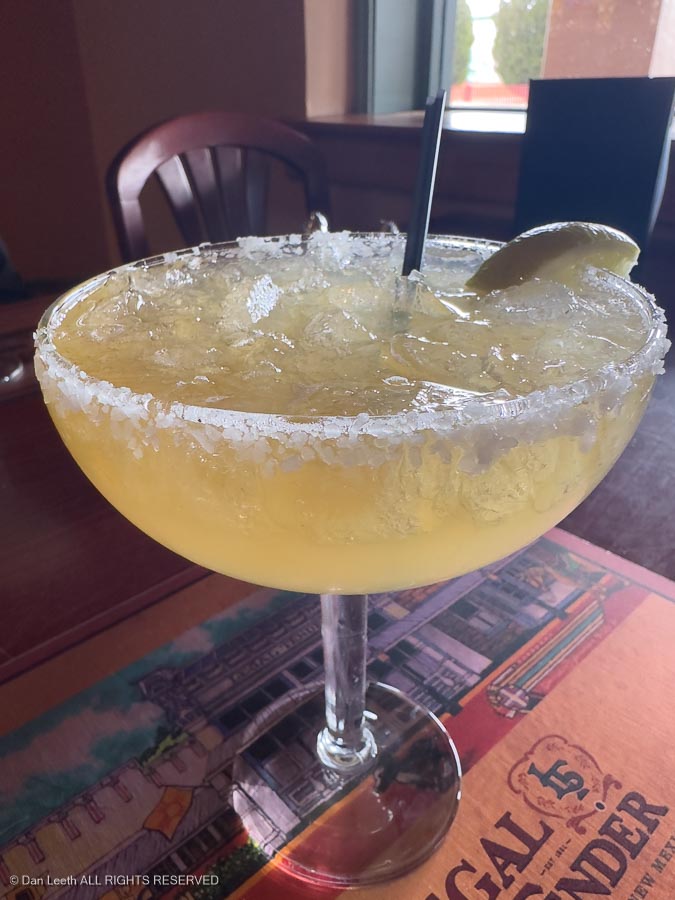
The Turquoise Room, the hotel’s restaurant, offers delicious cocktails, which of course we sampled…

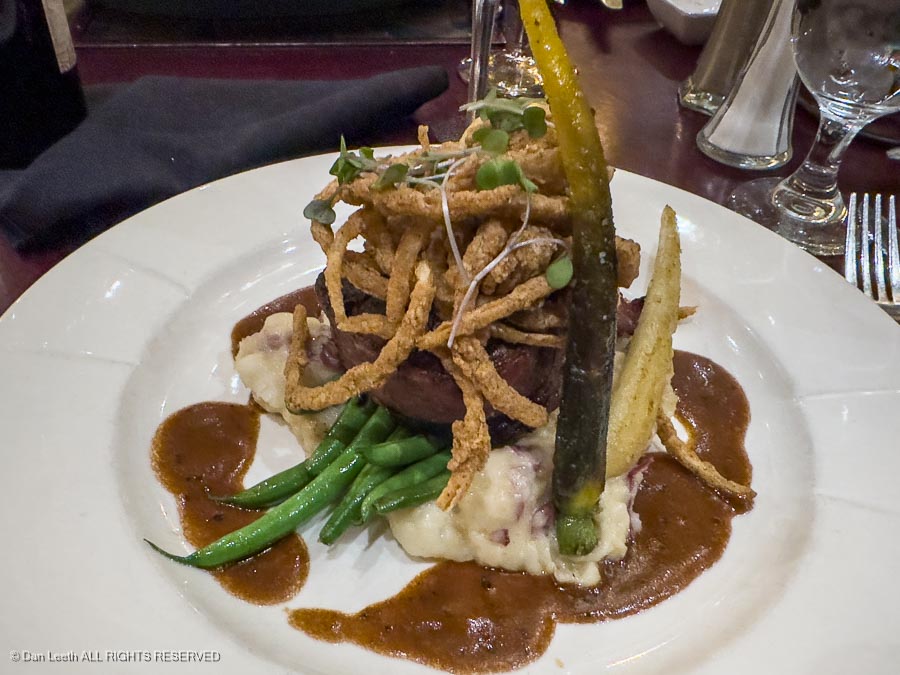
…plus dinner, which for me featured a gourmet steak (yes, there’s a filet mignon hidden in there).

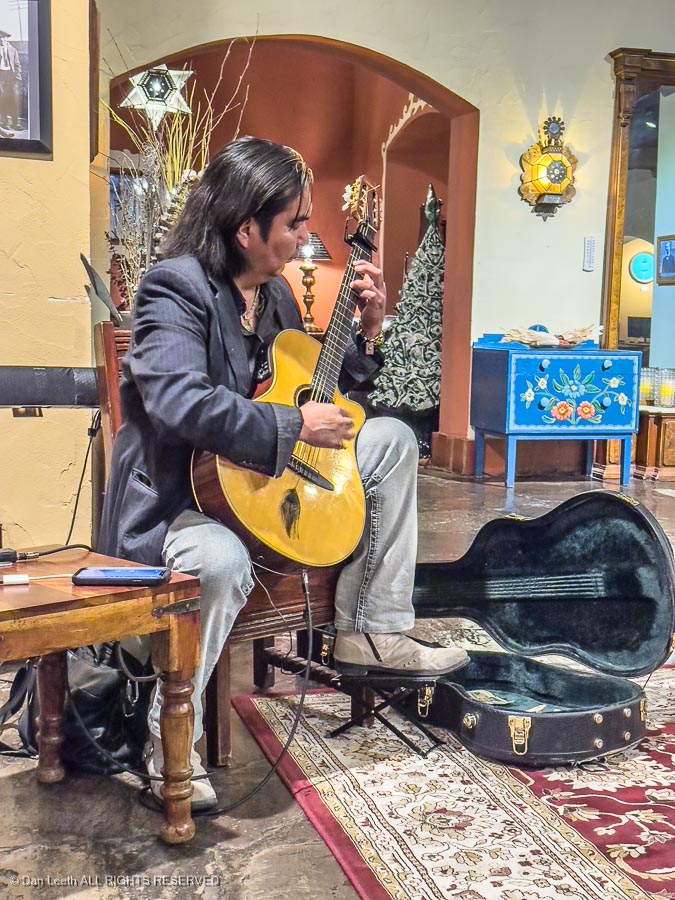
At night in the hotel lobby, classical guitarist Khent Anantakai plays tunes and tells tales about his life . We now own both of his albums.

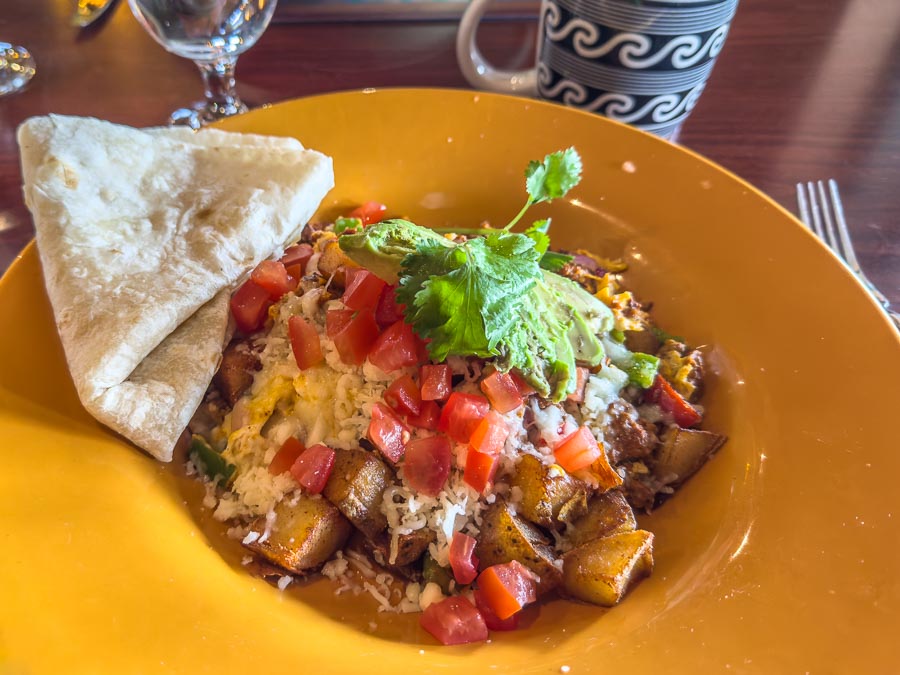
Come morning, we stuffed luggage into the truck and headed to the Turquoise Room for breakfast where I enjoyed coffee and a bowl of Chorizo Breakfast Hash. Very tasty.

Then it was off across the Navajo Reservation…

and on to home.