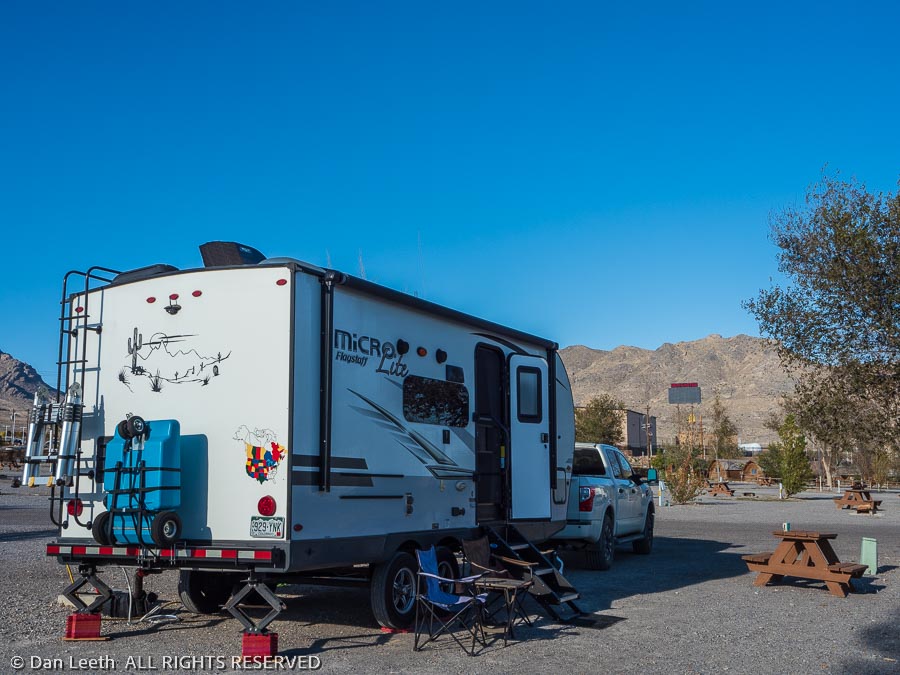
With over 200 miles to cover, Sunday would be our longest travel day on the coast. We got up before the sun, ate breakfast, packed what needed to be packed, drained the black and gray water tanks, slid the slide out in and headed for the California redwoods.
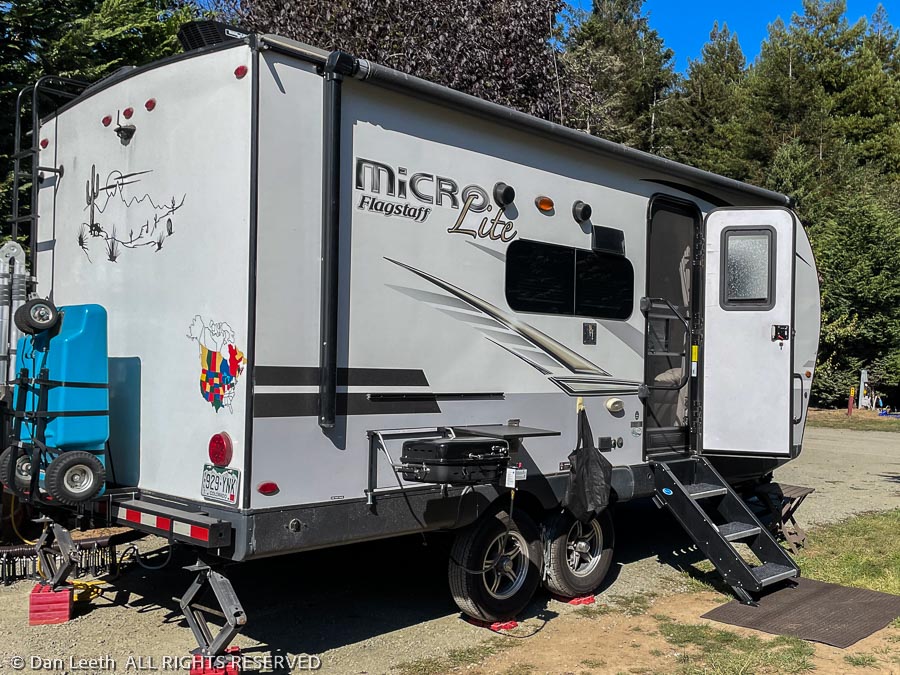
For camping, I could have reserved a spot at my choice of three California State Park campgrounds, none of which have hookups. One has a 21-foot trailer-length limit would have been tight for our 22-foot trailer. Of the other two, only one has a dump station. We can get by without water and electric hookups, but for our weeklong stay, we need a place to dump sewage. Plus, deep in the redwoods, we’d need to use a generator to recharge the battery, which is noisy and takes time.
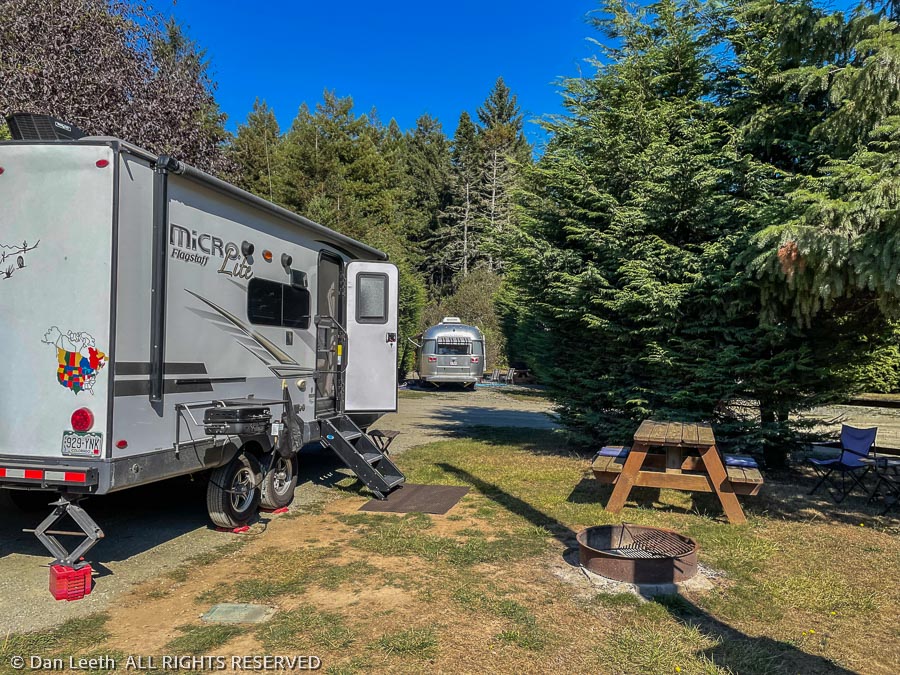
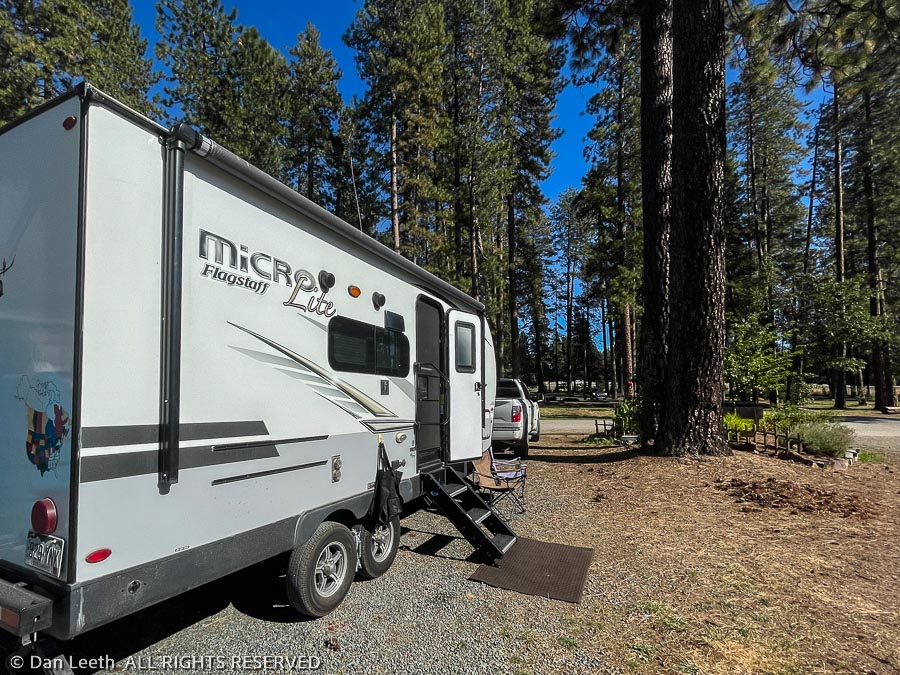
Instead, since we are elite, gold-plated, premier, diamond-encrusted KOA royalty, we opted to stay at a nearby KOA. They gave us a nice enough site and we have full hookups. We don’t plan to spend much time around camp anyway.
That said, we spent the entire day Monday at the KOA never leaving the grounds.
I spent Monday morning working with Verizon trying to find out why with three bars of LTE coverage, my download speeds were less than 2.5mbps while Dianne’s phone was getting 40mbps downloads. The Verizon folks, even the one who spoke English, were nice, but they couldn’t solve the problem.
Come afternoon, I finished a murder mystery book I had been reading about musically inclined crustaceans (“Where the Crawdads Sing). Dianne read the book and said it was a real page turner that I would enjoy. She was right.
Today would be our introduction to the redwoods. The KOA provided handouts with descriptions of some hikes and drives in the area, and I had some topo maps of the Redwoods National and State Parks. We chose to hike the Boy Scout Tree Trail that leads to the famous Boy Scout Tree.
(Okay, I’d never heard of it before, either, but I once was a Boy Scout and if the organization had a tree, I wanted to see it.)
We followed the KOA directions up the narrow access road that led to the trailhead where only a few other cars were already parked. Packs loaded, we set off up the 2.8-mile trail that led past the Scout tree and on to a small waterfall.
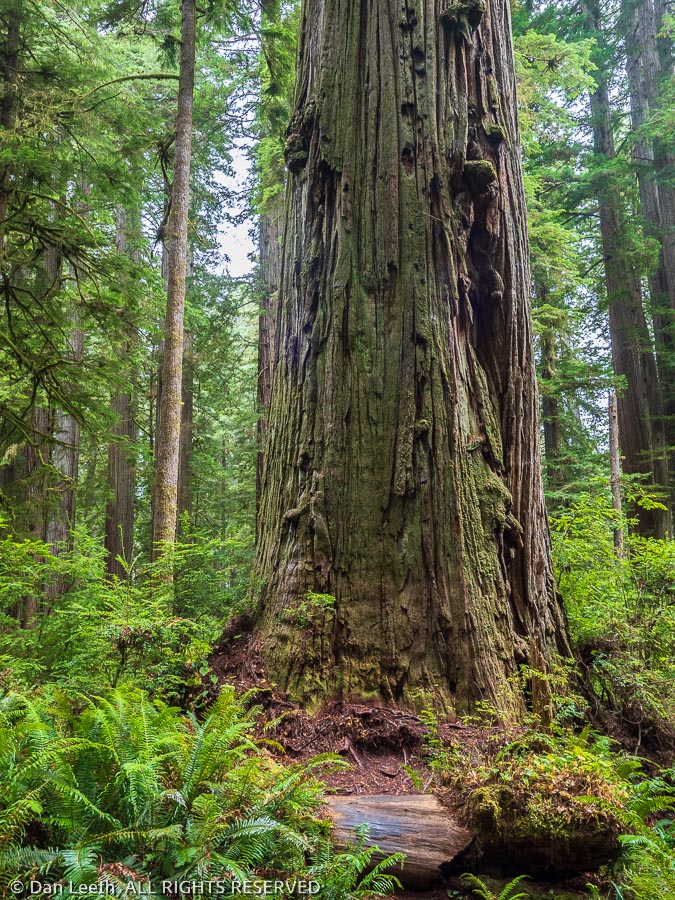
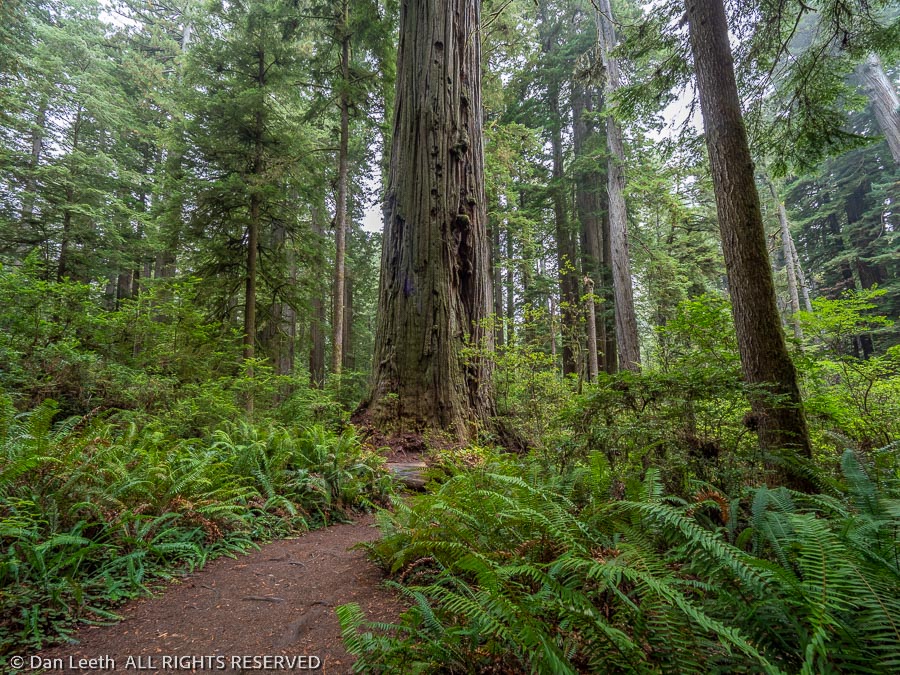
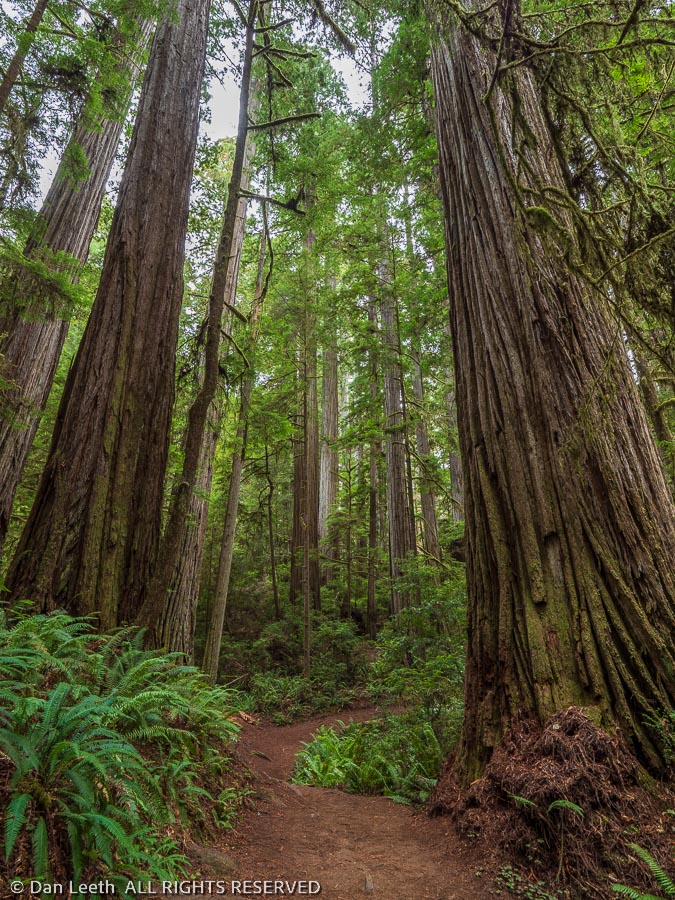
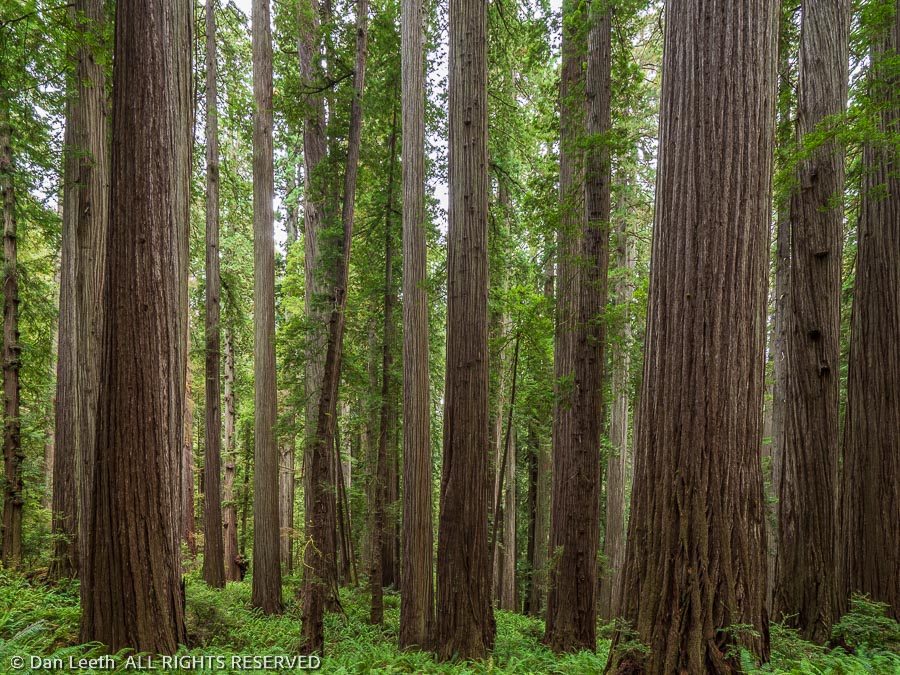
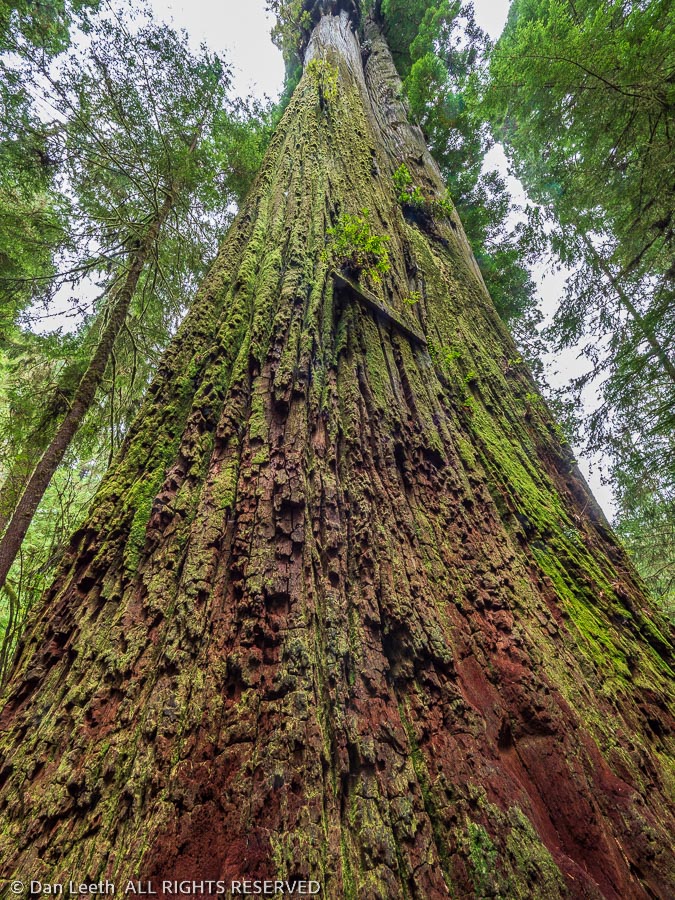
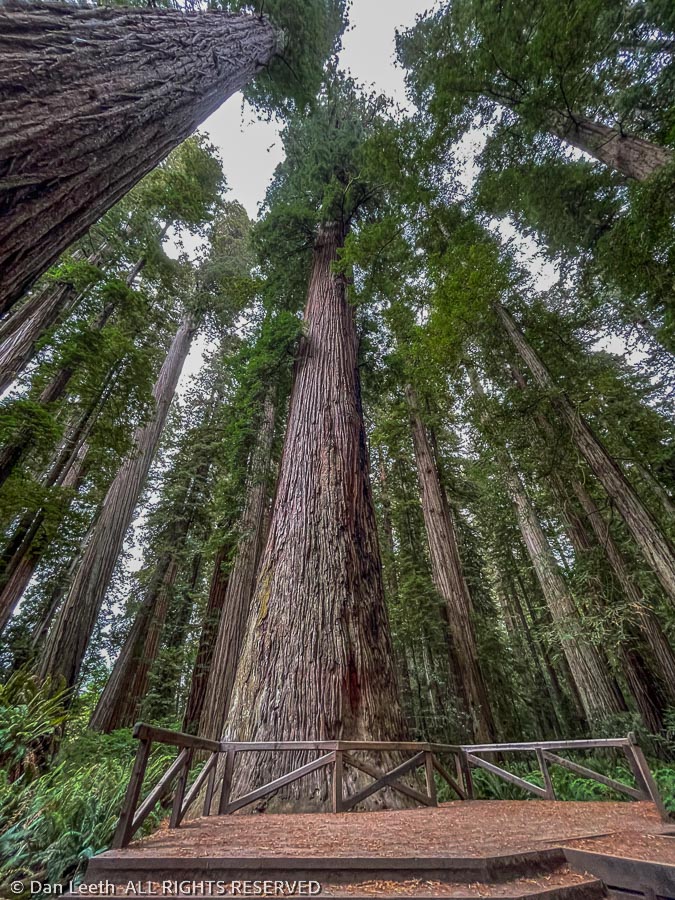
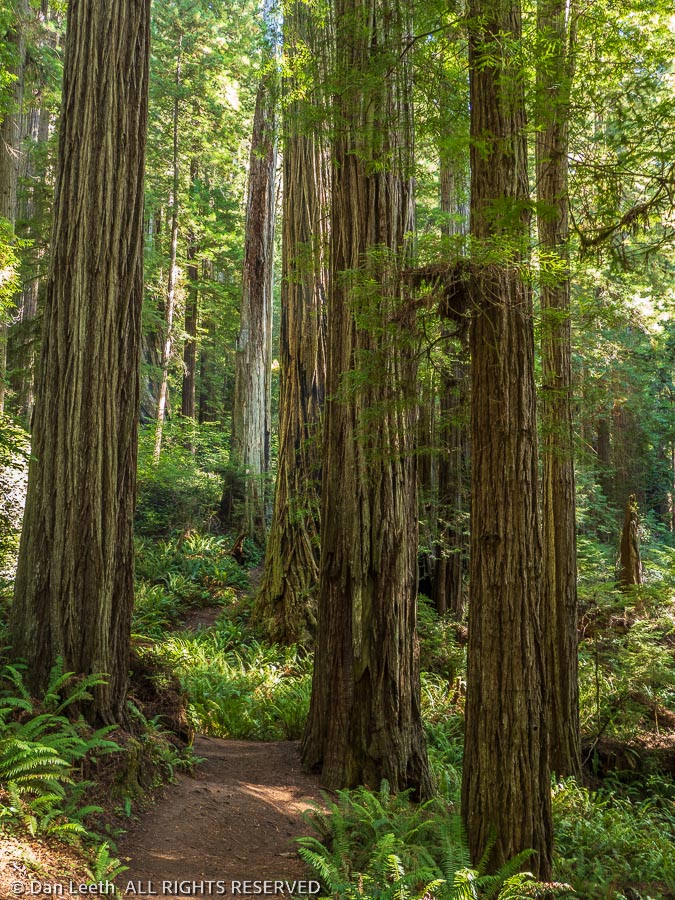
We walked into the forest up the wide, dirt trail where neither bikes nor dogs are allowed. With trunks reaching 20-plus feet in diameter and heights taller than a 30-story building, it was like walking down a street lined with brown-barked skyscrapers.
We’d stop along the trail and listen. There was nary a sound. Not a bird singing. Neither chipmunks nor squirrels racing about. No deer, elk, coyotes, bears nor big-foot sasquatches rustling distant leaves. It was just dead silence, a rare treat in our world of constant noise.
I brought only one camera body, which had my wide-angle lens attached. I hoped that with this, I could somehow capture the magnificence of the setting. The effort was futile because the grandness of the redwoods goes beyond the five senses. It’s all about how it feels to be dwarfed by such towering grandeur.
“It makes you feel insignificant,” a fellow hiker summed it up later in the day.
The feeling of insignificance ended at the Boy Scout Tree when we were invaded by a class of about a dozen fifth graders here on a field trip with their teacher and chaperones. While they broke the spirit of the place, it was fun to see their exuberance as they climbed the tree bark and raced around the perimeter of the 23-foot-wide fused double tree (class record set by one young man was 19 seconds).
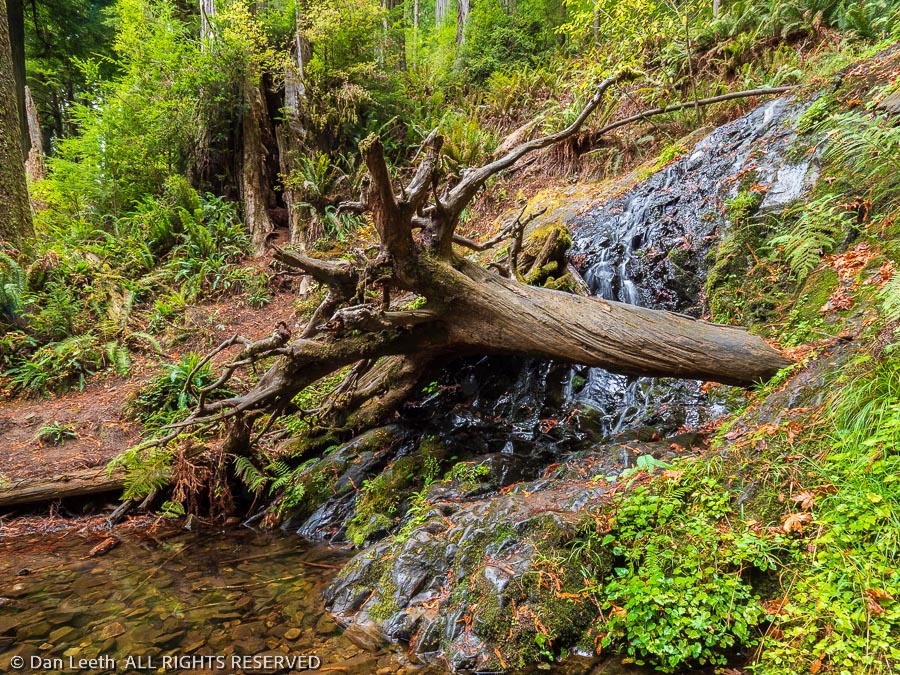
Escaping the hoard of 10-year-olds, we continued up the trail to Fern Falls, which late in a drought year wasn’t flowing much.
Then it was back down the trail where we frequently met other hikers coming or going.
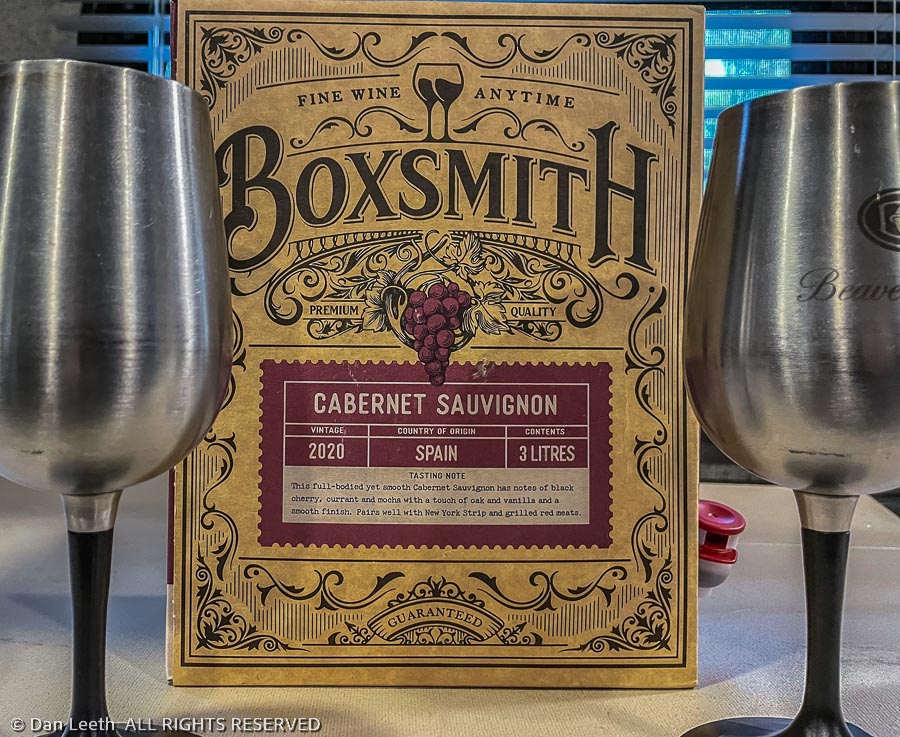
Back on the roadway, we stopped at the Stout Grove where a half-mile trail loops through the redwoods. From there, it was back on the highway to home where sandwiches of barbecue pork would appear accompanied by some of the worse box wine ever.
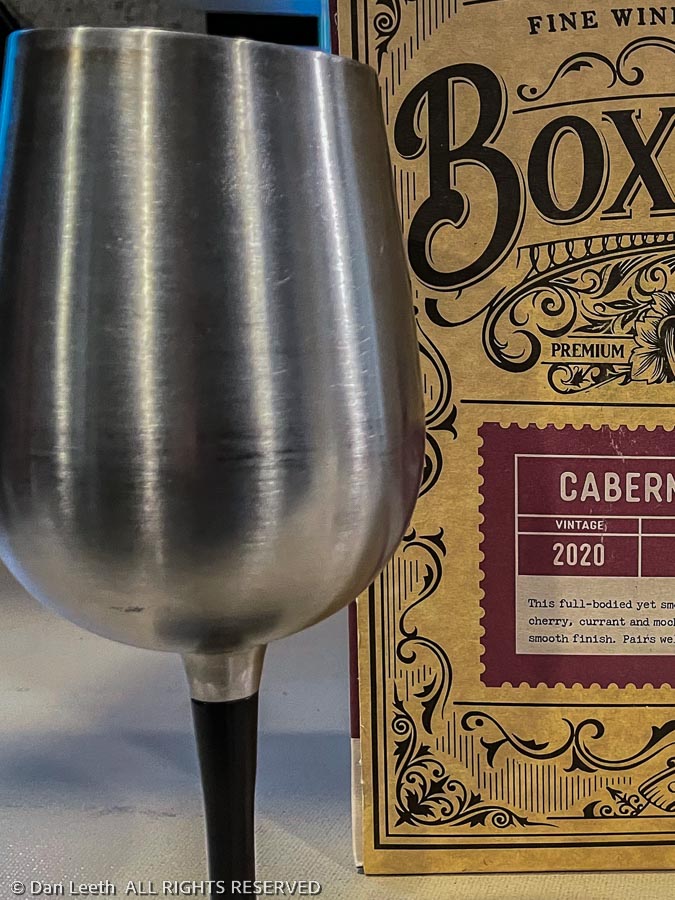
“Tastes like rubbing alcohol with a touch of raspberry,” Dianne declared.
Bad wine is just part of the roughing it element of camping.
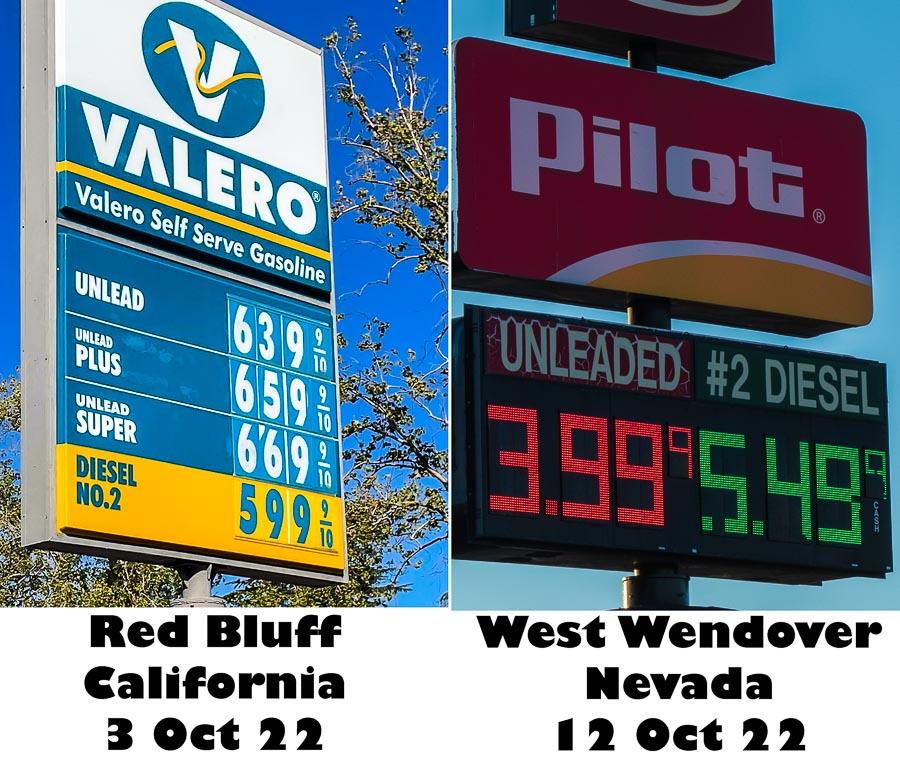
It was raining this morning, which made it a nice day for playing catchup in the trailer. The precipitation ended, and after a bit after lunch, we made a 21-mile shopping run up to Bookings, Oregon. There, Dianne could buy groceries with no sales tax and I could fill the tank with gas that cost at least $1.50 less than what it cost in California.
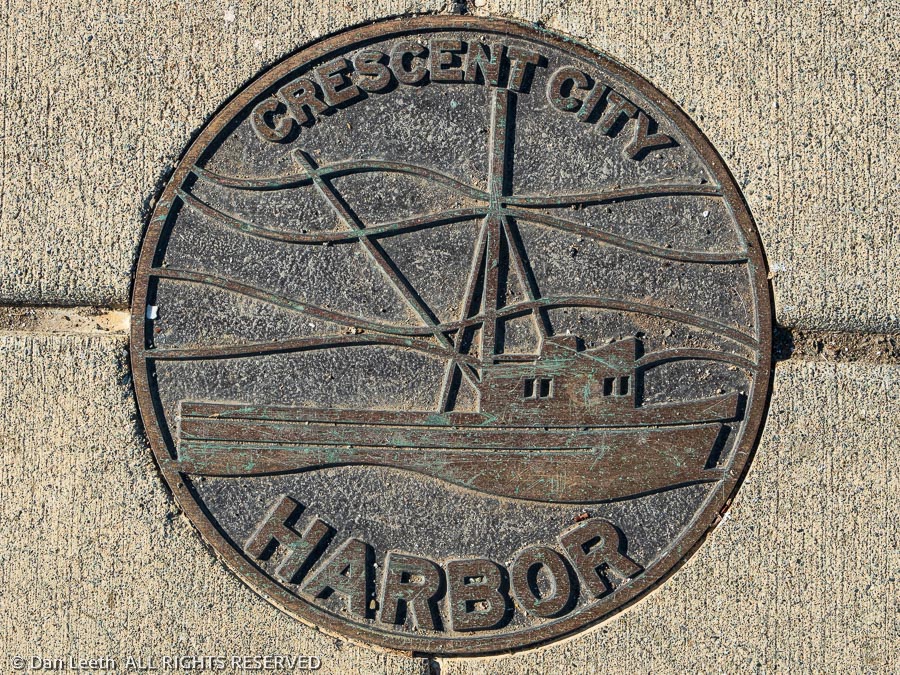
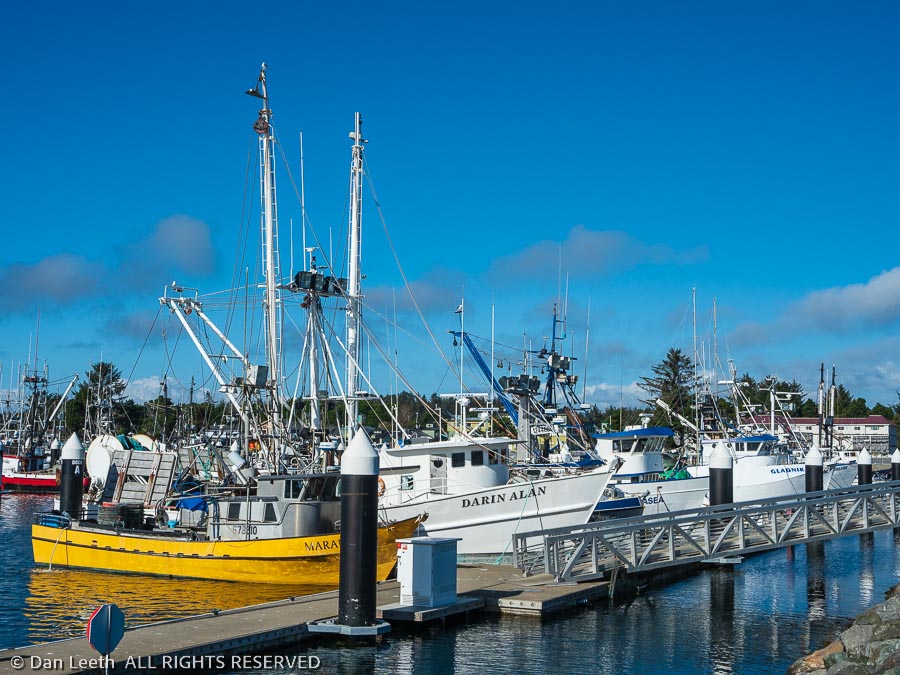
On the way back to camp, we stopped by a seafood market by the harbor where Dianne could by some clam chowder to go. We then walked around, admiring the flotilla of fishing boats moored there. These are the guys who brave it all to keep all of us supplied with fresh, wild-caught sea food. Thanks for your service, I was tempted to tell them.
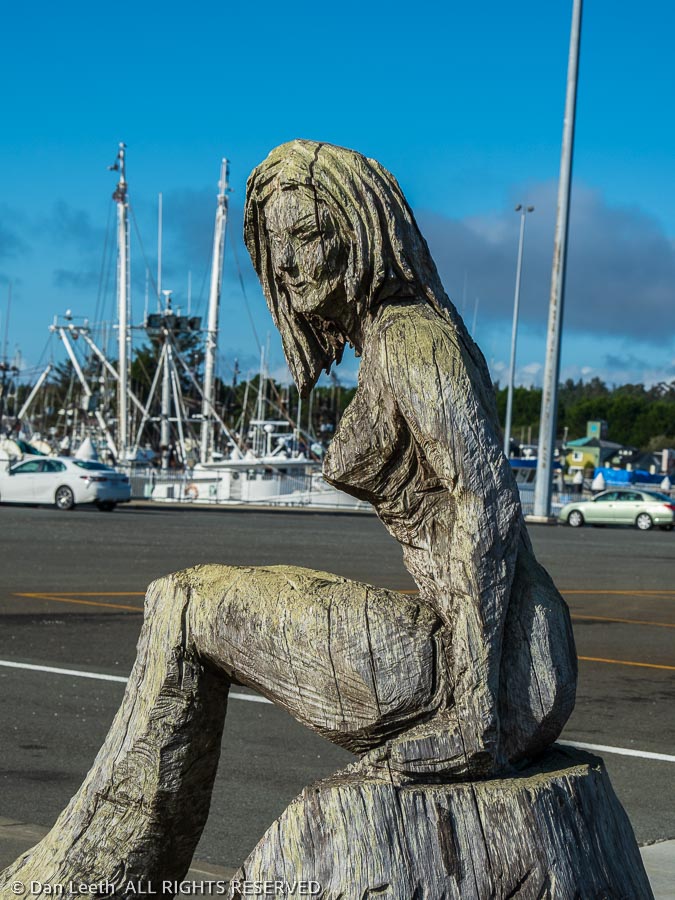
Departing, we passed a statue of a mermaid at the corner of the docks parking lot. Daryl Hanna definitely did not pose for this one.
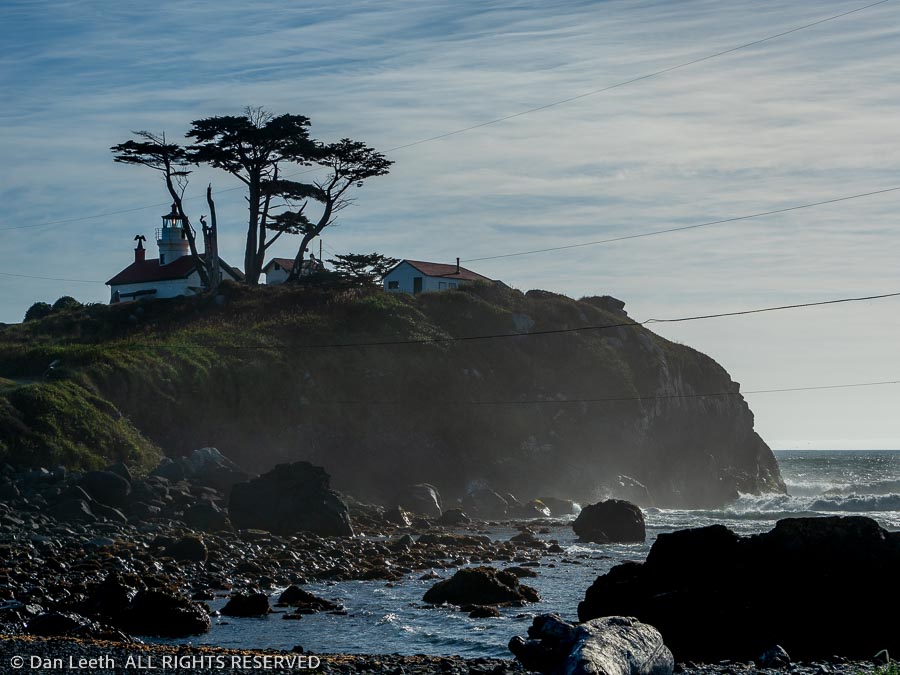
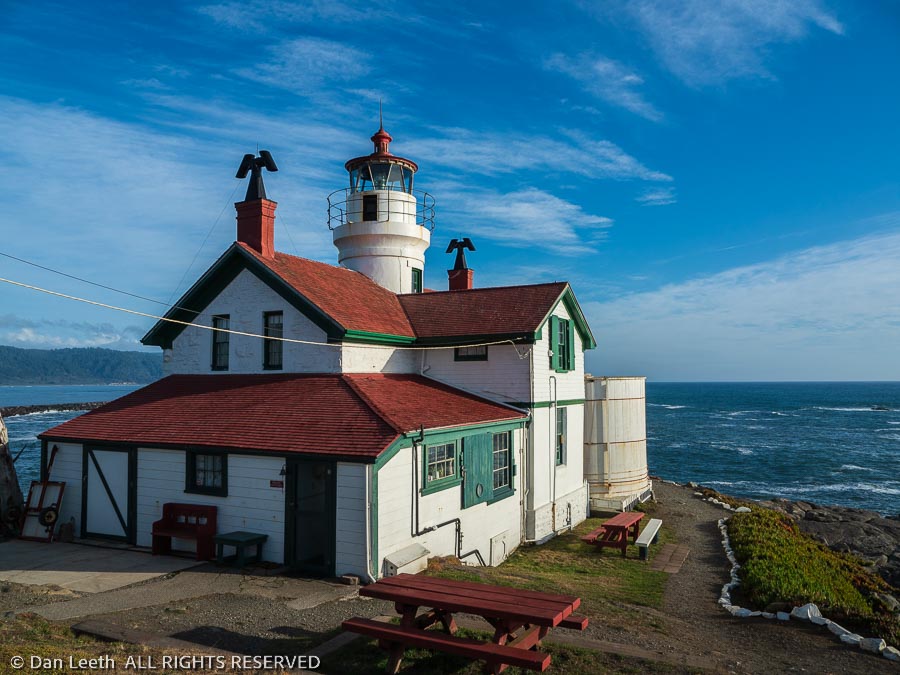
With time to kill, we decided to stop by yet another lighthouse, this one, the Battery Head Lighthouse in Crescent City.
We had to wait for the tide to roll out before we could make the walk up to the structure, which was one of the most picturesque we’ve seen yet.
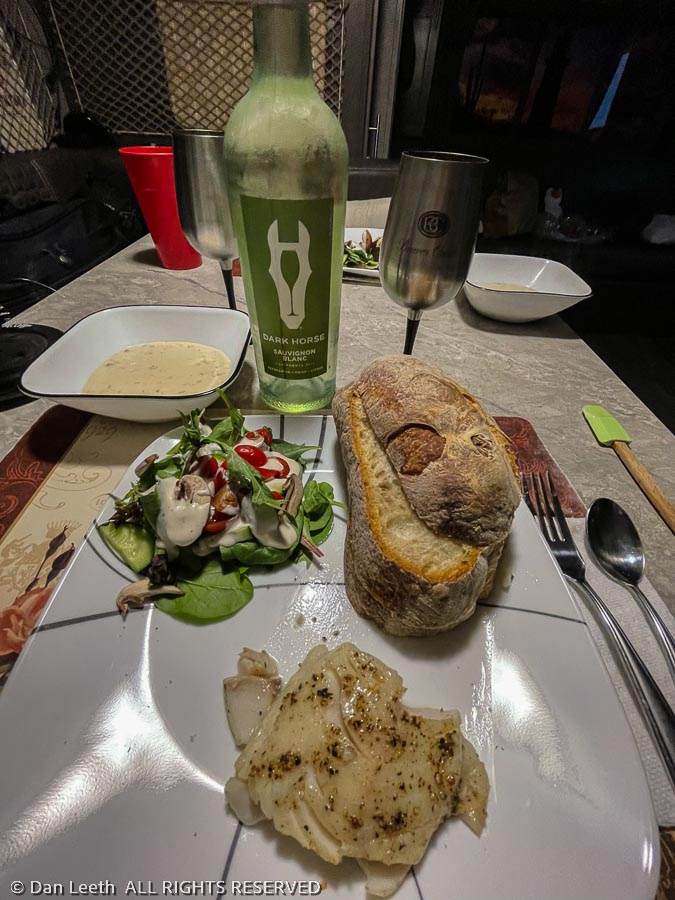
Back at the trailer, Dianne and I cooked up a delicious meal of clam chowder and the black cod we bought fresh off the boat back in Newport. Well, my lovely wife actually did all of the cooking, but I ignited the grill and opened the wine.
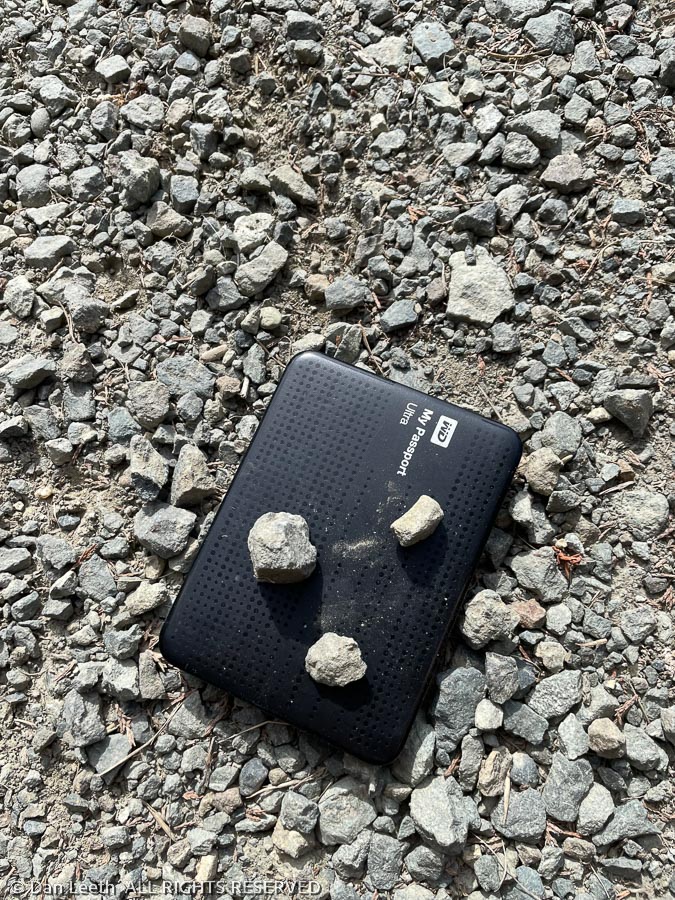
As we all know it’s best to not drop portable hard drives onto the hard ground.
When traveling, I use a small, portable hard drive to back up my photos and other files from my laptop. Since the laptop stays in the trailer, we keep our backups in the truck. That way, if a redwood crushes the trailer, I’ll still have my backup.
Loading a few things in the truck, I set the backup drive on the truck tonneau cover. It got caught on something else, and when I picked up the something else, the hard drive tumbled to the hard, hard ground. I thought it had survived, but alas, after working for two minutes on a three-minute backup, it died.
Fortunately, we carry spares of darn near everything, so I pulled out another portable drive and started the tedious process of backing up a couple thousand photo files, Quicken files, Excel files and Microsoft Word files. It took pretty much all morning, but by lunchtime, all was well.
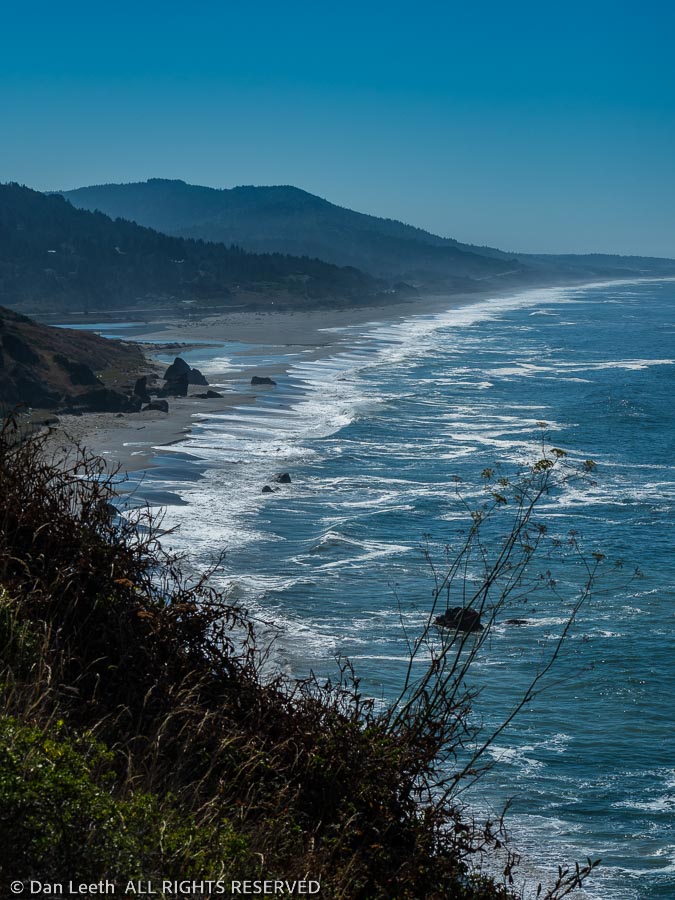
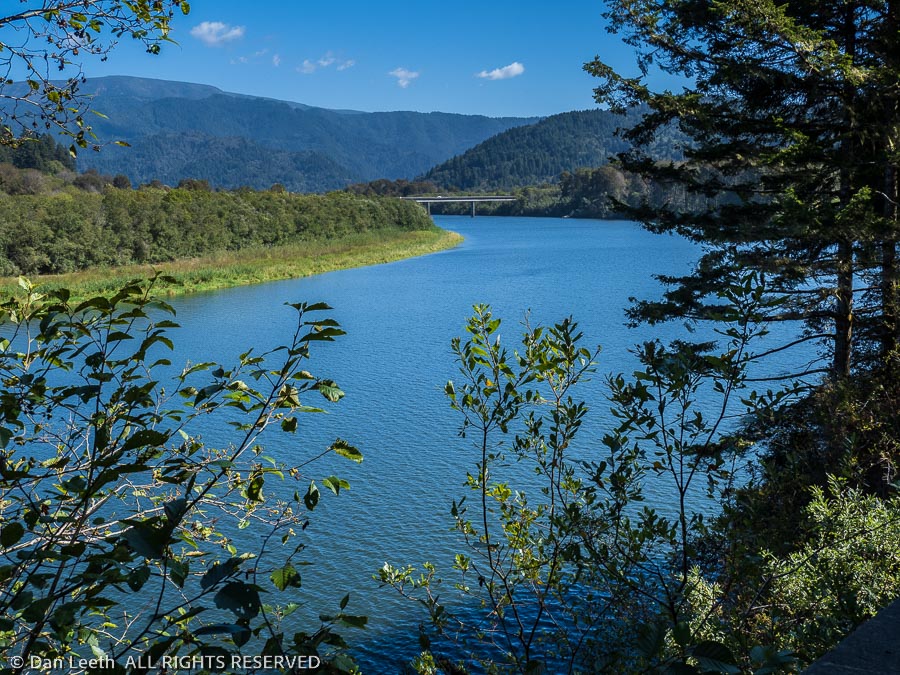
In the afternoon, we grabbed cameras and headed down Highway 101, stopping at overlooks and taking scenic detours that would be impossible to do pulling the trailer. One scenic detour was the narrow, unpaved Coastal Drive south of Klamath. We got views of the Klamath river…
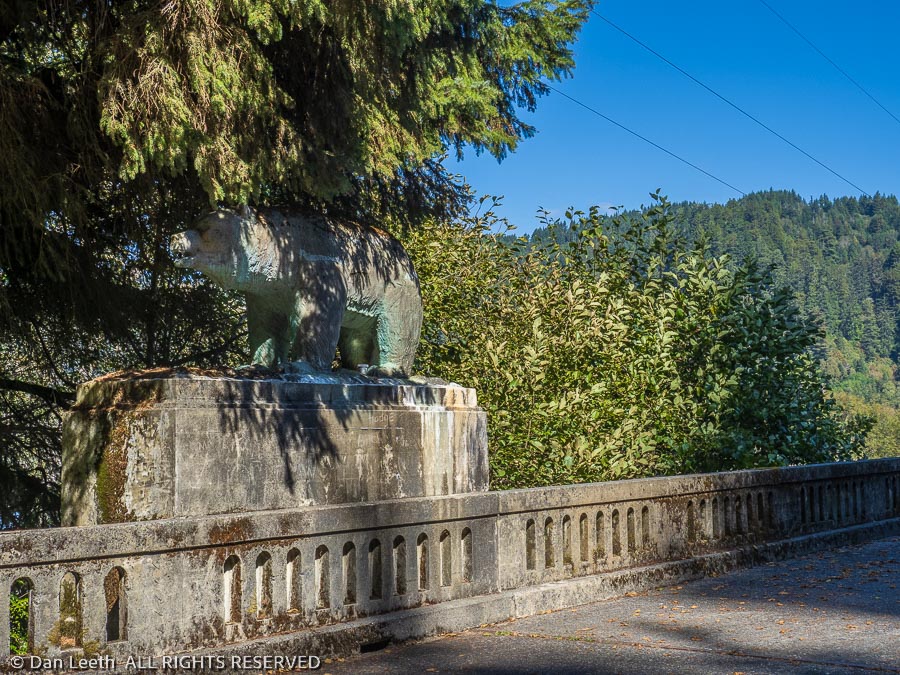
…saw the remains of the old bridge that was wiped out by a torrential flood in 1964.
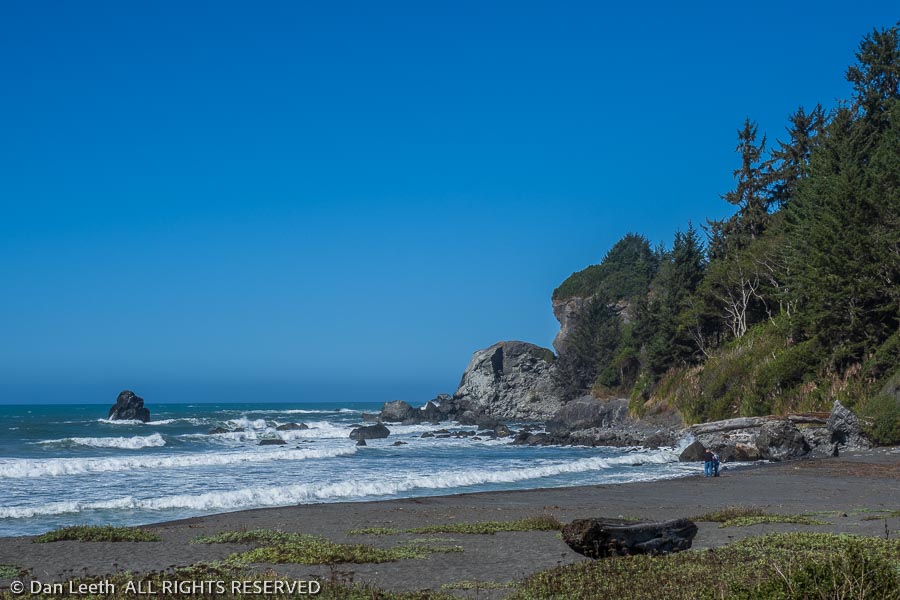
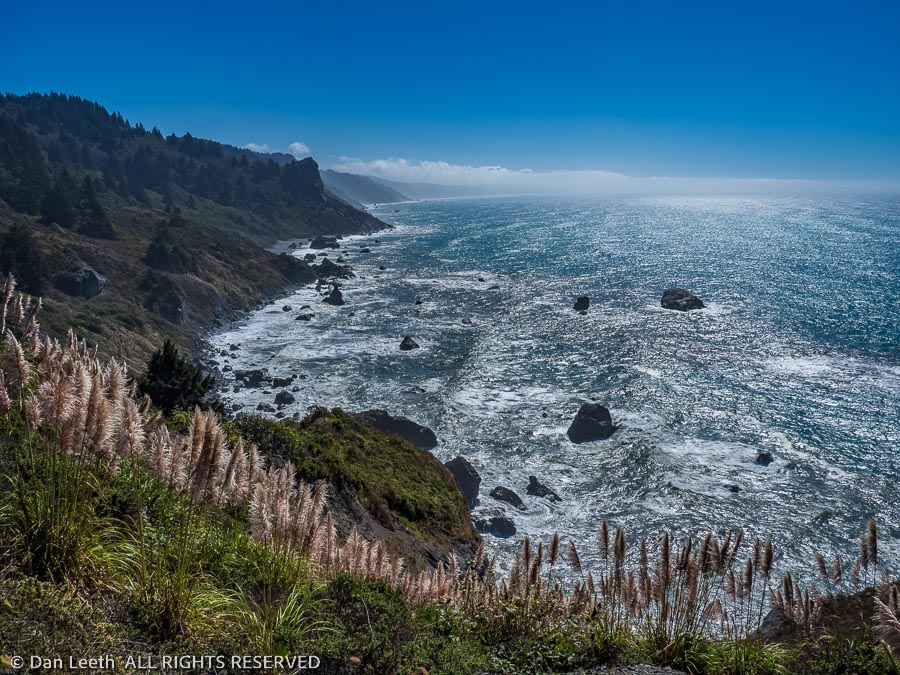
We were treated to lofty views of the ocean…
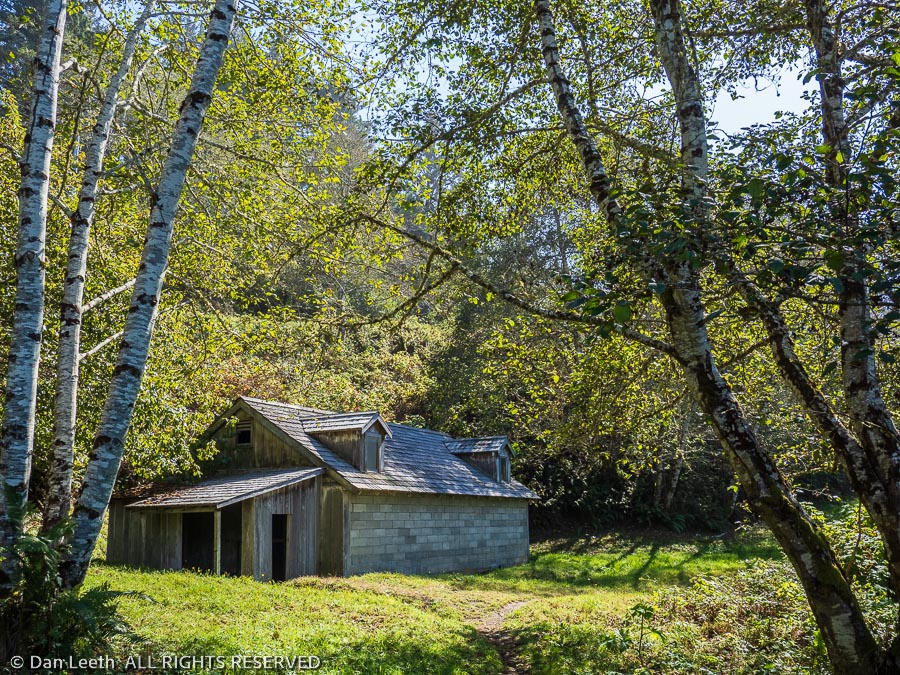
…and we stopped by the site of a historic, World War II radar station disguised as a farmhouse.
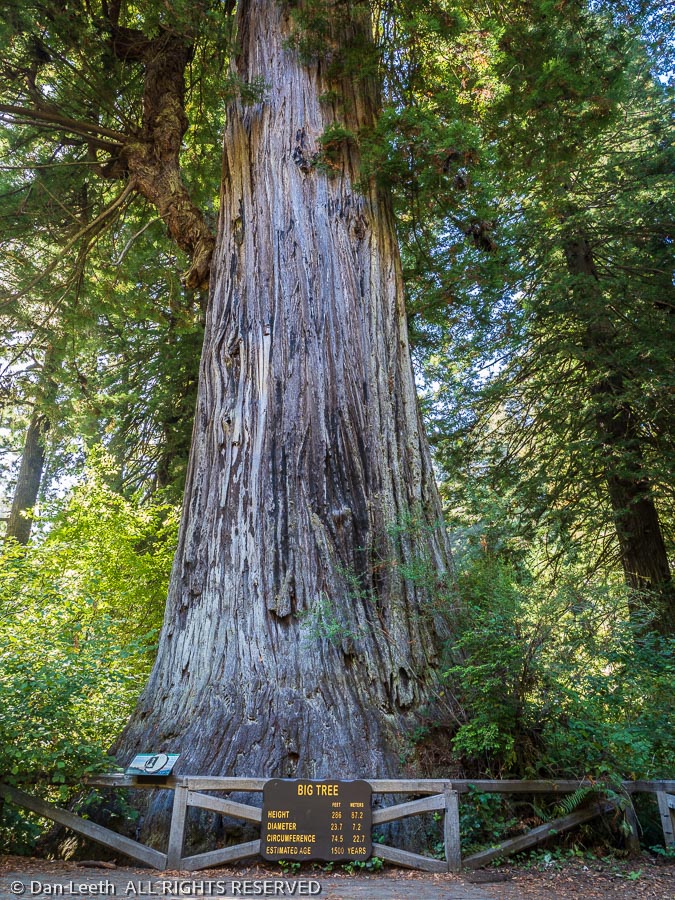
Farther down the highway, we took a detour onto the Newton B. Drury Parkway through Prairie Redwoods State Park. Here stands “The Big Tree.” Getting to it required a hike of about 100 yards, and that’s as far as most visitors ventured.
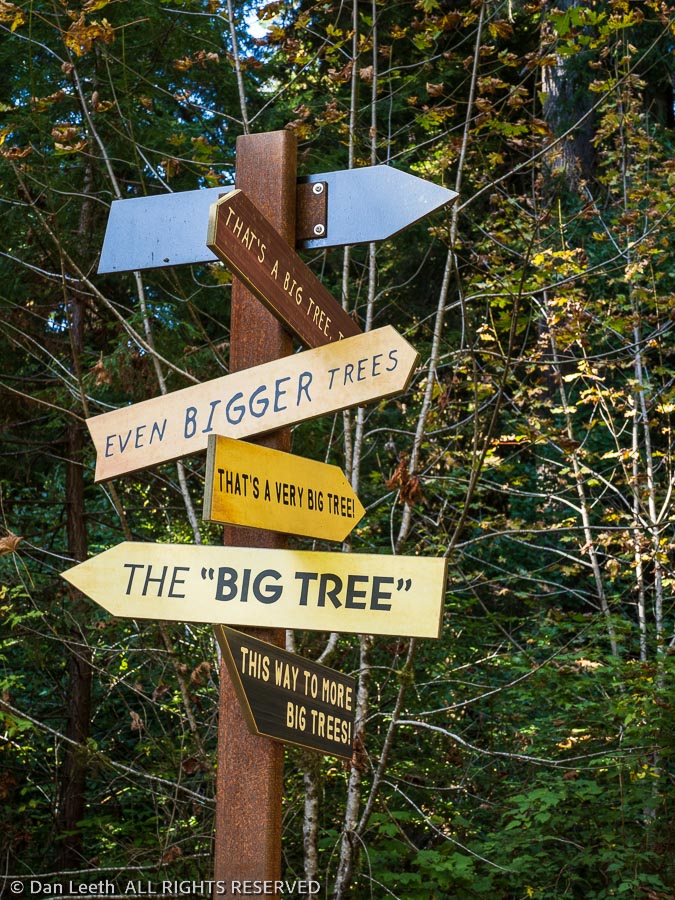
After admiring the tree, we took a look at the nearby direction marker and decided to walk on.
After viewing more big trees and even bigger trees, we returned to the truck and headed down to the park’s visitor center where Dianne added a Redwoods mug to our ever-expanding mug collection. (I had previously added a Mt. Hood mug to the collection.)
Then it was back to camp where we could enjoy more of our Spanish boxed wine with a steak dinner. Yum.
Ronald Reagan was widely quoted as saying that if you’ve seen one redwood, you’ve seen them all. I absolutely loathe admitting it, but he was somewhat right. There’s not a lot to see on a hike through the redwoods except redwoods, ferns and more redwoods. It’s a fantastic experience the first time (and pretty nice the second). But after a few miles of trees, trees and more trees, it gets a bit repetitive, repetitive and more repetitive.
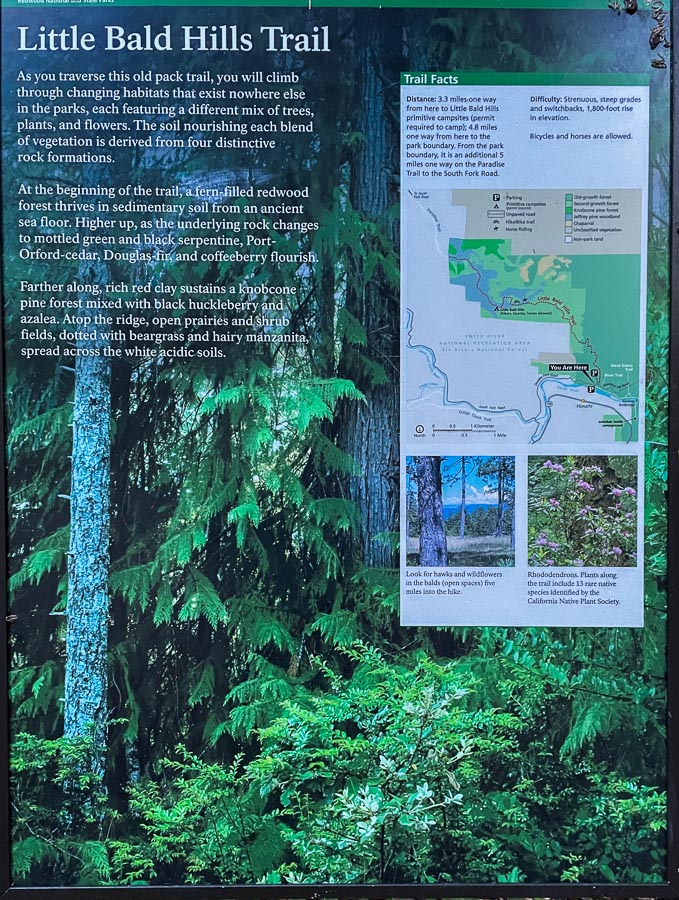
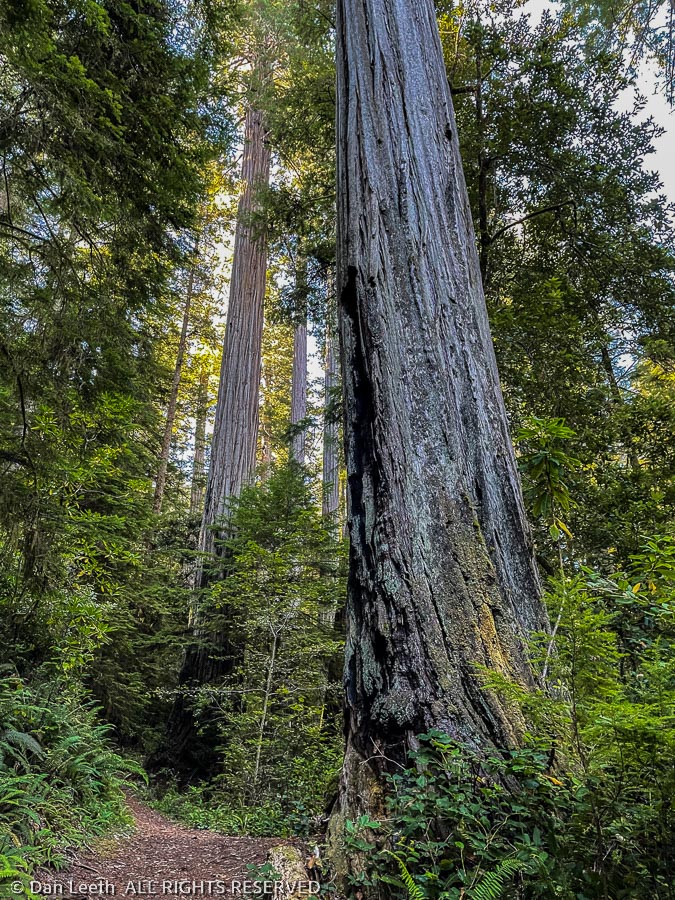
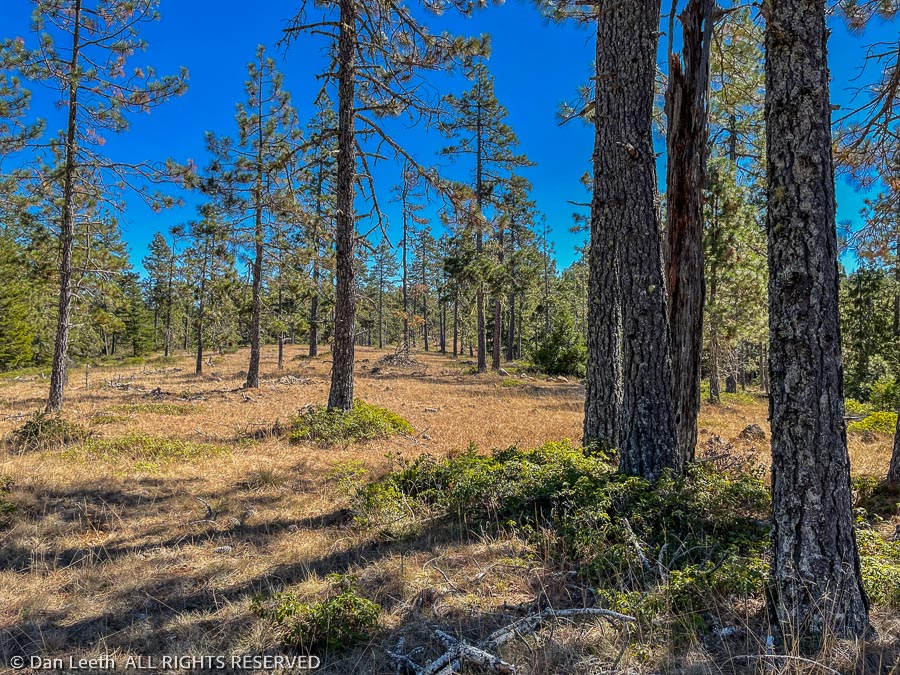
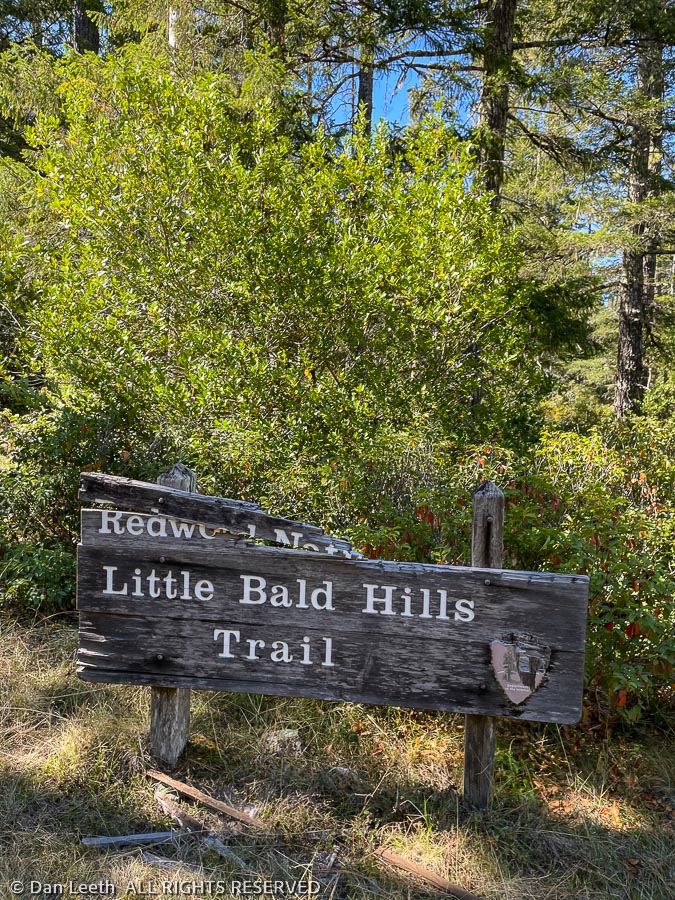
For our last hike, we decided to do the Little Bald Hills Trail, an out and back trail that climbs 1,800 vertical feet up to a wide, forested ridge. We’d have redwoods down low…
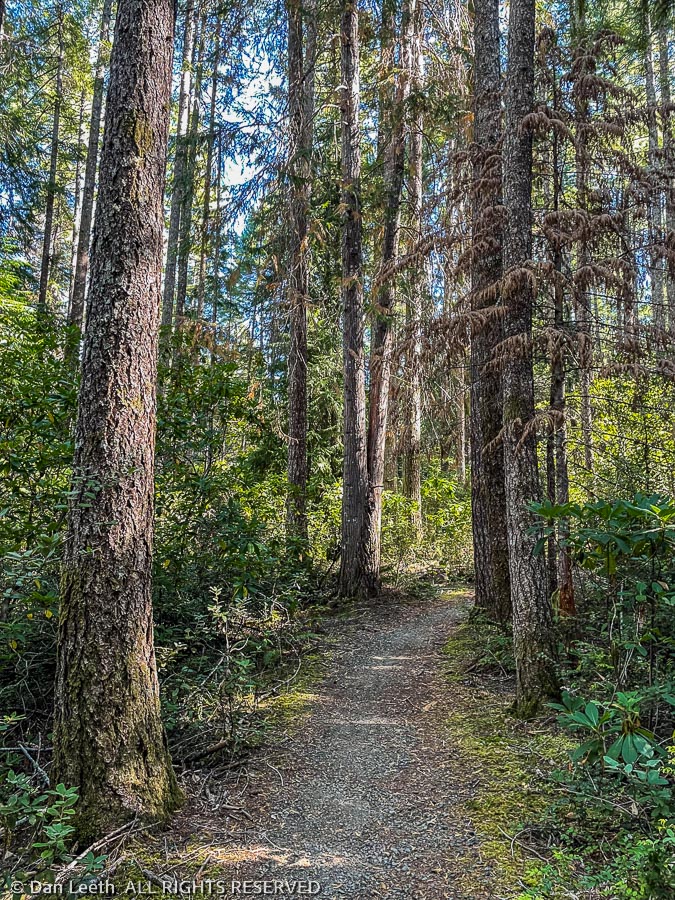
…before climbing into a forest of Douglas firs and Port Orford cedars.
Knobcone pine, black huckleberry, hairy manzanita and azalea follow, intermixed with open (bald) splotches of grass.
Up high, we even got a few openings where we could look out at the neighboring hills, which, of course, were all totally blanketed with trees. The hike was about five miles to the park boundary and five miles back.
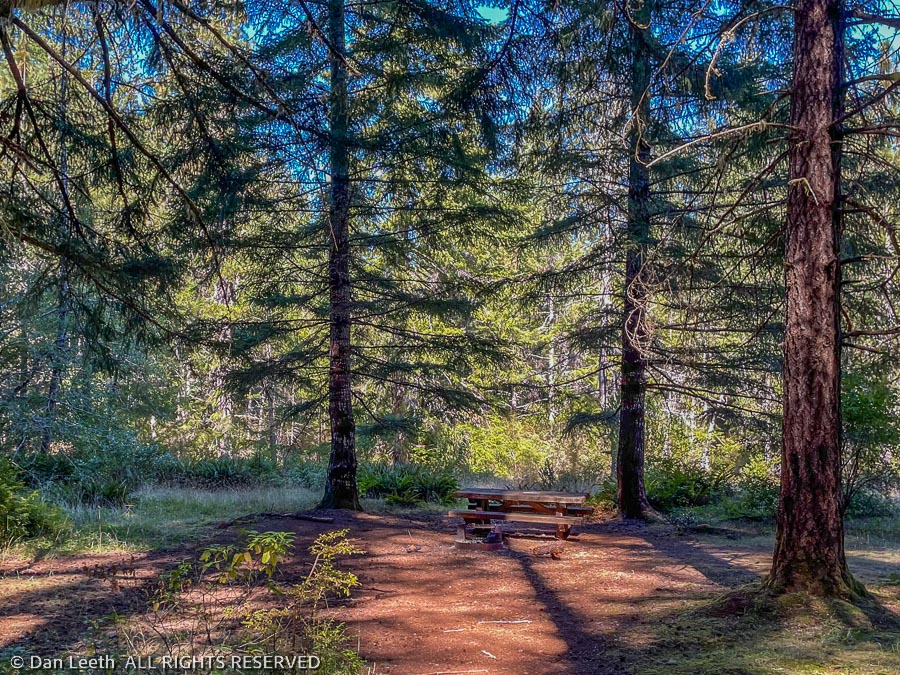
A backcountry campground stands at the three-mile point.
This would have been a nice place to bunk down back in our backpacking days. Fortunately, the thief who broke into our storage locker last year stole our backpacks and tent. That provided us with a suitable excuse to admit that our shlepping 50-pounds-on-the-back, backpacking days are over.
Back at our sipping 12-ounces-from-a-can, trailer campground camp…
…Dianne cooked up some chicken fajitas. With no margarita fixings available, we did the next best thing and paired our Mexican treat with that Spanish boxed wine – the stuff that Dianne proclaimed tasted like “rubbing alcohol with a touch of raspberry.”
We were supposed to go from the redwoods to Lassen National Park for a three-night stay. Instead of sitting in the trailer, I’d be hiking through the forest or standing atop Lassen Peak. Unfortunately, a 5:45 a.m. phone call on Saturday morning resulted in a sudden change of plans.
Dianne’s oldest living brother has been diagnosed with stage-4 bladder cancer. The pre-dawn call from him told us that things were far worse than expected. Dianne was charged with personally relaying the unhappy news, face-to-face, to her parents.
They live in Grass Valley, a small city located about 60 miles north of Sacramento. We were going to stay in Grass Valley at the county fairgrounds RV park for a two-night parental visit after Lassen, but because of the urgency of the situation, we cancelled our Lassen reservation and booked two additional nights at the county fairgrounds.
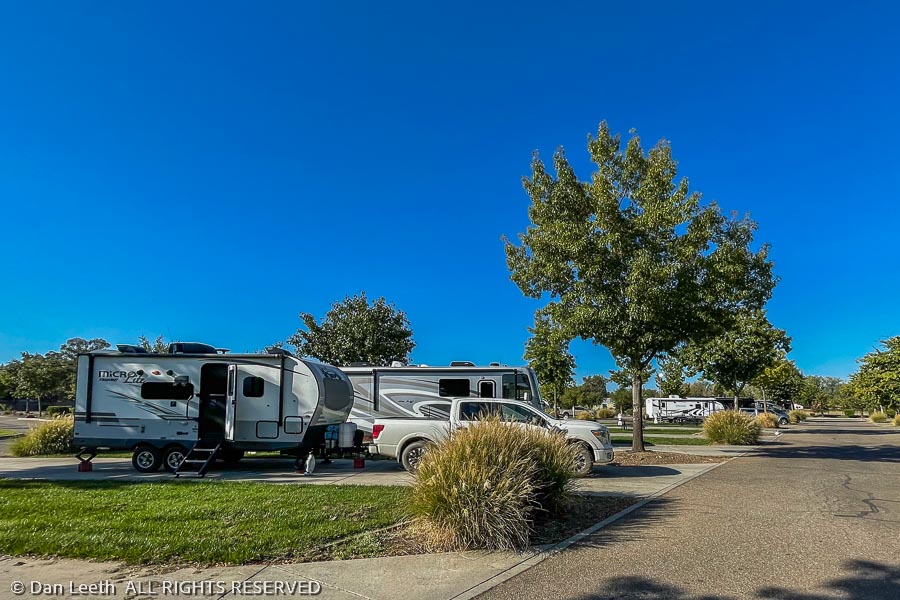
The Crescent City to Grass Valley distance was more than we wanted to drive in one day, so we booked an intermediate stopover at a new KOA in Red Bluff, a half-hour’s drive south of Redding, California, where Dianne’s brother is hospitalized. That allowed Dianne time for a nice long visit as we passed through town.
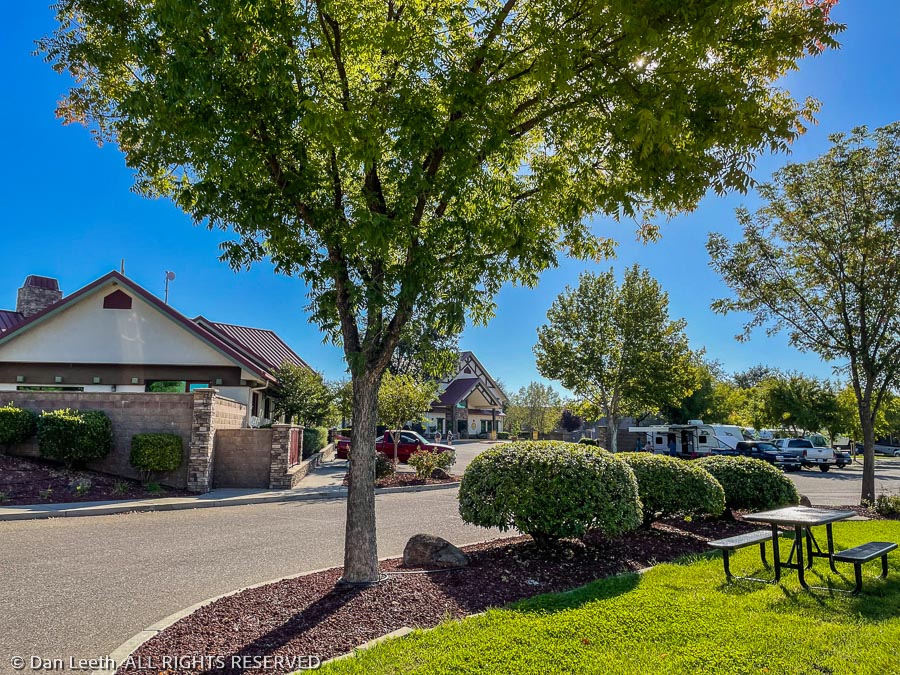
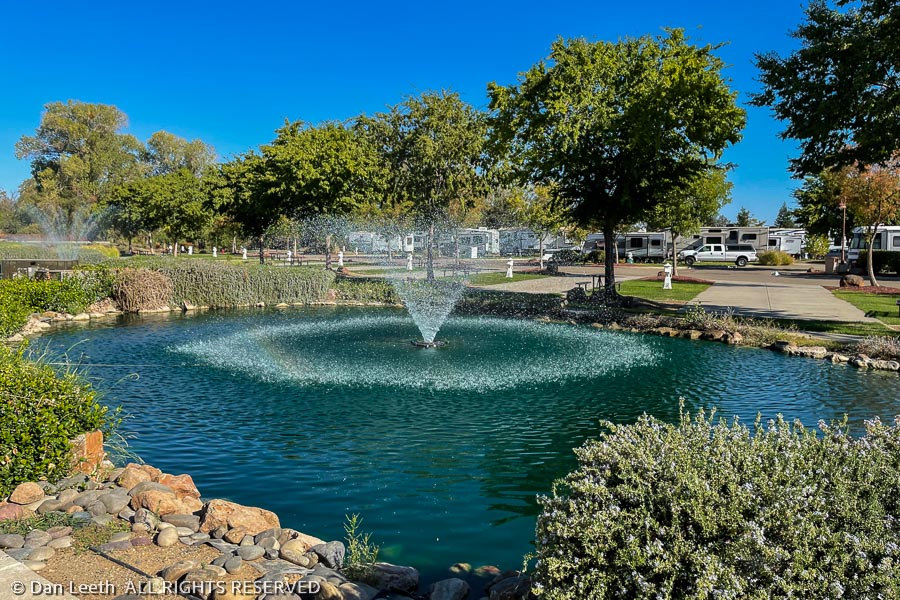
The KOA in Red Bluff was one of the nicest KOAs we’ve ever visited. It was also one of the most expensive KOAs we’ve ever visited. But it offered all the amenities we wanted like full hookups and clean restrooms.
To top it off, the location just off Interstate 5 gave us a constant din of traffic noise, interrupted when freight trains ran down tracks on the other side of the park. For even more money, we could have had a back-in site by the fountains where the sound of the water might drown out some of the noise.
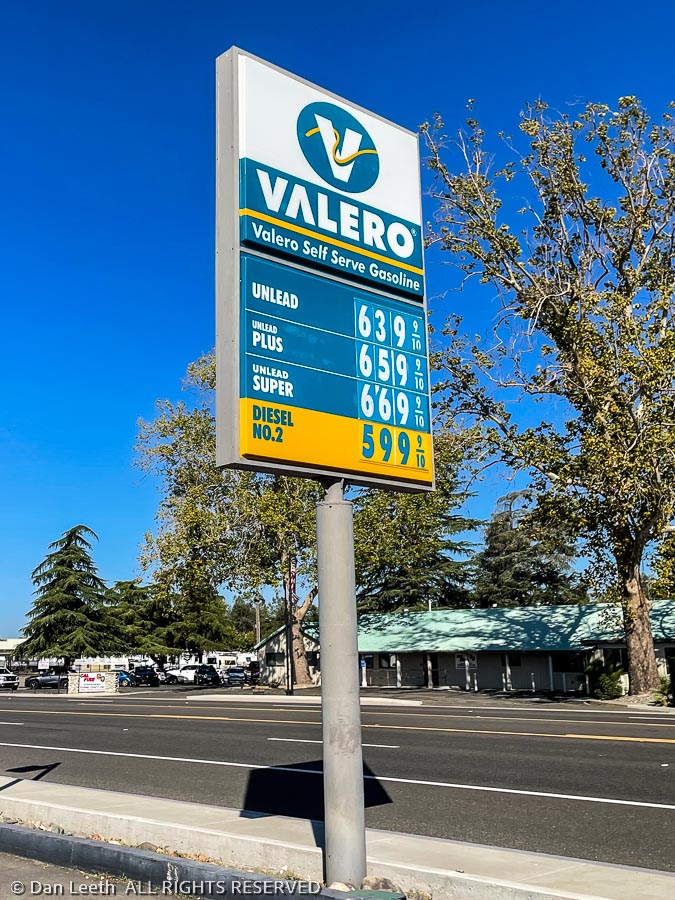
We filled up with fuel on our way out of town. California gas is known for being bloody expensive, and it was. In Crescent City, unleaded fuel cost nearly (or over) $7.00 per gallon. While there, we drove 20 miles north to Brookings, Oregon, to top up the tank at less than $5.50 a gallon.
At $6.399 per gallon, Red Bluff fuel was cheaper than Crescent City, but it still cost over $114.00 to fill a ¾-empty tank. When I was growing up, a $5 bill would fill the family Buick and we’d get change back.
Our site at the county fairgrounds campground (which cost half what the KOA cost) is nice enough. We’ve got full hookups and the restrooms are old, but clean and spacious. Best of all, we’ve got Ponderosa pines in every direction.
I’m sitting in the trailer alone today. Dianne, her sister and her parents are driving up to Redding to see the brother/son for perhaps the last time. It will be a sad evening when they return.
Our four-night stay in Grass Valley was scheduled so Dianne could visit with her mother. That gave me plenty of on-my-own time.
While Dianne and her parents were heading to/from Redding on Tuesday to see their dying brother/son, I decided to go out for a hike, or at least that’s how it turned out.
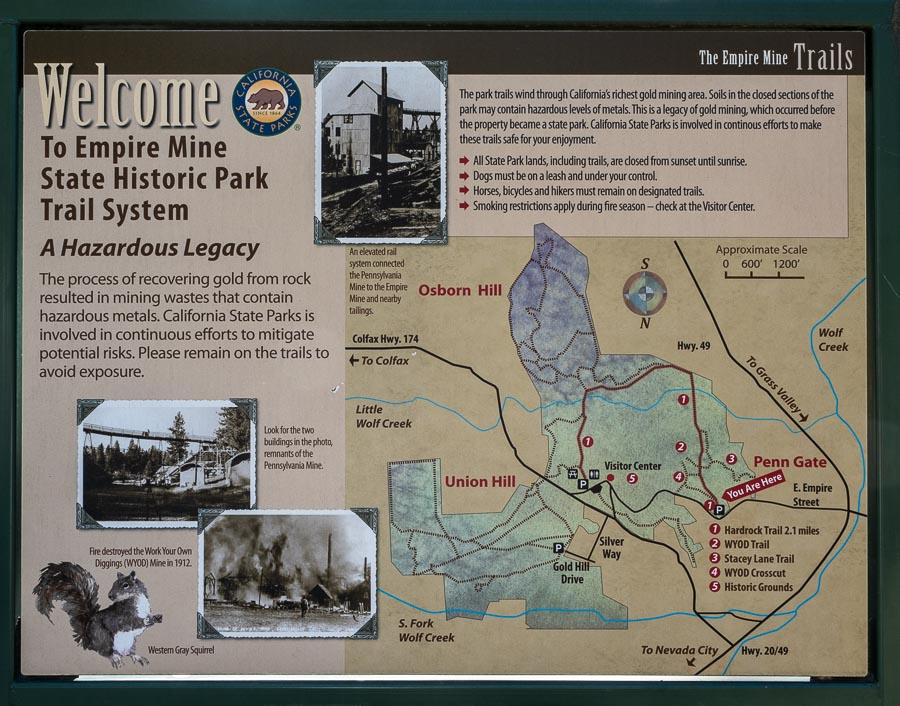
My initial goal was to wander around and photograph the Empire Mine Historic State Park. As I drove up the road to the park, I passed a lot with a sign that said, “Empire Mine parking.” So, I parked there.
It was parking for the park but getting to the visitor center would require a 1.4-mile hike up the Hardrock Trail. I wanted some exercise anyway, so I grabbed my camera and started up the trail.
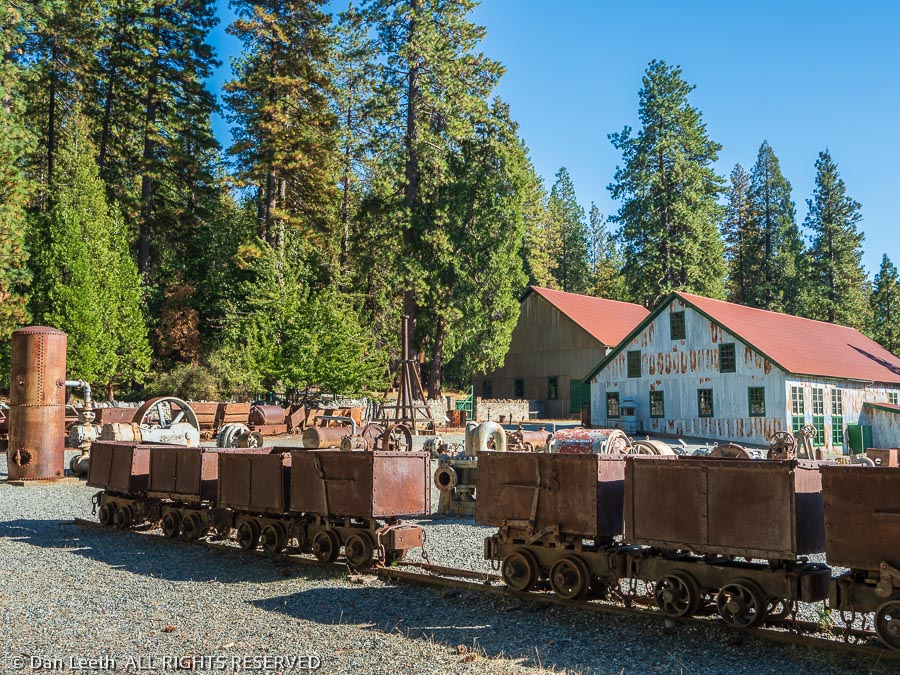
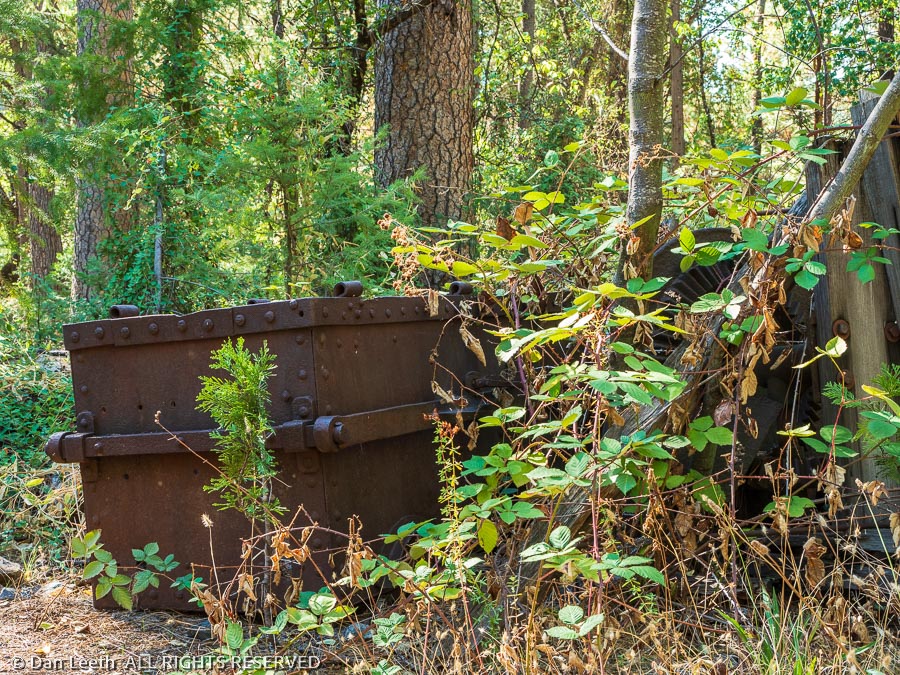
There were several unmarked forks in the trail along the way, and following the advice of Yogi Berra, I took them. Unfortunately, most of the forks I opted for did not lead to the visitor center. Instead, I ended up with a 6½-mile round-trip hike through the woods. I passed the remains of old mines but only once touched the VC.
On Wednesday, Dianne and her 91-year-old mother went on a hike up a paved trail not far from the campground. I hung out at the trailer and attended to bill paying and finances. We had a delicious clam chowder lunch/dinner at her parents’ home later that afternoon.
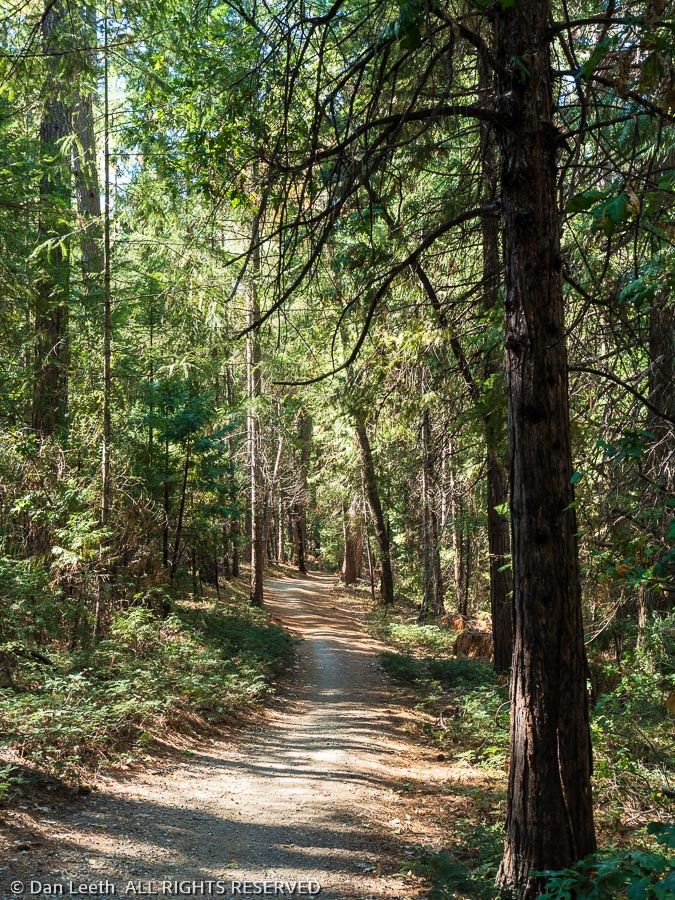
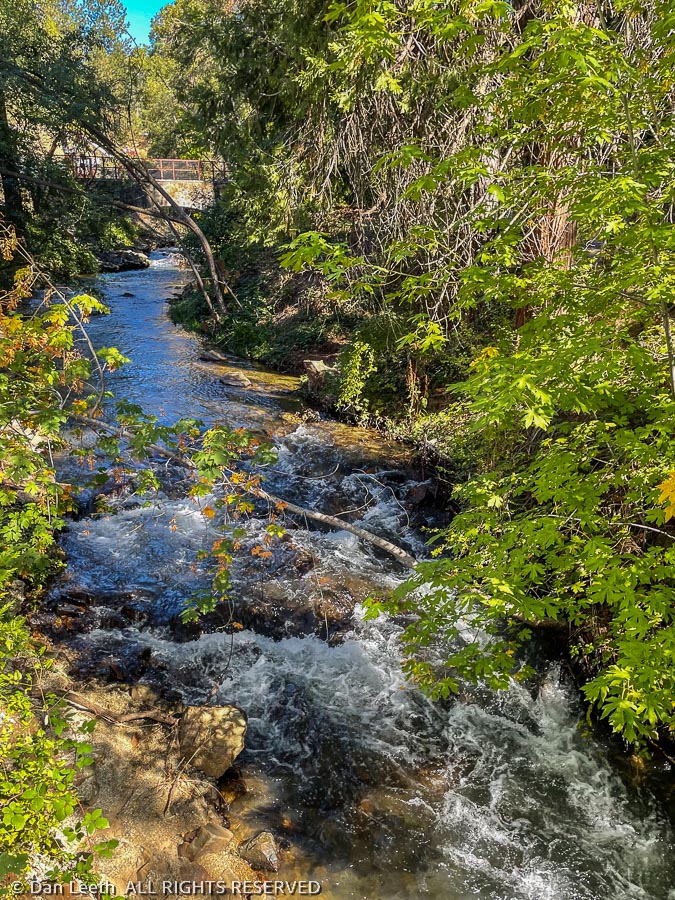
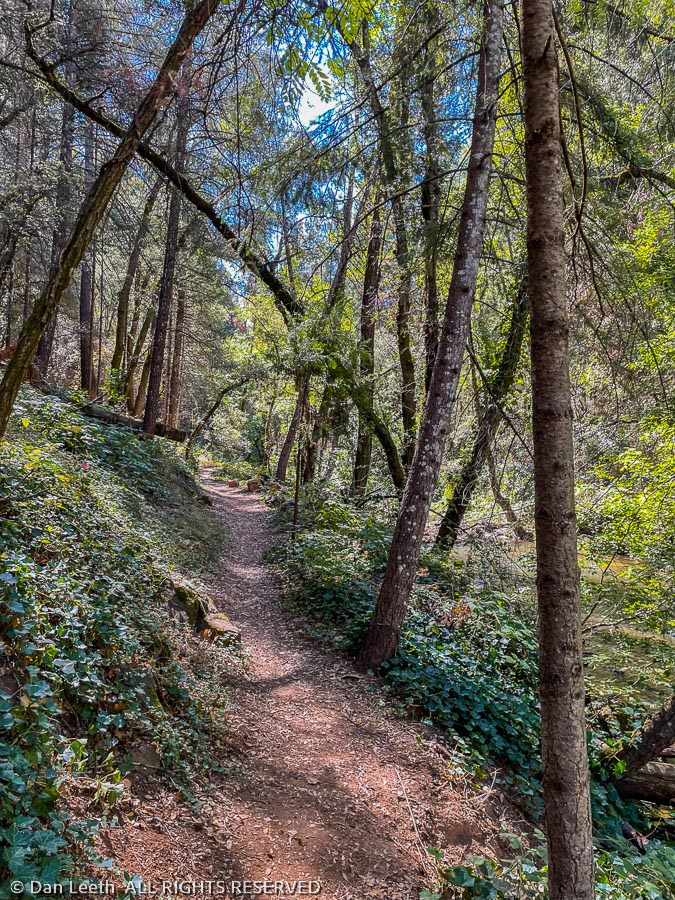
Dianne wanted to spend Thursday, our last full day in Grass Valley, with her mother doing laundry. I decided to go on a morning walk along a creek in the woods.
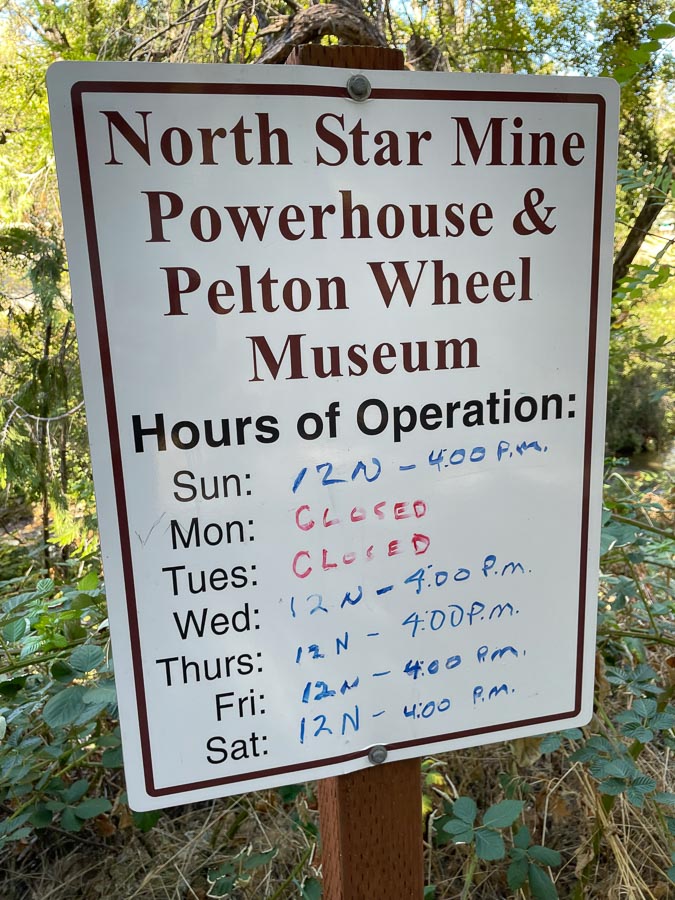
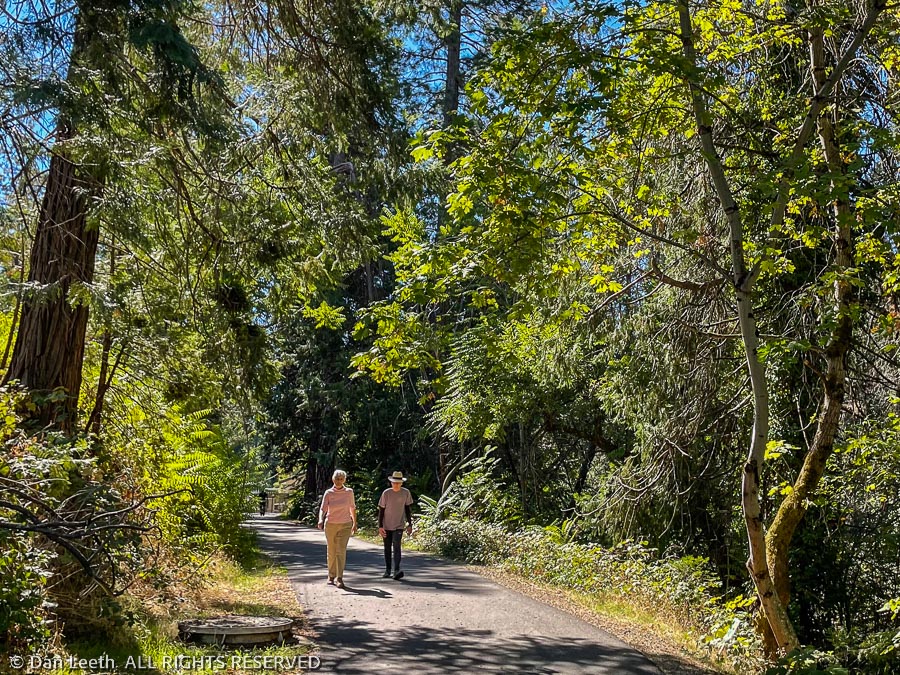
The trailhead for the paved trail that mother and daughter took the day before was a mile’s walk down the road from the campground, so I thought I’d go hike that. It starts near the site of the North Star Mine Powerhouse and Pelton Wheel Museum.
The trail follows Wolf Creek through the forest. Being paved and lacking much altitude gain, it’s a favorite with old people.
The first part of the trail ended at the county animal shelter, perhaps a mile from the start. A second leg continues up Little Wolf Creek for another mile or so. Here, some alternative, unpaved hiking paths drop down and follow the creek. It was a joy to get off the blacktop.
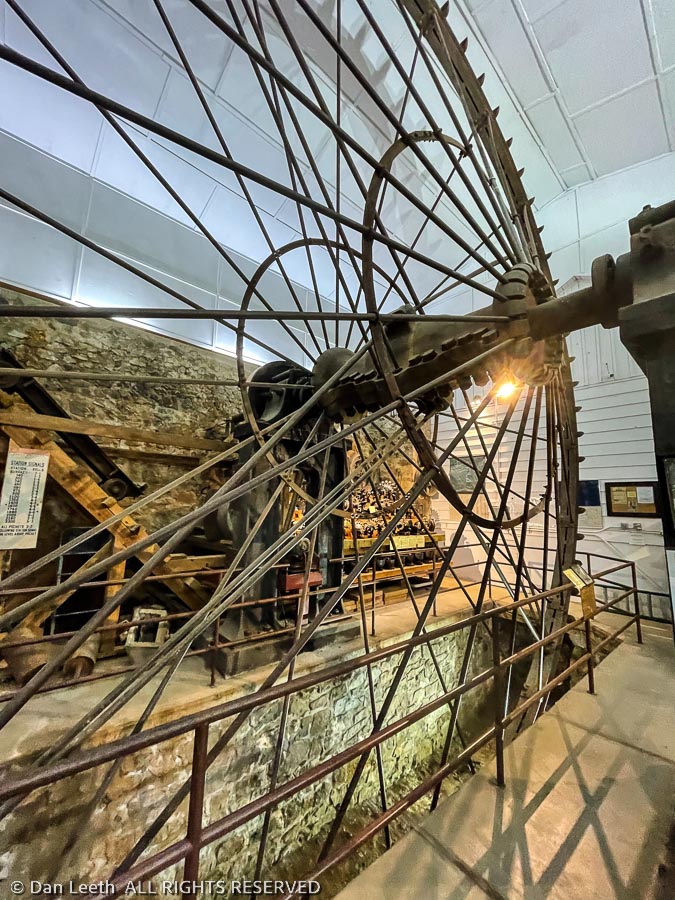
On the way back, I stopped in the museum. I was the only guest, and one of the docents offered to give me a free tour. I’m not big on mining, but it was fascinating. Several of the exhibits such as the huge Pelton waterwheel…
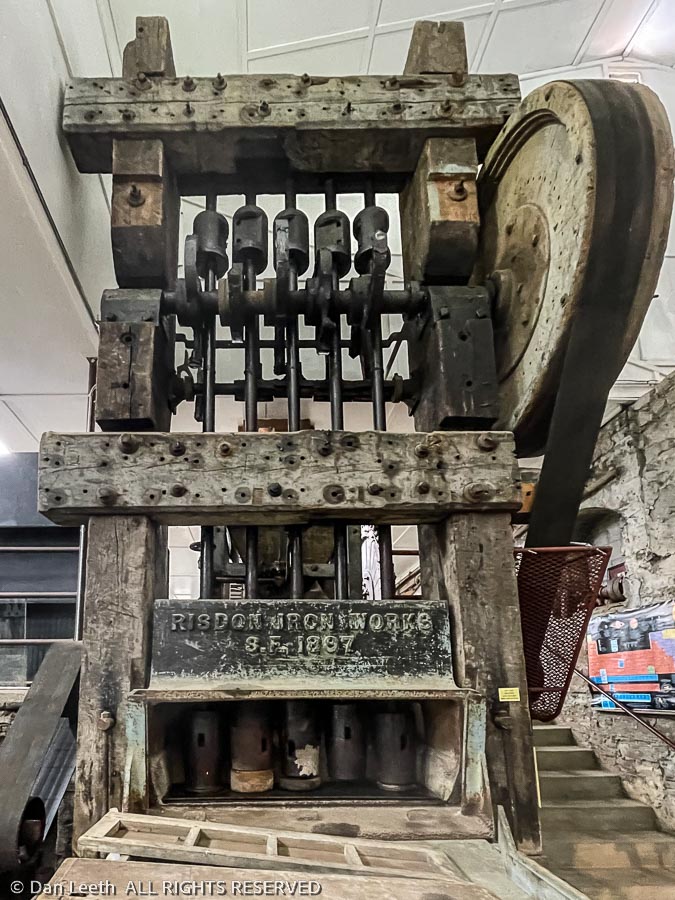
…and an 1897-vintage, five-head stamp mill…
…were hooked up to show them in operation. Only the need to get back to camp to meet the wife and parents kept me from staying longer.
That afternoon, we took Dianne’s parents out to dinner at a nice Italian restaurant in town. Then it was back to camp for one last evening at the fairgrounds RV park.
Friday morning, we had a leisurely breakfast and then got the trailer ready for the three-hour trip to Reno. California has a maximum speed of 55 mph for those of us pulling trailers, so we were tailgated and eventually passed by every vehicle on the highway. We took Interstate 80 over Donner Pass and eventually dropped into Nevada and the Truckee River Valley. We had reservations at the KOA Boomtown.
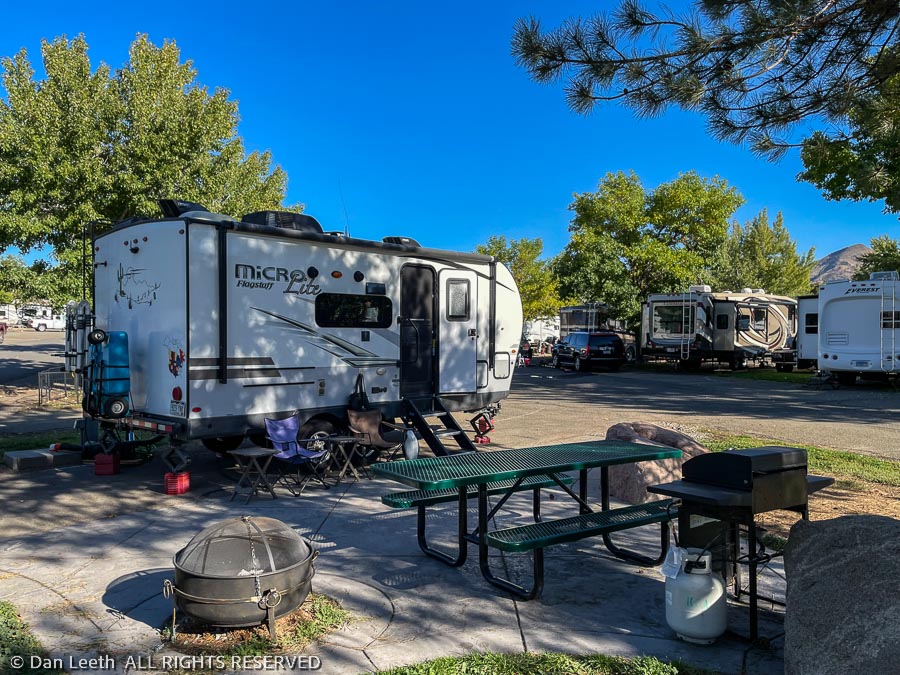
Now, this is Nevada and Boomtown is a casino development in Verdi, a few miles west of Reno. I expected the KOA to be a parking lot RV resort behind the casino, but we were pleasantly surprised to find that it’s a separate area about a half-mile beyond the gambling hall. We have a shady patio site with a grill and grass. While we can hear the freeway, the noise is not overwhelming.
After getting our trailer hookups hooked up, we went over to see some old friends from back in the old days when we lived in Reno. Dinner at one of our old favorite Mexican restaurants (new location) followed.
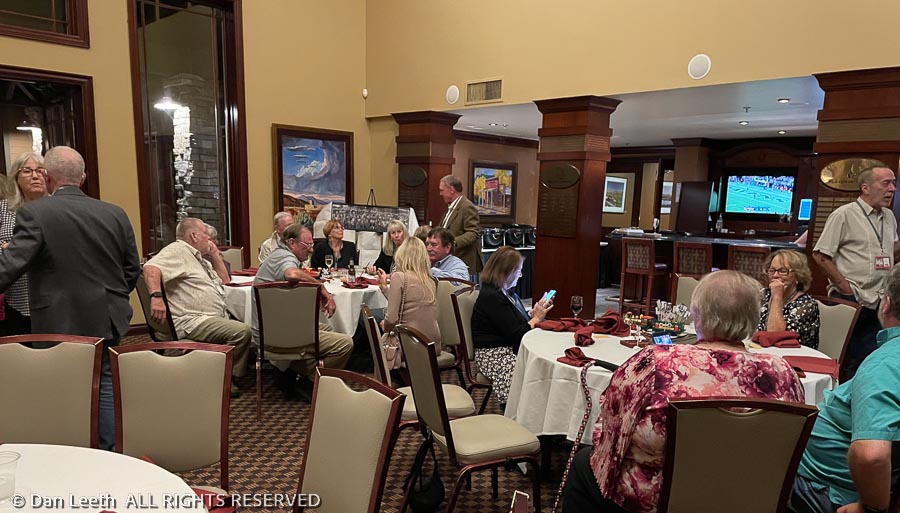
We spent four wonderful days in Reno. Dianne attended her 50th high school reunion and got to reconnect with a lot of old classmates.
We spent some time with an old hiking buddy and his wife, and we had lunch with an old workmate of mine from back when I was serving time as a bank officer in Reno.
Then, after more than a month on the road, it was time to head toward home and cheaper gas prices.
Pulling the trailer, we get 10 miles per gallon on a good day (downhill with a tailwind). Filling the tank in California became a three-digit expense. The farther we got away from the Golden State, the more gold we got to keep in our bank account.
From Reno, we cut across Nevada on I-80, possibly the most boring stretch of interstate highway this side of Kansas. After 400+ miles of being passed by every car, truck, motorcycle, motorhome and bus on the highway, we “camped” for the night at a nice KOA in West Wendover, Nevada.
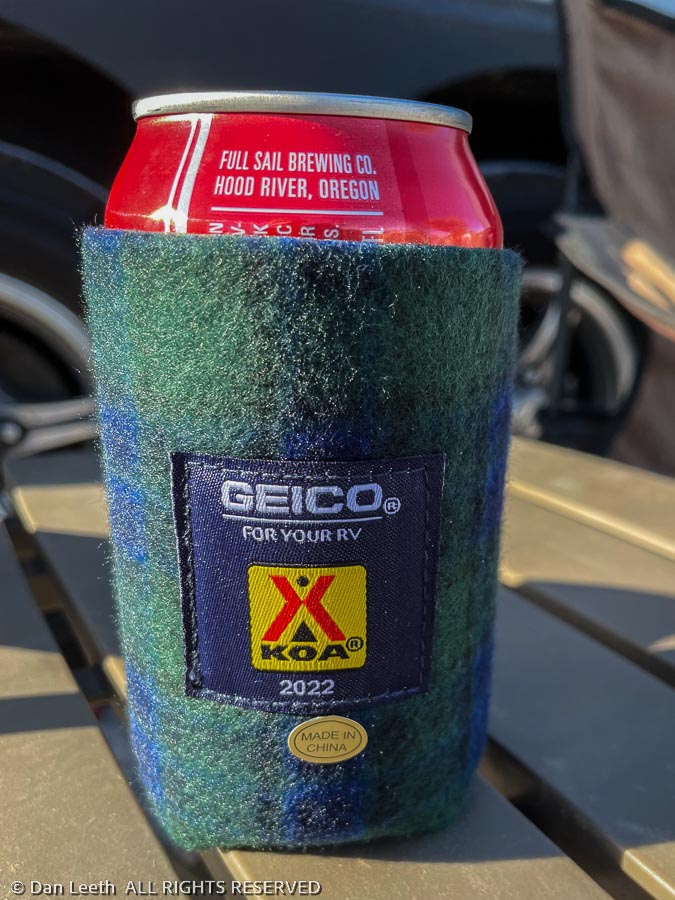
We’re generally not fans of RV parks, but as it is with Super 8 motels, when you just need a place to bunk down for the night, they’re a good option. They even gave us imported koozies for our beer.
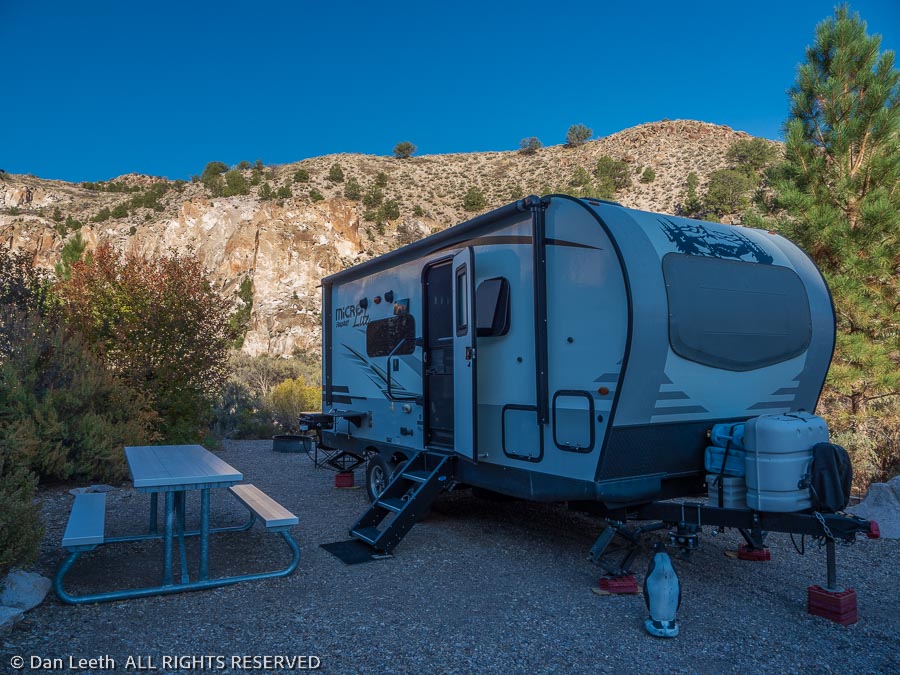
The next morning, we entered Utah and drove 300 miles south and east to Fremont Indian State Park near Richfield.
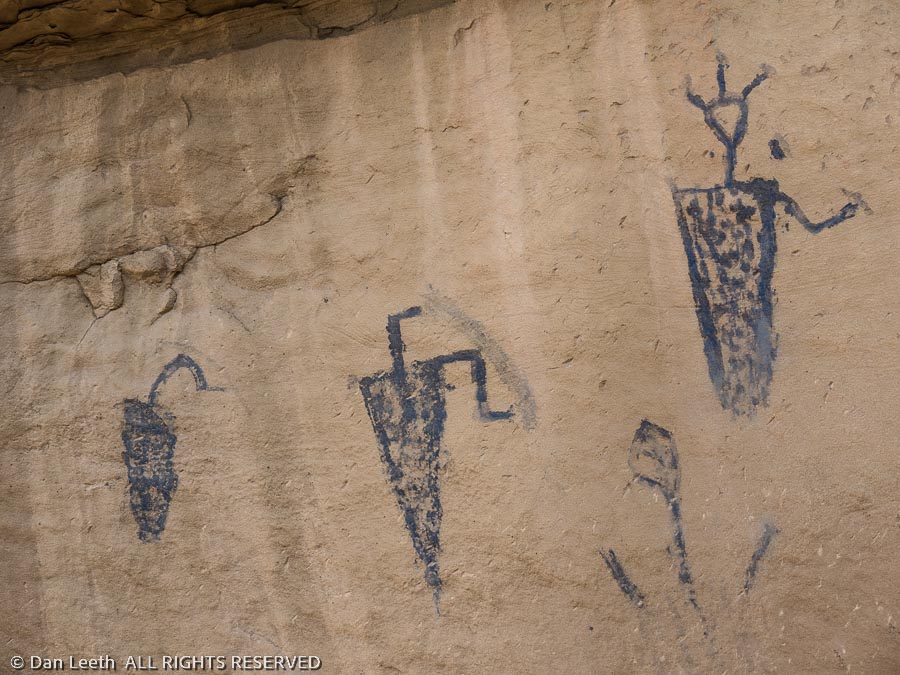
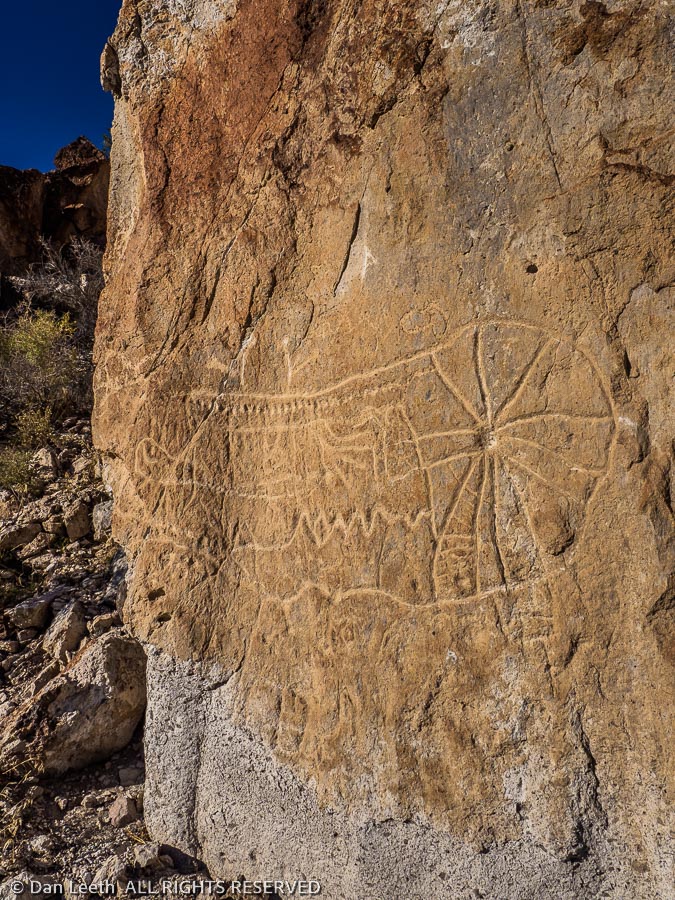
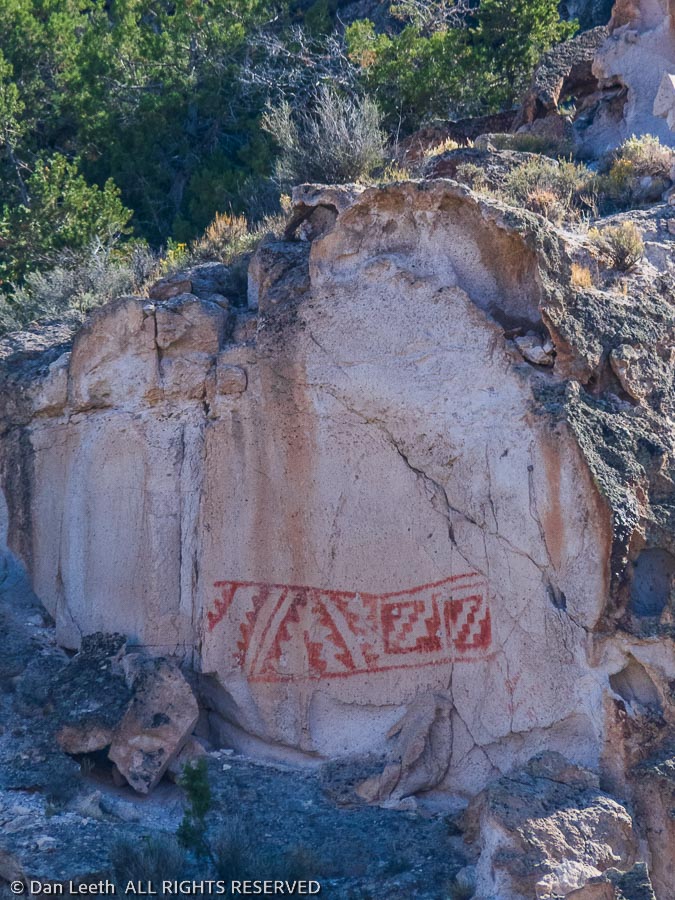
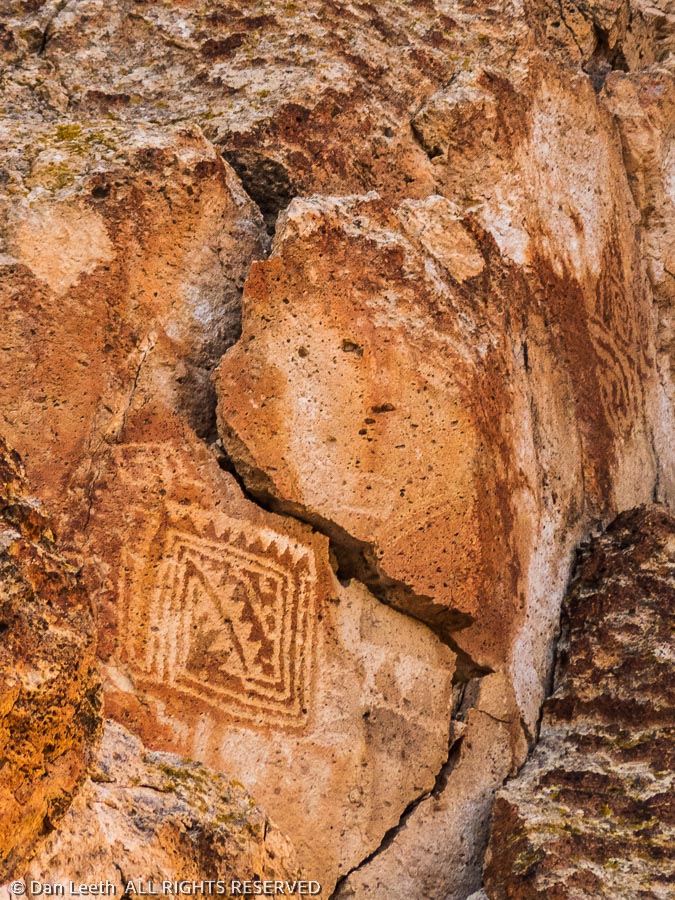
The Fremont Indians were contemporaries of the cliff-dwelling Anasazi Ancestral Puebloans to the south. While they didn’t give us ruins in the rocks to admire, they are responsible for some of the impressive pictograph and petroglyph rock art that decorates the Utah and Colorado canyon country.
After two nights at Fremont Indian, we’ll head east down Interstate 70 to Green River. There, we’ll meet up with some Colorado Mountain Clubbers to hike some slot canyons in the San Rafael Swell.
The Fremont Indians were great rock artists. We spent yesterday, our full day in Fremont Indian State Park, photographing their works.
Today, Friday, we hooked up and drove to Green River State Park, which is surprisingly located in Green River, Utah. We’re camping with 16 other members of the Colorado Mountain Club out here in 3.2 beer country to do some hiking in the San Rafael Swell.
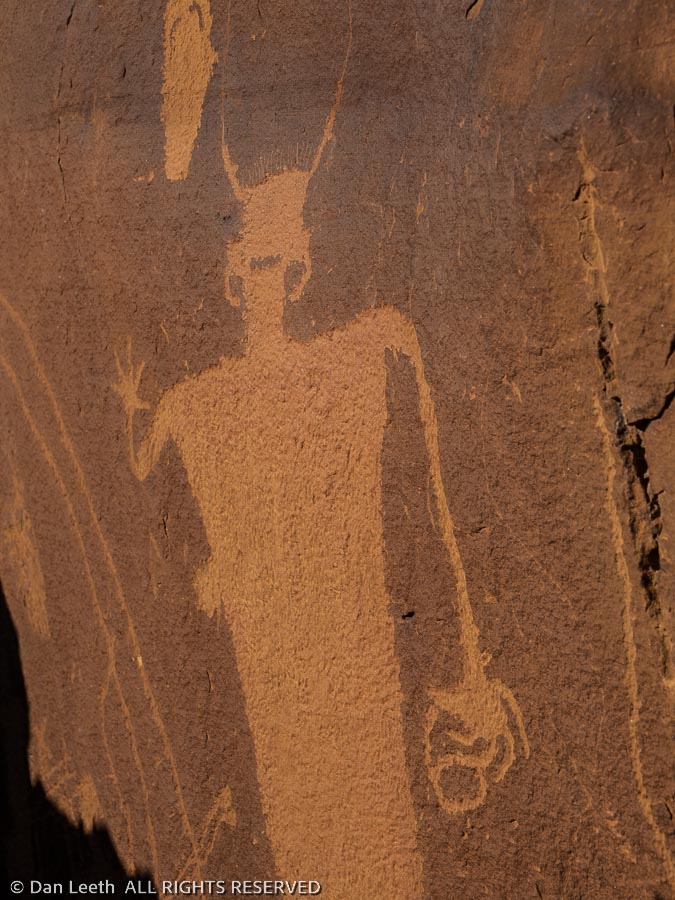
Our first trip with the group was a one-mile jaunt out to see some petroglyphs in Coal Canyon.
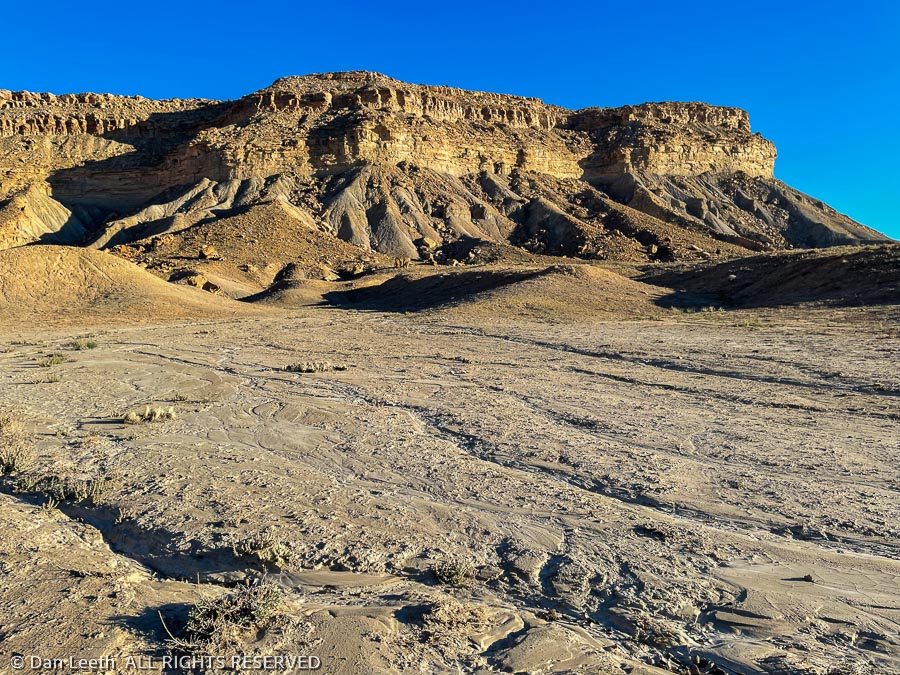
Damn, it’s good to finally be back hiking in Dianne’s ancestral homeland. Out in this colorful landscape, trees don’t block the view and the art hangs on rocks.