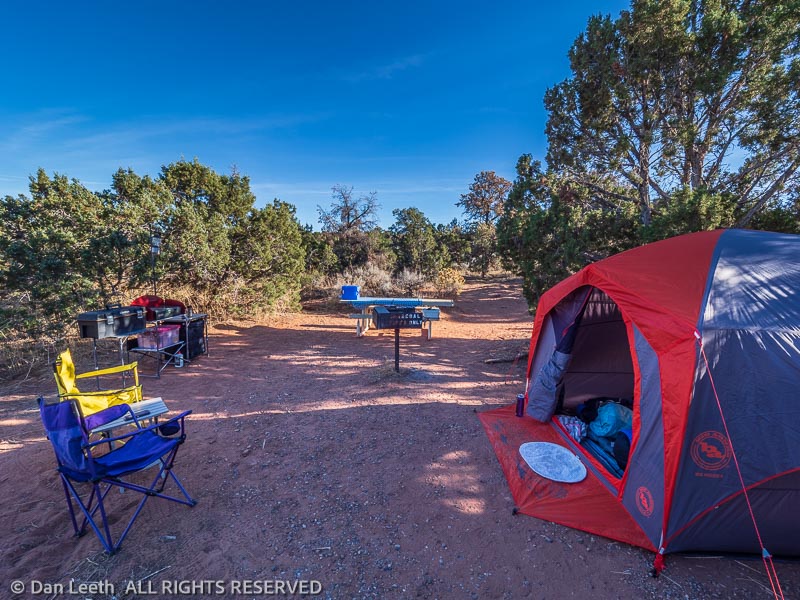
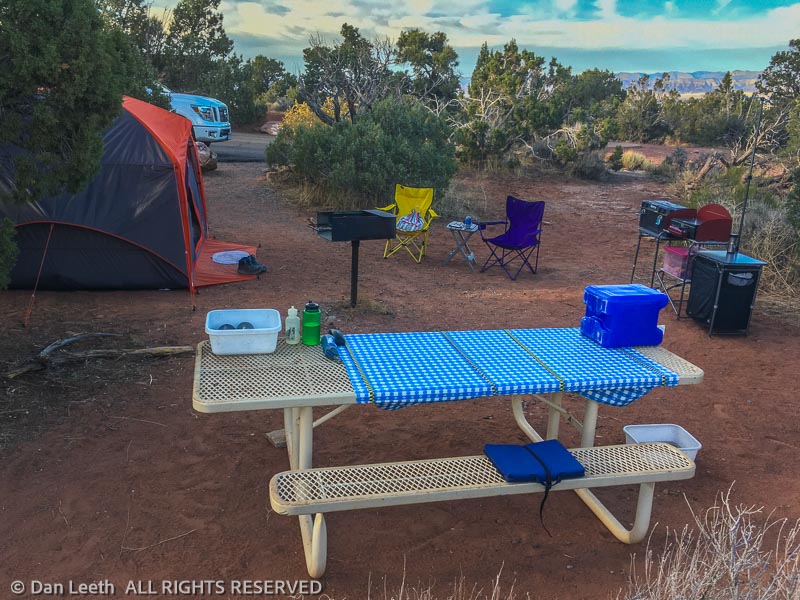
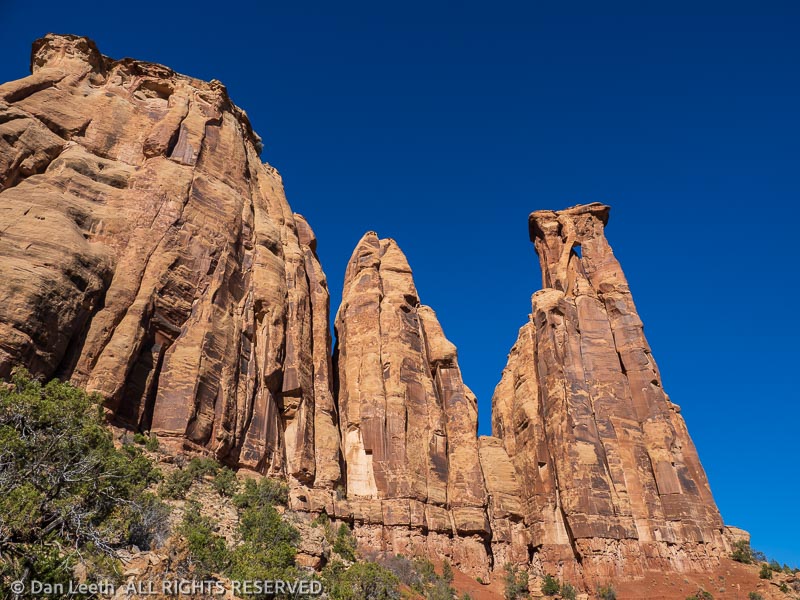
We had so much fun on our previous tent camping experience, I was able to convince my lovely wife to allow me to buy a tent. Our former Korean-made, Walmart special given to us by the in-laws was replaced with a Big Agnes Big House four-person tent. It’s spacious and tall enough we can stand up inside.
Of course, we had to test the tent out in the wild. For that I booked four nights at Colorado National Monument in western Colorado near Grand Junction. We loaded up the truck and set out with our local weather gal promising 70-degree highs and lows in the 40s.
One of the things we discovered on our August tent camping trip was how much harder the ground has gotten over the years. To mitigate that, we decided we needed fatter pads under our sleeping bags.
Years ago, at some travel writer gathering, I was given a Big Agnes Q-Core insulated air mattress. I never used it. In fact, I never took it out of the stuff sack it came in. After all, we have a real mattress with a 2½-inch memory foam topper in the trailer.
It was in the Covid-cleanup, donate-to-charity box when I looked it up online and discovered it was a $100+ pad. We pulled it out and decided to give it a try on this trip, with Dianne being the designated guinea pig. She loved it so much, we decided to order another, now 50% more expensive.
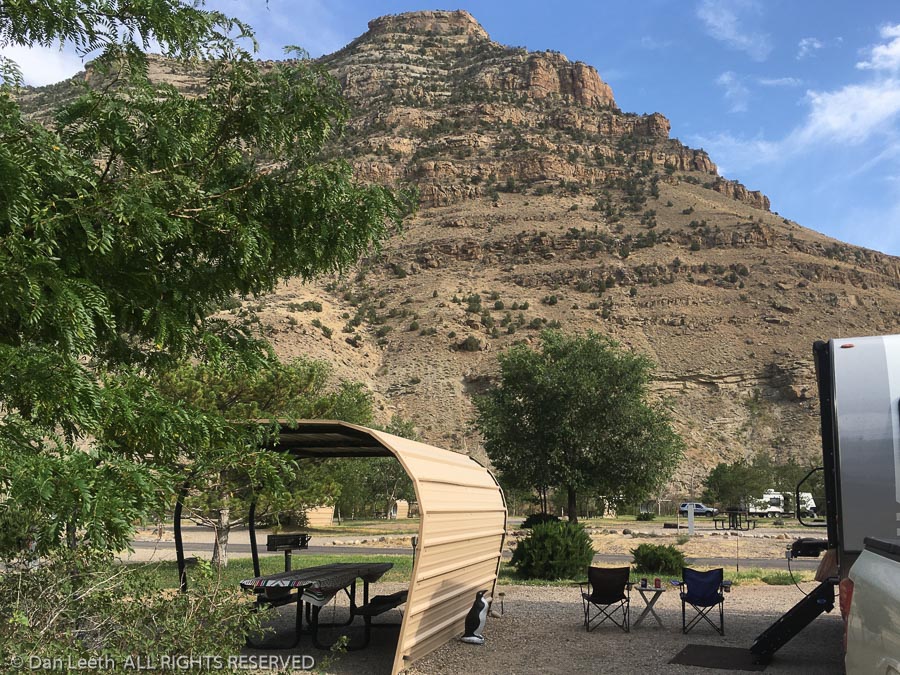
Our reserved site at Colorado National Monument was ideal for tent camping. We had a flat spot for the tent with piñon and juniper trees sheltering the site. We erected our new camp tent, set up our folding camp kitchen, pulled out the camp chairs and in less than three hours, we were kicking back, downing a couple of camp beers.
That night we discovered one of the major drawbacks to tent camping in a formal campground. Motorhomes all have generators, and for some reason, they need to run them constantly. The site next to us, a good 20 or 30 yards away, was occupied by a succession of motorhomes, each with progressively louder generators. It was like we were once again camping next to the interstate.
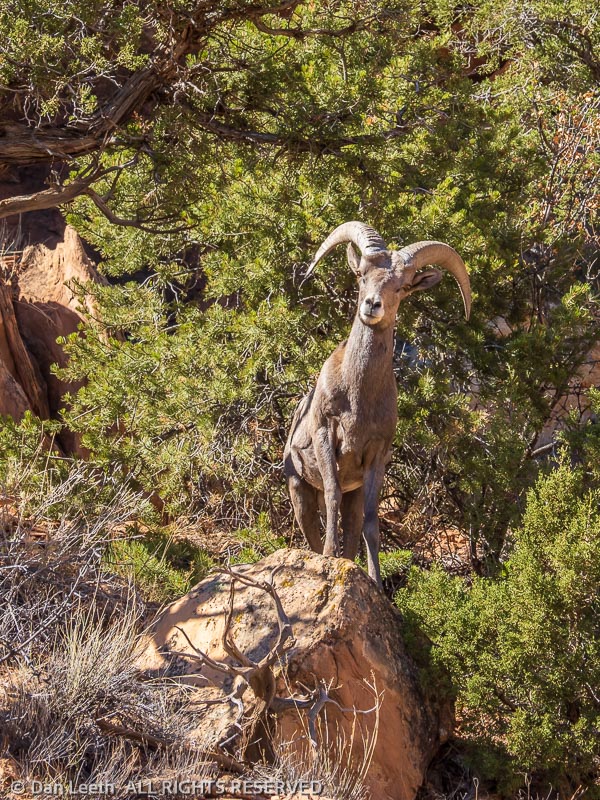
Four nights in camp gave us time for three full days for hiking. Our first day’s hike was up Monument Canyon from the bottom to the base of Independence Monument. We spotted several groups of bighorn sheep on the way up. A longtime resident of the area we met along the trail said they were common in this canyon. She was a park volunteer (not on duty), and as we chatted (at the proper social distancing distance), she told us about several other off-the-beaten-path hikes we should try. We didn’t take notes, and of course at our ages, we don’t remember a single one of them. But they sure sounded good.
The nice thing about the Monument Canyon to Independence Monument trip is that we could make it a loop trip by hiking back on the Wedding Canyon Trail. At the bottom, on Nebraska-flat ground not far from the truck, Dianne somehow tripped over a flat rock fully buried in the dirt. She lurched forward only to be saved from mashing into the ground by her loving husband who flung his body between her and the great beyond.
In the process of staggering forward, she managed to badly tweak her hamstring. She was only able to mitigate the subsequent pain, she insisted, by downing a three-scoop ice cream sundae at Enstrom’s in nearby Fruita.
With Dianne unable to hike on her injured hammie, we spent our second day playing tourists. We drove Rim Rock Drive stopping at every viewpoint along the way. Dianne did manage to hobble down few short overlook trails, but it was clear she wasn’t going to cover any major ground the next day.
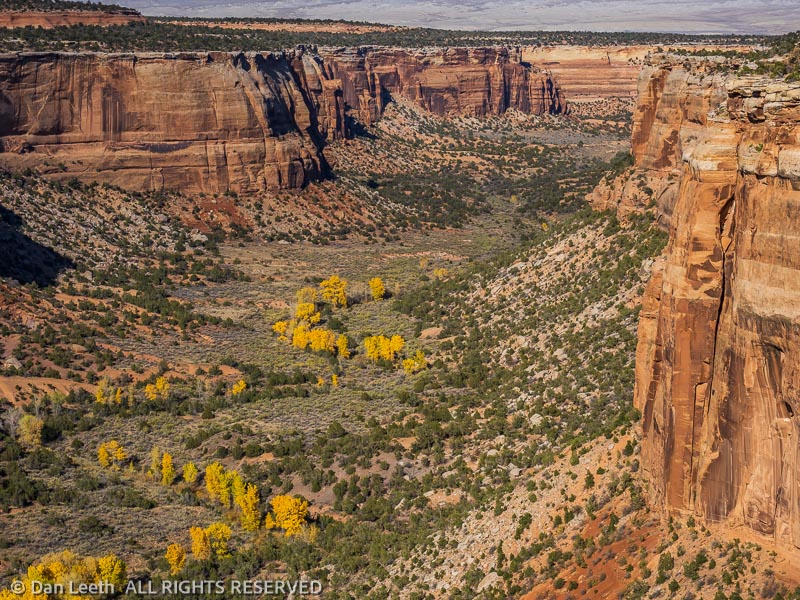
Unable to hike, Dianne became my third-day Uber driver. She dropped me at the upper end of the Monument Trail along Rim Rock Drive. I hiked down past the Coke Ovens formation and along the cliffs back to Independence Monument. With towering redrock on one side and a canyon on the other, I burned up a slew of digits shooting photos along the way.
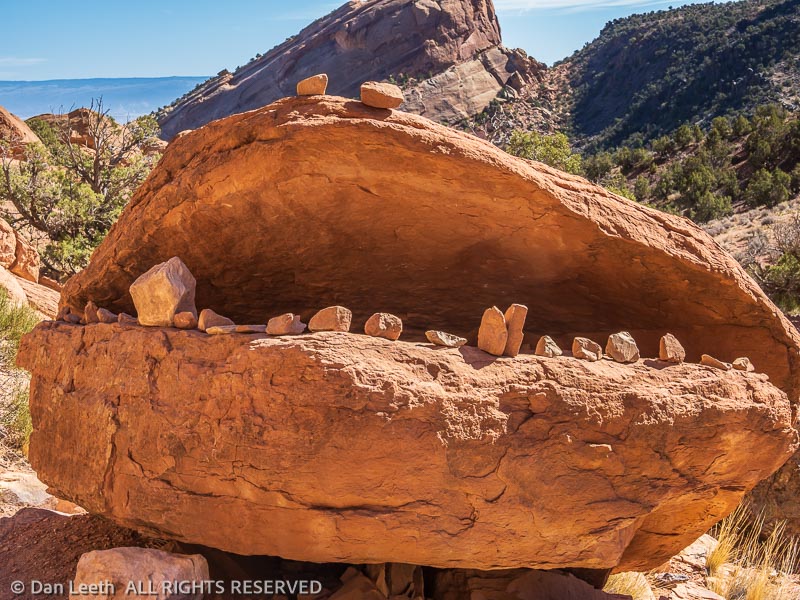
Not wanting to duplicate my wife’s tripping on a flat rock, I chose to forego the Wedding Canyon option and trudge down the trail we had taken up the first day. Along the way, I cautiously passed a carnivorous rock and spooked a gaggle of bighorn rams.
Dianne was waiting by the truck at the bottom. In the backseat sat our 12-volt cooler, chilled to 39 degrees. Liberating a cold brew from its clutches, I unfolded one of our chairs and kicked back. It was the perfect ending to a fun hike.
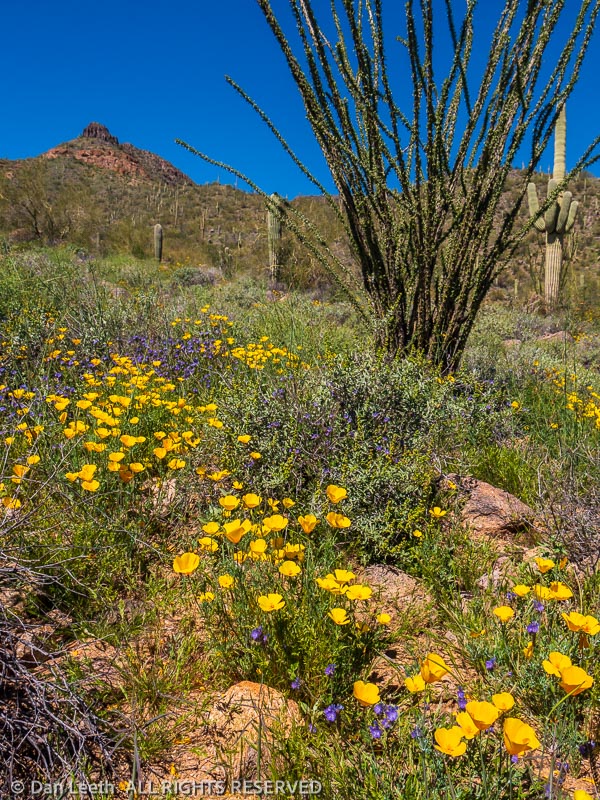
Our next tent trip is already inked on the calendar. Because of the ongoing Covidemic, we decided not to get ski passes this year. As a partial consolation, we booked campsites for two weeks in February at a pair of hiker-friendly, county parks in the Phoenix area. Instead of towing the trailer over mountain roads in the winter, we will take the tent.
Not only will we have flush restrooms and showers available at the campground, but we’ll be in tent-only campgrounds where generators are totally banned.
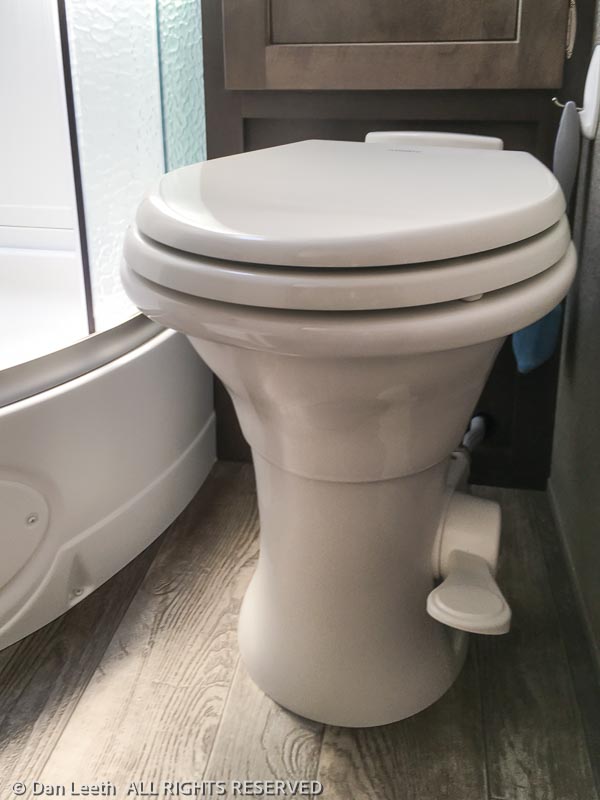
One of the easiest projects we’ve done in the trailer is to replace our Dometic 300 toilet with the upgraded 310 version.
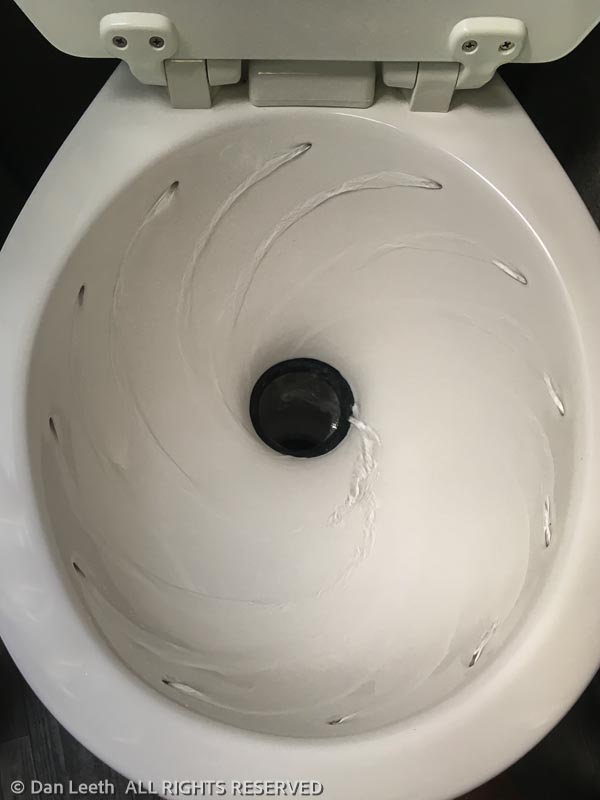
The 300 is made of plastic while the 310 has a ceramic bowl, which my wife insists provides a more secure seating surface. The 300 just dumps water in the bowl to wash out the waste while the 310 uses a “vortex flush pattern” to swirl the incoming water around to better clean the bowl.
Best of all, the 300 has a cheap feeling plastic lid while the 310 boasts a nice solid wooden seat/lid of the slow-close variety. Just give it a flick and it slowly and quietly closes on its own. My wife loves that so much that she’s begged me not to put the toilet seat down so she can do it herself.
Just kidding.
A number of lucky trailer owners had defective 300-series toilets that caused their bathrooms to smell worse than a Texas feedlot. Under the Dometic warranty, they were able to upgrade to the 310 toilets for a mere $75. We had to pay for ours, which we got on sale at Camping World for only twice that amount.
Installation was a one-beer breeze. I just unbolted the old toilet and bolted on the new, adjusting the angle slightly to fit the space. It’s now traveled thousands of miles with nary a problem.
Of course, with the good comes the bad. My wife liked the slow-close seats/lids so much, I got to play Mr. Plumber for a day, replacing every toilet seat at home with the slow-close versions. That project, of course, warranted a few more beers.
A Cruise to the Antarctic Circle TakesVoyagers Past the Last Land on Earth
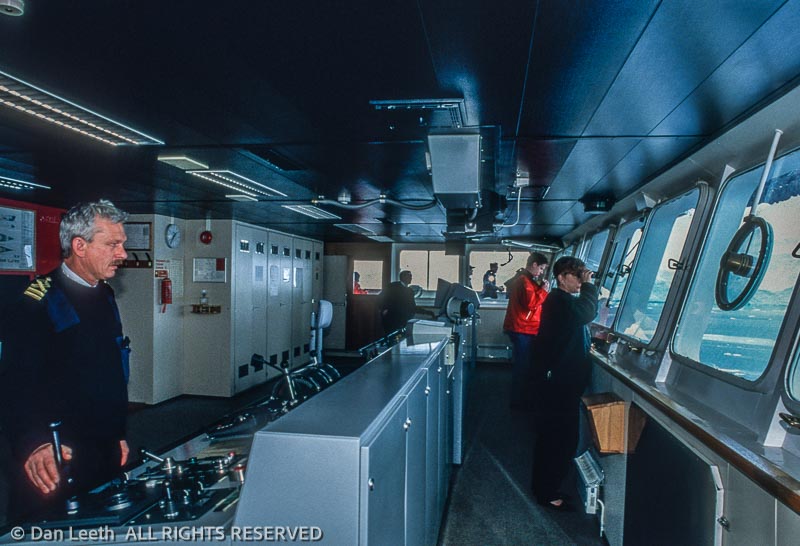
Two nautical charts lie spread across the ship’s navigation table. Both indicate we are traversing “unsurveyed waters.” Concerned, the captain maintains a heading that overlaps a solitary line of depth soundings. Although a veteran of Antarctic waters, he has never before sailed this channel.
Visibility diminishes with dusk. Heavy snow begins to fall. The dime-sized flakes plaster windows on the bridge making it difficult to discern the icebergs that clog the channel. The floating obstacles, however, show clearly on radar. Images of ice paint the monitor with splotches of cold orange.
One massive, tangerine glob looms dead ahead. The scale registers a distance of three kilometers.
Then two.
At one kilometer, the captain breaks the silence with a whispered order. The helmsman flicks the wheel, and the ship begins angling.
Through a shroud of fog and snow, a ghostly apparition reveals itself as a tabular iceberg, a form unique to the Southern Ocean. Its sheer sides rise a hundred feet to a top that stretches flat and wide as a Kansas homestead. Once again, I stand awestruck by the humbling magnitude of Antarctica.
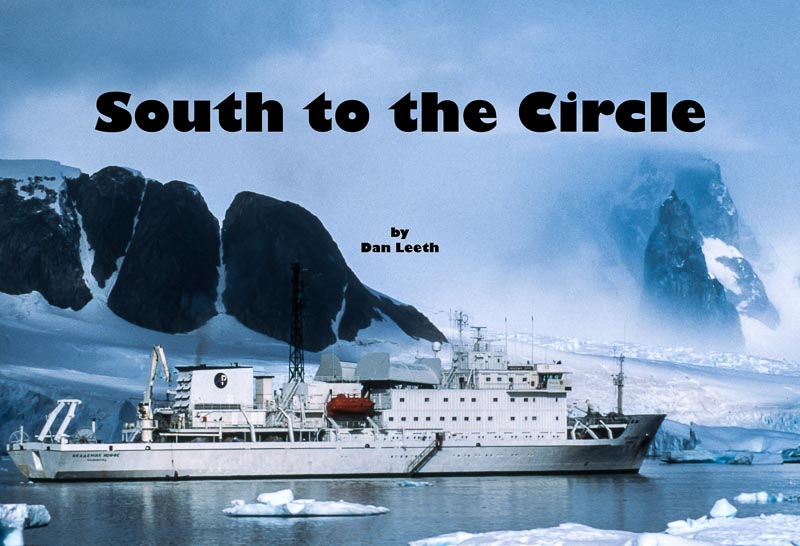
Our polar-class cruise vessel is bound for the Antarctic Circle, the dashed line that girds the bottom of the globe. The route there takes us past the most remote and uninhabited land on the planet.
Antarctica was not sighted until 1820. Another 79 years passed before anyone wintered on its surface. Explorers soon arrived in a deadly quest for the southern pole. Scientists followed. Until recently, the land’s only tourists were those who could afford five-figure fares. Now, prices have plummeted, and for about the cost of a Caribbean escapade, I booked a Marine Expeditions’ cruise to the seventh continent.
Antarctica is shaped like a manta ray with a curving tail. A 600-mile stretch of ocean separates the stinging end from the tip of South America. Through this gap known as the Drake Passage churn the roughest seas on earth. Negotiating the “Slobbering Jaws of Hell” is the true toll of admission to the last land on earth.
“Stow everything before you turn in,” the guides warn. “Also, securely latch cabin portholes.”
Leaving from Ushuaia, the Argentine city on Tierra del Fuego, the ship first navigates the placid waters of the Beagle Channel. Then, sometime in predawn darkness, we hit the open ocean.
For two days we do the Drake Shake, rocking and rolling through latitudes where no appreciable land tempers nautical might. Winds howl at near gale force. Waves explode over the bow, sending a shrapnel of ocean spray higher than my fourth deck window. Swells rise between 15 and 40 feet, their estimated size varying with the amount of sea sickness the observer is suffering.
“This is not too bad for the Drake,” a staff member assures me. “I’d say it is fairly typical.”
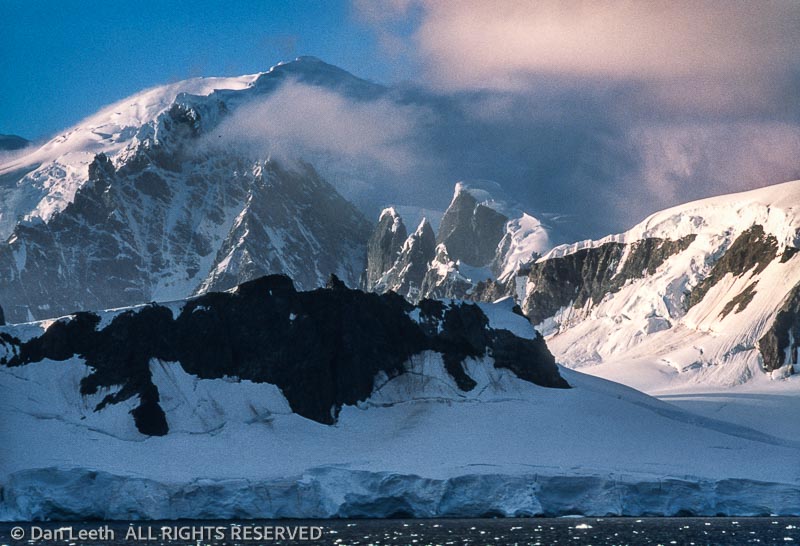
Our second day from South America, we enter the cold waters of the Southern Ocean. The following morning, I awaken to views of a coastal archipelago. Sedated by land, the seas have calmed to a gentle chop. Wisps of cloud float around mile-high summits. Angular ridges poke like chocolate shards from glacial frosting. Cracked, fissured, smooth and choppy, the ice flows in frozen slabs to the sea. It looks as though a range of Everests jut straight from ocean blue.
“This is like childbirth,” observes one motherly passenger. “Getting here is labor. Now we cradle the joy of parenthood.”
An unruly child, Antarctica is on average the coldest, windiest, highest and driest of the seven continents. Although its surface holds 70 percent of the world’s fresh water, the polar plateau receives about the same precipitation as Death Valley. Owned by no one, the land has no indigenous human population, and animals visit only briefly to molt and reproduce. It remains the only continent without a Holiday Inn.
In this region of extremes, sailing routes depend on weather, and shore landings are at the whim of wind and waves. Although the guides advise us to be flexible, our initial landfall comes on schedule.
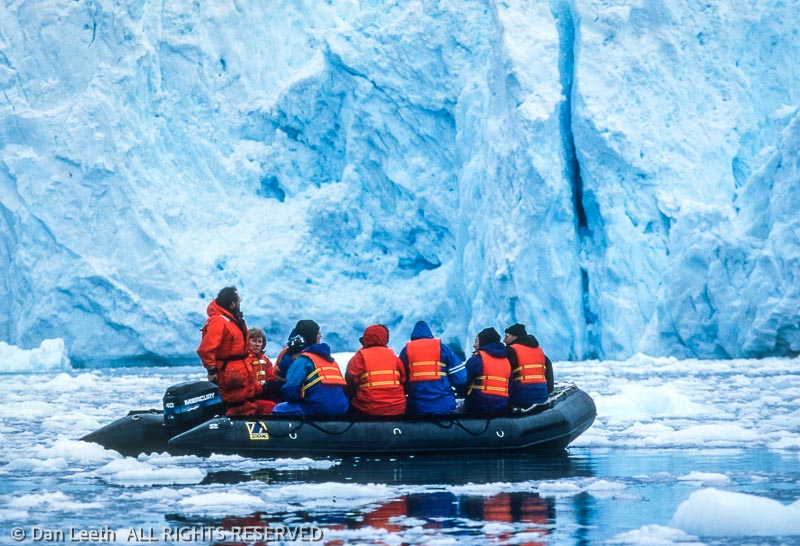
We assemble on deck in predesignated groups. When mine is called, I join nine others in an inflatable Zodiac. The driver guns the outboard, and a quarter mile later, we bump dry land. With one step, I join the exclusive fraternity of people who have touched Antarctica.
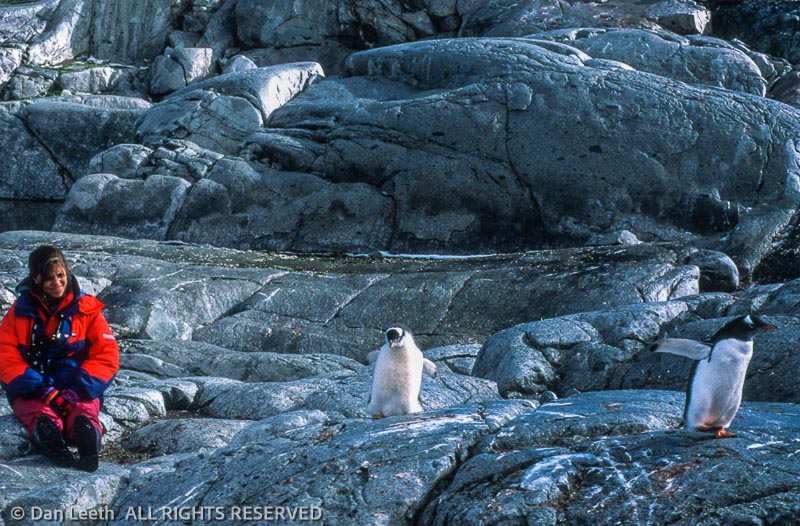
Our first frat party is a black-tie affair hosted by a delegation of two-foot-tall penguins. Garbed in feathery tuxedos, they strut like aristocrats at a fund raiser. The majority of residents are chicks still covered in gray down, but a few adolescents are beginning to sprout head feathers. The hairdos make them look as bizarre as punk rockers at an opera.
At nearby Paradise Harbor, we take Zodiacs on a cruise through an inlet cul-de-sac that resembles an intimate version of Alaska’s Glacier Bay. Towering crags scrape the sky. Blankets of frozen ice drape the cirque in curtains of crystal blue. Miniature bergs reflect in mirror-still water.
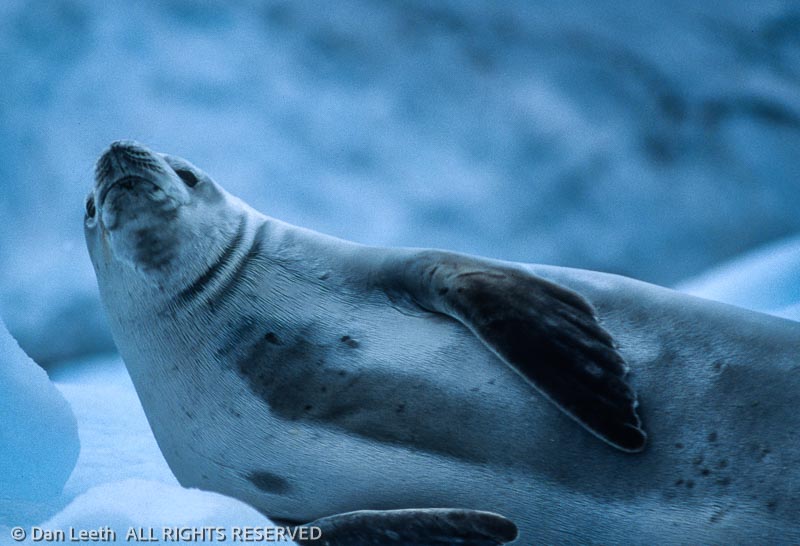
We glide past Antarctic shags, which nest on a plunging cliff. Nearby, thick flocks of terns flutter in the air. Crabeater seals lounge on an ice floe. We approach, quietly sneaking photos like a boatload of paparazzi. The natives seem unfazed by our bold intrusion.
Outdoor temperatures along the peninsula typically hover around freezing, and a few layers of ski clothing provide comfortable warmth. One evening, we even enjoy an outdoor, deck-top barbecue. The chefs grill steaks, chicken, burgers and brats while the bartender mixes drinks with ice chipped from the remnants of a small berg. This is one picnic where brews stay cold, and ants definitely are not a problem.
Continuing south, we pass through the Lemaire Channel, a fjord-like corridor nicknamed “Kodak Gap.” Here, glistening mountains ascend from the ocean in postcard-perfect artistry. It looks as though we are sailing through the Alps after the Great Flood. The view is nearly identical to that seen by the first mariners who plied these waters. Apart from a handful of science bases, Antarctica remains virtually untrammeled by humankind.
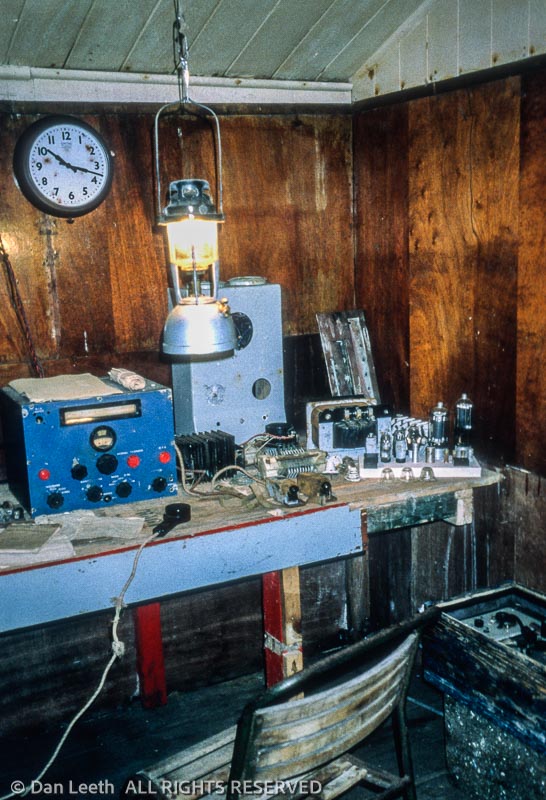
We visit one of the continent’s earlier research stations at Port Lockroy. Built by the British during World War II, it provided reconnaissance and weather data. The main hut, Bransfield House, remains the oldest British structure on the peninsula.
Now a historic site, Port Lockroy offers a glimpse of Antarctic life from a half-century past. The unpretentious buildings were made of wood, heat came from coal-burning stoves, and communication with the outside world was by vacuum-tube radio. Originally a crew of nine lived in spartan quarters. Now a pair of Antarctic veterans spend the austral summer refurbishing the facility. They also vend clothing, patches, stamps and postcards.
“We get over 40 tour boats each season,” says one of the pair. “The money we collect goes toward restoration.
While Antarctica is becoming a more popular destination, the continent still gets only about 10,000 visitors each year. Trip organizers have formed the International Association of Antarctica Tour Operators (IAATO) to self-regulate tourism. Members pledge to travel safely, protect wildlife, respect protected and scientific areas and help keep earth’s last true wilderness pristine.
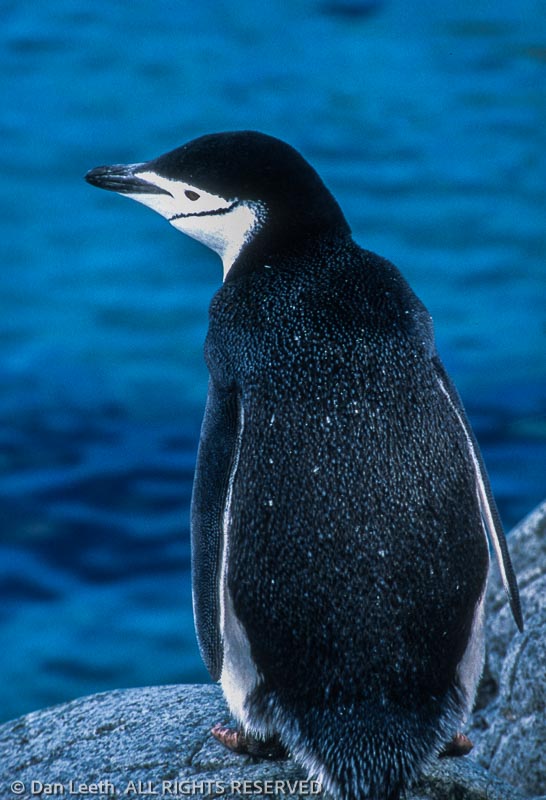
We stop at Petermann Island where the peninsula’s three species of penguins peacefully share an integrated neighborhood. Gentoos have snowy earmuff flashes that cross their heads from one eye to the other. Chinstraps sport black skull caps seemingly held in place by a thin line below their beaks. Adélies feature black noggins with their eyes ringed in white.
As we head south, we spy more wildlife from the ship’s bridge. Through its windows, I glimpse whales shooting plumes of vapor from blowholes. Above the surface, albatrosses soar on glider wings. Skuas and kelp gulls add to the aerial display.
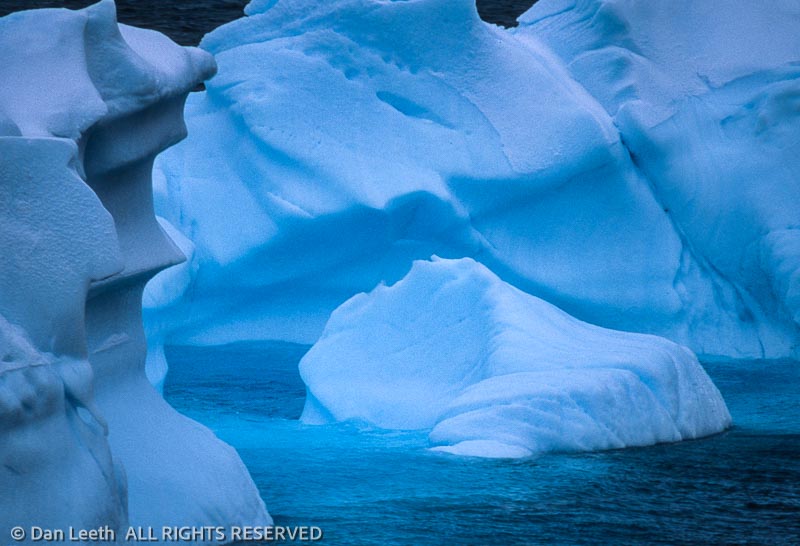
When wildlife is absent, I admire the floating gallery of sculpted icebergs. Some look like Monument Valley monoliths. Others are honed and weathered like salt licks. Many glisten Clorox white, their ice still marbled with trapped air. The rest show pale blue, dense from years of glacial compression. Nearly all display a band of eerie luminescence that shimmers below the waterline like neon glowing beneath a low-rider.
The iceberg flotilla increases as we head farther south. I watch our progress on the Global Positioning System’s digital display. At a bleary-eyed 2:40 in the morning, the ship reaches 66 degrees, 30 minutes southern latitude. We cross the circle and enter the south polar world.
A few hours after dawn, we take Zodiacs to windswept Detaille Island. A British research station once operated here. Frequently frozen in, even the tenacious Brits gave up and left years ago. Their buildings remain.
Near the structures, Adélie penguins waddle up a snow slope, then toboggan down on their bellies. A hundred yards away, fur seals growl at each other. These animals have the disposition of a linebacker, are aggressive as Ken Starr and bear the teeth of Mike Tyson. Unlike other seals, they can run on their flippers. We maintain our distance.
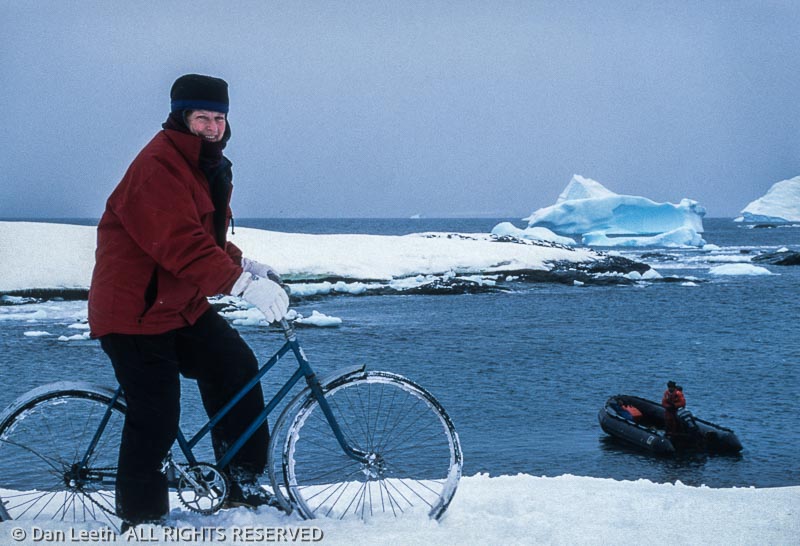
One passenger found an old bicycle onboard, and he has it hauled ashore. A few of us take turns posing as polar pedalers atop the two-wheeler. For two hours, we goof-off, explore the island and view its wildlife. Finally, time comes to return. The crew hoists the Zodiacs aboard, and the ship turns north.
From his place on the bridge, the captain smiles. A look of relief seems to cover his face. The waters here may be unsurveyed, but he now brandishes the confidence of having sailed this way before.
Québec City Provides a Dreamy Retreat in the Dead of Winter
Maybe it’s because I grew up beneath the sweltering Arizona sun, but I find myself irrepressibly drawn to cold places. Give me frosty air and a few flakes on the ground, and I’m as happy as a penguin on ice. When it comes time to treat my wife, Dianne, to a romantic, midwinter getaway, I book a return visit to Québec City.
Founded a dozen years before the Pilgrims hit Plymouth Rock, Old Québec City’s stone walls enclose a downtown filled with picturesque shops, pubs, churches, restaurants, hostelries and residential row houses. French is the language with English freely spoken, albeit with a syrupy accent. And being Canadian, folks here are friendly and polite. Here, we can enjoy Euro-flair with less time in the air.
The Québécois don’t let the cold get them down. The town remains fully functional in winter. Vendors still sell art in outdoor galleries, horse-drawn carriages still clomp up cobblestone streets and sidewalk cafes still offer alfresco lunches. Best of all, it’s a place my heat-hating spouse truly enjoys visiting.
“Fantastic!” Dianne exclaims, “as long as we can stay in the Frontenac.”
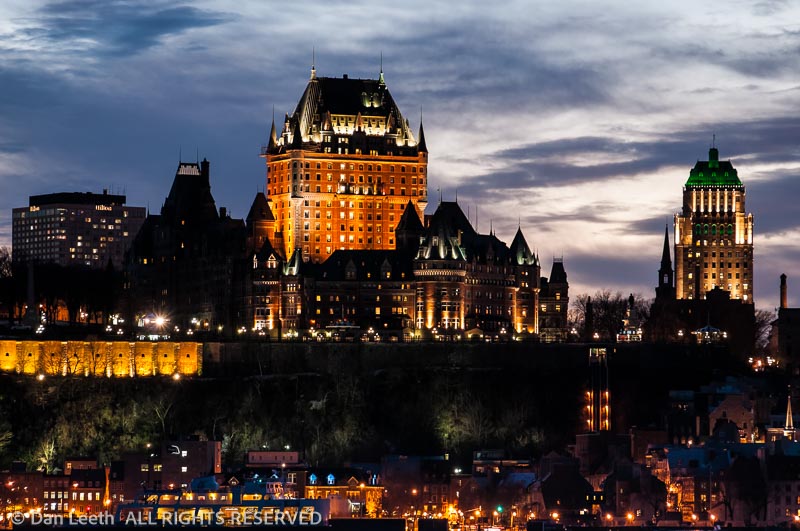
Chateau Frontenac, now a Fairmont Hotel, stands as the structural icon of Québec City. It was built in the 1890s by the Canadian Pacific Railroad to lure clients into luxury travel by train. With turrets and towers reminiscent of the Middle Ages, the 611-room edifice looks like a fairytale castle at the edge of the bluffs above the Saint Lawrence River. One almost expects to see Tinker Bell fluttering about.
“We’ll have a few nights at the Chateau,” I assure my mate, “but I’ve got an even more romantic surprise for the last night of our trip.”
We arrive at the Chateau Frontenac and check in. I’m looking forward to sharing an amorous first night’s dinner with my lovely at the hotel’s Restaurant Champlain, but those plans quickly evaporate.
“Where’s the best place around here to get poutine?” Dianne asks the concierge.
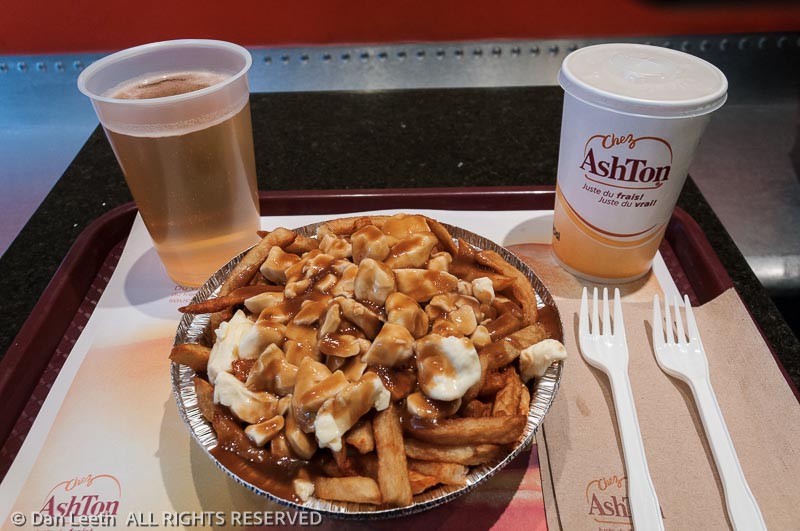
Invented in Québec, poutine is a Canadian specialty, which like ketchup-flavored potato chips, is seldom seen south of the 49th parallel. It consists of French-fried potatoes topped with cheese curds and smothered in gravy. The saturated fat content alone would make a cardiologist wince, but that doesn’t bother my dining partner, a 30-year nurse. She’s so fond of the dish, she even uses a photo of poutine as the desktop background on her computer.
“Chez Ashton has the best poutine by far,” the concierge claims, handing her a map with this mecca of malevolent nutrition circled. Instead of china and stemware, we eat dinner from aluminum pie plates at what could pass as a French-Canadian version of Chipotle’s. Fortunately, they sell beer.
“Thank you!” Dianne coos as we depart, arm in arm.
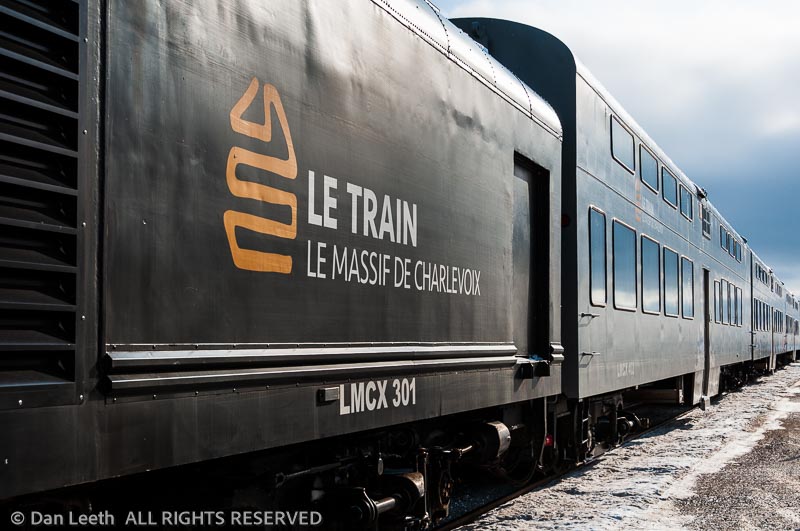
Last time we came to Québec City, we packed skis and drove to the Charlevoix region to slide the slopes of the Le Massif Ski area. This time, I’m taking my ski-free honey to Charlevoix by train.
Le Massif and Le Train le Massif de Charlevoix are owned by Daniel Gauthier, who along with Guy Laliberté founded Cirque du Soleil. After selling his interest in the circus, Gauthier bought the ski area and reestablished the rail route along the banks of the Saint Lawrence River.
We board near Montmorency Falls, a 272-foot-high chunk of ice that’s one and a half times higher than Niagara. Climbers arrive with ropes and packs presumably filled with warm clothes. It’s five degrees Fahrenheit outside with fog and falling flakes giving the setting a dreamy look.
Inside the railcars, 11-foot ceilings and panoramic windows offer an airy feel. We share a table for four with a French-Canadian couple celebrating a birthday. They speak limited English and we have even more limited French.
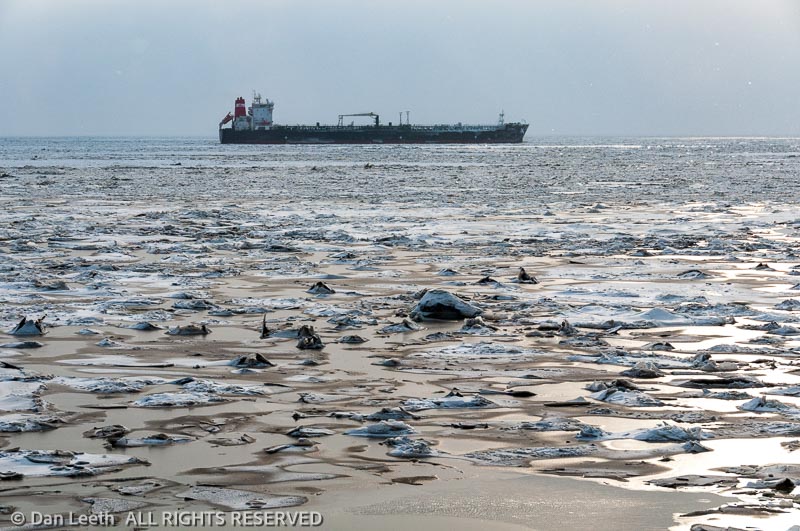
The rails follow the Saint Lawrence River as it heads for the sea. With snow covering the banks and chunks of blackened ice floating in on its slate gray surface, the monochromatic view through the window resembles an Ansel Adams black-and-white photograph. We spot buoys in the channel, and the occasional ship slowly making its way through the bitter current.
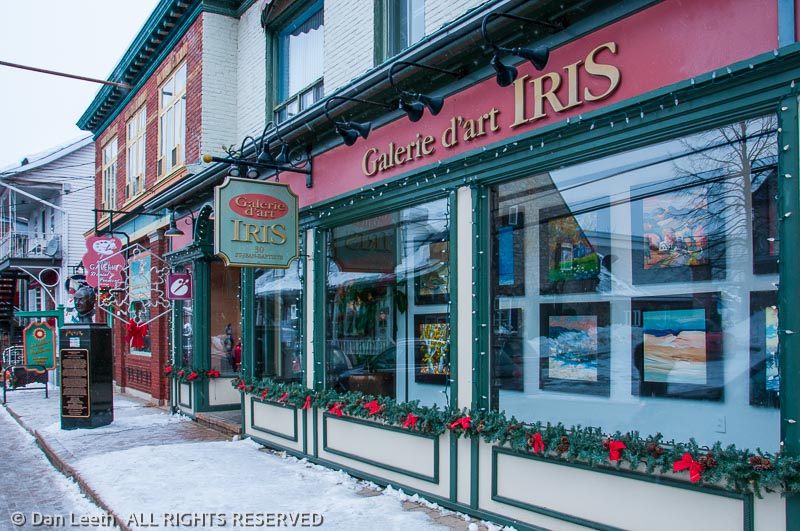
We leave the train in the village of Baie-Saint-Paul where the depot shares space with a hotel, also owned by Gauthier. The outside temperature has warmed to six degrees and the sun threatens to emerge from behind the slate gray clouds. These, we agree, are perfect conditions for a walk into town. As we wander through gift shops and stroll around art galleries, one thing becomes abundantly clear. Charlevoix residents are proud of their region.
“The birthplace for tourism in Canada is here,” touts Jean Poirier, director of Eco & Motion Charlevoix. “Tourism started 400 years ago when people from high society decided to leave their main country and visit our colony.”
We return to the hotel for lunch before our afternoon departure back to Québec City. Dianne is devastated when she discovers the hotel restaurant doesn’t serve poutine.
The next morning, we at least get to enjoy breakfast in the Champlain. Outside, a wave of warmth has hit town, pushing temperatures up to a sizzling 24 degrees Fahrenheit. Braving the heat, we go out for a hand-in-hand walk down the Terrasse Dufferin, the wooden boardwalk overlooking the river.
The Chateau Frontenac pokes into a gray sky, its new copper-colored roof replacing its patina-green predecessor. Near the hotel, a sloping, wooden Toboggan track rises from the boardwalk. Men armed with snow blowers and shovels remove the previous night’s snow from its twin tracks. Patrons will soon hurdle down the icy slide at speeds reaching 60 mph. Two ships ply the river, one going up channel and the other heading down. The ice floating in the river, I notice, is moving upstream. While the water here is fresh, Québec sits close enough to the ocean that the river backs up with the tide.
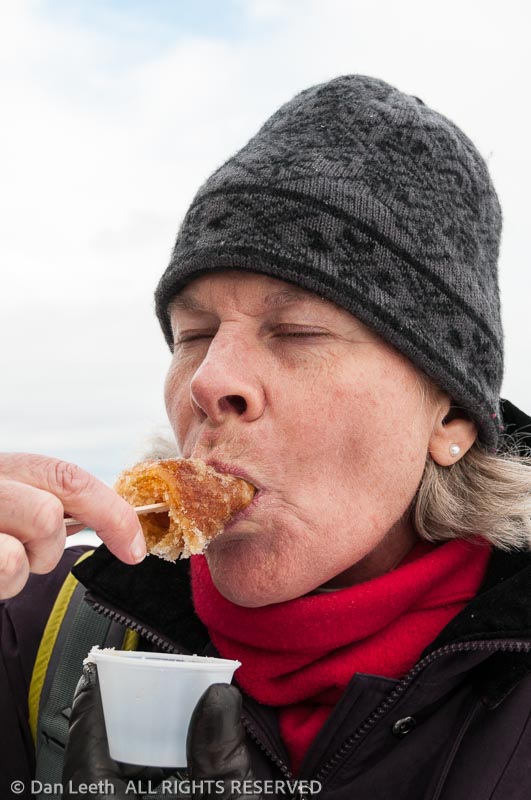
At a snack shack near the toboggan run, a vendor prepares tire d’êrables, maple taffy. After heating maple sap until it has a consistency between syrup and butter, he ladles it in strips onto fresh snow where it rapidly cools. Before it totally hardens, patrons wind the sugary mass onto a stick and eat it like a Popsicle. Dianne loves them. Next to poutine, tire d’êrables are her favorite Canadian vice.
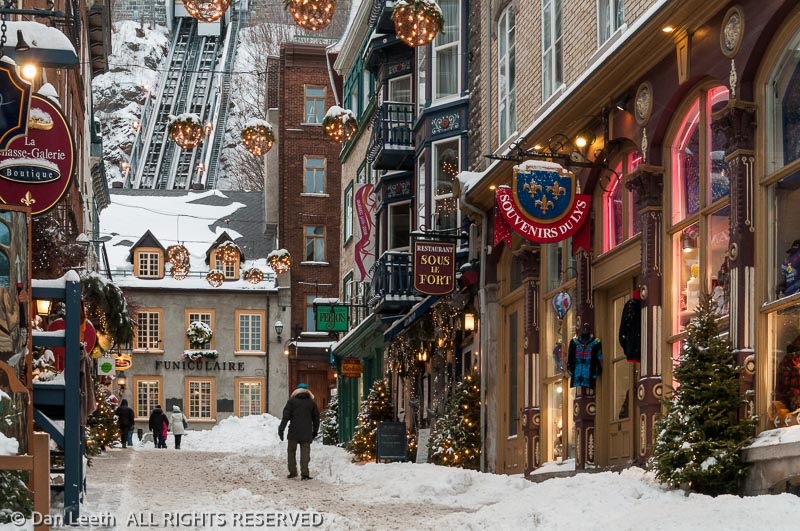
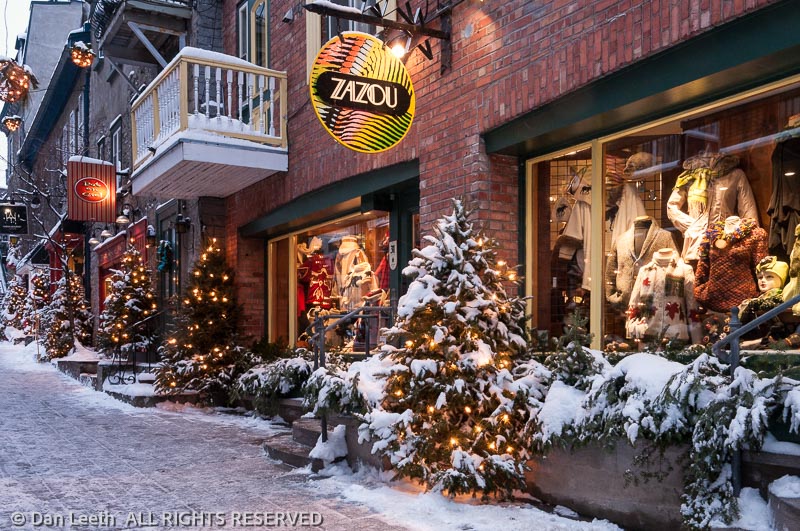
From there, we take the town’s European-style funicular down the cliffs to Basse-Ville, the lower section of Old Québec City. Here, we wander the pedestrian-only Rue du Petit-Champlain, which looks like a Christmas village lined with bistros and boutiques. Not content to leave her credit card untouched, Dianne buys a warm, Nepalese knit sweater to add to her clothing layer options. I suggest she test it out tonight on the water.
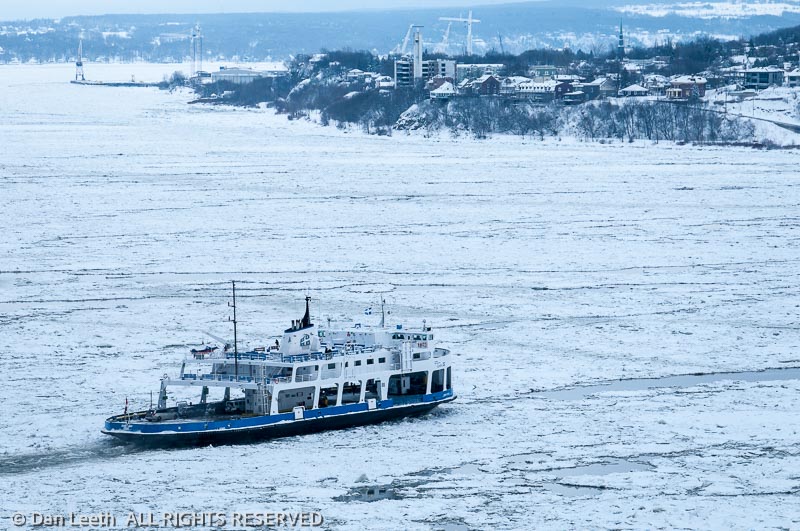
After dinner, we board the M/F Alphonse-Desjardins for a 15-minute ferry ride across the Saint Lawrence to the town of Lévis on the opposite bank. The river looks like a frozen margarita, its surface covered in broken ice and slush. We join a handful of passengers inside where an accordion player entertains for tips. The ferry’s engines fire up and the boat departs, the crunch of ice tearing at its hull. It feels positively Titanic-like.
“We’ve got to do it,” I smile at my costar-in-life.
Together, Dianne and I walk to the deck, and in the biting cold wind, we perform our best arm-in-arm imitation of Jack and Rose on the bow of that ill-fated ship. The YouTube clip of their “I’m Flying” scene lasts 30 seconds. Ours ends in less than half that time.
We catch the next ferry back. Across the river, the Québec City skyline rises above the cliffs in a montage of shape and color. Below, shops of the lower town paint a band along the waterline. Between them stretch the illuminated ramparts where red flashes from gun turrets simulate cannons being fired at our invading ferry. Downstream, the Image Mill’s projected lights transform a bank of grain elevators into a ground-hugging interpretation of the aurora borealis. Like the dance band on the Titanic, our accordion player plays through it all.
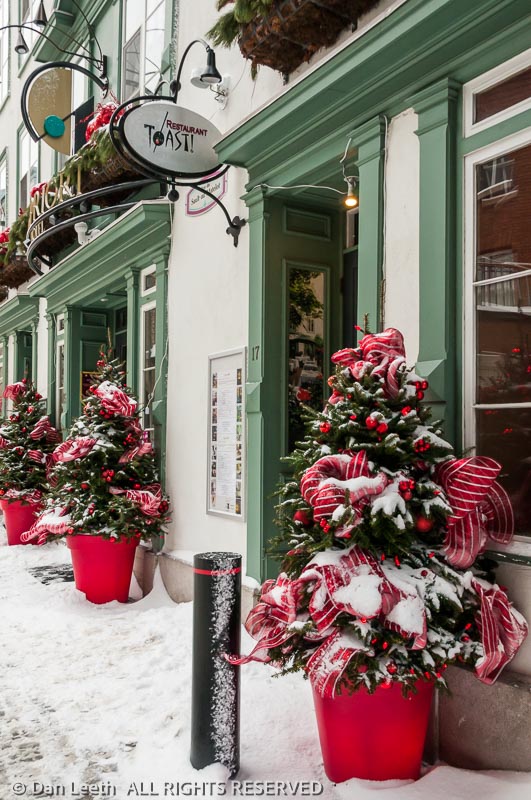
Beyond poutine, Québec City offers an array of fine dining options. One night we head to Restaurant Toast!, a gourmet tapas eatery whose name reflects something one does with champagne glasses, not bread. At Restaurant Aux Anciens Canadiens, we dine on traditional French-Canadian dishes served by a staff dressed in historic attire.
For our final night’s meal, I follow a local recommendation and make reservations at Nordic-themed Chez Boulay. To get there, I prearrange a romantic ride in a one-horse open carriage. We meet our driver, Willie, and his horse Fred in the square outside the hotel. With the mercury congealing at zero, his was the only carriage around.
“Sorry to make you come out on a night like this,” I apologize.
“Don’t worry,” the driver tells us. “I have another ride scheduled for 8:00 tonight.”
Snuggling beneath thick woolen blankets, we begin a slow ride through the streets of Old Town. Illuminated signs paint shops, lamplight streams from undraped windows and moonlight softly tints banks of street-side snow. Fred clomps along while Willie provides a narrative of the town’s history.
After a dinner of seared salmon, we take our overnight bags, hale a very warm taxi and head to our final night’s lodging, Hôtel de Glace – Québec’s Eskimo-worthy Ice Hotel built entirely from ice and snow.
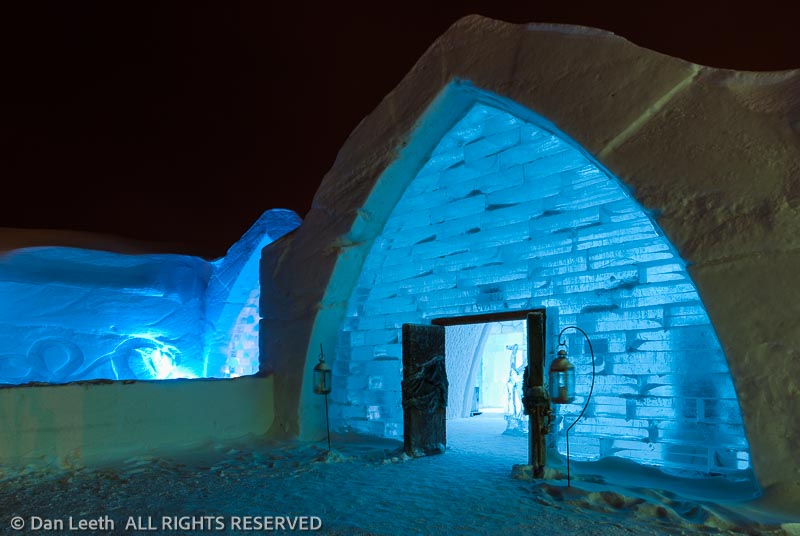
Outside at night, Hotel de Glace, Ice Hotel, Quebec City, Quebec, Canada.
Reconstructed annually, the frozen structure begins with super-saturated snow blown onto molds to form what look like a series of gothic-arched Quonset huts. The blocks of translucent ice enclosing the ends allow sunlight to shimmer in by day and colored lights out at night. The effect appears vividly surreal.
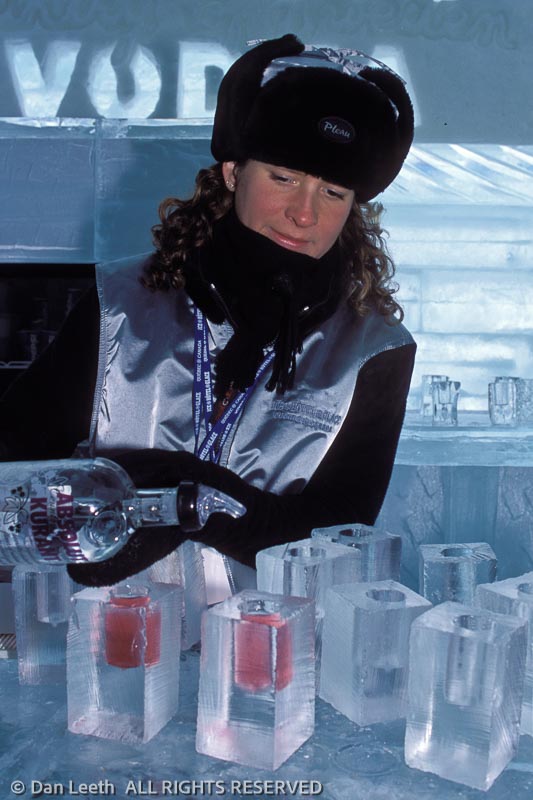
The hotel boasts a chapel with pews made from sheets of crystal ice. Imaginative ice sculptures grace the Grand Hall next door. A passageway leads to the Ice Bar where drinks served in hollowed ice come in the rocks, not on the rocks. Around the corner patrons can sit and slip down the icy spiral of the Grand Slide.
The hotel’s 40+ overnight rooms come in two styles. Some are simple, entry-level quarters with snowy, unadorned walls, ideal for folks who believe that all rooms look the same when you turn the lights out. It’s the “theme suites” that draw visitors to the Ice Hotel and provide this French-Canadian institution’sraison d’être.
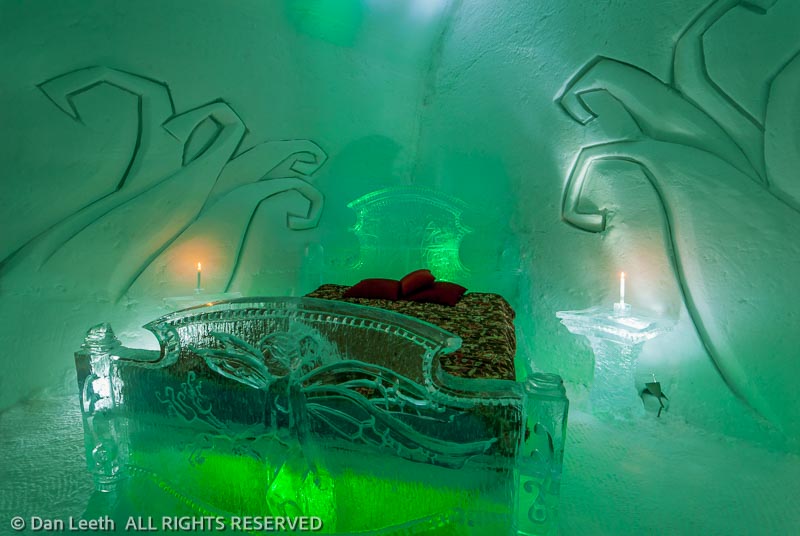
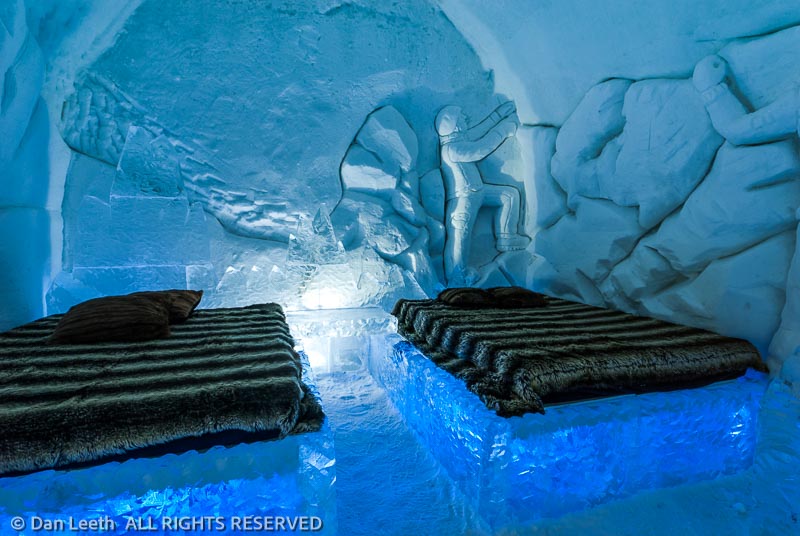
More than a dozen artists transform a select number of rooms into frigid works of art. They carve elaborate bas-relief sculptures into the snowy walls and decorate the floor with furniture crafted from blocks of pure ice. Banks of colored lights transform these rooms into a fantasia of pure delight.
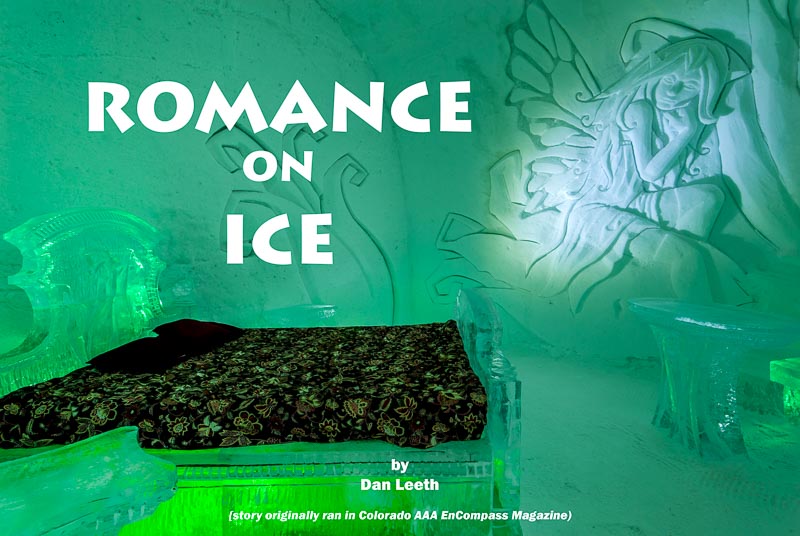
Themes, which vary year-to-year, may include anything from flowers and forests to mountain climbers and polar bears. Ours is the Perce-Neige (Snowdrop) suite, named for a snow-piercing plant that blooms in late winter. A white spotlight in the green-lit room highlights a winged fairy maiden emerging from a blossom on one wall. Her halter-topped countertop adorns the opposite with oversize flowers gracing the remaining surfaces. We have a bed frame made from sculpted ice along with an icy love seat, table and two nightstands.
Every year, close to 100,000 folks pay to tour the hotel, but only about 5,000 of us annually brave a night in rooms devoid of heat and indoor plumbing. Overnight guests attend a mandatory orientation held in the heated pavilion building adjacent to the icy complex.
“Do you have any worries about sleeping at Hôtel de Glace?” night guide Sophie Vaillancourt asks as we join the gathering.
“No,” my wife answers. “We’re from Colorado.”
Many of our fellow guests, some with children, hail from warm climates where snow is seldom seen. Sophie assures everyone that even though it’s minus 10 degrees Fahrenheit outside, the insulating snow will keep our quarters a toasty 25 inside. She explains how to get into and out of the provided sleeping bags, which she claims are rated to minus 20 Fahrenheit.
“You will survive,” she assures all. “You will have a great night of sleep.”
Electronics and cell phones, however, will die in the cold. She advises everyone to leave anything we don’t absolutely need in heated lockers.
“A lady from South America had a gorgeous pair of boots,” Sophie recounts. “In the morning when she tried to grab them from the floor, they were stuck to the snow. We had to use a hairdryer to free the boots so she could put them back on.”
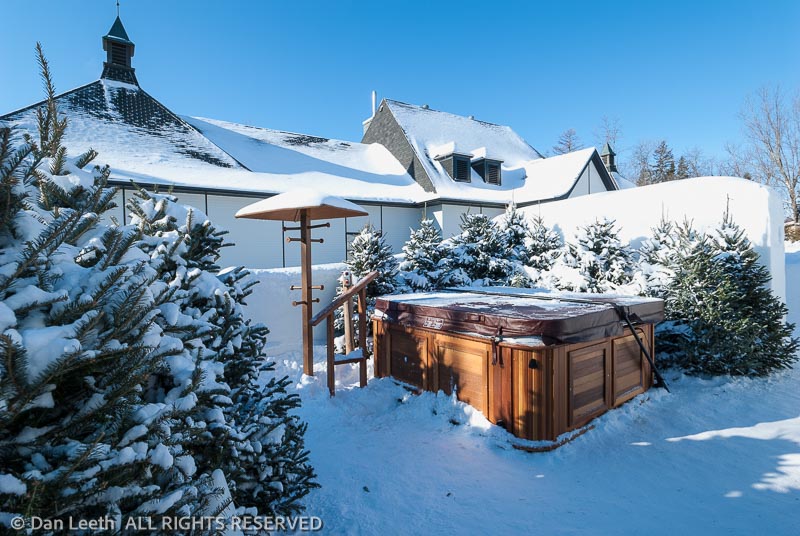
With the Ice Hotel sporting three outdoor hot tubs, a simmering soak before slumber seems like a splendid idea. We don swimwear, grab robes and race to one of the pools, which we share with two Canadian sisters who say they’re there for adventure. Tomorrow, they’re going to go dogsledding and maybe try snowshoeing.
Another couple from Jackson, Mississippi, joins us. They’ve come with their daughter and son-in-law because overnighting in the Ice Hotel was on his bucket list of things to do.
We’re here, I tell the group, because we think that enduring a subfreezing night ensconced in snow, curled up in individual mummy bags and trying to fall asleep on a thin mattress set atop a frigid slab of ice is downright romantic.
“You know, a bungalow in Bora Bora would be romantic, too,” Dianne blurts, her hair frosted white by steam from the tub.
“You wouldn’t like it,” I remind her. “They don’t sell poutine there.”
We had originally planned to head west for a six-week trip that would take us across Utah and Idaho to the Columbia River, then down the Oregon Coast to the California redwoods.
We were going to attend a Mini Lite trailer rally and visit Dianne’s parents in California followed by a visit to her sister in Nevada. We would then camp in Denver for a few days before heading south to Arizona for a two-week camping excursion with friends in the desert east of Phoenix.
Because of the Covidemic, all of that was cancelled. Although some places graciously didn’t charge their normal fees, we still ended up absorbing $188.12 in campsite cancellation fees.
In place of relatives and redwoods, we are doing a Colorado Covid Compromise trip. We were able to book a trio of two-week stays at Colorado State in the western part of the state. First stop is Robb State Park Island Acres Section, which lies 18 miles east of Grand Junction.
Getting here presented a challenge. A huge wildfire broke out in Glenwood Canyon that closed the Interstate highway through the canyon. Alternative routes were required.
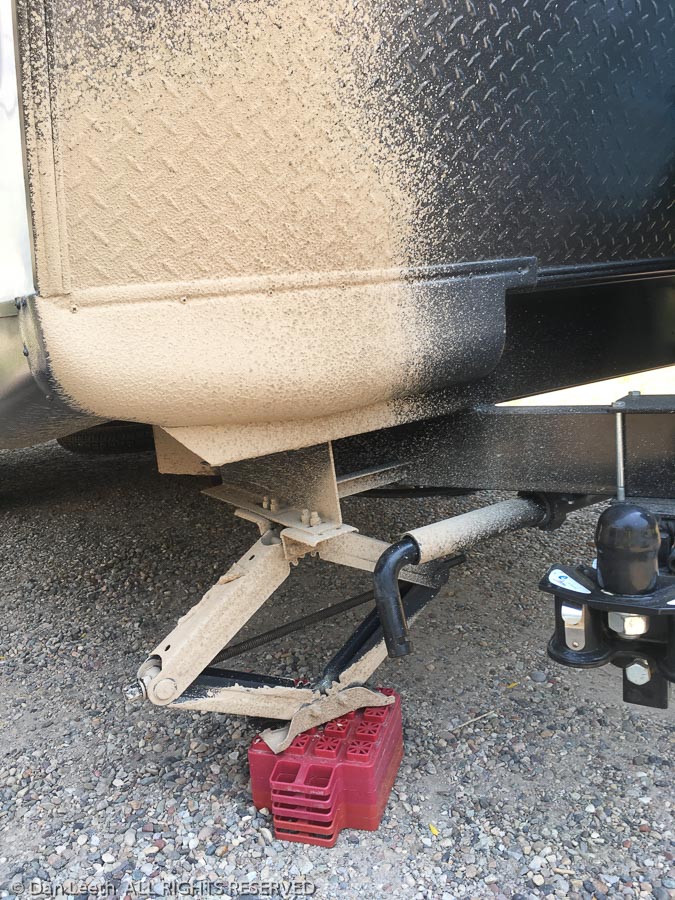
We chose to go north through Steamboat Springs and then south to Rifle. Other than a few miles of road construction that coated the front of the trailer in mud, it was pretty much uneventful. It only took about two hours longer than normal.
We arrived and set up camp in pleasant 100-degree, one-percent humidity warmth. On went the air conditioner. It’s good to not be tent camping.
Some camping trips are truly memorable. This looks to be one of them, but for all the wrong reasons.
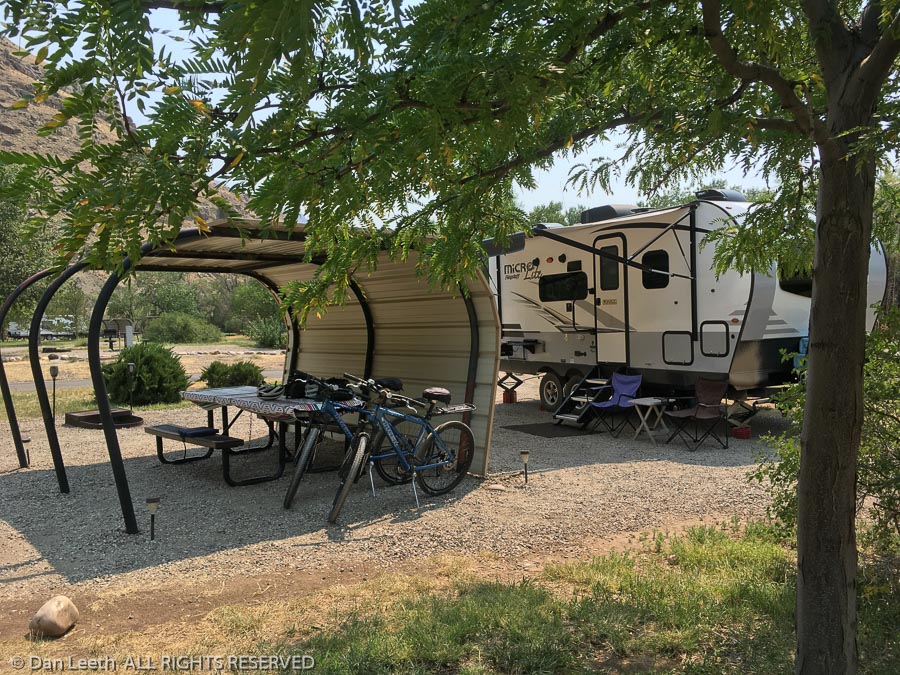
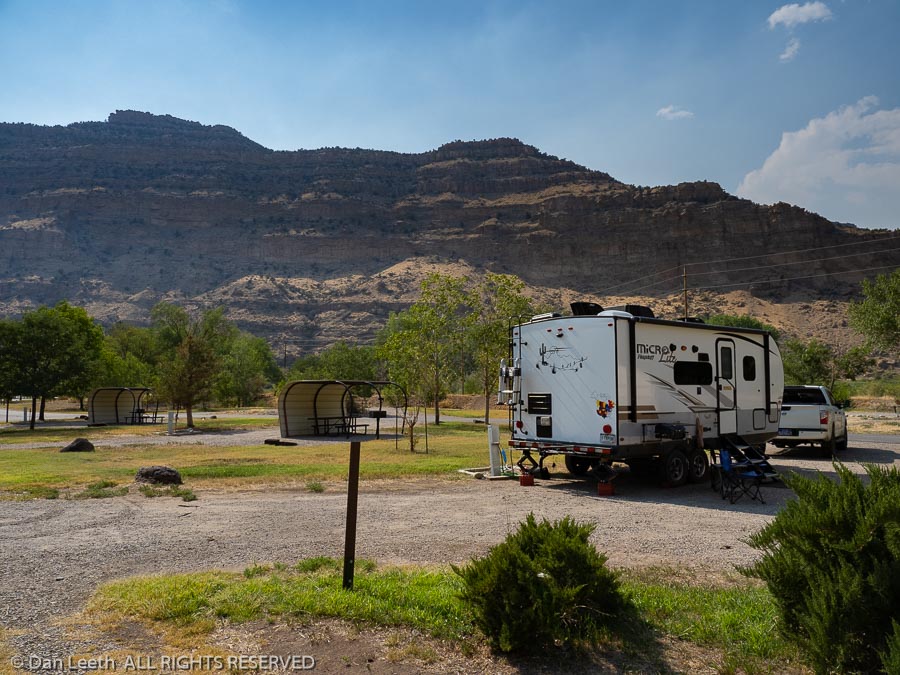
While the name may sound exotic, Robb State Park Island Acres section lies sandwiched between the cliffs, about 18 miles east of Grand Junction. There’s no island. On one side of the campground lies the Colorado River and the Union Pacific railroad tracks. On the other lies Interstate 70, a major transcontinental truck route. Even though we’re about as far away from the interstate as we can get, it’s still noisy.
The sites are nicely spaced with grassy lawn between them, but shade is at a premium. Our site does have a canopy over the picnic table. We have full hookups (electricity, water and sewer), which means we can use as much water and power as we want. That’s handy because with temperatures only a shade under 100, we’ll be showering frequently and will have the air conditioner running pretty much all afternoon.
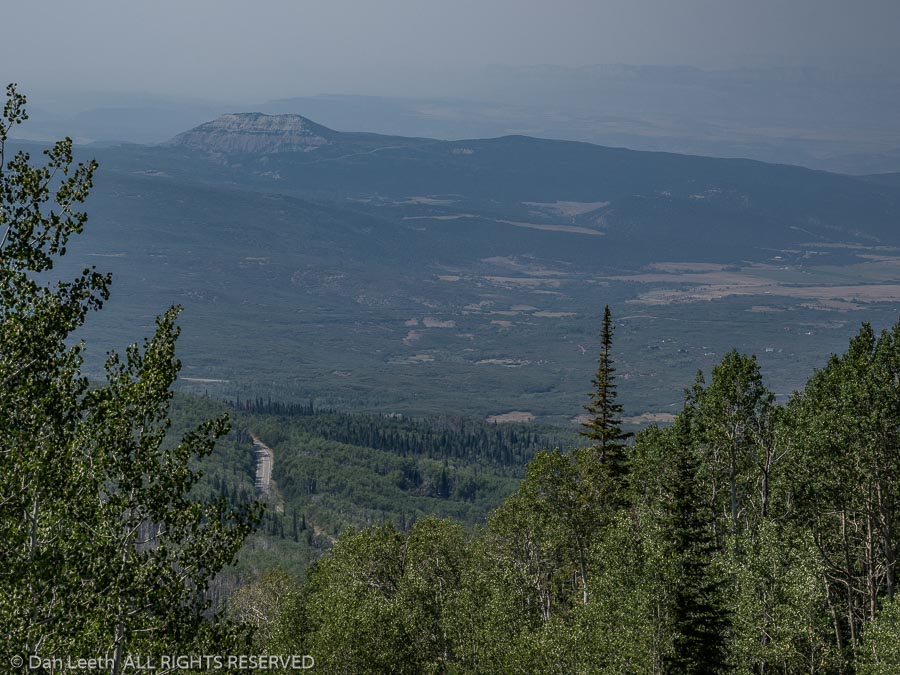
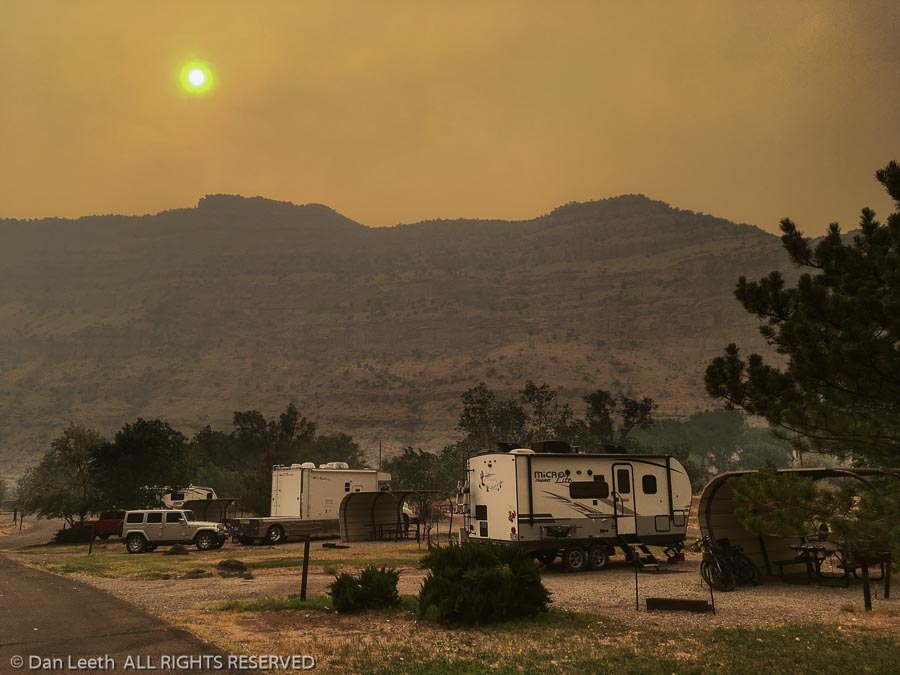
Then there’s the smoke. Another major wildfire, the fourth largest in Colorado history at last count, is burning north of Grand Junction. Smoke from that conflagration blankets the area, making distant views appear as if we’re seeing them through waxed paper. The air smells of burning wood and ash settles on everything overnight.
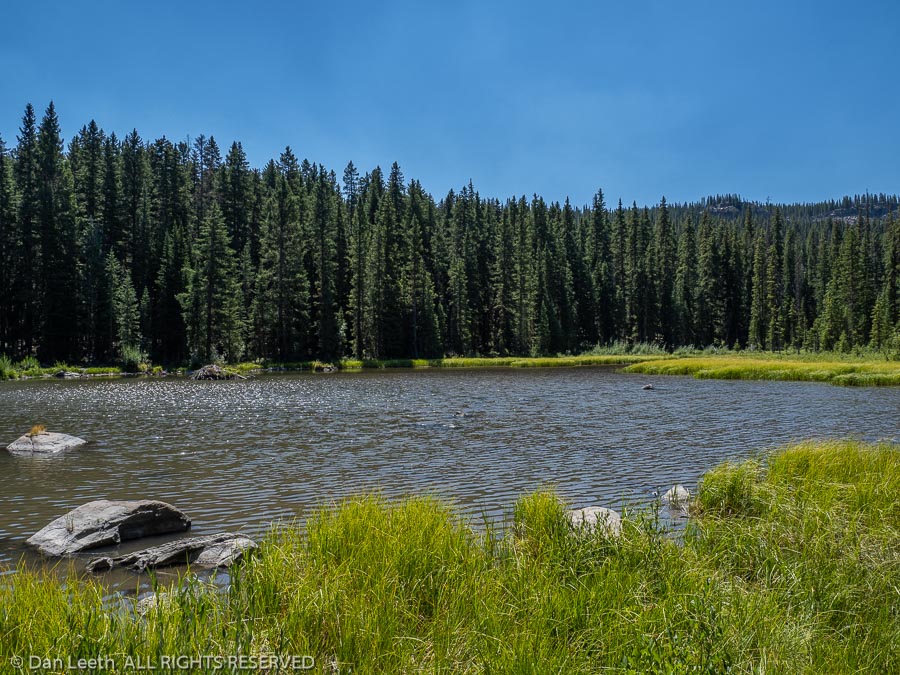
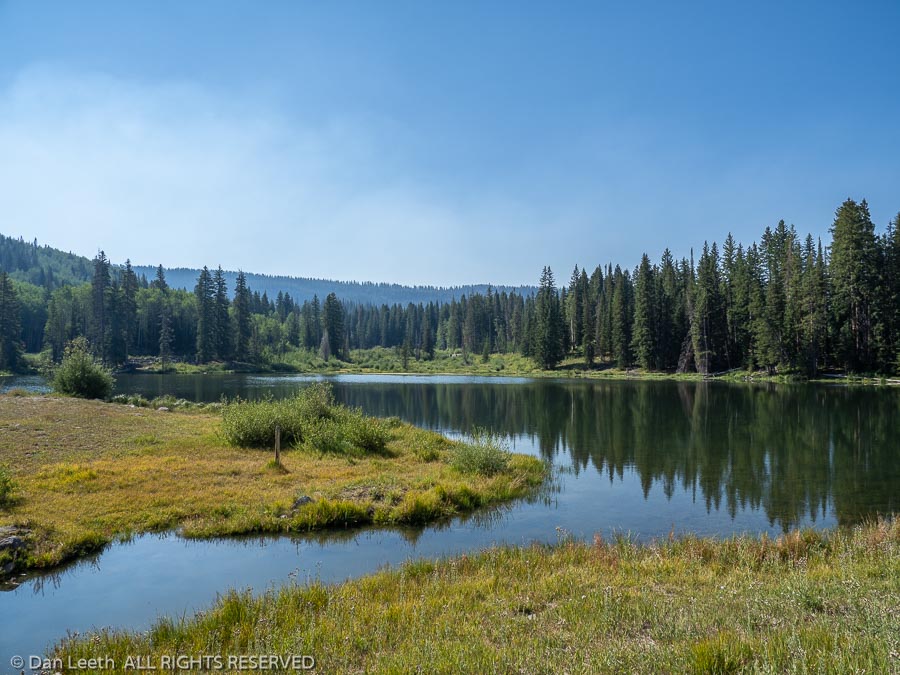
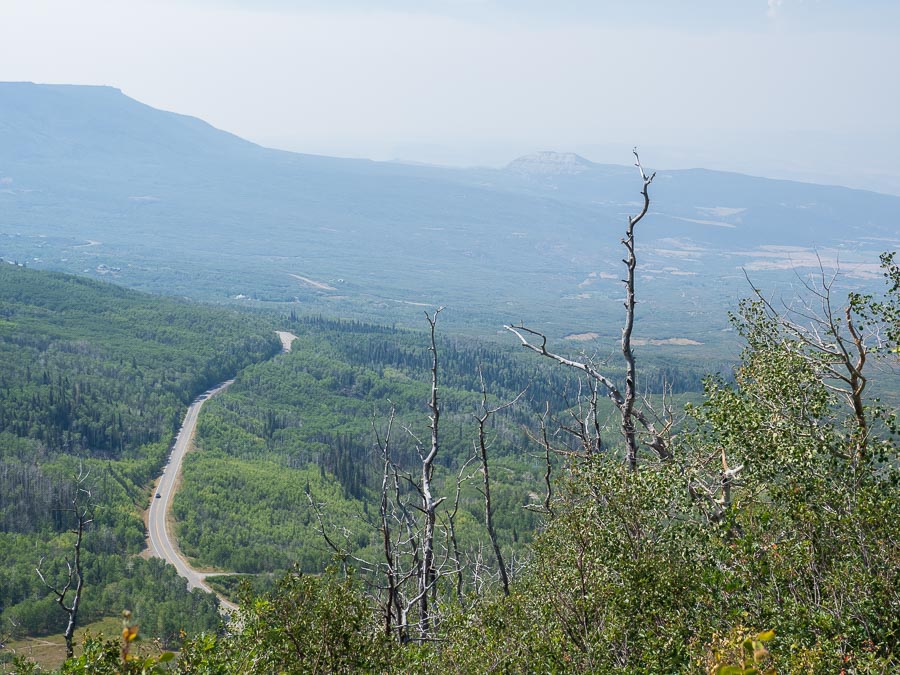
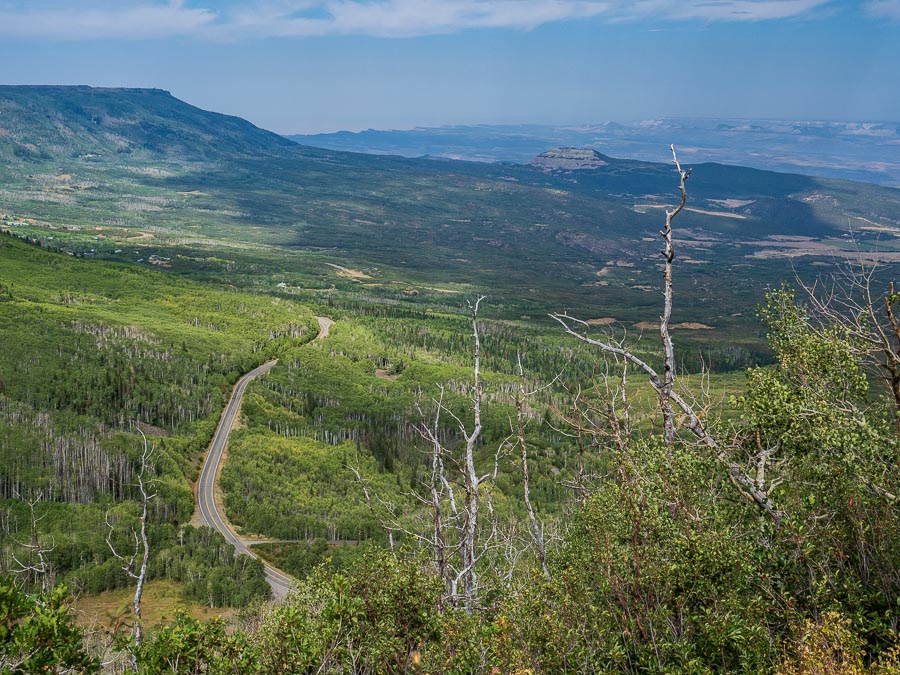
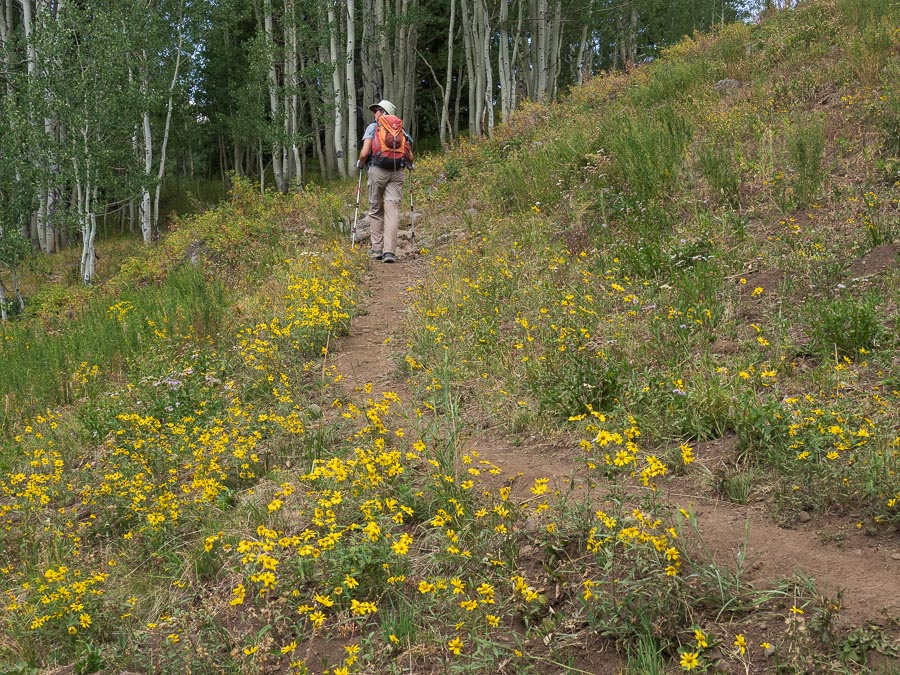
The one saving grace is that Grand Mesa lies about a half-hour drive away. At 10,000 feet, world’s largest flat-topped mountain offers a cool, relatively smoke-free place to escape for hiking. The first day, we did a short, six-mile hike through glades of aspen and spruce to a series of small lakes and creek-fed reservoirs.
Yesterday we hiked eight miles from a set of roadside fishing lakes near the campground where we stayed three nights last July. I think we each lost over a liter of blood to the ravenous mosquitoes back then. We saw nary a mosquito on this trip.
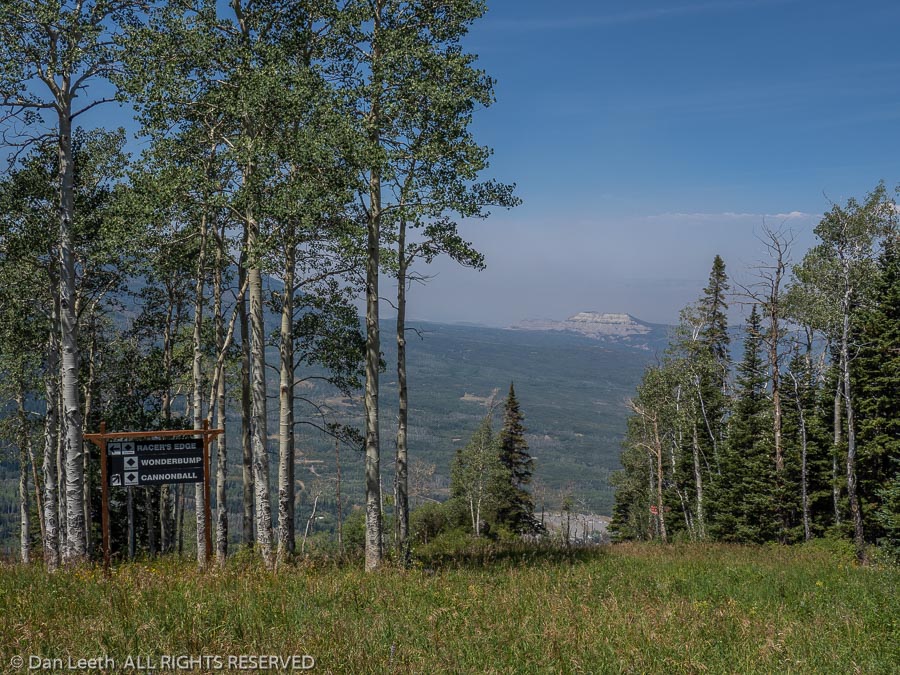
After four miles of relatively flat walking, we reached the top of a chairlift at the Powderhorn Ski Area. The steep, black-diamond ski trails look far more frightening when they don’t have snow on them. If we can do it in Covid-free conditions, we may come back this winter on a ski vacation.
Dianne is still having issues with her replaced knee, so we’re limiting hikes to every second day. On off days when the air is good, we’ll do some more biking. On the bad days, we’ll probably hang out in our trailer’s air-conditioned luxury and catch up on reading. There are some definite advantages to “camping” in our summer cabin on wheels (SCOW).
The Pine Gulch fire, now the second largest wildfire in Colorado history, burns out of control about 20 miles to the north. Winds shifted in our direction this afternoon.
We don’t have to have a campfire (now illegal) to make our clothes smell like smoke.
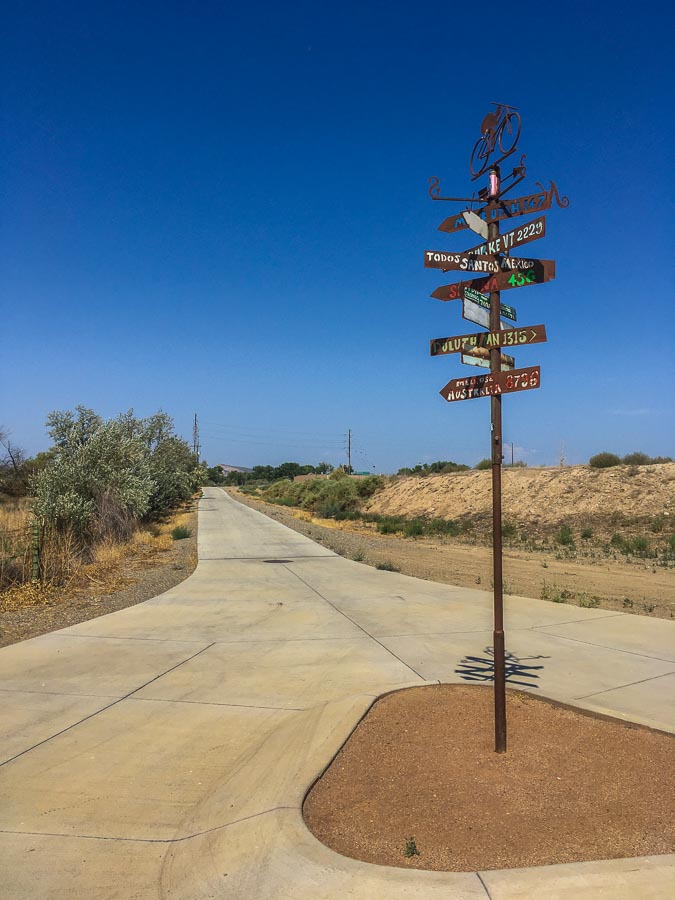
We just completed our last active day at Island Acres with a 40-mile bike ride on the Riverfront Trail. From Las Colonias park in Grand Junction, we pedaled 14 miles out to the Robb State Park in Fruita. From there we continued nearly to the Kokopelli Trailhead in Loma. At the 20-mile point, we turned back.
Heading downriver, the first half of the trip was predominantly downhill, and we had a nice tailwind. Going back was uphill, pedaling into a stiff breeze. At Dianne’s insistence, we ensured success by stocking up on calories at Enstrom’s with triple-scoop ice cream sundaes before facing the final 14 miles of trail.
This was our fourth day of bicycling over our 14-night stay at Island Acres. We also enjoyed five days of hiking up on Grand Mesa. In all, we covered nearly 94 miles on bikes and over 32 miles on hiking trails. Monday was a shopping and laundry day, and tomorrow will be the same as we prepare for departure. We also had two photo days up on the Mesa (not retired yet) and a stay-in-the-trailer day when the smoke from the Pine Gulch fire blanketed the valley and beyond.
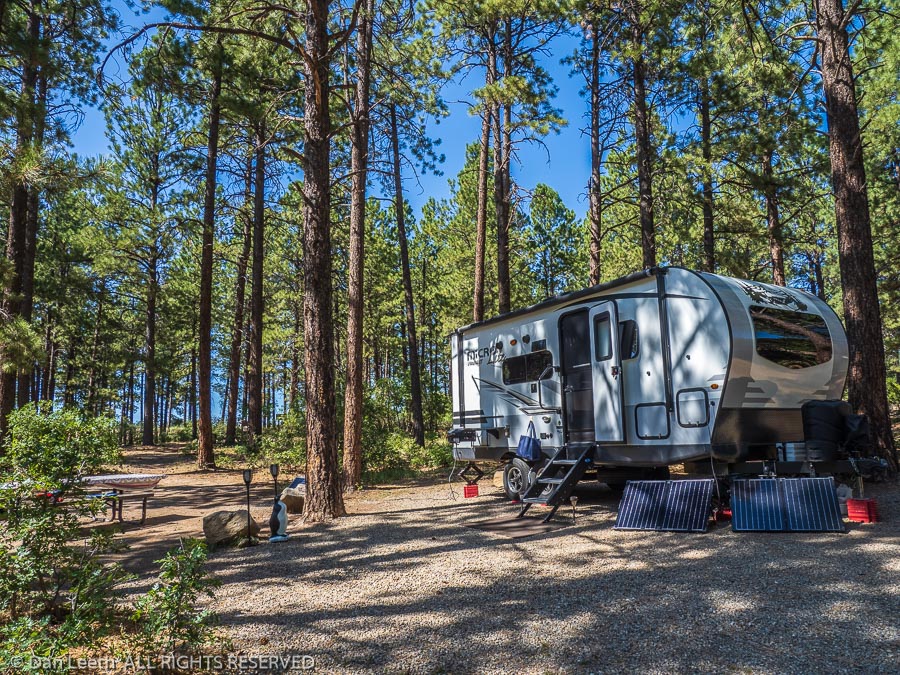
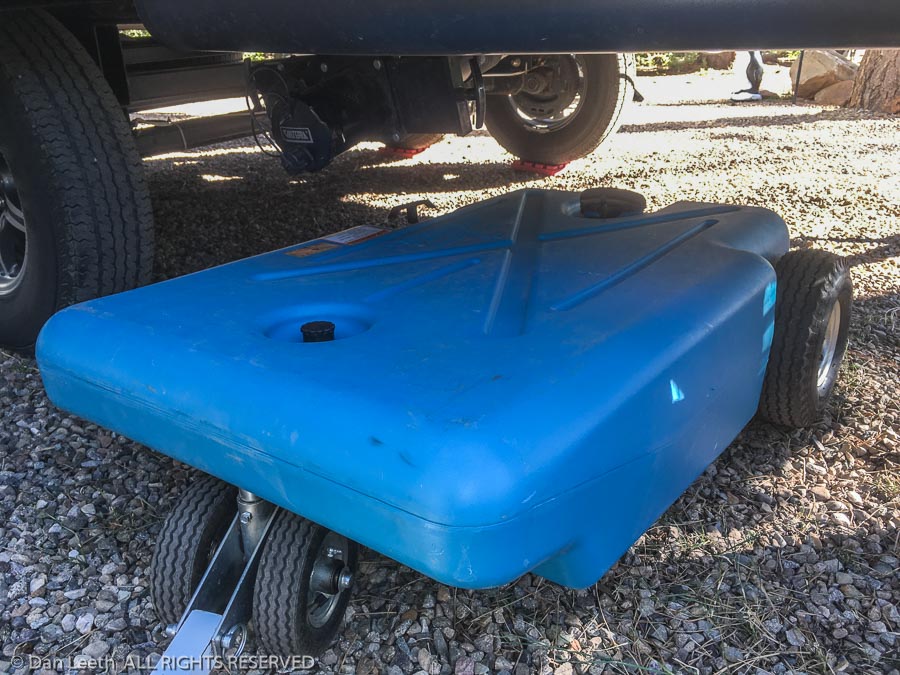
Saturday, we begin the second leg of our Covid-escaping, getaway trifecta. After enjoying full-hookup “camping” here at Island Acres, we will be staying at Mancos State Park near Mesa Verde where water fill-ups will have to be carted in jerry cans, the battery will be recharged with solar panels and the gray- and black-water tank contents will be hauled to the dump station using Bob, our 25-gallon, Barker four-wheel sewer tote.
At Mancos, we’ll be boondock camping in the whispering pines. No din of the interstate. No freight trains rumbling by. I’m really looking forward to spending the next two weeks ensconced in rustic quiet.
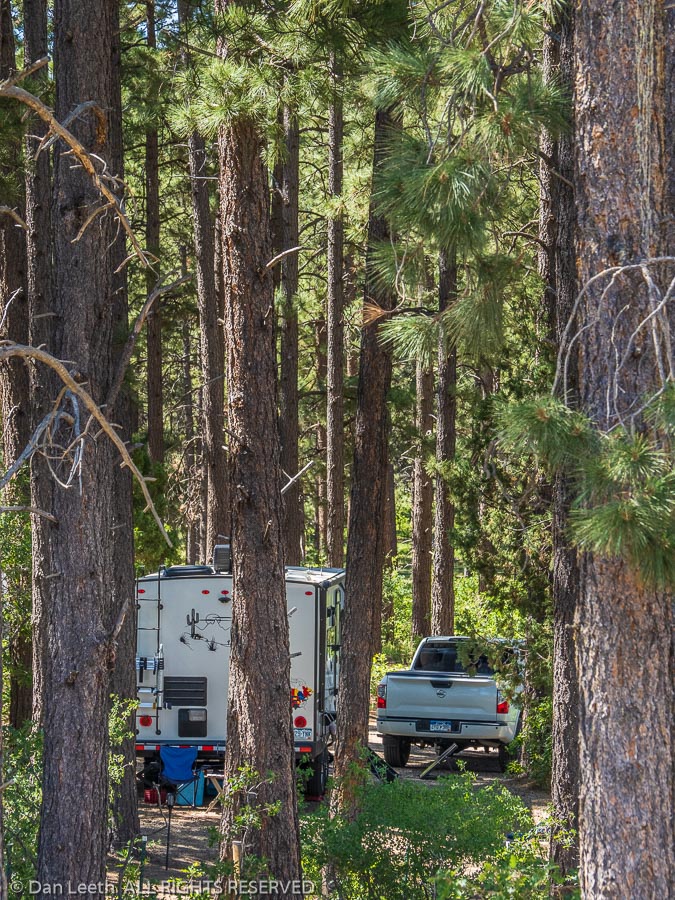
We left Island Acres and arrived at Mancos State Park on Saturday afternoon. The route from Grand Junction to Mancos took us over two mountain passes (Dallas Divide and Lizard Head), most of which was done with a fierce headwind. We arrived at Mancos in calmer conditions, set up camp and kicked back beneath the ponderosa pines and enjoyed the sounds of silence.
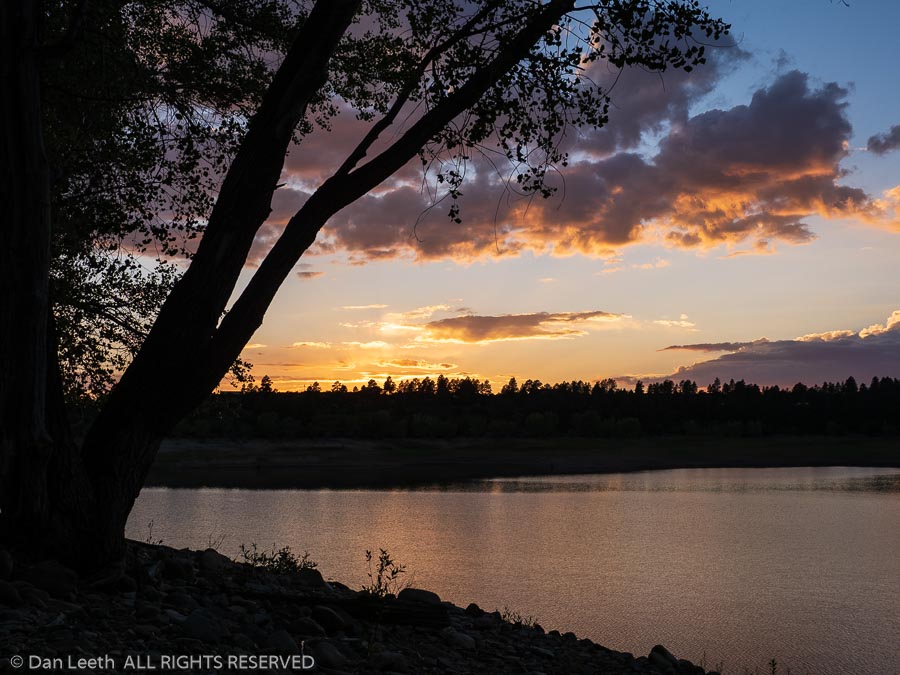
Sunday was flake-out day with just a 3.6-mile hike around Jackson Gulch Reservoir, the park’s central feature. The water provides a great backdrop for savoring the sunset.
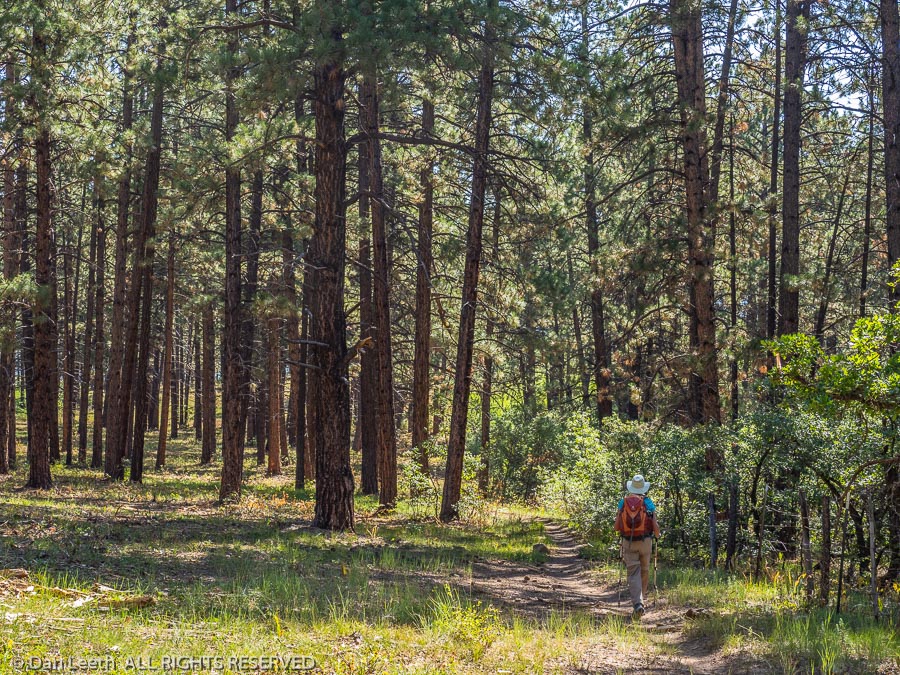
Yesterday, we hiked a beautiful trail in the national forest that is on neither the Trails Illustrated nor San Juan National Forest maps. We had no idea where it was taking us, which was exciting. We ended up in a familiar canyon and followed a trail we took last June back to camp.
Today, Tuesday, is flush and fill day – the day that we drain the gray- and blackwater holding tanks and top up the freshwater tank. The “used water” I tote to the dump station in Bob, our 25-gallon Barker tote tank. It’s a two-trip operation – one for the black followed by another for the gray. While I can tote the tote from the hitch of the truck, I’ve just been hand-pulling it here because the dump station is only a couple hundred yards away. Hand-pulling gallons of sewage to the sewer builds character.
Dianne carts the freshwater in five-gallon jerry cans from the drinking water spigot about 25 yards away. By carrying a pair of jerry cans with us, she can be refilling one while I’m using a portable water pump to load the water from the other. It took five jerry trips today to replace the liquid we’d used since our arrival on Saturday.
We’ve got a nice long hike planned for tomorrow followed by maybe a bike ride past some nearby summer homes on Thursday. Friday will be flush and fill day. Once again I’ll be dragging Bob up the road to the dump station. I can’t wait.