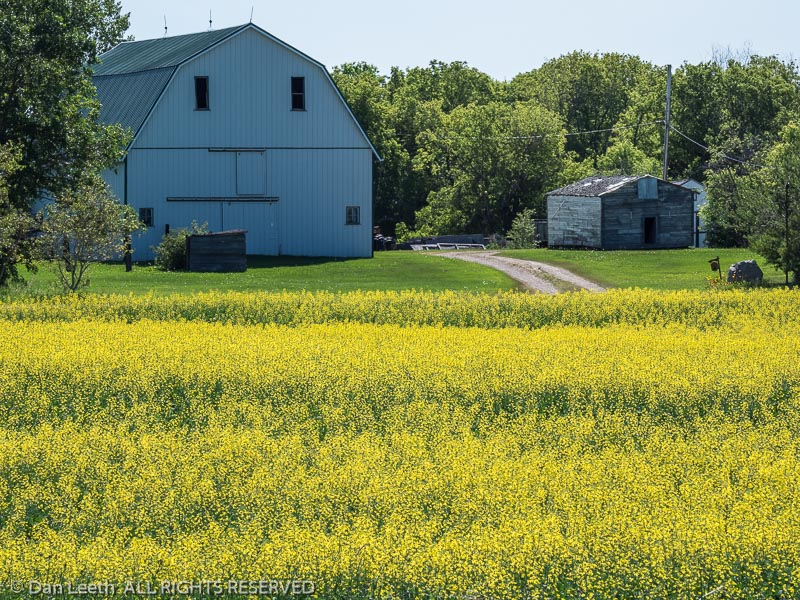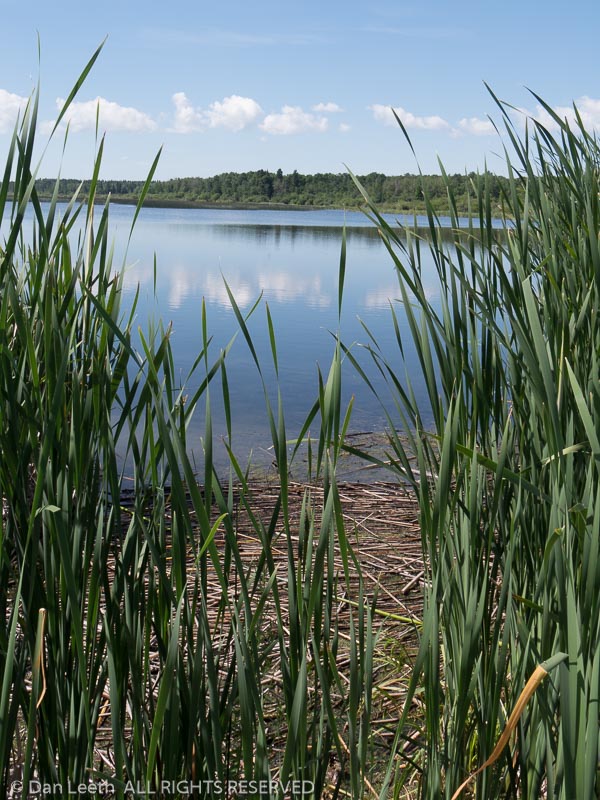
From Lake Louise, we drove the freeway-like Trans-Canada highway past Banff, dropped out of the mountains, rounded Calgary and headed east into the Canadian prairie. The terrain gently rolled with undulating hills covered with green and yellow crops and dotted with small, blue water ponds. Sorry flatlanders, but we both agreed the landscape was far more attractive than crossing the Great Plains through Kansas or Nebraska.
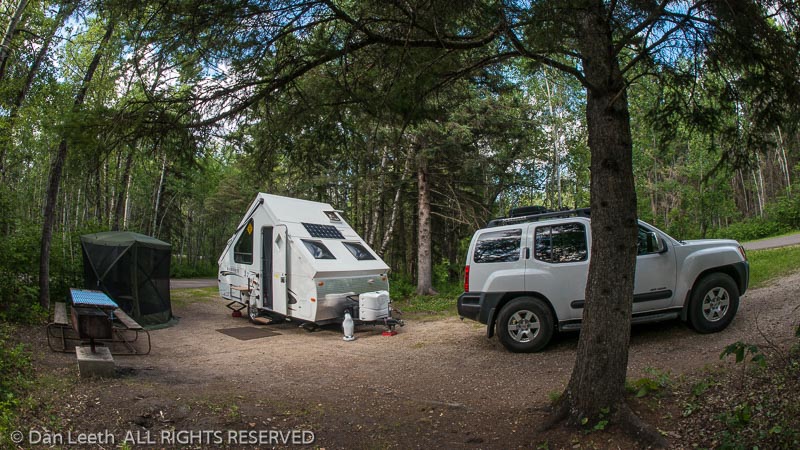
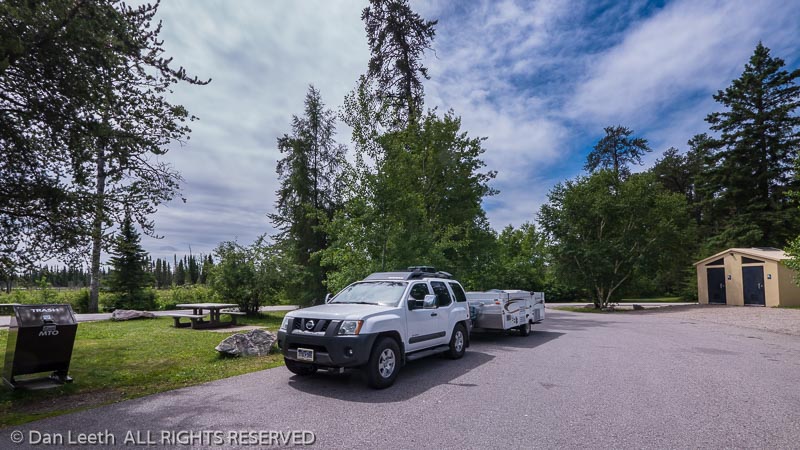
Our destination is Dinosaur Provincial Park, a World Heritage site known for offering more dinosaur bones for its size than anywhere else in the world. We checked into a grassy campground shaded with leafy cottonwood trees with nearby pit toilets. Flush toilets, free showers and a burger-cooking restaurant were available a few hundred metres away.
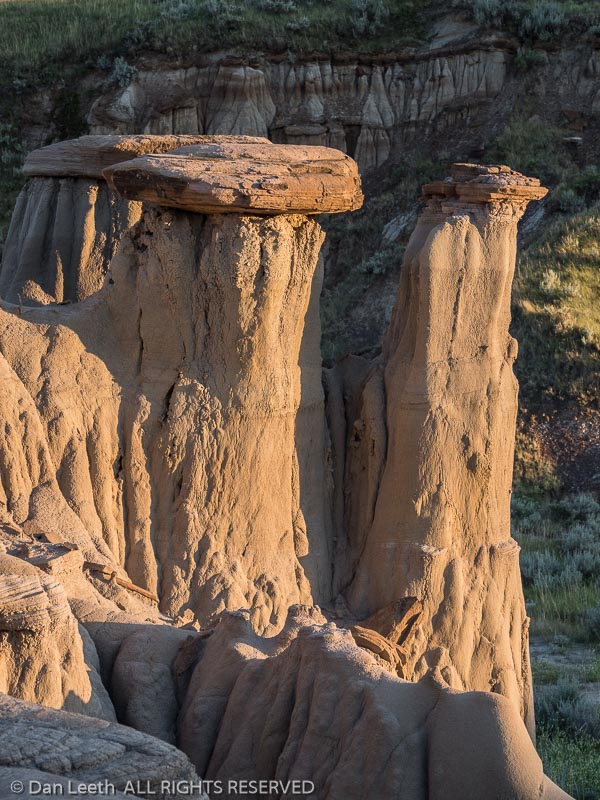
While bones sparked the park’s creation, we came to explore and photograph the park’s badland topography. The landscape features a river and glacial-carved landscape covered in mounds of bentonite that’s been molded into an array of standing hoodoos and rilled peaklets. Cameras in hand, we hiked the park’s scenic loop drive, all five of the park’s interpretive trails and took a guided sunset drive into the park’s limited-admittance backcountry. We also swatted a myriad of mosquitoes.
Our stay overlapped Canada Day, which is like our 4th of July, but they do theirs four days earlier. July 1st marks the day 150 years ago when the British colonies came together to form what is now Canada. Falling on a Saturday, it was duly celebrated by a slew of families out camping with their kids and the family dog(s). I have to say that the interaction of the parents and children in this natural setting was a delight to watch.
The downside of having so many families sharing the campground was that the showers were always crowded and with the hot water supply frequently depleted. They may have been frigid, but at least they were free.