Absolutely Petrified

After a dozen nights camped in Chama, New Mexico, it was time to head west to Homolovi Ruins State Park near Winslow, Arizona, where we’ll be camped for a week.

The park houses the remains of some Hopi settlements dating back to the 14th century, only a few walls of which have been reconstructed and stabilized.  Beyond that, there’s little more than a handful of interprettive signs telling us what once stood there.

The most surprising thing about the site were the number of pottery sherds littering the ground.  While it’s illegal to remove them, people (who must believe the rules do not apply to them) still do so.  I’m sure the best pieces are long gone, but there’s still plenty of sherds left on the ground for us non-thieves to admire.

The main reason we’re camped at Homolovi (pronounced ho-MOLE-lo-vee) is because it’s the closest public campground to Petrified Forest National Park.  The park houses not only thousands of acres studded with petrified tree trunks, but it also contains some of the most colorful Chinle “badland” slopes around.  Some of these barren hillsides form what Arizona tourism folks have dubbed the Painted Desert.  We were eager to get there and photograph both petrified wood and painted wonderland.

After enduring 2½ days of rain in camp, we finally made it to the rocky forest.  The first day, we stopped at nearly every one of the park’s slew of scenic overlooks and hiked nearly every one of its tourist trails, the longest of which was a whopping mile in length.  The following day, after strolling the final tourist trails, we set out on a three-mile, off-the-grid hike through the backcountry.

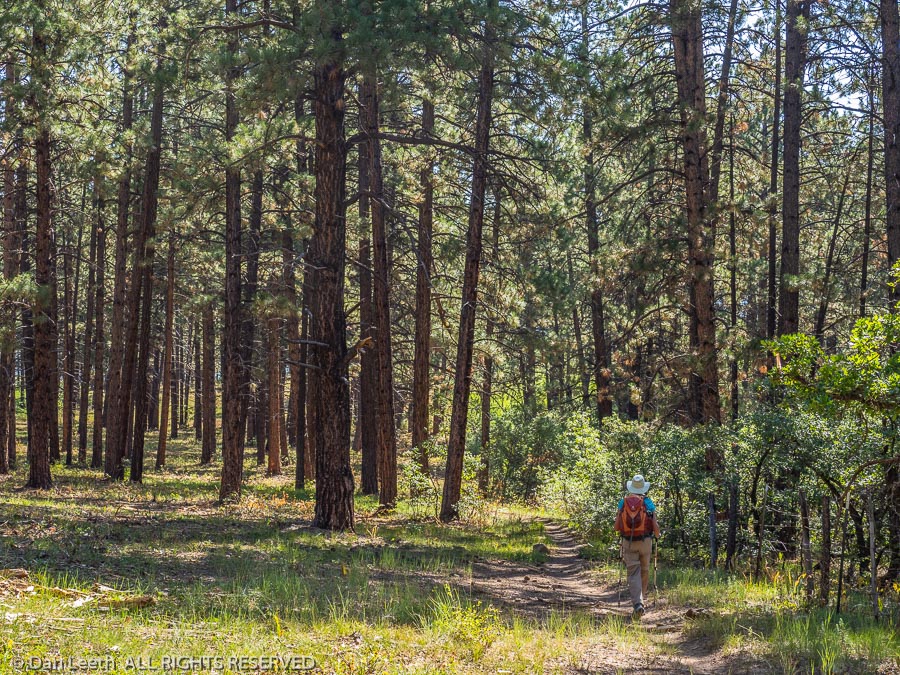
One big difference between our cross-country hike versus the tourist trails soon became apparent.  Our backcountry route was rife with small pieces of petrified wood.  It would have been so easy to pick one up and take it home as a souvenir.  (We absolutely did not do so.)  Virtually none of those pocketsize pieces can be found beside the tourist trails these days.

It’s a pity, but beside the park’s popular pathways, petite pieces of the petrified plants have apparently been previously pilfered.

Time for Pie

After leaving Homolovi Ruins State Park, we headed north to Bluff, my favorite town in southeast Utah.  We had planned to camp at a BLM campground on the banks of the San Juan River, but rain, rain and more rain had turned the site into a quagmire of mud and muck.  So instead of cheap, off-the-grid camping we ended up at the Cottonwood RV Park in downtown Bluff.

Being in Bluff meant that dinner would have to be Navajo tacos, which consist of beans, salad fixings and cheese atop a fry bread bed.  There are two places in the neighborhood to get decent Navajo tacos.  The closest choice, the restaurant at the Twin Rocks Trading Post, was closed.  There was a big Navajo event in Shiprock, so the owner gave his Indian staff the day off so they could attend.

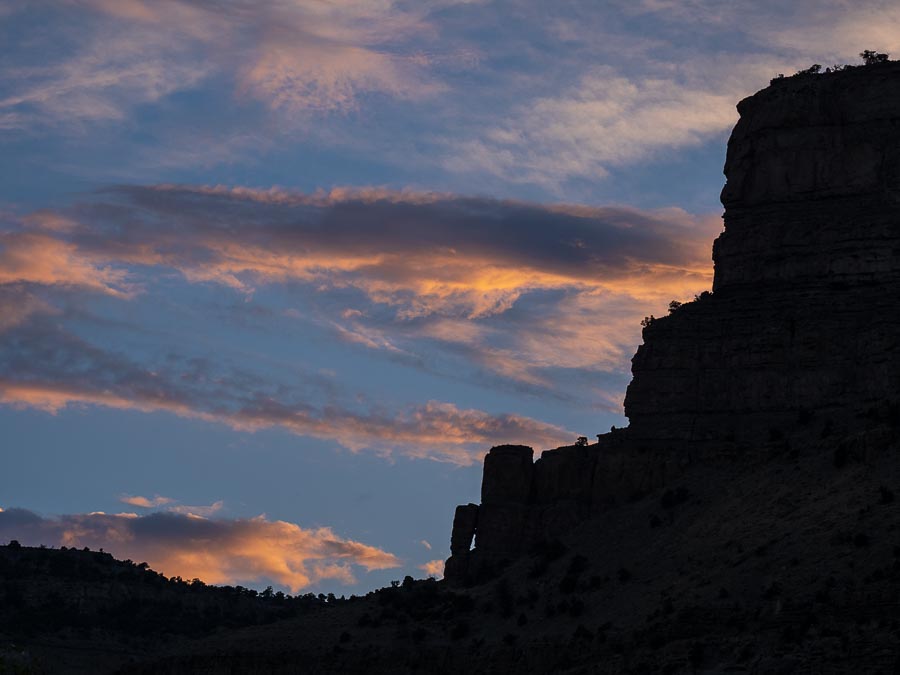
That meant we would have to drive 20+ miles down to Mexican Hat and get dinner at the Olde Bridge Grille located in the San Juan Inn.  The commute gave us the opportunity to photograph the cliffs and clouds as the storm broke.

The next morning, as research for a Utah Life story, we talked to and bought a t-shirt from the folks about the Bears Ears National Monument at the Friends of Cedar Mesa information center.

From there we headed north for a four-night stay in Capitol Reef, my favorite Utah national park.  I needed to do some final research about the pies the Natural History Association sells for an upcoming Utah Life story about the park.  Eating pies for as story research is tough work, but I do it because my readers need to know.

Besides pigging out on pies, we had hoped to drive south along the length of the Waterpocket Fold through the park, but the road is dirt and the rangers advised us that it would not be a good thing to do after the rain.  So we stayed in the main Fruita area and squeezed in a few short hikes.

Our next destination is the Grand Canyon North Rim where we have a premium, rim-side campsite for four nights.  On the way there, we stopped for two nights at Utah’s Coral Pink Sand Dunes State Park.  I envisioned a nice, quiet state park formed to protect the sand dunes.  That’s not what we got.  Ninety percent of the park is open to ATVs, and they were out buzzing around the dunes like a swarm of locusts devouring a wheat field.

To escape the dune drivers, we fled to Zion National Park and hiked a few miles up the East Rim Trail where we saw only a handful of fellow trail traipsers.  It was then back to camp where we followed dinner up with yet another Capitol Reef pie we brought out with us, all in the name of research.

The Grand Question

There’s a great debate going on in our household.  Does the Grand Canyon’s grandeur look more impressive from the rim or from the river?  Our next stop was the canyon’s North Rim where the controversy ensued.

The female contingent of our household believes this monument to erosion looks more impressive from the rim where one can look out over a network of chasms and sub-chasms ten miles across and more than a mile deep.  Knobs and buttes rise like temples from the abyss, each sculpted with cliffs cut by side-streams.

The problem, her male counterpart contends, is an absence of scale.  With no reference points, one has trouble appreciating how large and deep the thing really is.  The problem is magnified by the human-caused haze than now lingers over the canyon.  When the first explorers gazed into its depths, they estimated the river to be no more than six feet across.

Sitting beside the river, which is more like 300 feet from bank to bank, one can better appreciate the scale.  Canyon walls can tower a thousand feet or more, frequently straight up.   The sky is often little more than a slot in the heavens, and when one can see the rims, they seem impossibly far away.  To me, that is the epitome of Grand Canyon Grandeur.

Both Dianne and I have seen the Grand Canyon from nearly angle possible.  We’ve spent countless nights bunking on the rim, we’ve hiked from rim to river and back again countless times (sometimes twice in one day) and we’ve floated the river twice, once in motorized rafts and once in hard-sided dories.

On this trip, we would spend four nights camped at the North Rim, and because of the weather, only see the canyon from the top.   Our first day in the canyon we indulged in one of our favorite Grand Canyon pastimes.  We had lunch at Grand Canyon Lodge staring out into the canyon.  That was followed by a sunset drive to Point Imperial and Cape Royal, the North Rim’s prime viewpoints.

The next day we hiked the Widforss Trail along the rim followed by the short hike to Bright Angel Point behind the lodge before heading once again to the Lodge’s dining room, this time for dinner.

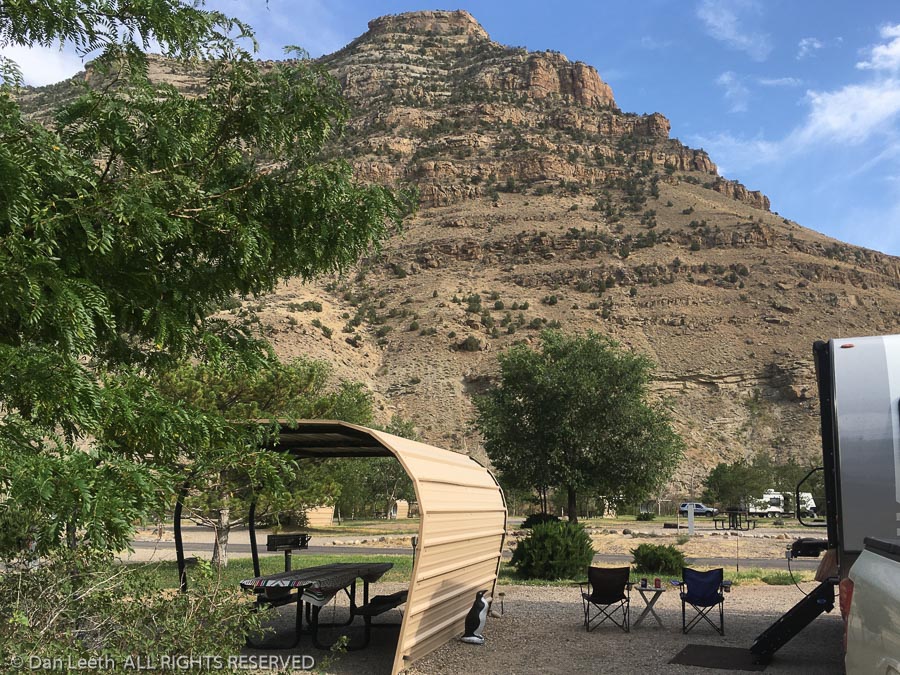
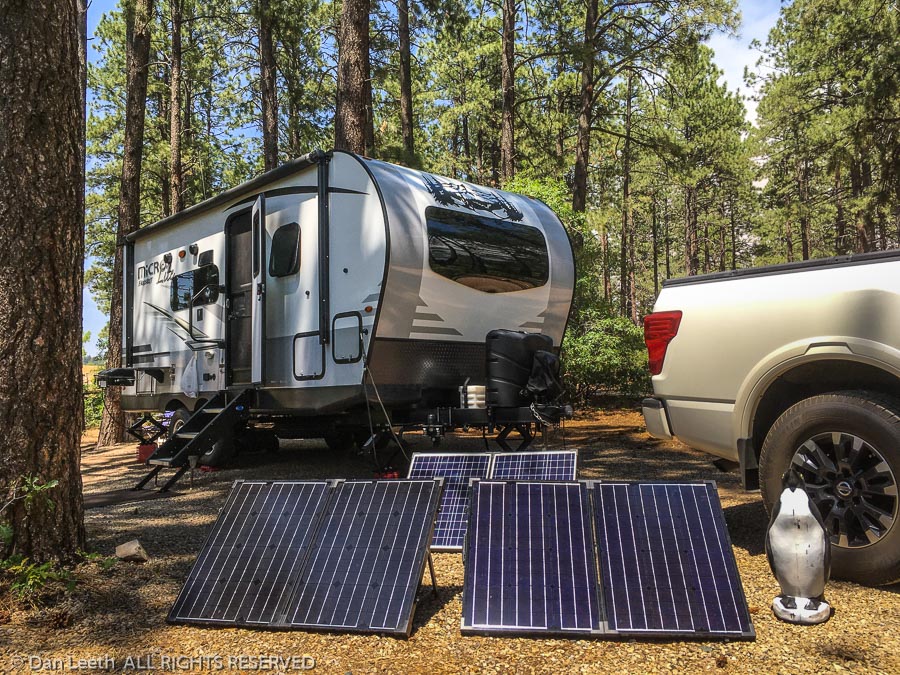
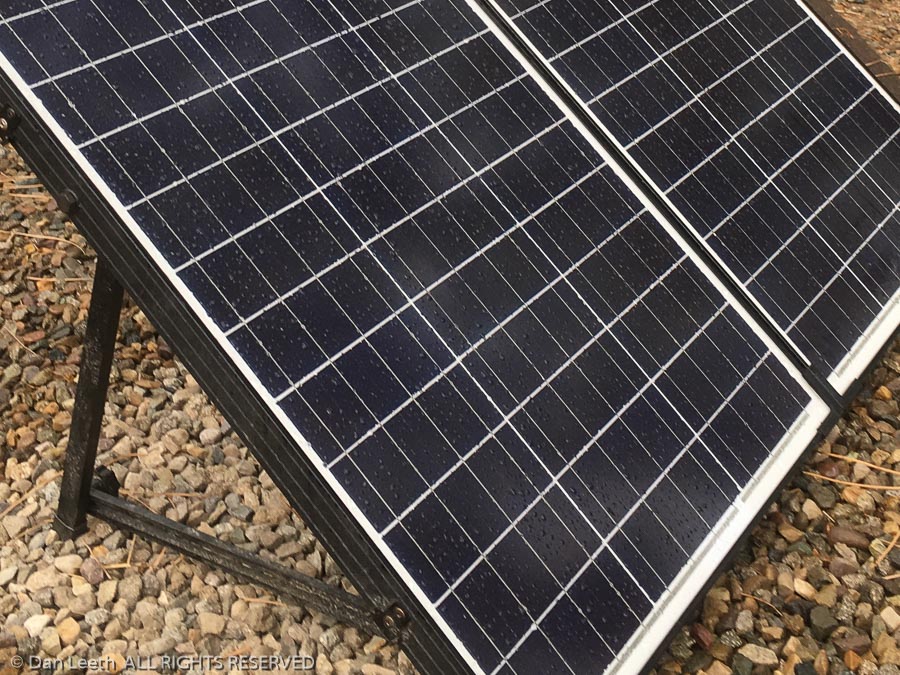
The following morning, we found that temperatures has plummeted, and our campsite was covered in snow.  Our attack penguin, Adelle, was happy, but our solar panels were not.  The campground Walley came around door-to-door to tell the dozen or so remaining campers that we could use our generators longer than the prescribed time.  That was handy because our trailer furnace burned constantly throughout the day and night.

The next day was cold but clearing.  We hiked the Transept Trail from our campsite to the Lodge, which was now closed for the season.   Snow plastered the hillsides, occasionally illuminated by the sun poking through clouds.  It was a pleasant day, but the rim versus river debate would have to wait.

We were definitely looking forward to the drive to lower altitudes and warmer temperatures at Dead Horse Ranch State Park in Arizona’s Verde Valley.

Wally World

We’ve camped just under 400 nights over the past six seasons, nearly every one of which was in some sort of formal campground.  Nearly every one of them had a “campground host” on duty.  The only places we’ve ever had issues with these park volunteers (we call them “Wallys”) have been in Arizona state parks.

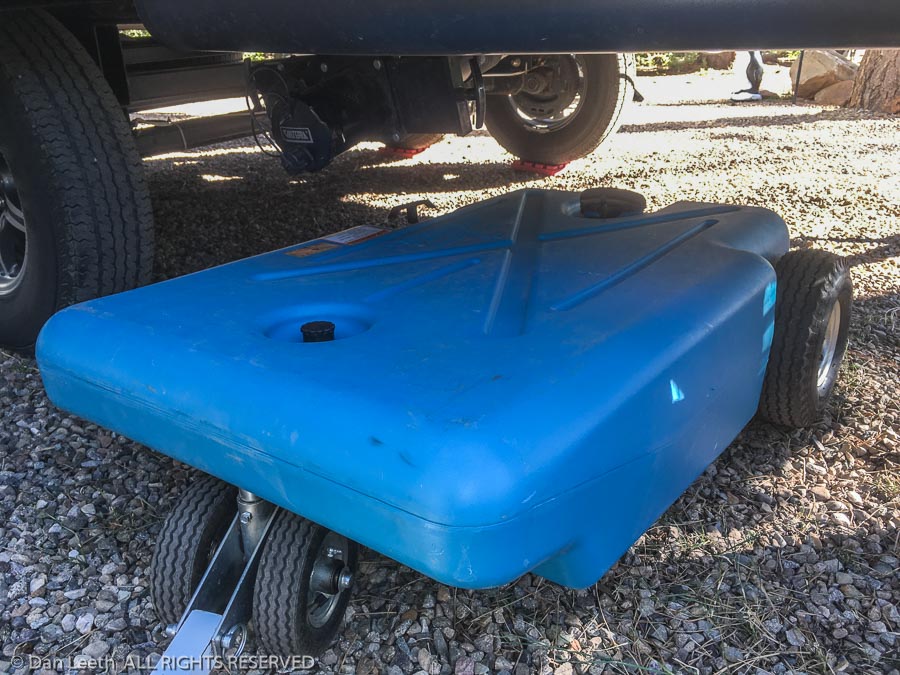
Two years ago, we were camped at Kartchner Caverns State Park in southern Arizona.  Our site had water and electric hookups, but no sewer.  That’s not a problem since we don’t have a bathroom in the trailer.  But we do wash dishes in the trailer sink, which produces “gray water.”  We catch the sink runout in an 11-gallon tote, which we can wheel to a drain site.

Our Kartchner campsite was across from the campground restrooms.  It had an outside sink where folks could wash dishes and dump their dirty dishwater.  We used similar sinks at a national park to drain our tote of dishwater, so we figured that would be the proper thing to do there.

Not so, said the Wally who intercepted me on my way to the sink.  You must dump your dishwater at the trailer dump station.  We discussed the issue and I agreed to tote my tote across the campground to the RV sewer dump.

I thought the issue was settled, but apparently it was not.  She had one of the park rangers drive over to tell us that if we were to so much as even thinking of dumping our sink water anywhere but the RV dump station, we could be subject to a $5,000 fine.

“Why are you telling me this?” I asked.  “I already told the lady we’d wheel it to the dump station.  Did she think we might smuggle our dishwater into the dishwater sink when she wasn’t looking?”

The second incident occurred on our current visit to Dead Horse Ranch State Park located in the Verde Valley near Sedona.  The park is beautiful, the restrooms clean, the hiking trails plentiful and the ranger staff at the Entrance Station/Visitor Center friendly and helpful.  We hiked an eight-mile loop trail from our campsite and explored and photographed three nearby national monuments preserving centuries-old Sinagua Indian sites.

On our way back from one of the sites, we decided to take a look at the park’s group campsite facilities.  We belong to the Aliner Owners Group (yes, ours is a Rockwood but the club graciously lets SOBs–Some Other Brands—join).  They are always looking for regional rally sites, so we thought we’d scope out the group site here.

There were no signs, cones, closed gates or anything else saying the group site was off-limits.   We drove in, made a quick loop through the area and headed out.  An angry Wally flagged us down as we were leaving.

She told us we were not welcome in the group site and began scolding us for violating some unwritten, do-not-enter protocol.  We explained why we were there, apologized profusely and promised never to ever enter the group campsite again.  Her scolding and our apologizes continued for a good five minutes.  Finally we were allowed to exit.  I half expected to receive a ranger visit that evening, but fortunately none followed.

I’m sure the two volunteer hosts were just ordinary people trying to do their job as they best saw fit.  Maybe we were the 15th incident in a stressful day and suffered accordingly.  I love Arizona State Parks and will continue to visit them.

I will just make sure to never enter a group campsite or tote my dishwater to the dishwater sink.

Back Again

After four nights at Dead Horse Ranch, we drove south to Apache Junction for a two-week stay at Lost Dutchman State Park, which lies at the edge of Superstition Mountain.

For those of you not familiar with the area, the “Lost Dutchman” name does not refer to an inexperienced guy from the Netherlands who ventured into the rugged backcountry without a map.

No, it refers to a 19th century prospector from Germany (Deutschland) whose supposedly rich gold mine was “lost” in these desert mountains.  Over the last 130+ years, hundreds (thousands?) have tried to find this misplaced treasure trove.  “Dutch Hunters,” they’re called.

We’re “Jack Hunters.”

Instead of searching for the elusive mine, Dianne and I are hoping to photograph the rare and endangered Superstition Mountain jackalope.  This is a rabbit-like creature with antlers.  We found a stuffed one at the Tortilla Flat restaurant and giftshop, so we know we were on the right track.

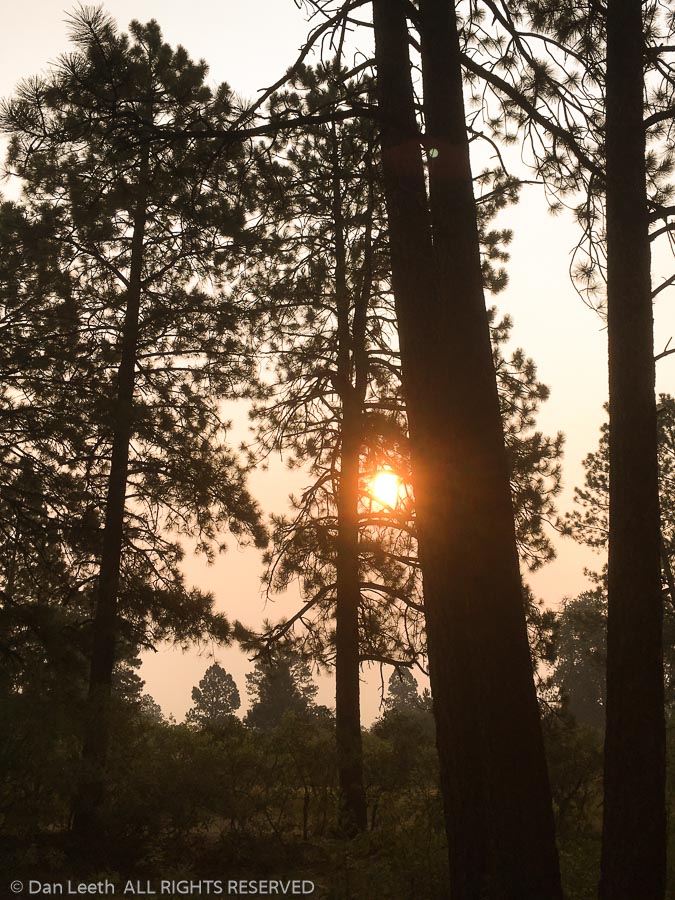
Our hunt, so far, has been just as successful as the decades of searches made by Dutch hunters.  While we’ve spotted numerous cottontail bunnies on our walks to the restrooms, none with the distinctive jackalope rack.  We did, however, see a regal horned lizard and numerous sunsets from camp, so all is not lost.

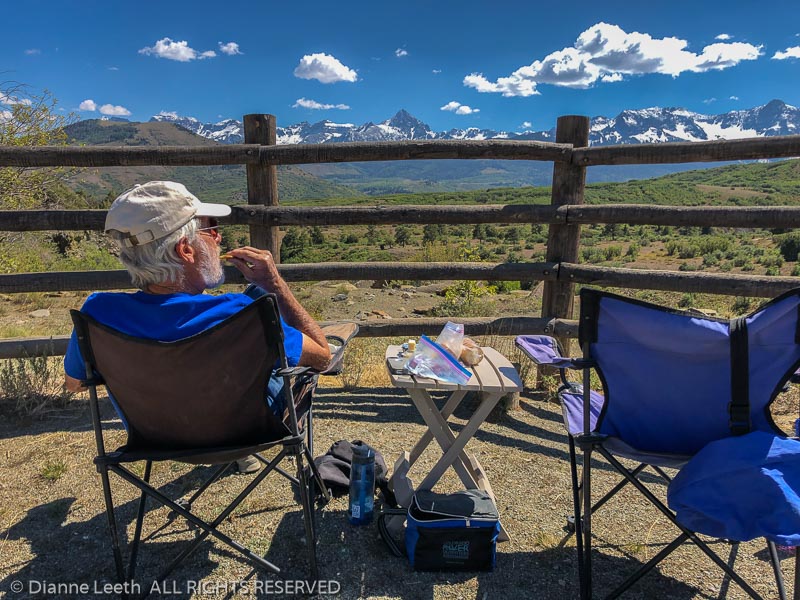
From our site, we look directly at the towering cliffs that form the southwestern face of the peak.  With the possible exception of our site at Devils Tower National Monument a few years ago, it’s the most scenic view from a campsite we’ve ever enjoyed.  Unfortunately, during the weekend, our unobstructed view is slightly diminished by the motor mansions parked in the loop above.

While the views from camp are spectacular, the campground itself has one annoying fault.  There are only two restrooms serving 104 campsites.  If the campground were all RVs with sewer hookups, that might not be a problem.  But without sewers and given the large number of tent campers here, it’s best to not be desperate for the facilities, especially on weekends when the campground is rife with families bursting with offspring.  At least the Wallys are friendly.

But hey, we’re in the Superstitions, my favorite Arizona mountain range.  Over the 18 years I lived in Arizona as a youth and young adult, I logged hundreds and hundreds of miles traipsing her trails.  I still enjoy venturing into the Superstition backcountry, but as a geezer with a wife suffering from foot, knee, back and shoulder issues, the hikes are now considerably shorter.

In the past two weeks, we’ve logged dozens of miles hiking Superstition Wilderness Area trails.  We’ve hiked to springs, scaled ridges, crossed mesas, wandered up and down canyons and crossed a few passes.  At a maximum of 10¾ miles per day (Dianne’s medically limited to less than 11 miles per day), we’re not covering the amount of ground we would have logged three or four decades ago, but we’re still able to get into and enjoy the backcountry.

Now If we could just find one of those Superstition Mountain jackalopes in the wild!

Shakedown Cruise

First trip of the year, and this time with a new tow vehicle.  Since we bought the trailer, we’ve been pulling it with our old, trustworthy Nissan Xterra.  It had a tow rating of 5,000 pounds, which was more than enough to handle our 1,854-pound Rockwood.  The problem was that it was a stick-shift.

In 52 years of driving, I’ve owned only one car with an automatic.  That was back in the ‘70s with wife number one.  We bought a Chevy with a V-8 engine and a column-shift automatic, my now ex-spouse was so thrilled with it, she soon ran off with a used car salesman.  Best thing that ever happened to me.

I like manual transmissions, but not for pulling trailers.  The Xterra towed fine down the highway, but was not fun in stop-and-go traffic nor if we stopped on an uphill.

The biggest problem, however, was backing into a campsite, especially if it had an uphill slope to it.  Moving slowly required slipping the clutch and more than once we ended up smelling the pungent aroma of a burning clutch.

When we had to have the clutch replaced at less than 80,000 miles, I decided the stick-shift had to go.  This winter, we were offered a splendid deal on a brand-new Nissan Titan crew-cab pickup with a seven-speed, automatic tranny.  So, we went that route.

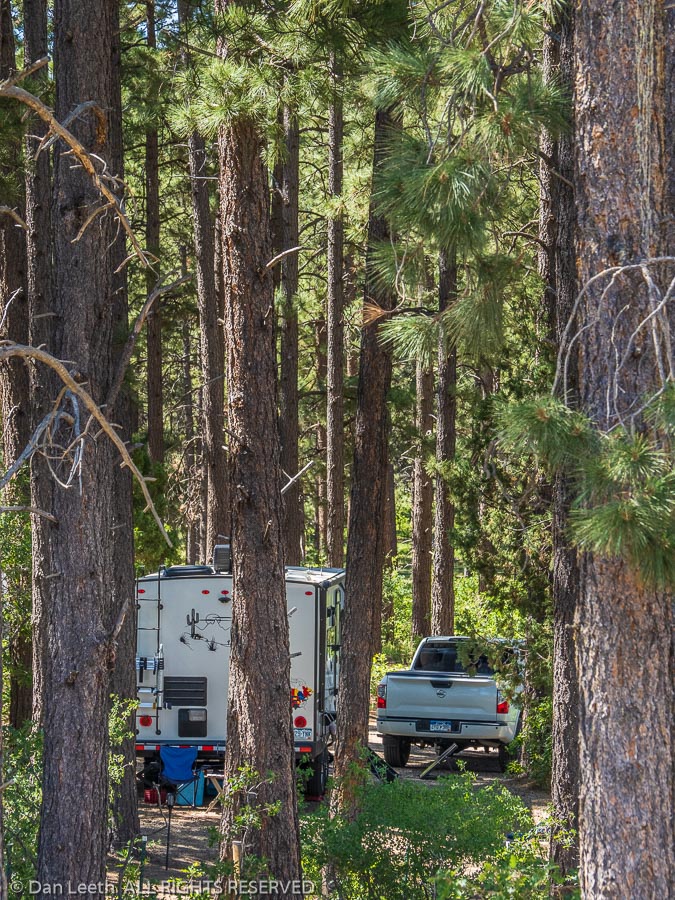
It’s white so we named our Titan “Tighty.”  It’s first tow trip was to haul the trailer down to Cheyenne Mountain State Park outside of Colorado Springs.

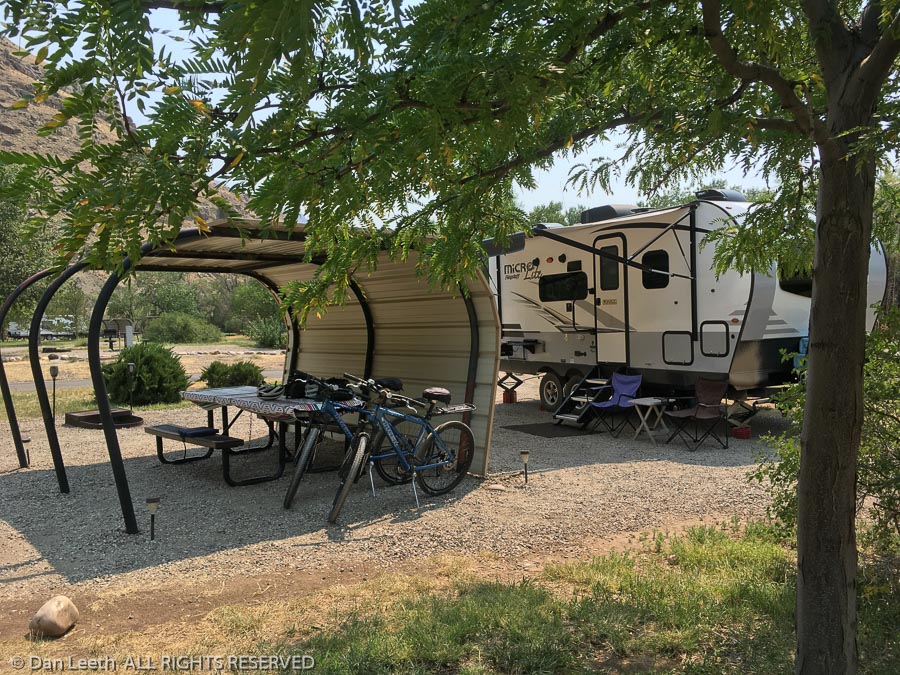
This was our second visit to this state park, which we really like.  It’s 60 miles from home and has lots of full-hookup sites.  At night we look down on the lights of Colorado Springs, and we hear Reveille and Taps broadcast daily from the Fort Carson army base located just below the mountain.

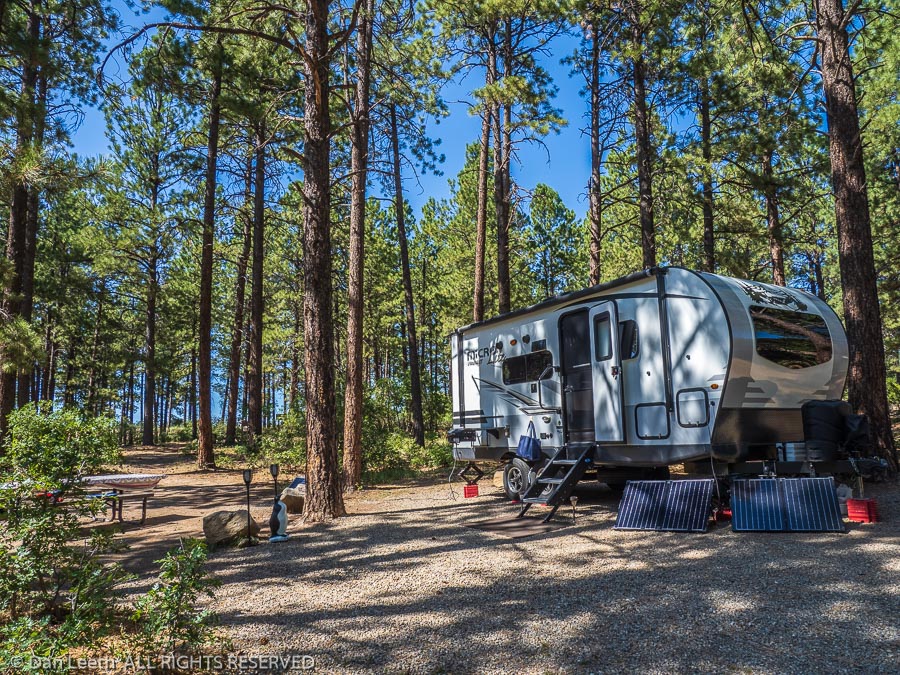
With a trip to the Four Corners region of Colorado and Utah upcoming, we wanted to check everything out both on the trailer and on the truck.  As for the trailer, we found we had forgotten a few camping items, but all else seemed to be in good working order.  On the truck, we discovered the tailgate was hitting the jack post, a problem we easily solved with a longer ball mount on the hitch receiver.

Best of all, Cheyenne Mountain State Park offers 21 miles of hiking trails, allowing us to discover what condition our condition was in.  Let’s just say there’s work to be done on that front.

Planning ahead

Decades ago, Dianne and I traveled three months through Europe armed with little more than a Eurail pass and knapsack full of clothes. Our itinerary was determined by what felt good and where the next train ran. Serendipity ruled.

That’s changed.

This summer, we will be doing a four-month, trailer camping trip through Canada, motoring from Vancouver Island on the Pacific to Newfoundland on the Atlantic. We plan to camp principally in national and provincial parks along the way, and with Canadian national parks celebrating the country’s 150th anniversary with free admission, campgrounds will be even more crowded than normal.

To get a decent site (or get any site at all) we have to book campsites the minute reservation windows open. That means blindly planning a detailed, 122-day itinerary months in advance.

So much for serendipitous travel.

Canada camping reservations

Sometimes it pays to not listen to the experts.

I asked members of an A-frame Facebook group how far in advance we should reserve RV park campsites in Canada this summer. One Canadian camper suggested that he never made reservations and was always able to get a site.

Well, that may be true if one doesn’t mind that the only campsite left is immediately downwind of a pit-toilet.  But we have our standards.

I spent hours studying campground maps and photos trying to find perfect sites, which we reserved the instant reservations opened.

Others obviously are doing the same thing. In many cases, I went back online an hour after reservations opened and found those campgrounds had few unreserved sites left.

As for camping between parks, my Canadian expert suggested that if we can’t find space, we should just ask locals if we can camp in their yards.

With that in mind, we’d appreciate it if those of you living in the Great White North would give us your addresses. We’ll need a restroom and showers, and the gray water dumped from our sink should do wonders for your petunias.

Canada Plan

Beginning June 21st, Dianne and I will begin a three-month camping escapade across Canada in our tiny, a-frame trailer.  We’ll be spending 102 days on the road, bunking in an 84-square-foot trailer and since we don’t have a bathroom onboard, we’ll be using nothing but public restrooms (called washrooms up there).  Should be interesting after all of that good Canadian beer.

Due to a little hand surgery, we’ll be starting our Canadian adventure in Radium Hot Springs instead of Vancouver Island.  After one night there, we drive to Lake Louise and begin our long slog across the largest country on the continent. We hope to learn more about our neighbor to the north and search for an answer to that perplexing question of just why are Canadians so gosh darn friendly and polite.

While we will hit a few cities along the way, most nights will be spent in national and provincial park campgrounds.  We already have prepaid reservations at most for specific nights at specific campsites.  We can only hope no breakdowns interfere with the schedule.

The journey will reach its easternmost point on Newfoundland.  From there it will be back through Nova Scotia and New Brunswick to Maine followed by a long slog back home.

As Jimmy Buffett once pointed out, the worst experiences make the best stories.  Hopefully we’ll have only dull but happy experiences to report at trip’s conclusion.

Blame Caputo

A few years ago, I was perusing the travel section in a Barns & Noble store when I stumbled upon “The Longest Road,” a book whose cover featured the image of a trailer being pulled down the pavement.

Written by Pulitzer Prize winning author Philip Caputo, the book tells the tale of a trailer-camping trip he took across America.  We had just recently purchased our own camping trailer, so of course, I bought the book and quickly read it from cover to cover.

The account of his trip got me to thinking that maybe Dianne and I should do something similar.  After all, we’re both avid campers and veterans of extended journeys.

Before we met, she and a girlfriend traveled for five months across North America in a Jeep Wagoneer.  About the same time, my step dog, her owner and I spent seven months exploring the western U.S. in a VW camper van.  After we got married, Dianne and I embarked on a three-month trip vagabonding around Europe and over the turn of the last century, I spent four+ months at sea on an around-the-world cruise.

Now, as a retired nurse and a freelance travel journalist, we have the time and temperament to tackle another long trip.  Inspired by Caputo, we quickly hatched our plans.

  • Caputo went from Key West, Florida, to Deadhorse, Alaska.  I decided that a sea-to-sea journey across Canada would be our goal.
  • Caputo pulled a classic Airstream trailer with all the amenities.  We would bunk in a smaller, folding trailer that doesn’t have a bathroom.
  • Caputo, who largely traveled without advance reservations, camped in RV parks.  We loathe RV parks, preferring instead to find nature-engulfed sites in national and provincial parks where advance campsite reservations can be vital.
  • All travel narratives, I was assured by a fellow writer, must involve a pilgrimage.  Caputo’s was a mission to find out how the United States, peopled by every race on earth, remained united.  Our mission will be to discover why residents of the Great White North, peopled by every race on earth, remain so darn friendly and polite.

Airstream trailers such as Caputo’s are crafted from aircraft-style aluminum and made for long hauls.  Ours, on the other hand, was fabricated from plastic and particle board that was glued, screwed and stapled together.  It was designed for weekend camping, not 10,000-mile continent-crossing escapades.

If things go wrong, and I’m sure something will, we’ll have Caputo to blame.