As they say around these parts, if you don’t like the weather, just wait. It’ll get worse.
We’re on a five-night stay in Ontario’s Algonquin Provincial Park. This massive reserve located in the hardwood “highlands” (our campground is 1,550 feet above sea level) lies due north of upstate New York. At 2,948 square miles, the park is larger than the entire state of Delaware.
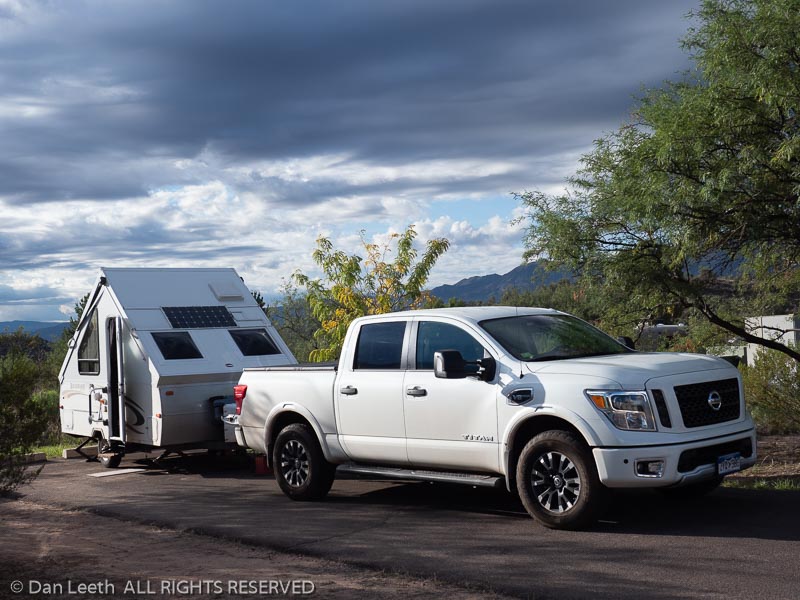
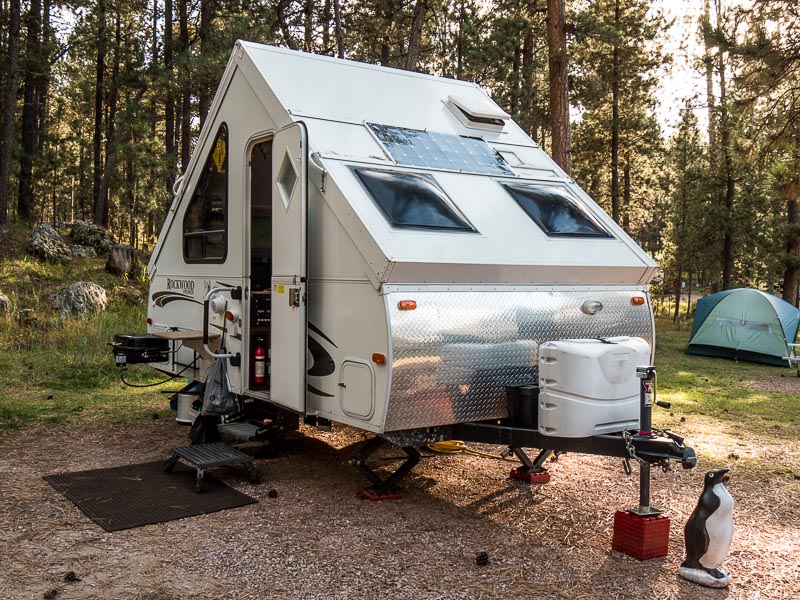
One paved road cuts across the southern part of the park, accessing lakes, streams and forests. It offers at least six campgrounds ranging from pit-toilet primitive sites to those like ours featuring electrical hookups, flush toilets and free hot showers. About half the campers here are in tents, with the rest of us residing in smaller tent and travel trailers. Big rigs are few, perhaps because there are neither water nor sewer hookups, and the nearest and only dump station is eight miles down the road.
Day One – Clouds and Sun

The afternoon we arrived was sunny, the only such day they say they’d had for a week. We checked in, completed the paperwork and proceeded to our campsite which was flanked by a semi-dried mud puddle. Other than that, the site is wide, shady and with an electrical hookup reachable with our 30-foot cord.
Having a slew of chores to do, we spent our first full day hovering around camp. The previous day’s sunny skies were now partly cloudy but it was warm, dry and it felt good just to kick back and catch up on life.
Day Two – Not a Shred of Blue

Now under totally overcast, gray skies, we spent our second full day in Algonquin touring the park’s 56-kilometre main roadway. Our first stop was the Visitor Centre, which offered displays telling the story of this, Canada’s first provincial park. Algonquin, was founded back in 1893 – a mere eight years after Canada’s first national park, Banff, was established.
Unlike American parks which are sometimes preserved to prevent logging operations, Algonquin was created partly for the benefit of logging. Our next stop, the park’s open-air logging museum, told the story of Algonquin’s timber history.
The cutting was done in the winter with loggers working from sunup to sundown in those frigid temperatures the Great White North likes to send our way in the height of winter. They bunked in dormitory cabins, neither bathing nor even changing their underwear for months on end. And to think we feel grody when we have to go two days without a hot shower.
On our way back to camp, we did a couple of short hikes that let us enjoy two of Canada’s national animals. Accompanying us on our hike down the Spruce Bog Boardwalk Trail were massive numbers of what we’ve heard is Canada’s national bird – the mosquito. We tried to follow the “don’t feed the wildlife” commandment, but despite dousing ourselves in repellant, they still managed to swarm in for a bite.
Our other major sighting involved beavers, Canada’s national mammal. Normally nocturnal, we spotted a pair of construction crew beavers repairing their dam in broad daylight. They would swim across the pond, gather mouthfuls of grass and then swim back to the dam where they apparently stuffed the grass to plug leaks.
Day Three – Wet and Drizzly

We’d already gone from sunny to overcast, so naturally our third full day started with rain. With the forecast predicting more of the wet stuff to follow, we cancelled our planned 10+ kilometre hike. Instead, we drove the main park road in the other direction to check out the park’s Art Centre. With the rain diminishing to a mere drizzle, we went for a short walk through the hardwood forest. That was followed by a drive to the Portage Store on Canoe Lake, which true to its name, was rife with canoers.
Besides renting canoes and selling souvenirs, the Portage Store features a small restaurant whose menu offered something for each of us – poutine for Dianne and burgers and beer for me. Dianne ordered pulled-pork poutine, which featured the meat and gravy poured over a bed of French fries topped with cheese curds. I had a bacon and cheddar burger accompanied by an unfiltered IPA brewed at an Ontario craft brewery. We never did make it to the canoes.
Day Four – All-day Downpour

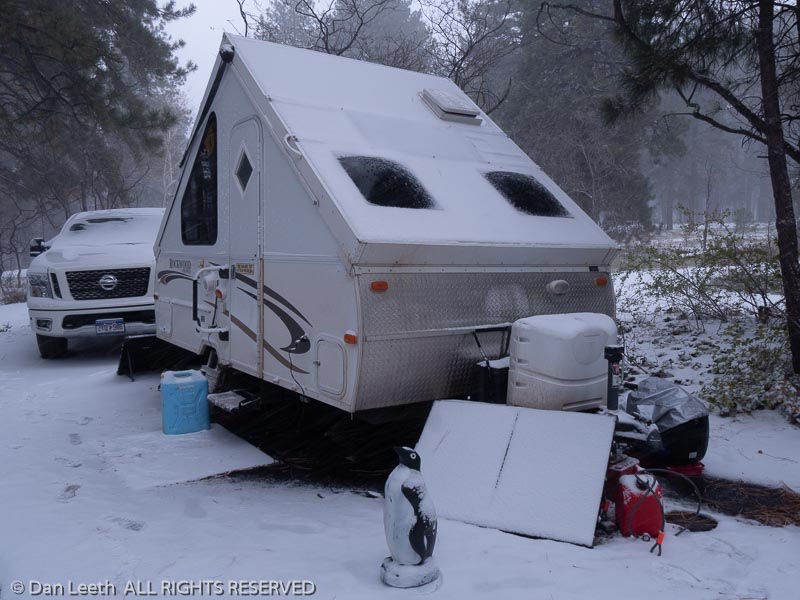
Not liking the day three weather, of course, meant day four would be even worse. Sometime around 4:00 in the morning, the heavens opened and Noah-worthy rain drenched the campground. We awoke to a quagmire of campsite mud puddles. In the cold and wet conditions, we were glad to have a warm and completely dry trailer to retreat to. Three of our neighbors dwelling in tents were not so lucky.
We’d be even happier if we had reliable power. We’re connected to a 30-amp circuit, which should give us plenty of energy to run our portable space heater or trailer’s heat pump furnace.
The problem was voltage. To protect the trailer electronics, I installed a high-tech surge protector in the trailer. One of the things it does is monitor line voltage. If it goes too high or too low, the surge protector cuts off the power. The bottom limit on our 120-volt circuit is 103 volts and the power here has been ranging between 103-104 volts. With every dip, the electricity cuts off and the heater shuts down.
I think of those loggers from a hundred years ago. They went without heat for months during the winter. We’re complaining that we may have to resort to firing up the trailer’s 12-volt propane furnace.