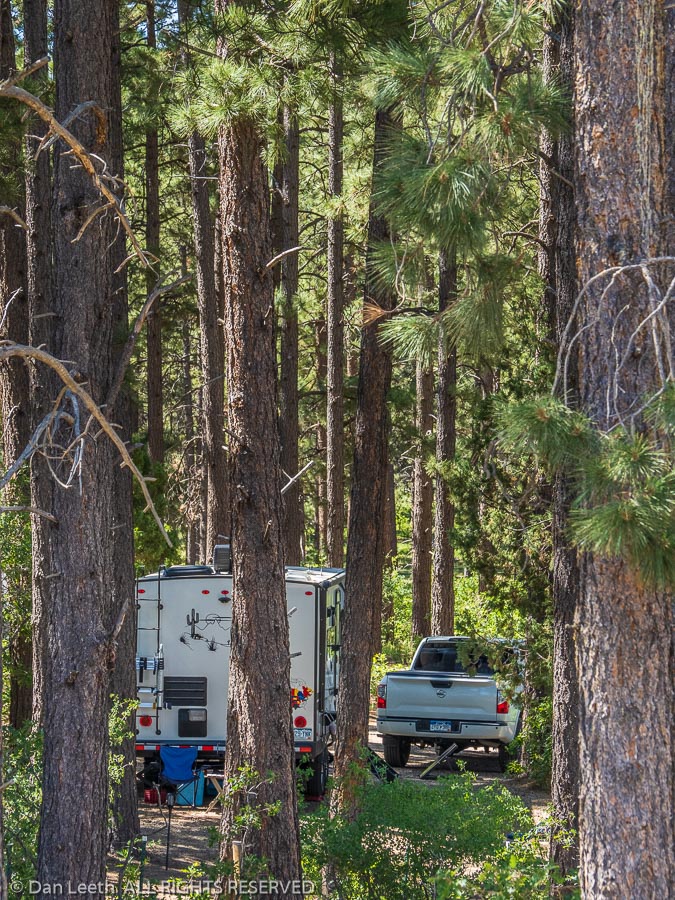
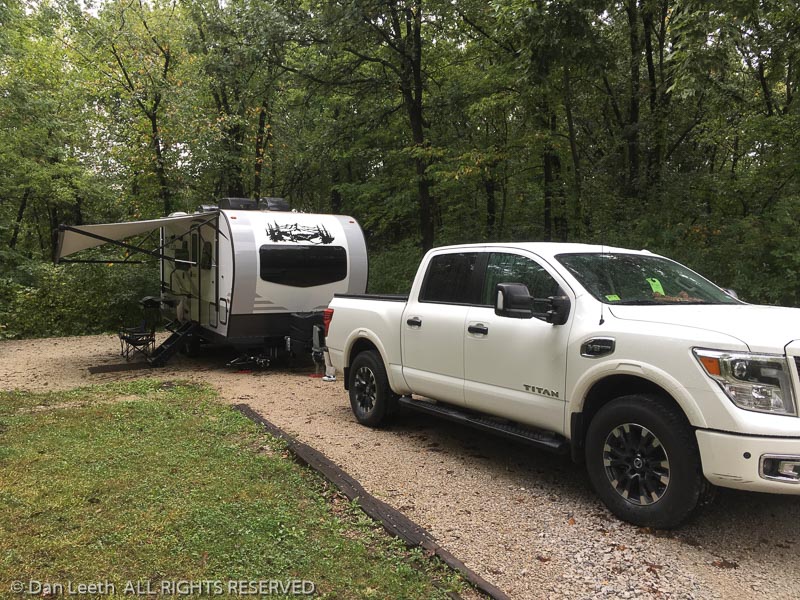
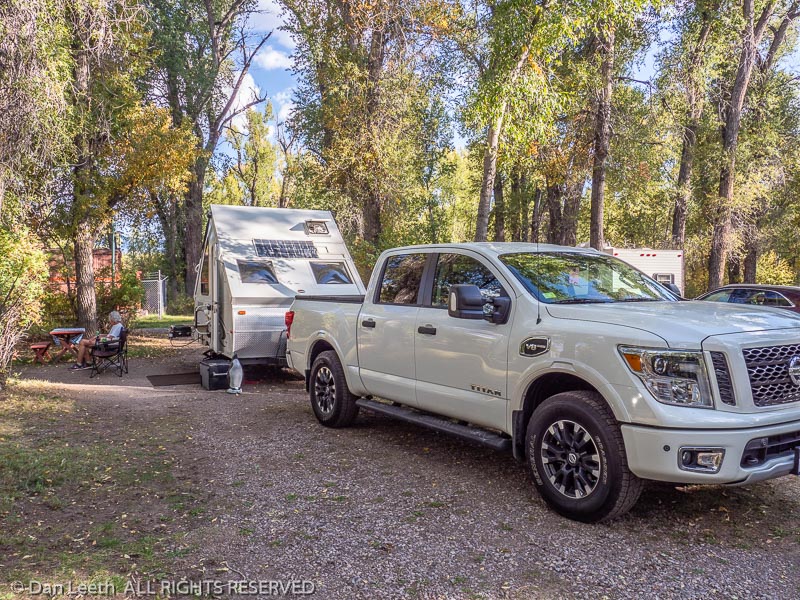
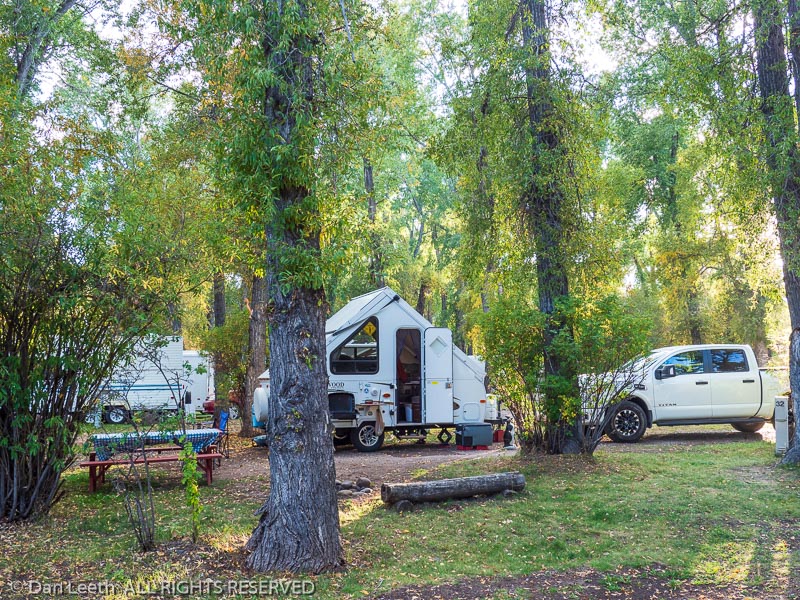
I love camping in the woods. Unfortunately, bunking amongst the trees creates a little problem when trying to recharge the trailer batteries with solar. It seems the sun keeps moving.
[Note to my seventh-grade science teacher: Yes, I know it’s the earth that moves, not the sun. But from the perspective of our campsite, it’s the sun that’s arcing overhead. My X-chocked trailer hasn’t budged an inch.]
We’re spending two weeks in a state park campground without hookups. Normally, keeping the trailer batteries charged with solar is easy. Find a clear spot with a southern exposure. Put one solar panel facing the 10:00 a.m. sun, another at the noon position and the third facing the 2:00 p.m. sun. The batteries, which can be down 20+ amp-hours in the morning, will be fully charged well before happy hour.
That doesn’t work in the woods. I place the panels in a spot where fresh sunlight bathes the ground. Faster than cops racing to a doughnut truck accident, the sun moves, and shade soon smothers my solar output.
There are two solutions to our predicament. We could just fire up the generator to recharge the batteries. But in the week we’ve been camped here, I’ve not heard any of our fellow campers running a generator. I don’t want to be the first.
The other solution is to go out every second day with a pot of fresh coffee and a good book. We just sit back, relax and move the panels as the sun migrates across the sky. After lunch, we merely substitute a different sort of brew and continue the charging task.
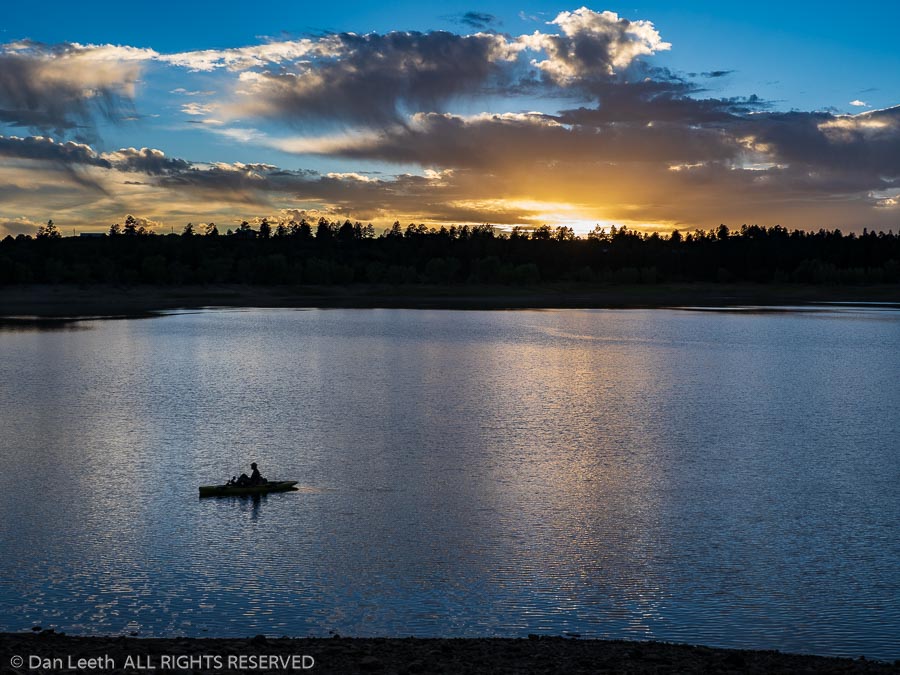
Heading home at the end of our two-week escape to southwestern Colorado. We hiked about 38 miles through incredible Colorado scenery. I read at least three books, we photographed several sunsets over the reservoir and we finally got to visit the Rio Grande Southern Railroad Galloping Goose Museum in Dolores.
We loved the Mancos State Park campground. Shady, quiet and rustic – just the way campgrounds used to be back in “the day.” Shady, however, presented a problem. We never got enough sun to fully solar charge our trailer batteries. After 13 nights of camping and despite all our panel-moving efforts, the batteries’ state of charge was down over 20 percent.
Lesson learned. We will soon be replacing our anemic lead-acid batteries with top-of-the-line lithium batteries with far more reserve capacity. I used a lot of data bytes researching options on our “move the solar panels back into the sun” days in camp. Orders will be placed Monday.
In addition to experimenting the with using solar panels in shady campsites, we also did a refrigerator experiment on the way home.
One of the big controversies among trailer owners is whether to run the refrigerator on propane when traveling down the road. One school of thought says to turn the propane and refrigerator off. It will stay cool, they say. The other school says if it wasn’t safe to run them on propane while traveling, manufacturers wouldn’t make that the automatic option.
With Dianne packing the freezer full of ice cream and meat, we’ve always left the fridge on, running on propane while traveling. We have an automatic emergency cutoff installed on the gas line if something were to sever the propane hose, so we feel relatively safe doing that.
Coming back from Mancos, we turned the fridge off. The freezer was -3 and the refrigerator about 35 degrees when we left. When we reached our final campsite eight hours later, the fridge was an acceptable 42 degrees, but the freezer had warmed to 35. The beer was still cold, but any ice cream in the freezer would have turned into a melted mess.
Lesson learned. Since we normally travel with lots of frozen food, we’ll be traveling on propane in the future. No need to risk melting our dessert when camping.
We had planned a camping trip to Arizona, but alas, a certain nasty virus got in the way. While camping might be a good way to practice social distancing, getting there and back would involve a fair amount of social interaction. While our intended campground remains open, there’s no telling when state-wide or national quarantines might drop into place.
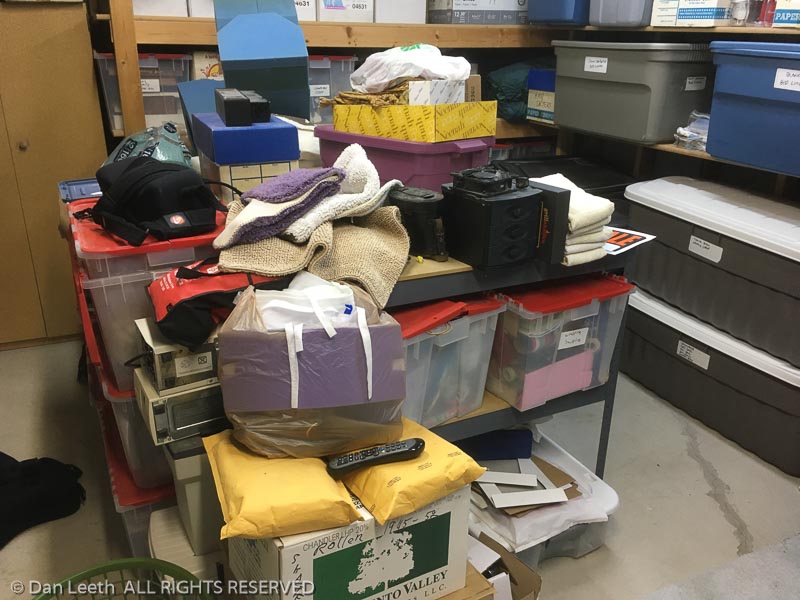
Problem is, by staying home we have no excuse not to finally get around to cleaning 35 years accumulation of crap out of the laundry room.
I’m a planner. When it comes to activities, I’ve always liked to plan ahead.
As a hiker/climber/backpacking tent-camper, I’d sit down in the spring and map out every weekend and vacation adventure through the end of autumn and beyond. The need for preplanning got worse when Dianne and I bought a trailer.
In the old days, any place we could park our truck became a potential campsite. Other than an occasional national park stay, we had no need to bunk in formal campgrounds. That’s tougher with the trailer.
These days, we need a nice flat spot to park our motel on wheels, ideally with water spigot nearby. With solar panels and/or a generator, we can go without a power hookup, but a dump station for draining the holding tanks is a handy amenity if we’re staying more than a few days.
We’re not big fans of RV parks where “campers” are parked elbow-to-elbow like cars in a Costco parking lot. We prefer state parks, where sites are typically spaced farther apart and often cloaked in vegetation. For most state parks, ensuring a site requires making a reservation sometimes up to a year in advance.
The problem with planning one’s life that far ahead is that as Forest Gump pointed out, sometimes “stuff happens.” Take the latest pandemic, for example. By the end of 2019, I had our camping for 2020 totally scheduled, with campsites reserved through late September.
We’re now rebooking things. We had a long-planned trip with friends to an Arizona state park in April, timed so that we would be there for their annual wine and food tasting event. We had to cancel one week before departure when Colorado was put on a shelter-in-place lockdown. We rescheduled our reservations for October.
This week, another trip bit the dust. We were planning to meet some friends at a trailer rally in South Dakota in mid-June with stops at a Nebraska state park on the way up and a week-long retreat in the Black Hills on our way back. That trip will now be held next year, virus-permitting. Instead of South Dakota, we found a site still open at a Colorado state park and booked it for the same time period.
A late-May trip to Robb State Park in Grand Junction, Colorado, is still on our calendar at this point, although the scope of the trip has changed. As baseball fans, we originally planned to attend a few games of the Junior College World Series while we were there, but that event has, of course, been cancelled. If the campground reopens, we’ll still go and just do a lot of hiking instead.
Beyond that, we still have campsites reserved for July in Colorado. In mid-August, we have reservations for a six-week swing down the Left Coast with stops at state parks in Oregon and California with a couple of weeks camped in the redwoods before continuing on for our rescheduled Arizona trip.
While we may not be camping in the trailer, I am taking the time to “improve” our motel-on-wheels. In the next few weeks, I’ll be installing an upgraded toilet, reinforcing the bumper, moving the spare tire to below the frame and bolting on a receiver for a bike rack. I’ll probably be replacing the refrigerator thermistor with an adjustable version, installing a pair of solar panel inputs at the rear of the trailer and adding a sliding silverware drawer.
I’m also thinking about spending our covid-incentive on upgrading my factory power center converter/charger with a Progressive Dynamics unit and replacing a pair of anemic, lead-acid batteries with a 200-amp lithium-ion unit. That will allow us to boonie-camp for longer periods without needing to pull out the solar panels or fire up the generator.
Now, if we could just solve the need for a dump station, but unfortunately, Dianne is too excited about using that new, upgraded toilet for that ever to happen.
We’re off on what should be our final journey in our A-frame trailer.
Our first stop is in Chama, New Mexico, where we will be photographing the Cumbres & Toltec Railroad trains in brilliant fall color. Then it’s off to Homolovi State Park, Arizona, which lies near Petrified Forest National Park and the Painted Desert.
From there, we head north to Capitol Reef National Park, Utah. After a few pies there, we’ll be off to the North Rim of the Grand Canyon with a two-night stopover at Coral Pink Sand Dunes State Park on the way.
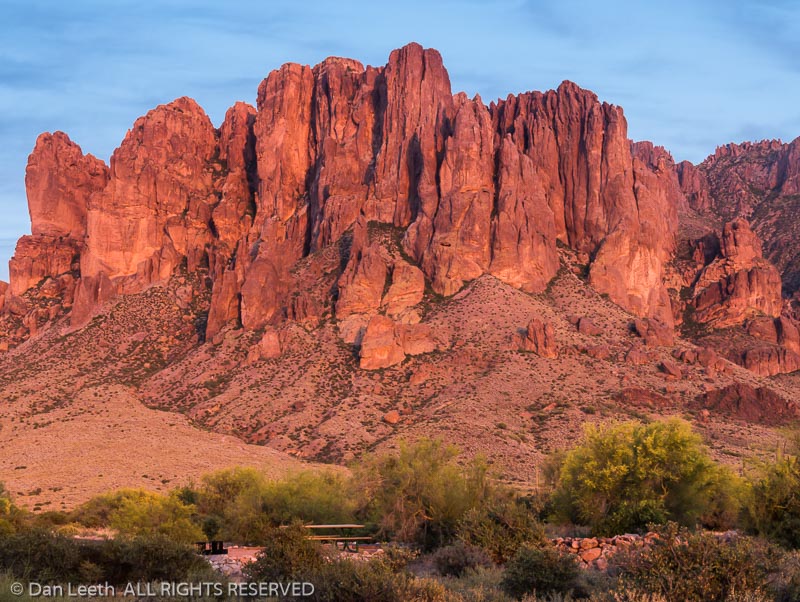
From the Rim, it’s south to Dead Horse Ranch State Park in Arizona’s Verde Valley. After that, we head for two weeks at our favorite Arizona state park, Lost Dutchman, near Apache Junction.
Then it’s home by way of my favorite KOA in Bernalillo, New Mexico, which has a brew pub next door.
When we get back home, we’ll have a new Flagstaff Micro Lite box trailer waiting for us. Unlike our A-frame, it will have a big refrigerator/freezer, a bathroom with a Motel 6-worthy corner shower and holding tanks for wastewater. No more camping! We’ll become members of the mobile-motel crowd.
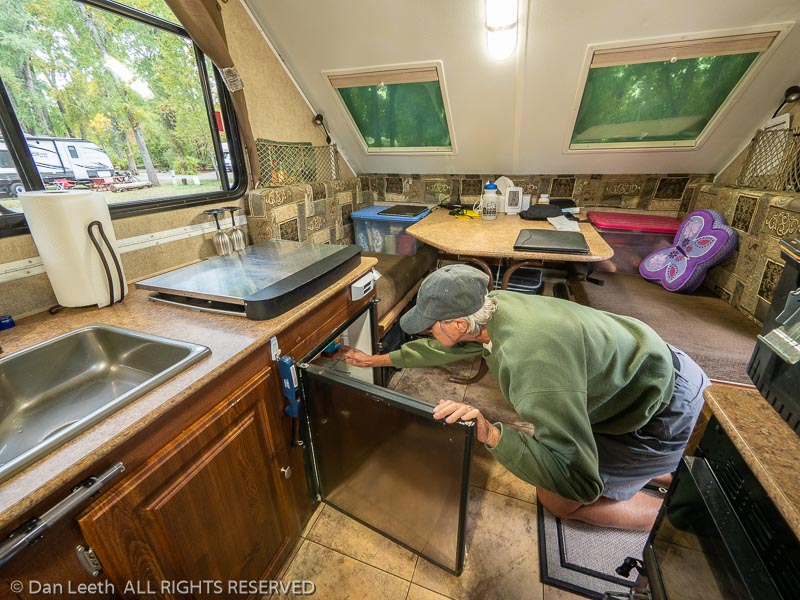
Dianne says no, we will still be “camping.” She just won’t have to crawl on the floor to get into the refrigerator and I won’t have to crawl over her comatose body to get out bed in the middle of the night.
One thing for sure – unlike other members of the mobile-motel crowd, we won’t be walking poodles and we won’t be sitting in front of a TV at night!
So, you might wonder, after six seasons and 400 nights spent camping in our trusty A-frame trailer, why will we soon be swapping it for a conventional box trailer. Let me explain.
It’s all my wife’s fault. Because the trailer folds down, the refrigerator is only of half height. And Dianne has bad knees. She can’t kneel. To get anything out of the fridge (like fetching another beer for her loving husband), she has to drop to her knees and crawl to the refrigerator door. “That’s getting old”, she says.
Then there’s the bed. It goes crossways across the back of the A-frame trailer. To get up in the middle of the night, he who sleeps on the back side has to crawl over she who sleeps on the front. “That, too, is getting old”, she says.
And then there’s the time it takes to get moving in the morning and setting up in the afternoon. Erecting the top takes 90 seconds. Moving boxes of food and luggage around (and everything else that is required to set things up) takes Dianne an hour or more. “That’s fine if we’re staying in one place for a longer period. It’s not great, however, for traveling when we’re staying in one spot for only a night” she says.
Yes, we might claim it’s because we need more room and storage space for our travels, but when all is said and done, the truth is that my loving wife just wants a new trailer.
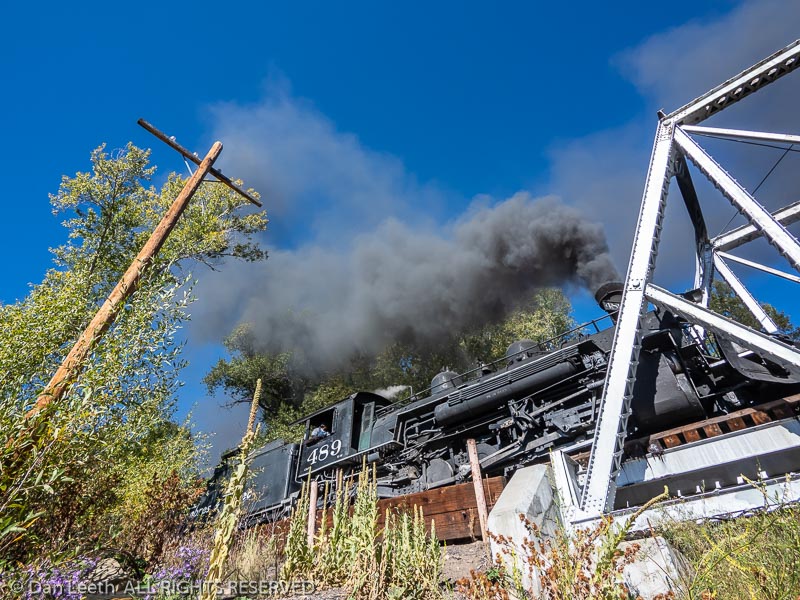
We’re on day six of a 12-day camping journey to Chama, New Mexico, where we’ve spent every day chasing trains. It’s all for an upcoming story on the Cumbres & Toltec Scenic Railroad for Colorado Life Magazine.
Our camping spot is the Rio Chama RV Park, which lies next to the tracks. Every morning, we campers gather and wave to (and photograph) the outbound train. Every afternoon, we gather and wave to (and photograph) the incoming train. Starting Tuesday we’ll be on the trains waving to the campers as we ride past on four consecutive journeys.
Yes, it’s a tough job, but as they say, somebody has to do it.
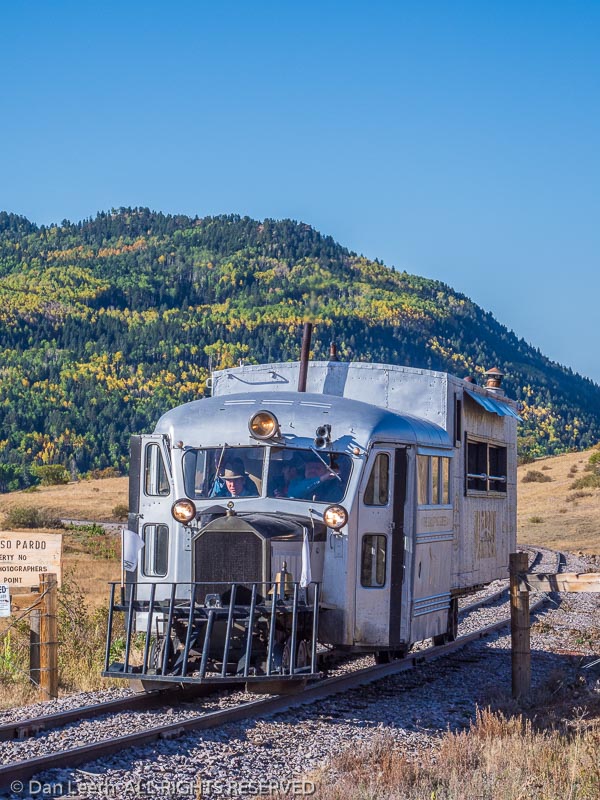
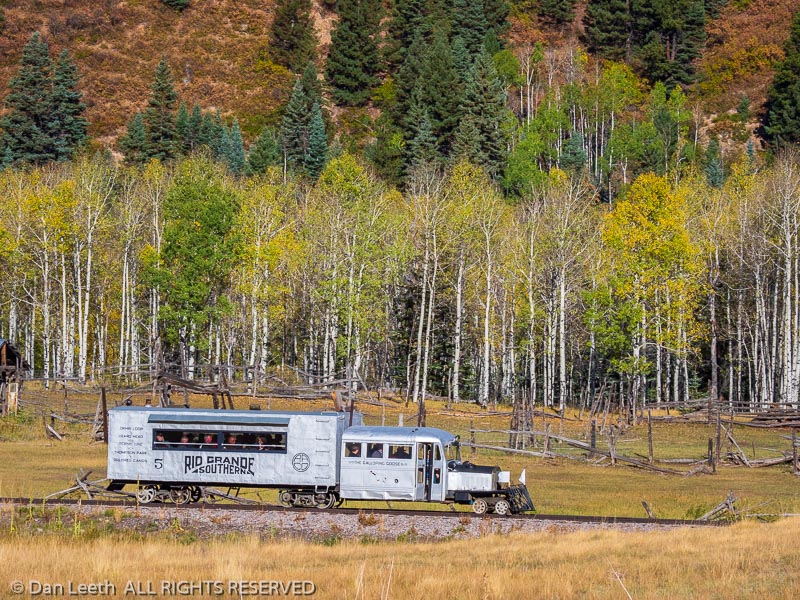
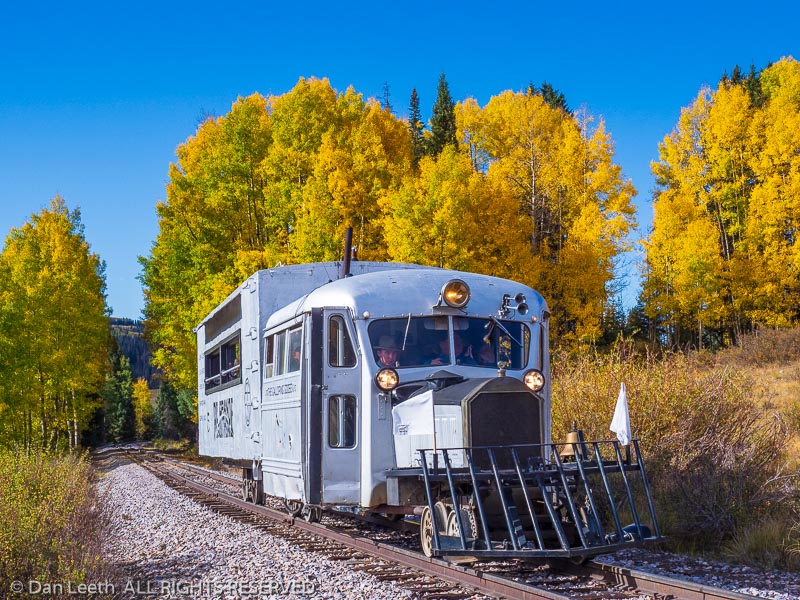
We’ve spent the last week photographing the steam trains of the Cumbres & Toltec Scenic Railroad out of Chama, New Mexico, for an upcoming Colorado Life Magazine story. Today our photos went fowl as we began shooting recently arrived Galloping Goose Number 5.
For folks not aware of these birds on rails, let me explain. The Galloping Goose is a car-on-rails contraption cobbled together in the 1930s. It and a half-dozen of its nest mates kept the Rio Grande Southern Railroad (RGS) in business during the Great Depression and beyond.
Running from Durango to Ridgway, the RGS served the mining communities of Rico, Ophir and Telluride. The railroad was the most effective way to get mail, cargo and people to those remote communities, but with the economy sputtering, the cost of running steam locomotives over the mountains often exceeded income earned.
RGS employees in Ridgway came to the rescue. They converted an old car body into a rail-mobile sporting an auto frontend and a truck bed in back. Burning cheap gasoline and needing only one person to operate, their Frankensteinish creation immediately proved profitable. Six more were soon hatched.
Waddling down the tracks with engine covers flapping and horns sounding like goose toots, the machines quickly garnered their waterfowl nickname.
The galloping flock kept profits aloft for two decades. While other railroads experimented with gasoline-powered rail cars, none ever served so long in revenue service.
When the RGS finally lost their mail contract in 1949, they tried to operate as a scenic passenger line. The plan failed. The railroad folded and the Geese flew the coop.
Surprisingly, all but Goose #1 (which was scrapped in the ‘30s) remain today. Goose #4 rests in downtown Telluride and Goose #3 winged its way west to Knott’s Berry Farm in California. Geese #2, #6 and #7 all nest at the Colorado Railroad Museum in Golden, and a faithful recreation of Goose #1 now occupies the Ridgway Railroad Museum.
Goose #5 resides at the Rio Grande Southern Railroad Museum in Dolores when it’s not on the road. For the rest of this week, it will be plying the Cumbres & Toltec tracks. Our ride, which will mark the third time we’ve ridden the Goose, comes tomorrow.
Galloping through glades of golden aspen should be pretty spectacular.
We just completed a dozen nights in Chama, New Mexico, doing research and taking photos of the Cumbres & Toltec Scenic Railroad for an upcoming Colorado Life Magazine feature.
Lesser known than its Durango & Silverton counterpart, the Cumbres & Toltec runs on 64 miles of narrow-gauge tracks between Chama, New Mexico, and Antonito, Colorado. From Chama where we camped, the first part of the route ascends a four-percent grade to the top of Cumbres Pass. From there, it’s a long descent through Toltec Canyon to the San Luis Valley and on to Antonito.
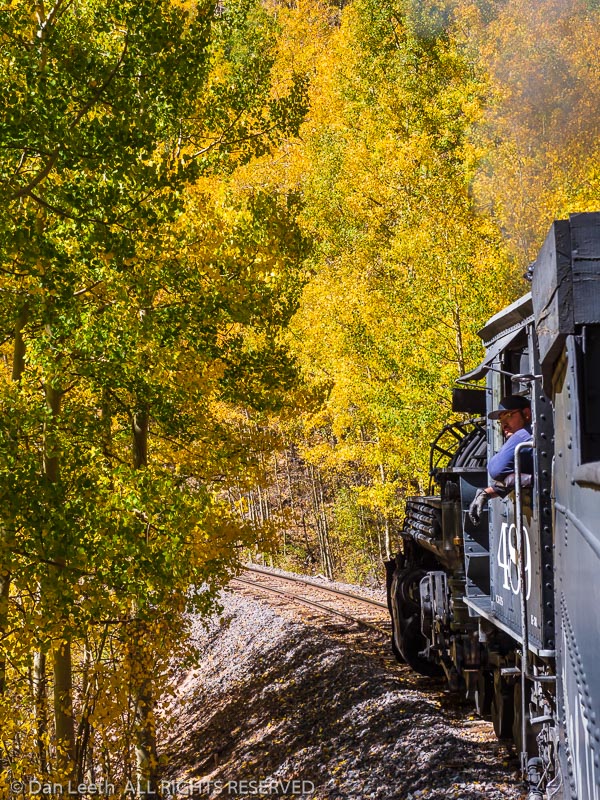
Where the D&S traverses a wilderness canyon, the C&T stays high, offering panoramic views of aspen-cloaked hillsides studded in brilliant gold at this time of year. It rivals the best fall color we’ve ever seen in the Rockies.
The train ride takes 6+ hours to ride from end to end, with an hour-long bus ride to the starting or from the ending point. A full lunch is provided at Osier, an old station house located in the backcountry. Best of all, beer is available for purchase onboard.
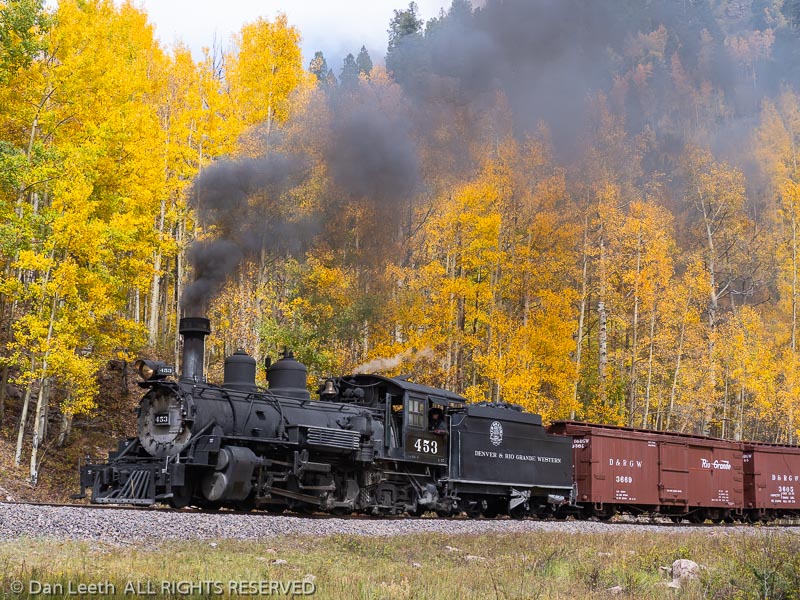
We spent several days chasing the train, taking photos from sites we could reach by car or short hikes. We then enjoyed two days riding the train from end to end and one day riding Galloping Goose #5 from end to end. Our final day was on a Friends of the Cumbres & Toltec photo-shoot featuring freight-train cars being pulled by a steam locomotive still bearing the old Denver & Rio Grande Western name.
We just celebrated our 365th night of camping in our trusty Rockwood A-frame camper. That’s over six seasons. Not bad when you consider that over the first year and a half, my wife, Dianne, was still afflicted with the curse of full-time employment.
Here’s a breakdown of the types of spots we parked for the night:
119 nights in U.S. state park campgrounds
33 nights in Canadian provincial park campgrounds
55 nights in U.S. national park campgrounds
29 nights in Canadian national park campgrounds
42 nights in Forest Service campgrounds
17 nights in Corps of Engineers campground
6 nights in BLM campgrounds
2 nights in county park campgrounds
2 nights boonie camping in the forest
3 nights parked on the curb in front of Dianne’s sister’s house
57 nights in commercial RV parks
We’re outdoors people, so spending a third of our camping nights in state parks was not surprising, nor was the number of nights spent in national parks/monuments.
What was sobering were how many nights we overnighted in commercial RV parks. They’re not our first choice of places to camp, but some have been quite nice. We just spent a very pleasant dozen nights at the Rio Chama RV Park (see photo) in Chama, New Mexico, and in the springtime enjoyed a five-night stay at the View RV Park and Campground near Dolores, Colorado. A pair we stayed at in Canada were formerly wooded city park campgrounds.
And then there’s our favorite KOA in Bernalillo, New Mexico, which lies adjacent to a nice little brew pub. We’ll hit that again on the way home from this trip.