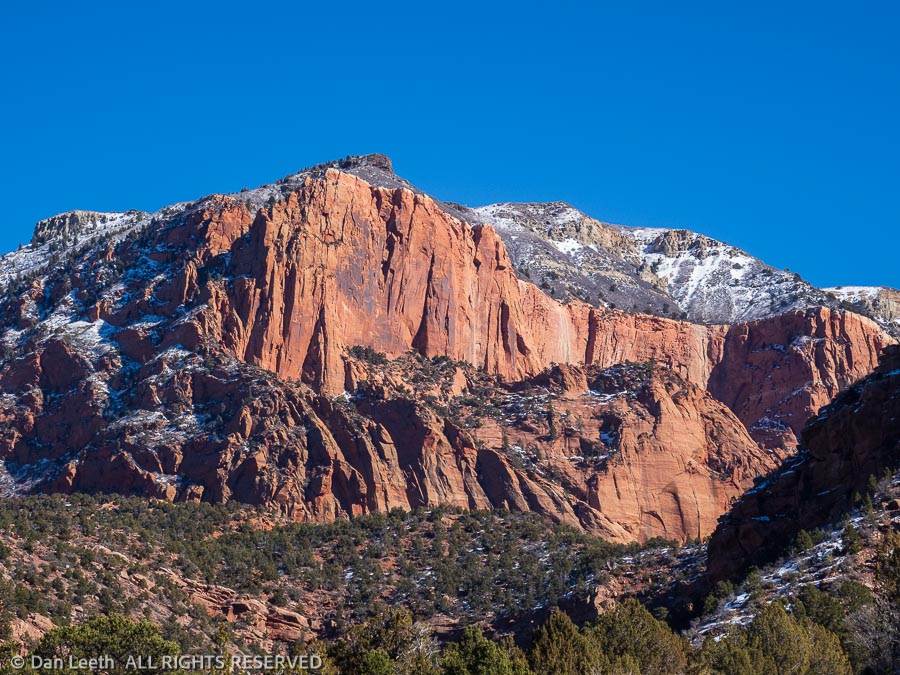
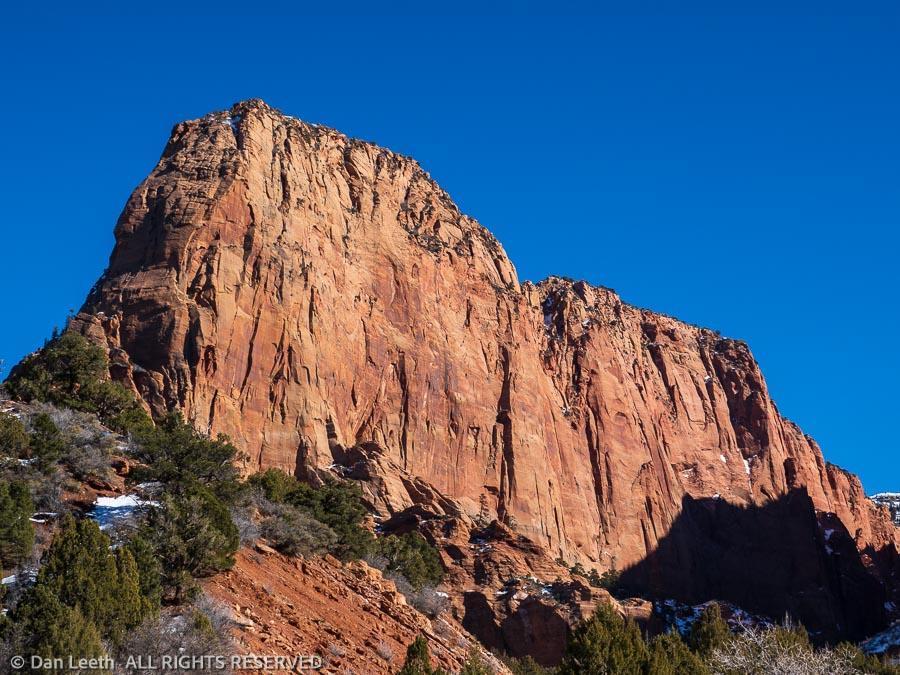
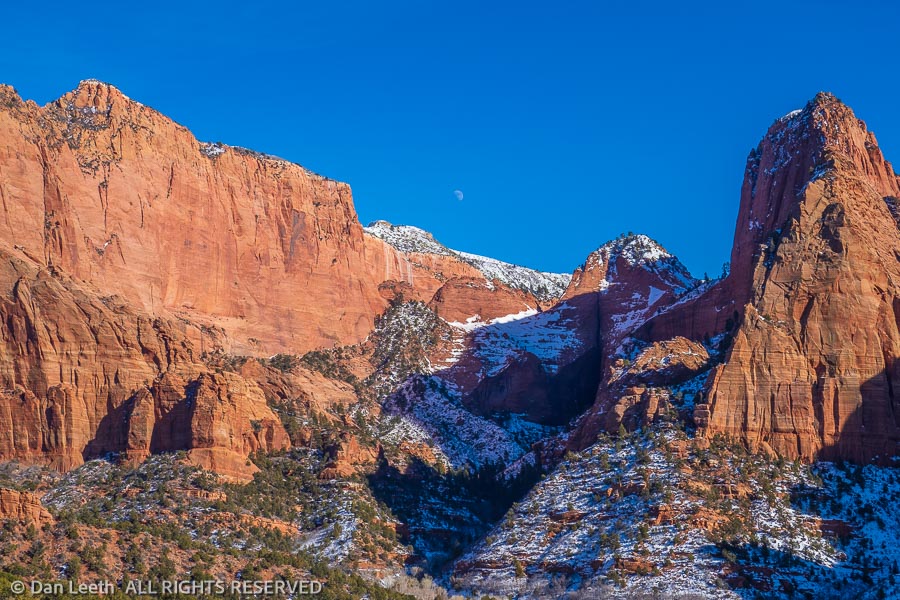
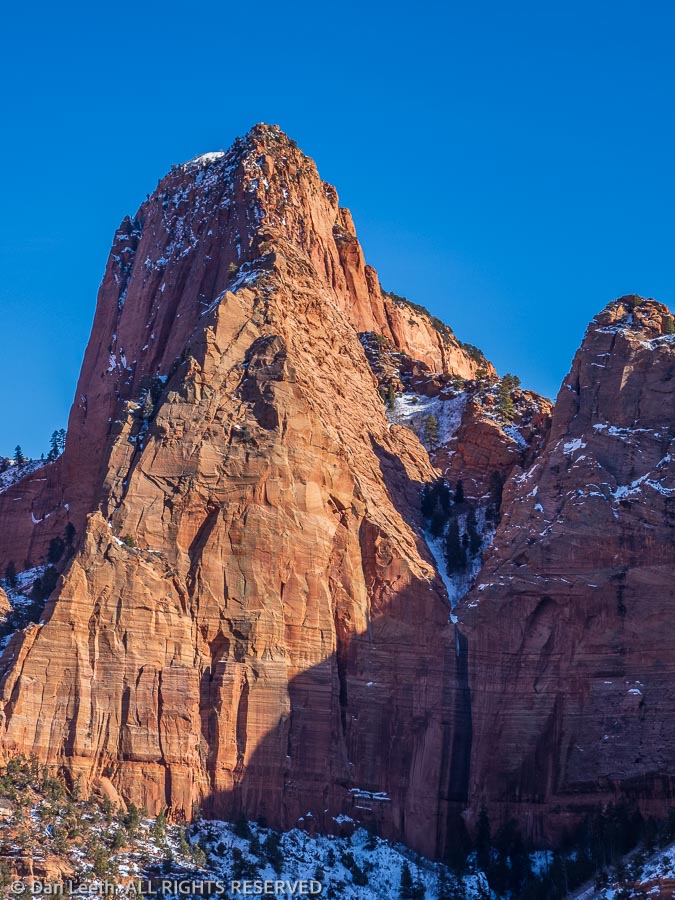
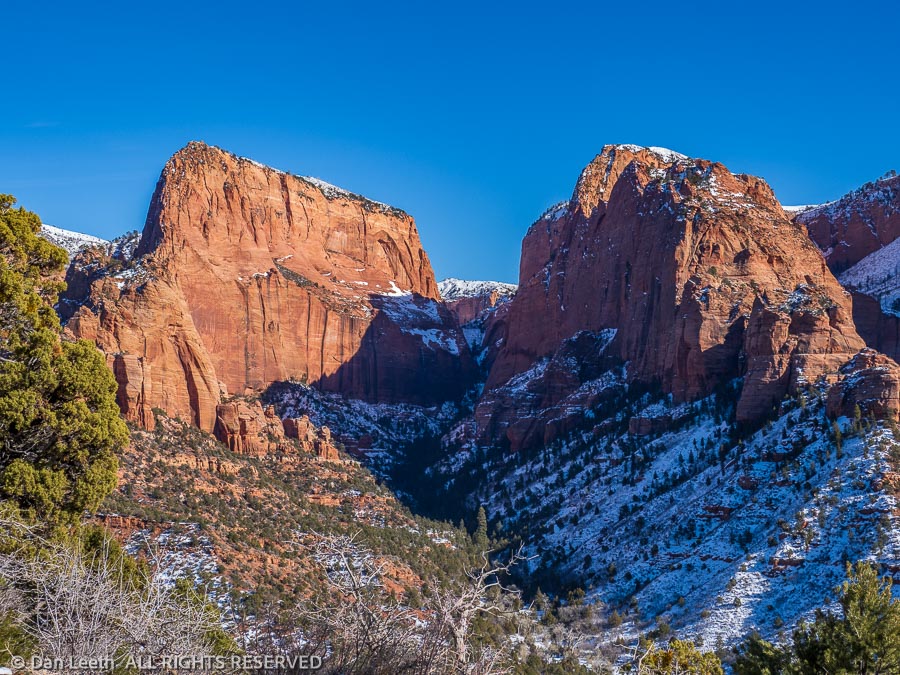
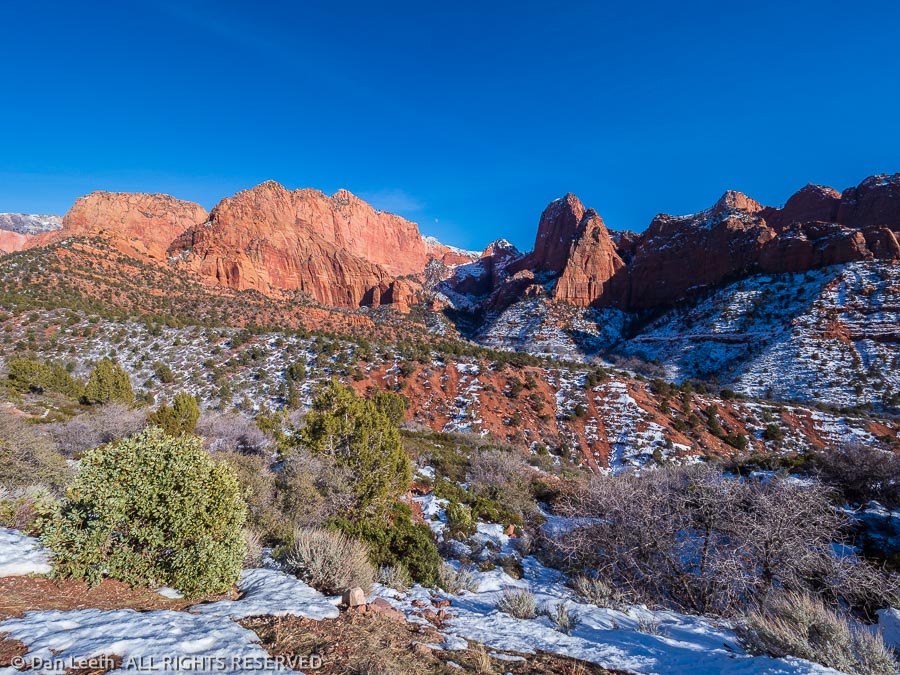
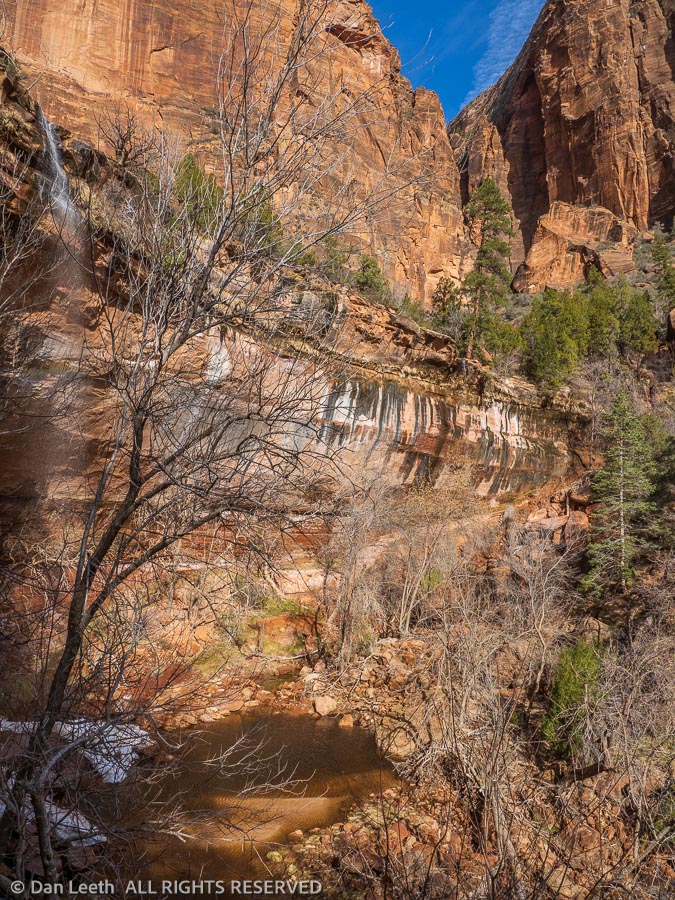
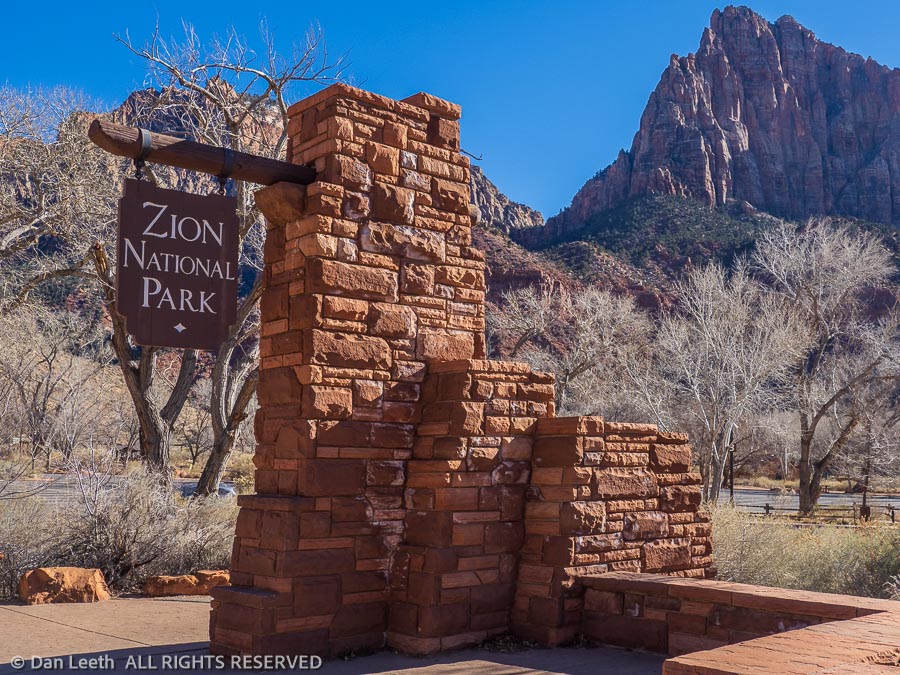
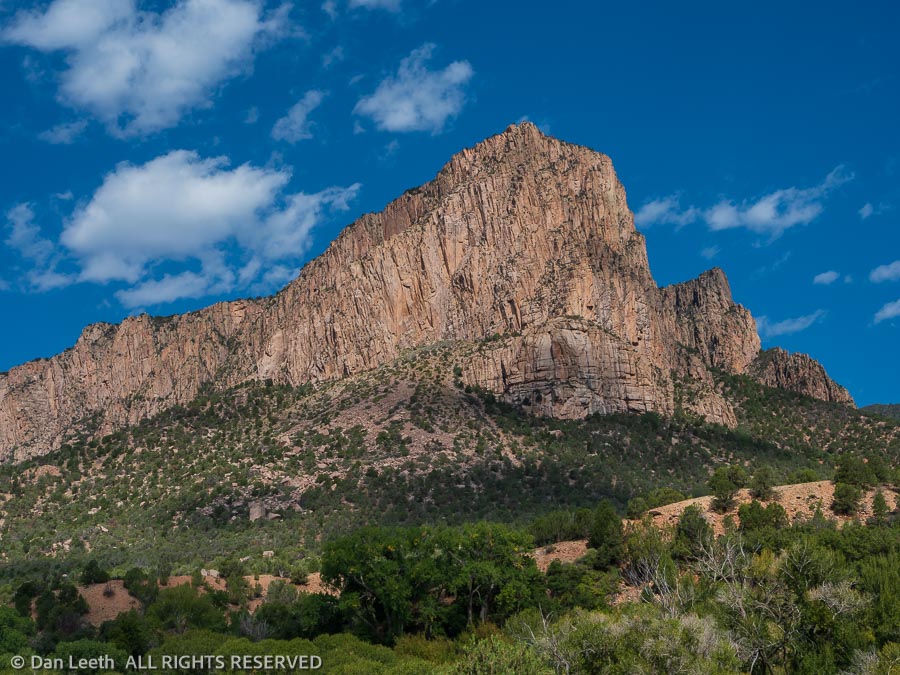
One of the things I wanted to do on this trip to Zion was to revisit the Kolob Section of the park. Many decades ago, a friend from Reno and I came down here for a Thanksgiving weekend backpacking trip to Kolob Arch. It was snowy and I don’t think we actually made it all the way there. This visit would be strictly a drive-through on pavement.
The Kolob section lies northwest of the main part of Zion National Park, and getting there requires a 40-mile drive from Zion Canyon. There are no restaurants, no gift shops and even in the summertime, far fewer visitors out here.
A five-mile, dead-end drive from the park entrance provides views of the canyon. Like the main part of Zion, the landscape here consists of towering cliffs, bluffs, canyons and mesas.
As we did coming into Zion, we stopped at virtually every pull-off on the road, shooting countless megapixels of images.
“We should come back and explore this country with backpacks!” Dianne enthusiastically suggested at one of our stops.
I’m game. Maybe on dry ground, we can actually make it all the way to Kolob Arch.
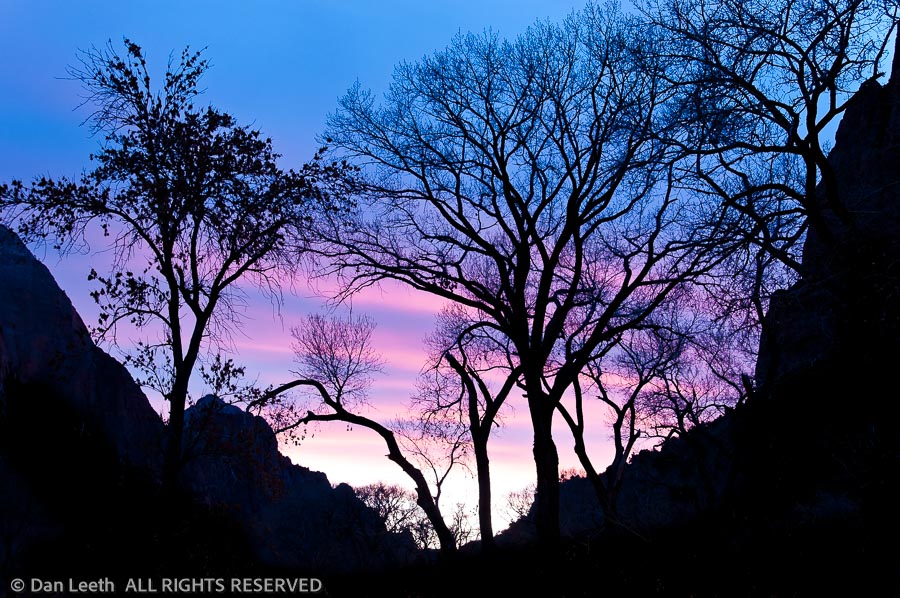
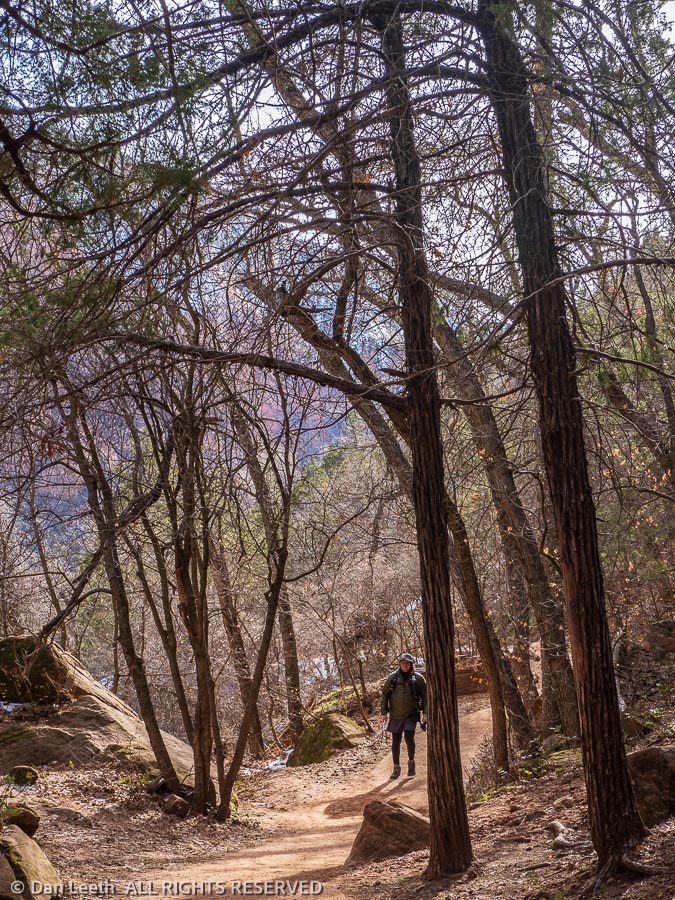
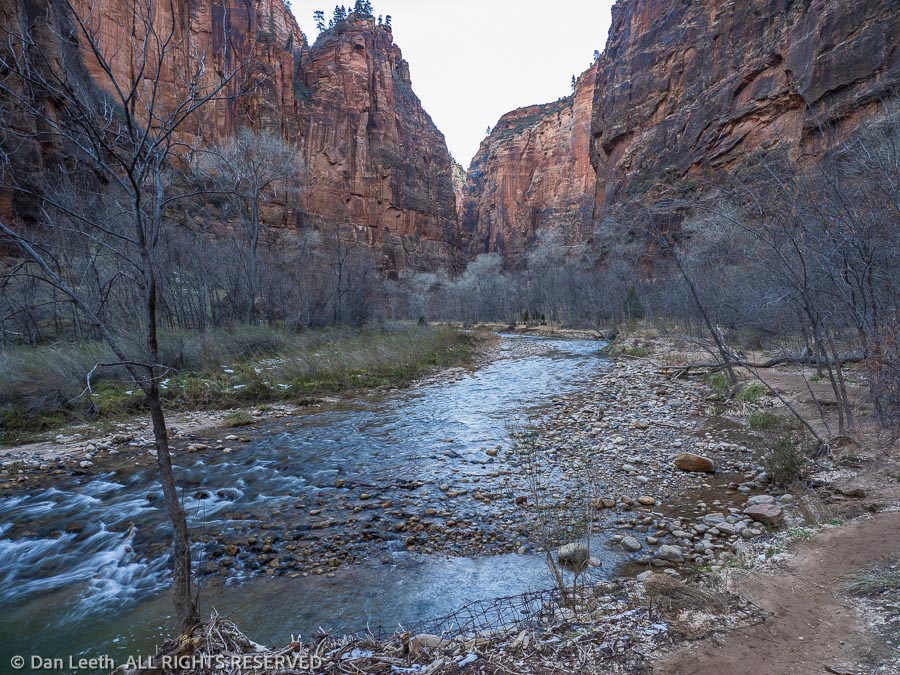
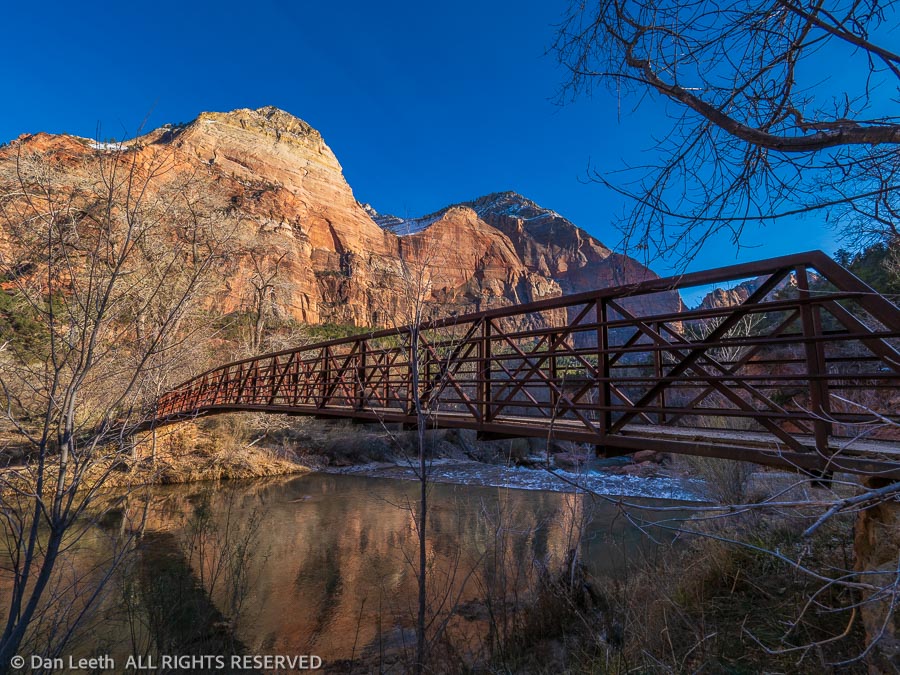
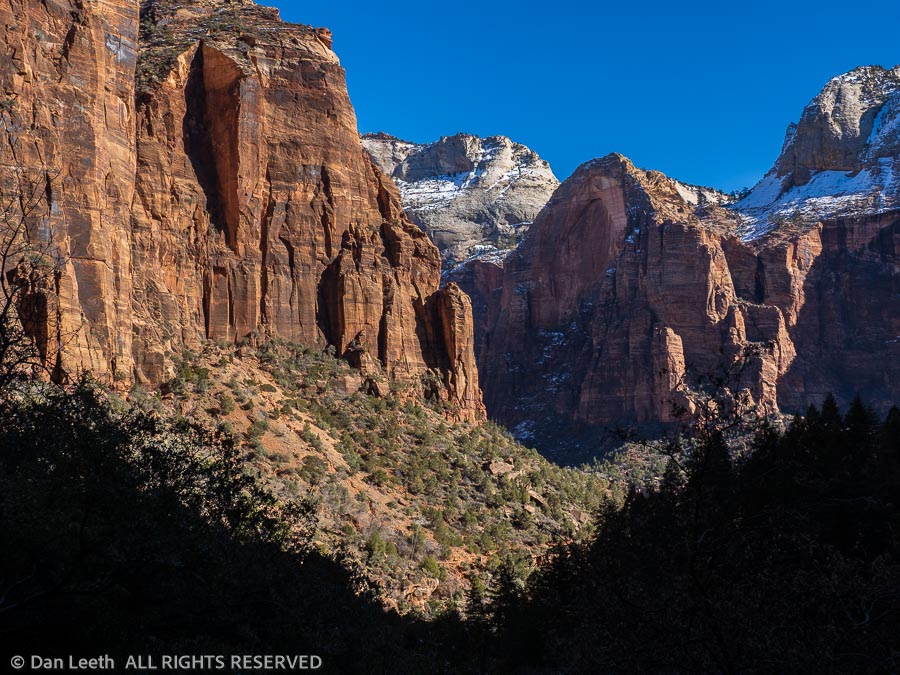
For those of us longing to ogle Mother Nature in the nude, there are few places better than Zion in the wintertime. Limbs of the cottonwood trees, which come fully clothed with leaves come summertime, now stand buck naked.
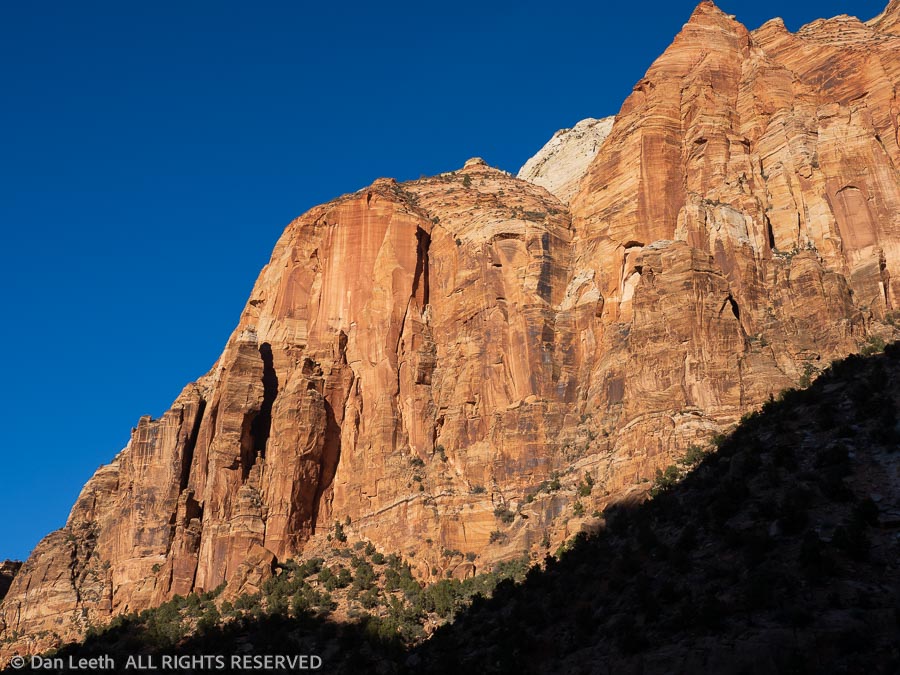
Beyond tower the canyon walls with sandstone cliffs bare as a pole dancer in a Texas strip club. Fortunately, a lap dance in this au naturel environment can be had by simply lacing up the hiking boots and setting off down a trail.
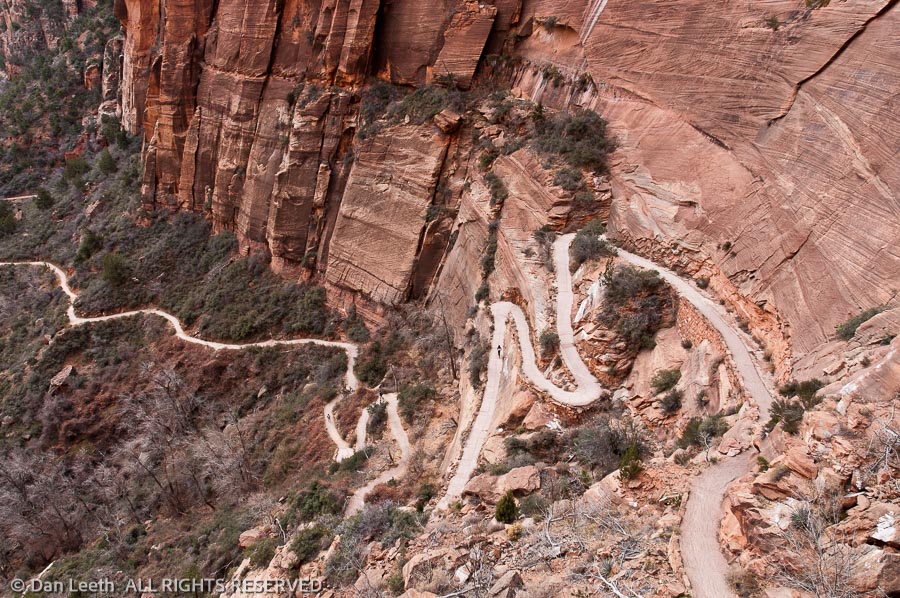
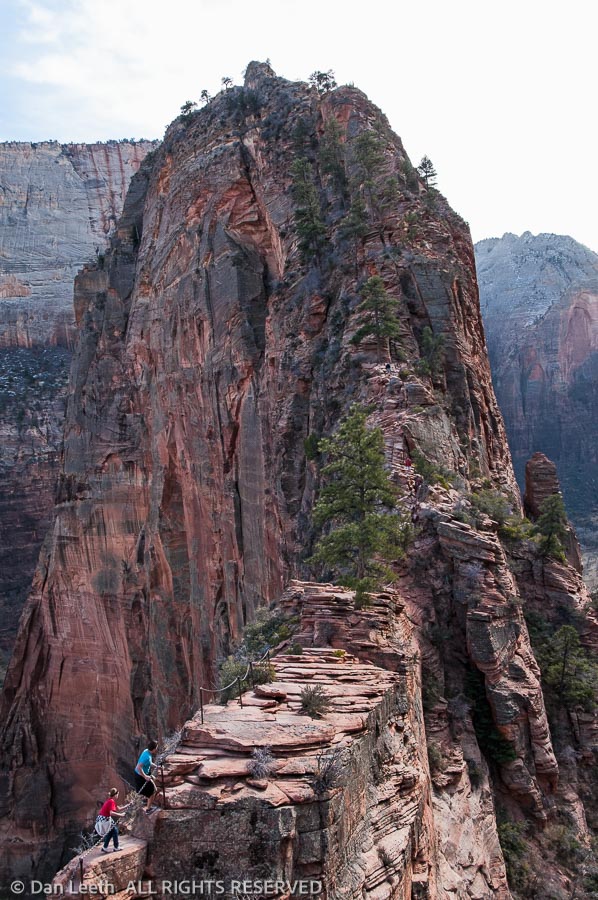
The premiere hike in Zion Canyon is up Angels’ Landing. It’s a steep, twisty climb up to a saddle followed by a walk up a death-defying narrow ridge to the top of a cliff overlooking the Virgin River Canyon.
Even though the Park Service has installed chains for folks to use as handholds, some still manage to fall to their deaths. “Scariest hike in America,” one YouTube video touts.
We did that hike ten years ago when we came to Zion to celebrate the New Year weekend. After 38 years living and climbing in Colorado, the hike for us was a piece of cake.
This year, the route up to Angels’ Landing was snow-covered and icy, we were told. While we did have traction cleats we could strap on, Dianne and I decided to skip the crowds and explore some of the other trails. One of them was to the Emerald Pools.
There are actually three Emerald Pools. Lower Emerald Pool has a nice waterfall feeding it.
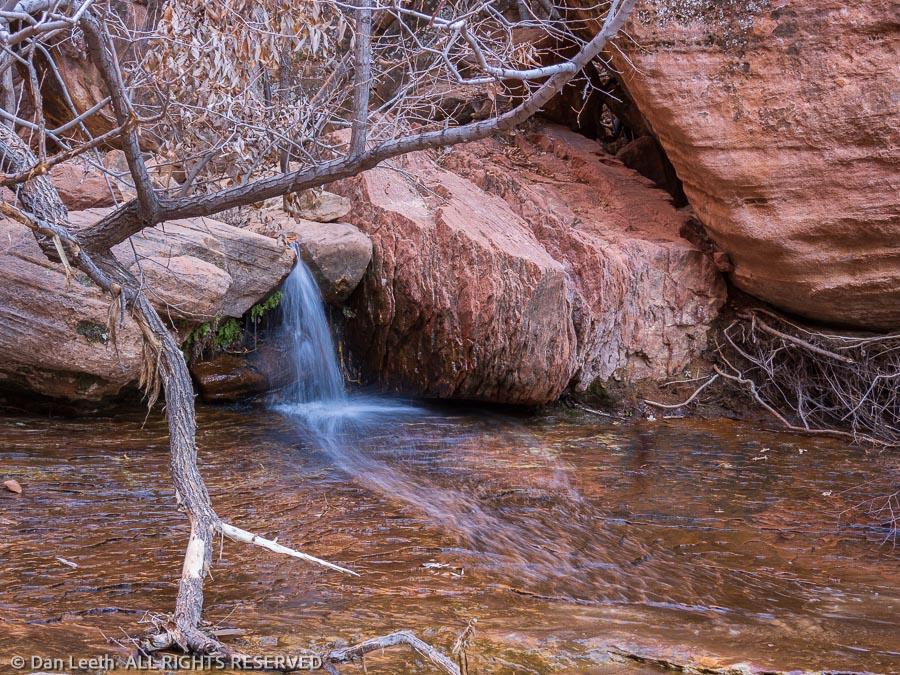
That waterfall is fed from the Middle Emerald Pool, which has its own tiny waterfall.
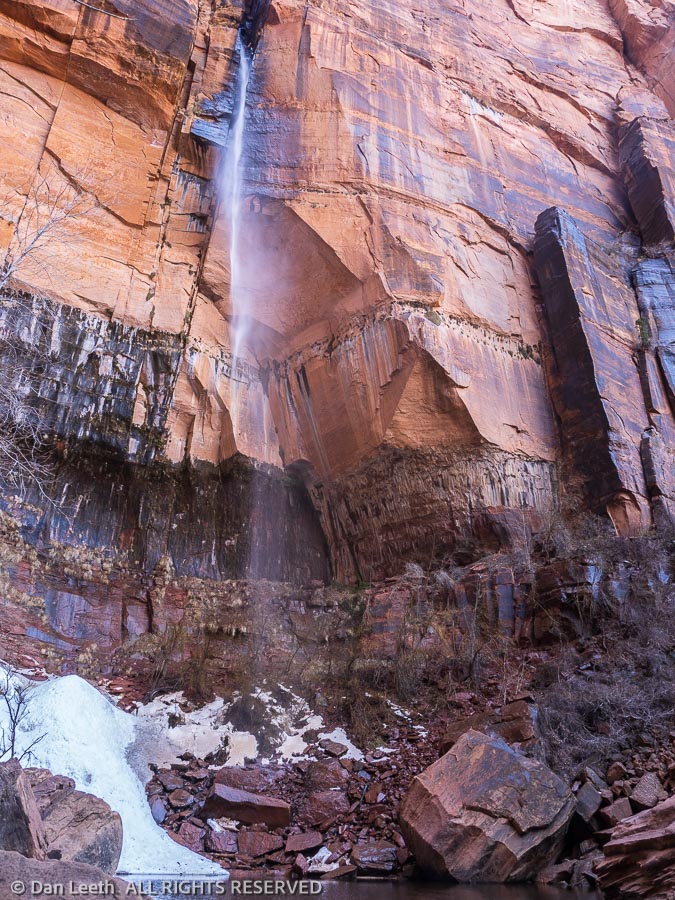
Upper Emerald Pool is fed by a towering waterfall dropping from a notch in the box canyon cliffs. In summertime, this place would be swarming with people. We shared it with maybe a half-dozen fellow hikers and a Park Service volunteer.
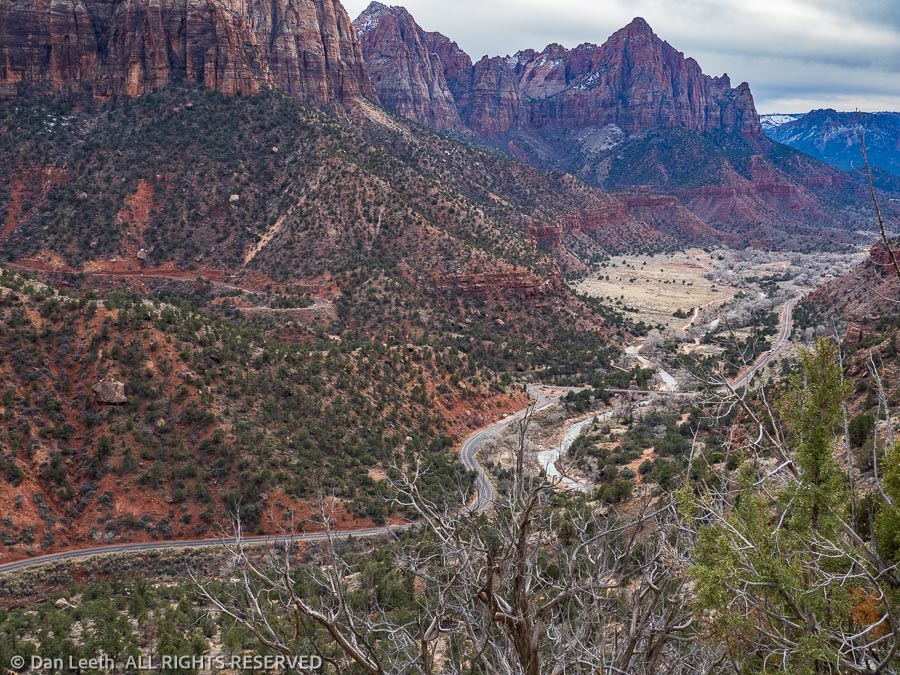
Another hike took us up the Sand Bench Trail, which offered lofty views down the canyon toward the tourist trap of Springdale and up Pine Creek Canyon toward the switchbacks and tunnel. We only met one other hiker on the route.
Late on our final afternoon, we walked the paved Riverside Trail up through the lower end of the Zion Narrows where decades ago, we led a Sierra Club group down from the top.
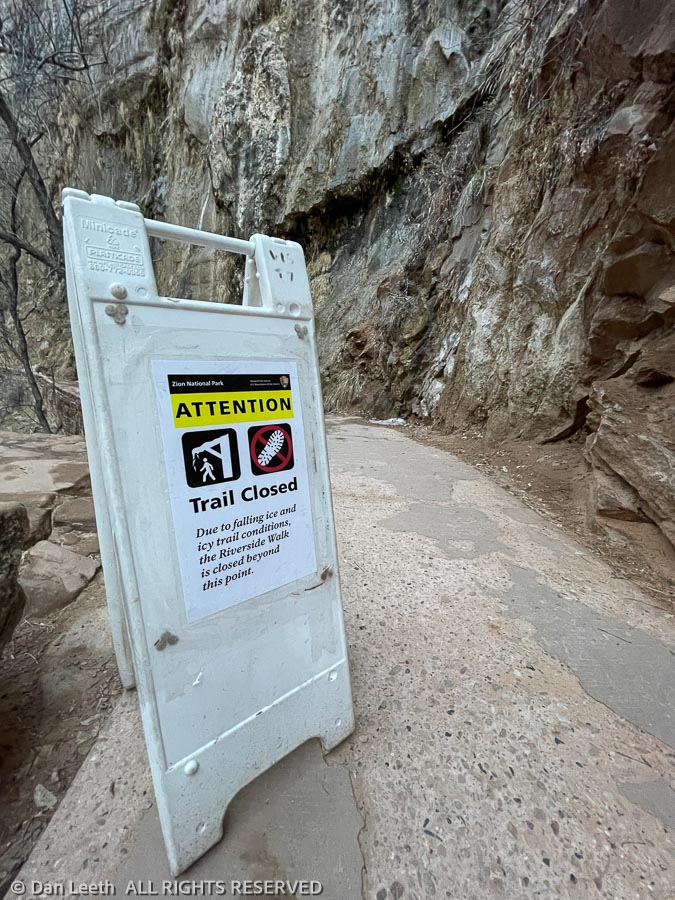
On this walk, we watched an avalanche of ice break off from the cliffs and land on the trail below. A half mile beyond, the route begins to hug the near vertical cliffs. To prevent an ice fall from bonking hikers on the head out here, Park Service has wisely closed the trail beyond.
Maybe it’s a symptom of being a travel journalist for over half my adult life, but I have this psychological need to rank things – best this, favorite that. I repeatedly found myself doing that on this journey to Zion.
How does Zion National Park compare with the other members of Utah’s “Mighty Five?”
When it comes to just plain scenic grandeur, I put Zion right at the top. The cliffs and canyons here are absolutely awe inspiring. Only Capitol Reef comes close. At Bryce, non-hiking visitors look down on the scenery. One must drop below the rim to feel engulfed by the environment. It’s much the same for Arches and Canyonlands.
While Zion may offer the grandest grandeur, it’s in fourth out of the five when I rank my favorite Utah national park to visit. Only Arches, in my book, comes in lower. That’s because I hate crowds.
Zion gets around 4.5 million visitors each year, making it the third most popular national park in terms of visitation. Only the Great Smokeys and Yellowstone see more visitors.
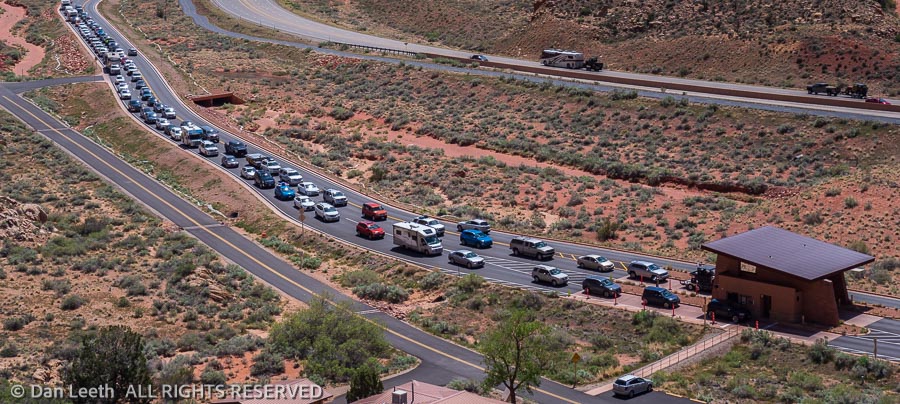
Zion is way too small to handle that many people. Cars line up for blocks at the entrance stations waiting to get in. Campsites and lodge rooms are tough to find. Visitors cram into shuttle buses to get into the Virgin River Canyon. Trails and sites are crowded. We’ve been told that folks sometimes need to wait hours in line to complete the ascent of Angels’ Landing.
Arches has the same problem. As Ed Abbey warned in “Desert Solitaire,” it’s industrial tourism at its worst.
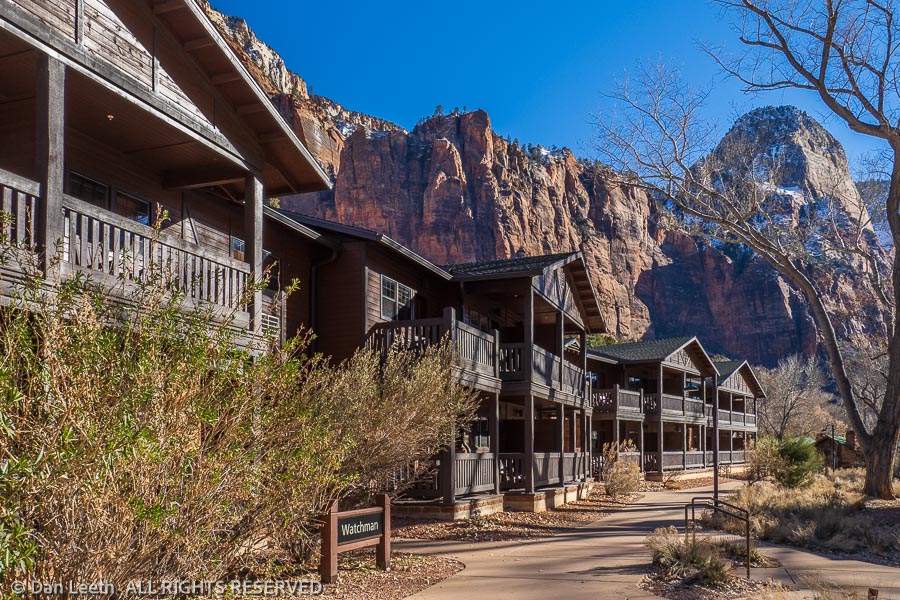
Fortunately, winter at Zion offers nature lovers like me a chance to get away from the madding crowds. When we checked in, there were still rooms available for drop-in guests at Zion Park Lodge, and there were many empty spots at the park’s Watchman Campground. We had no trouble finding parking spots at trailheads, roadside pullouts or in the neighboring tourist trap of Springdale.
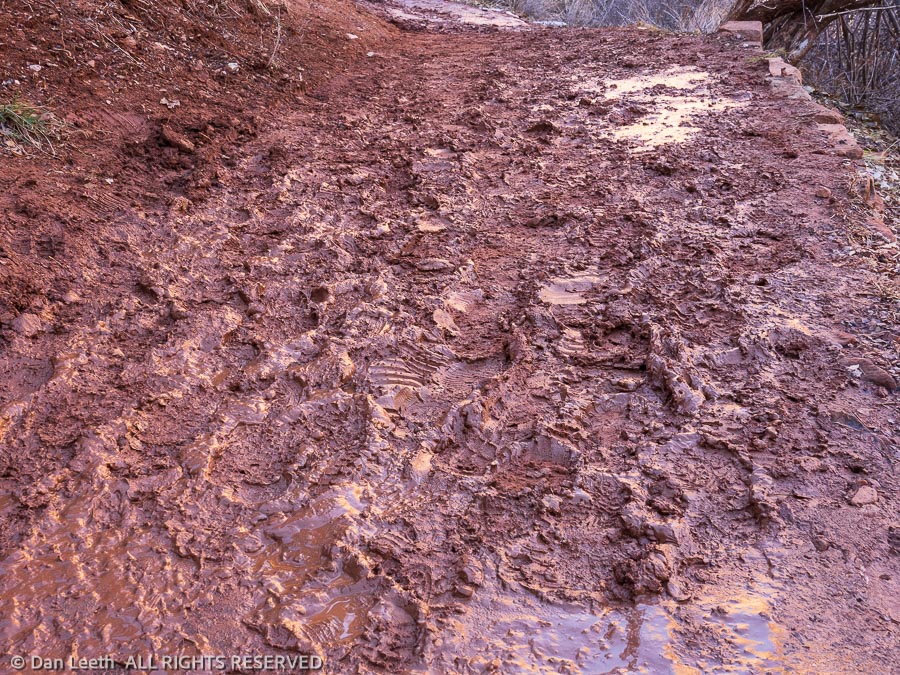
The downside of winter visits, of course, is the weather. It’s cold and snow is always possible. Trails, especially those on higher or shaded ground can be covered with snow, ice or thick, gooey mud.
While the visitor center was open, most of the park’s museums were not open. In town, we found many restaurants and other businesses closed for the season, making it harder to find $30 souvenir t-shirts for sale.
Personally, I’ll give all that up for the opportunity to see a place this beautiful in the raw. Besides, I already own one of those $30 t-shirts.
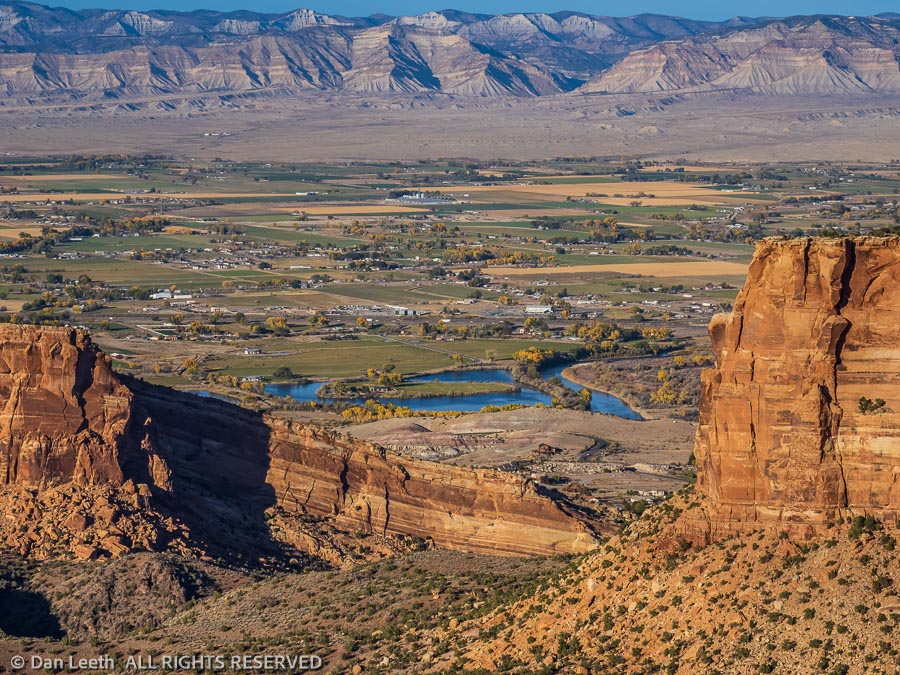
Coming back into Denver from our Canyon Country trip last May, we became stuck in stop-and-go, bumper-to-bumper traffic on the interstate as we tried to make it through Denver. My lovely wife studied the situation and announced in no uncertain terms, “That’s it. We’re moving to Grand Junction!”
[Dianne insists that she merely “suggested” we move to Grand Junction, but after 40 years of marriage, I know it’s best to take her suggestions as commands.]
Grand Junction is a place we’ve long longed to live. We checked it out years ago when Dianne was still working as a nurse, and I was still shooting photos on film. She’d have to start at a new hospital, and I’d have to find a suitable photo lab. I’d also have to get from the Junction to Denver to fly anywhere. We chose not to do it at that time.
A week after Dianne’s edict/suggestion, we went for a hike in Staunton State Park, which lies in the foothills west of Denver. There, we chatted with a volunteer couple who lived in a patio home nearby and loved it. With everything taken care of by the homeowners’ association, they could leave anytime they wanted and be gone as long as they wanted. The patio home idea sounded perfect.
The next day, I Googled “patio homes” in Grand Junction. Mixed in with all the conventional homes for sale that had patios, I found a link to a patio home community for folks over 55. A few days later, we drove over the hill to check it out. The quiet, cleanliness and friendliness of the community impressed us, so put our names on the wait list for a future home. It was a long wait list, we were told.
Maybe next year we’ll get the call, we hoped as we planned our summer travels.
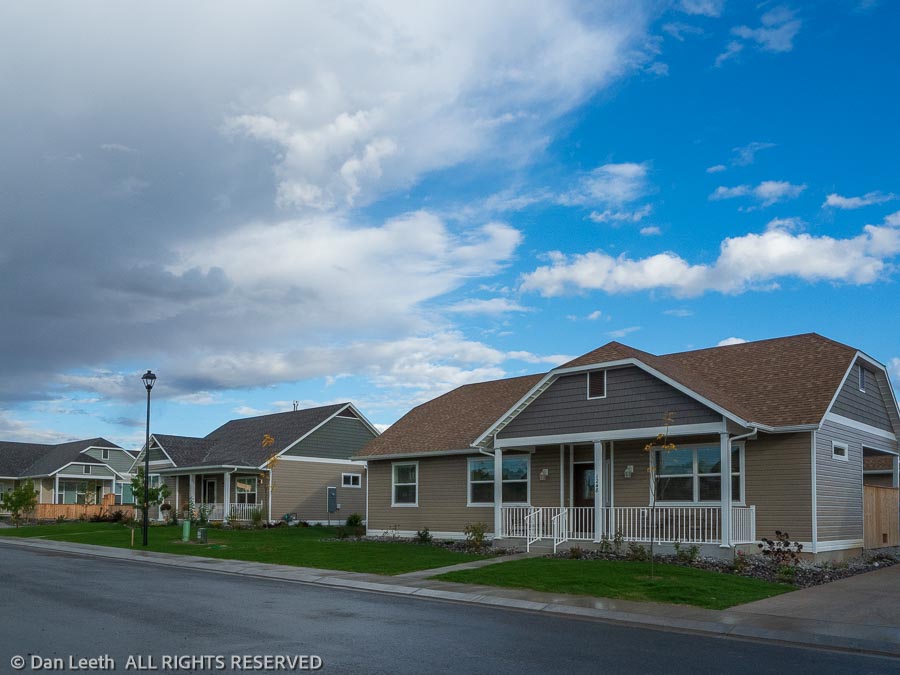
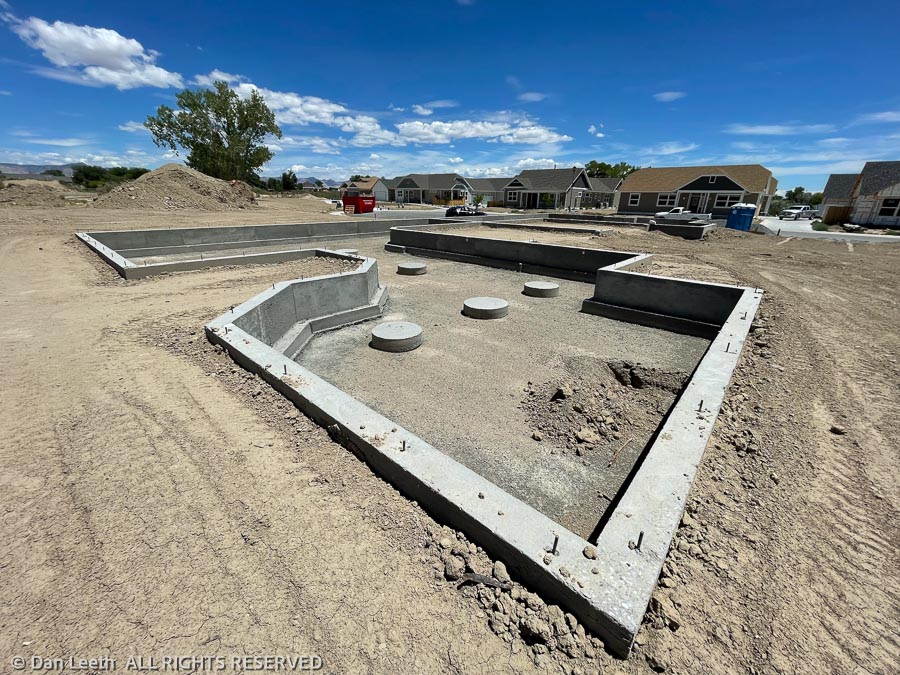
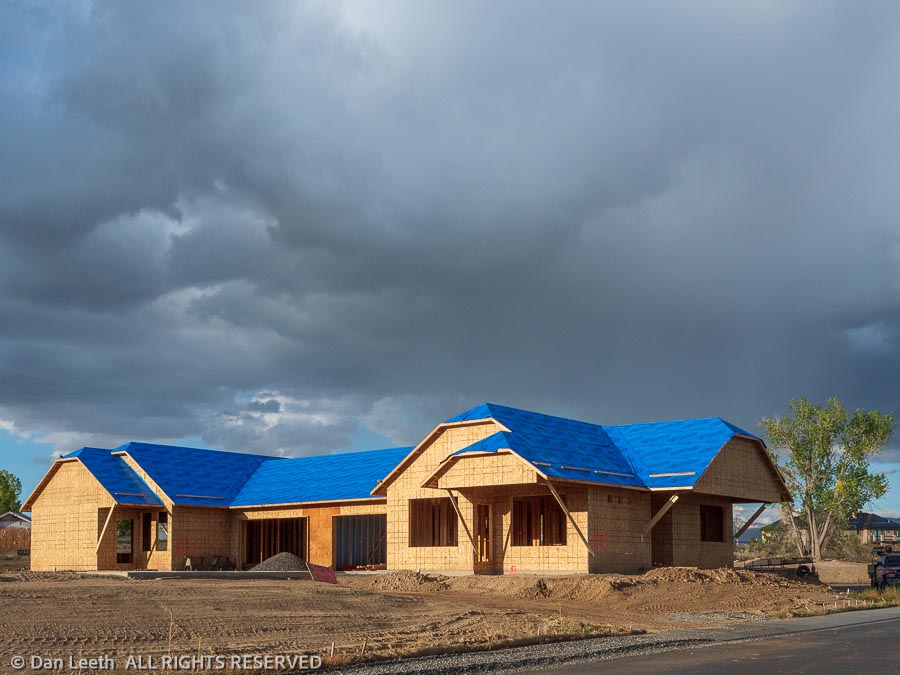
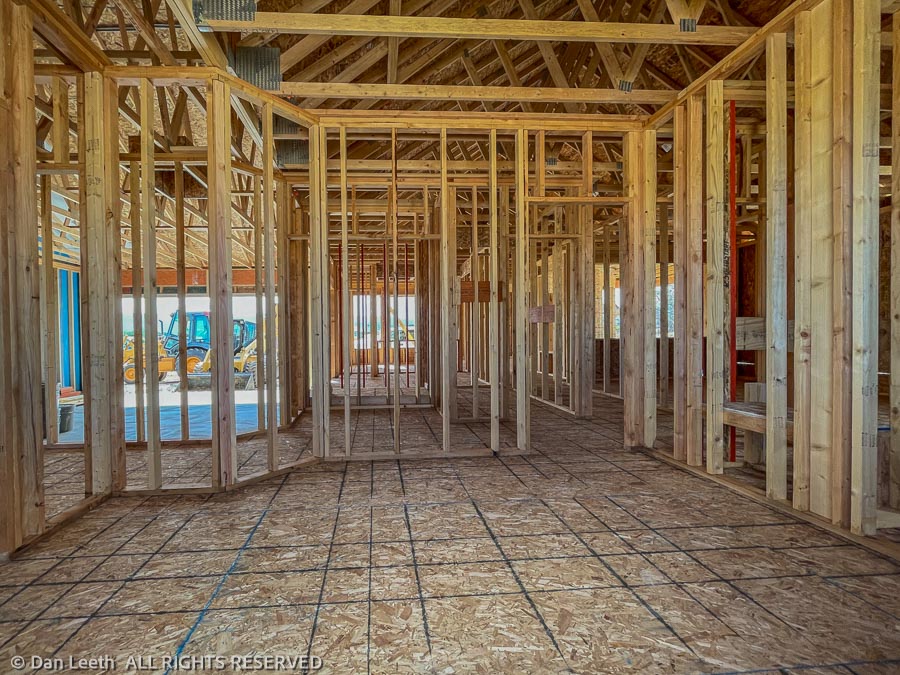
Two weeks later, we got an email asking if we would be interested in one of the units currently under construction. We drove back over the hill to check it out. These patio homes are front and rear duplexes, with a pair of duplexes sharing a common driveway. Ours would be a rear unit at the edge of what will be a grassy cul-de-sac. We agreed to buy it.
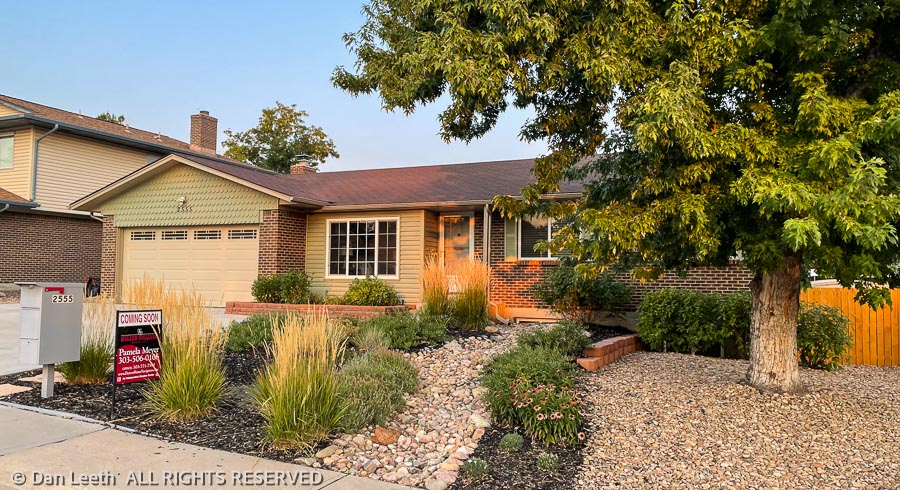
Even though our new home would not be done for months (only the foundation had been poured), we decided to take advantage of a hot sellers’ market in Denver and immediately put our house up for sale. We contacted a few realtors, chose Pamela Meyer, whom we had contacted a decade or two ago when we first thought about moving to Grand Junction, and signed all the necessary forms.
Our summer trip to the Left Coast would have to wait. Paraphrasing Admiral Farragut, it was “damn the deadlines, full speed ahead” time.
We had a few weeks to box up and remove 37-years of accumulated belongings from our house. Friends gave us some boxes to use, and we bought many, many more. We visited Lowe’s so often, they gave us our own reserved parking spot.
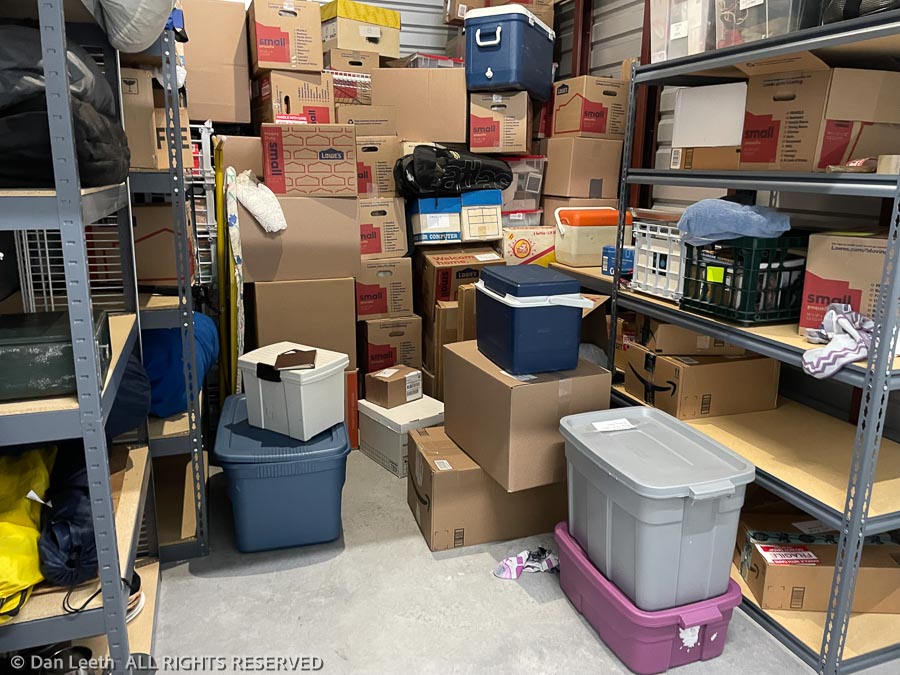
To hold everything before we could move into the new place, we rented a 10×15-foot, climate-controlled storage unit. We figured that would be more than enough room to store our belongings. Eleventy-seven truckloads later, it was filled wall-to-wall, floor-to-ceiling. We rented another.
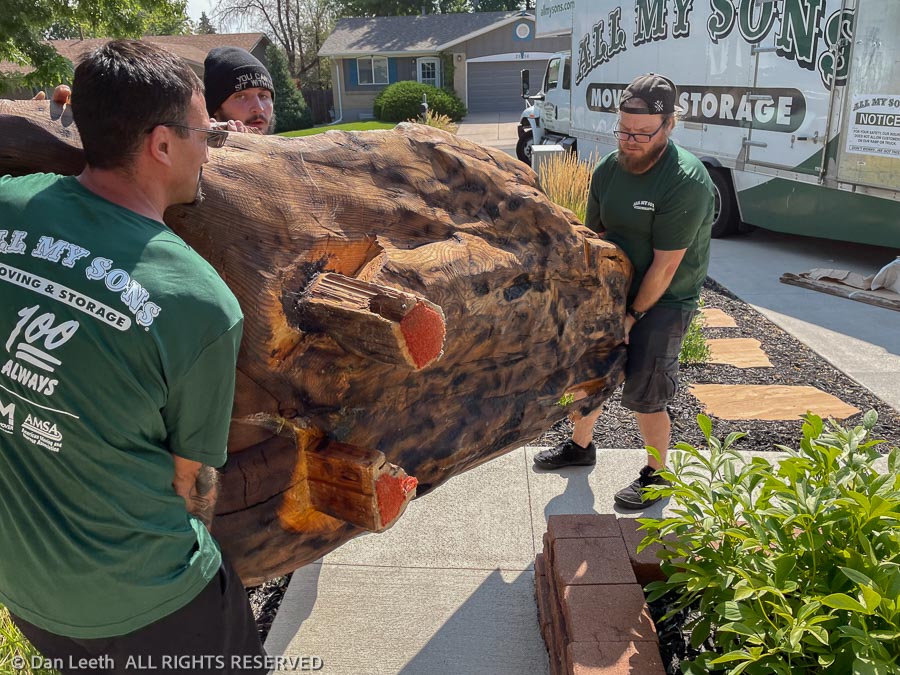
We rented a third storage unit, this one 10×20-feet, for just our furniture and hired a five-man moving crew to haul everything out there, including our 300-pound log table. With the furniture gone, we spent a week sleeping atop a leaky air mattress on the bedroom floor. It was like camping, but without any of the pleasures of camping.
Deadlines approached. We had a cleaning crew scheduled for September 1st and needed to get everything out of the house so they could do their thing. We moved into our trailer and began camping out on our driveway.
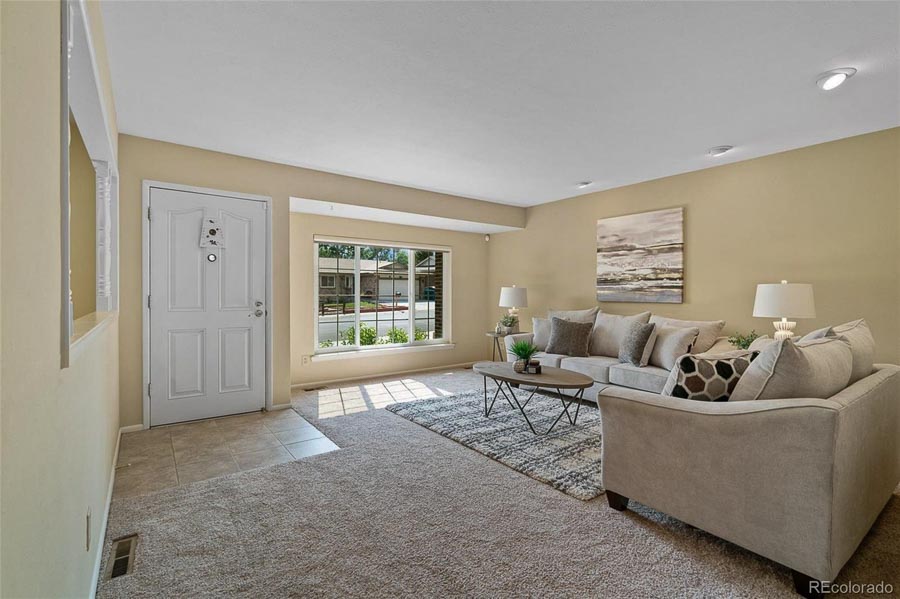
On September 2nd, the staging furniture arrived, turning our now empty house into something resembling a model home. It looked so pretty, we considered rebuying the house from ourselves and moving back in.
On September 3rd, the photographer was scheduled to shoot a portfolio of images for the online listing. Before he arrived, we hooked up the trailer, drove over the hill and bunked down in a state park campground in the Grand Junction area. Finally, we were really camping.
We had two offers for the house even before it officially went up for sale on the 7th. A slew of showings were scheduled over the weekend. By Monday morning, we had more offers, one of which we accepted. Pamela was able to get us $36,000 over our asking price, more than enough to cover all of the commissions and title fees. It was time to sign more forms and wait for the closing date to arrive, hoping nothing happened to derail the sale.
One of the exciting things about buying a brand-new house is the ability to have it customized just the way we want. We spent countless hours on Google researching flooring, countertops, water heaters and the like. We made a room-by-room list of modifications we wanted. Then the work began.
Instead of just going through a catalog of options, customizing our house meant physically visiting individual vendors. The first was the cabinet vendor who would be building the kitchen cabinets, bathroom cabinets and full-wall entertainment center.
“Anything but oak,” the cabinet lady said as we arrived.
Dianne poured over the non-oak wood and stain samples, finally deciding on what she liked. She ordered the pull-out shelves and optional spice rack she wanted. I got to redesign the entertainment center to include a wine cooler, stereo cabinet and pull-out drawers for our CD collection.
Two hours later, we made our way to the countertop vendor. Rather than granite which needs to be periodically sealed, we opted to go with quartz. Dianne wanted something that would show dirt, so she picked out a nice, light-colored, dull plain pattern. That only took an hour. We took a sample with us so we could make sure it worked well with everything else.
Next stop was the flooring vendor. I was hoping to go with real hardwood, but the flooring guy advised against that. Something to do with the climate and care, I think. Instead, we chose a high-quality laminate. We needed to make sure the flooring and countertops would look good with the cabinets, so we took flooring samples and our countertop sample and headed back to the cabinet lady.
“Ughh,” she said. The countertop choice was an abomination.
She pulled out a sample of granite and it looked far better. Although the pattern in the rock would hide dirt, Dianne agreed to go with it.
We went back to the countertop guy, found a similar slab of granite and ordered that for our countertops. He assured us that his products could be coated with a no-care, 10-year sealant, and unlike quartz, we could set hot pans directly atop the granite, although he didn’t recommend it.
Then it was back to the flooring guy to pick out tile for the bathroom floors, showers, entryway and kitchen backsplash. I think we were there for over four hours, the final hour of which was spent with Dianne laboring over the grout color.
Back with the developer, we went over electric and plumbing issues, planning the lighting, ceiling fans, plug configurations, water heater style (gas on demand) and laundry area configuration (stacked washer and electric dryer).
With all that done, it was finally time to head onward. We still had some camping to do.
With the house under contract, we could finally relax and enjoy one final fling into the mountains. The A-Liner Owner’s Club (we still belong even though we no longer own an A-frame trailer) was having a rally in the mountains outside Santa Fe. It would be a good chance to see old friends and once again answer the New Mexico state question – “red or green” (chili).
We planned a leisurely, three-day trip to get there from Grand Junction. Instead of going through the San Juan Mountains, we took the slickrock route through Gateway and Dolores.
Our first night was spent at Mancos State Park, one of our favorite places to camp. The state spent a few bucks on park improvements since we were last there including water spigots at the dump station. Dianne no longer had to cart five-gallon jerry cans from a faucet 50 yards away.
Our second night was spent at Trinidad State Park, a place we’d never visited before. While the campground was nice, it was a bit of a chore winding through town to get there. Complicating matters was the need to refuel the truck. Finding an in-town gas station suitable for a truck pulling a trailer proved to be challenging.
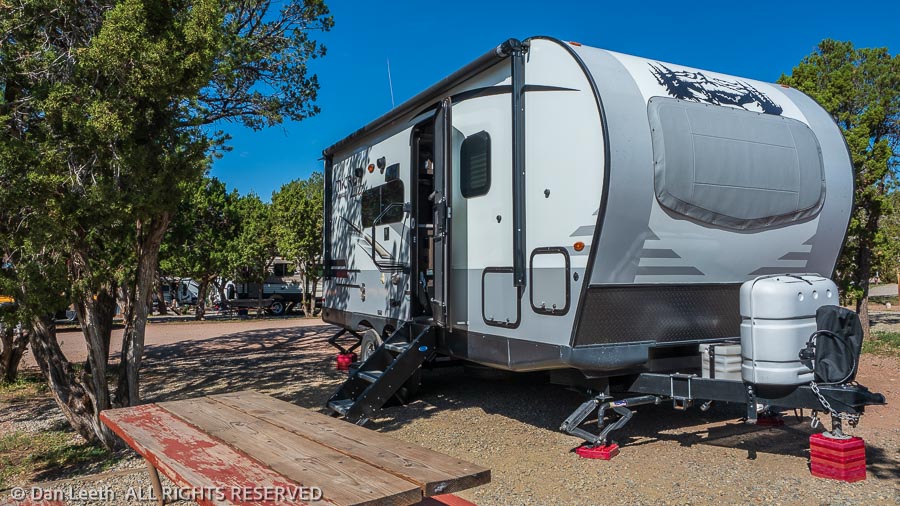
From Trinidad, we headed down the interstate to the Santa Fe KOA, which is located ten miles east of town. It lies along the highway, so the noise level was high, and there was no Verizon cell coverage. Other than that, it was a typical RV park.
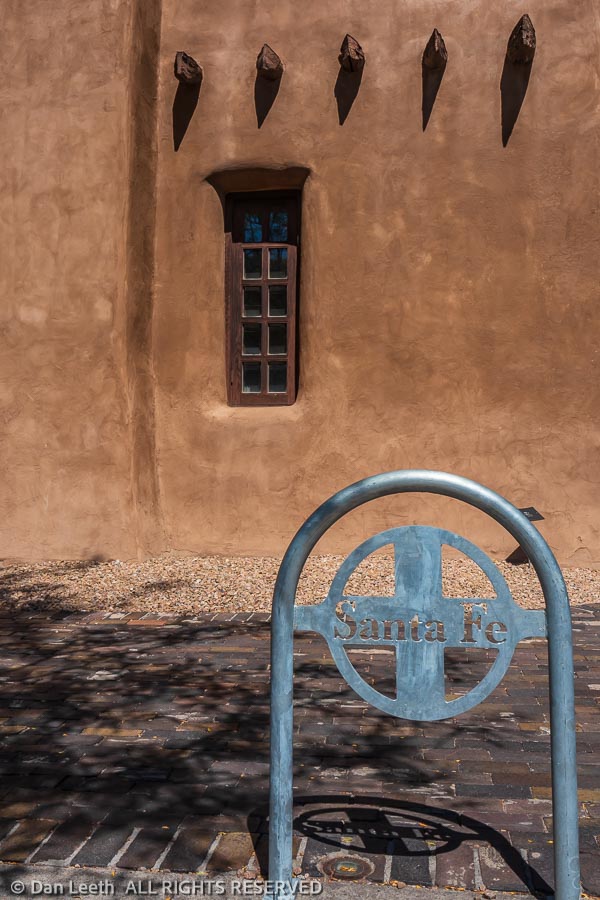
We spent three nights at the KOA, enjoying the opportunity to rest, relax and not have to fill, tape, label and lift boxes. On the single day we spent in the city, we mostly just ate, drank margaritas, walked the streets and shot a few photos.
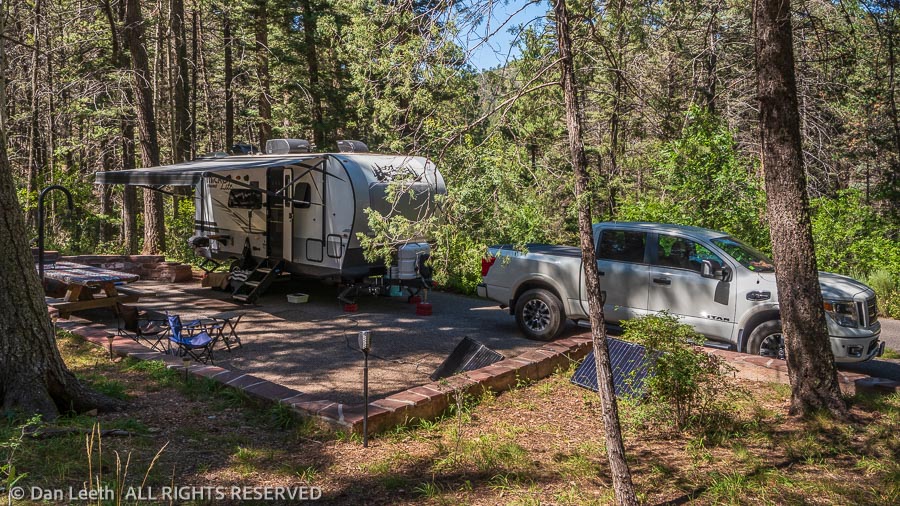
From the KOA, we pulled the trailer through Santa Fe and up to the Black Canyon Campground, which lies along the road to the Ski Santa Fe ski area. It’s a Forest Service site tucked in the trees. The campsites are wide, and many display CCC-like rockwork along their perimeters. Dianne loved the peace and quiet of the place. We’ll be back.
We visited with our old friends and met some new ones at the rally. With the exception of a short, 2½-mile hike out of the campground, we mostly just hung around camp enjoying the tranquility while moving the solar panels from spots of sunlight to spots of sunlight.
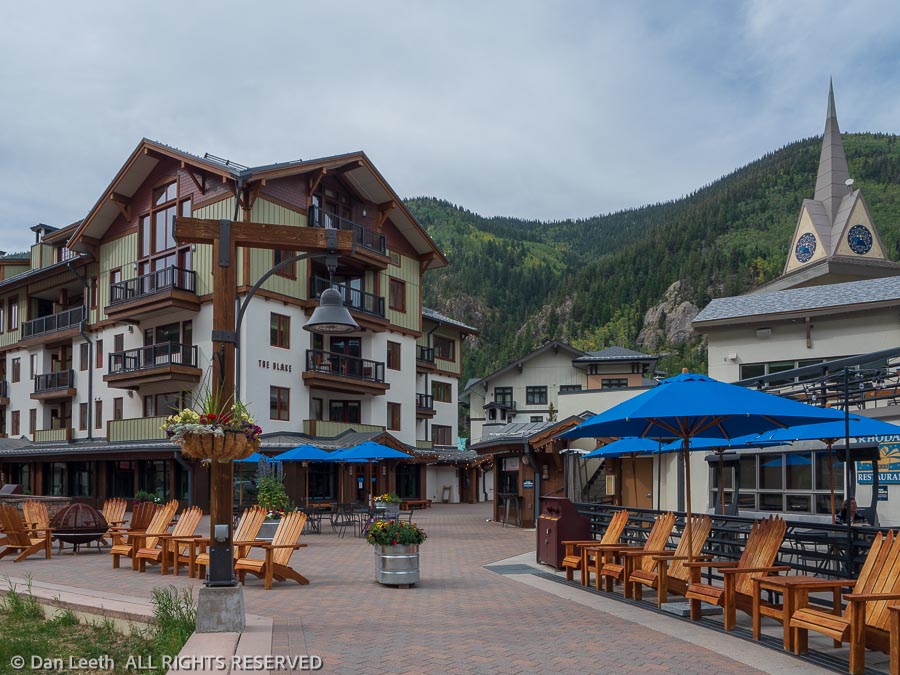
On our last full day there, we joined two other couples for a drive to Angel Fire, Eagle Nest, Red River and Taos. Dianne and I detoured to Taos Ski Village. I hadn’t been there since the Blake’s sold the place and Dianne had never been there. We became so impressed with the new layout (the skiing’s not bad either), we decided to put it on our 2022-2023 ski destination list.
The Black Canyon campground does not have a dump station, so we booked a full-hookup night at a KOA located 60 miles to the north in Las Vegas, New Mexico. I didn’t want to carry 400 pounds of wastewater over Raton Pass and into Colorado. Like its Santa Fe cousin, this KOA lies right along the freeway, so we were treated to the night-long din of truck traffic.
All that noise got us prepared for our next stop at the KOA Denver East Strasburg, which is located next to I-70 on the plains, 35-miles east of Denver. We’ll be here for 41 days before we move on for a four-month stay in an RV park near our under-construction home in the Grand Junction area.
At least, that park is a mile off the freeway, so it should be quieter.
A few nights of tent camping can make one appreciate the luxuries of bunking in a recreational vehicle.
Somewhere between buying a new house in the Grand Valley of Colorado and selling our existing house in Gridlock City, Colorado, we decided we needed camping escape. I was able to reserve a last-minute site for three nights at a Forest Service campground at the far end of Turquoise Lake near Leadville.
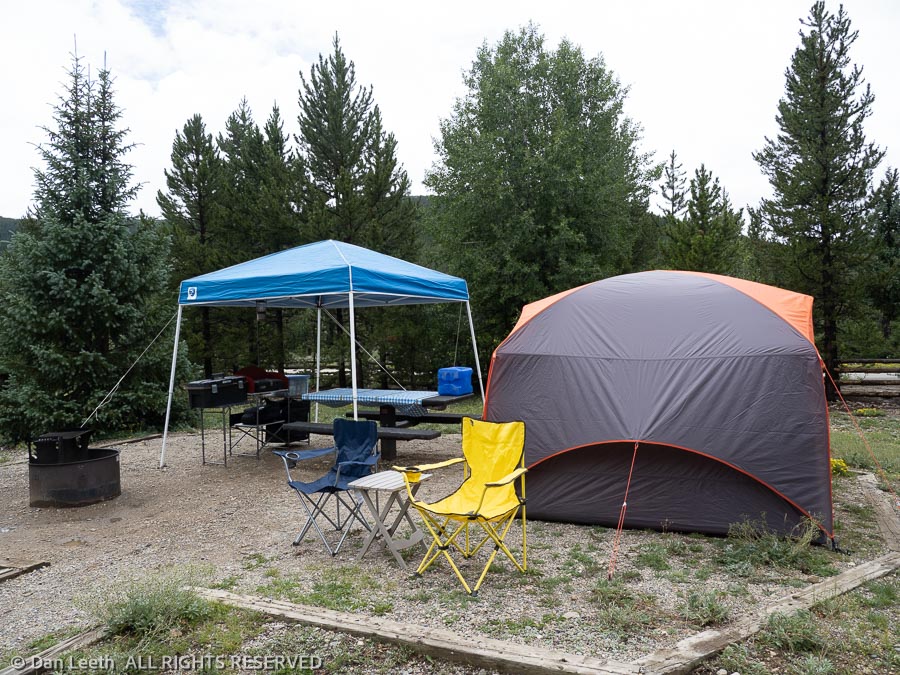
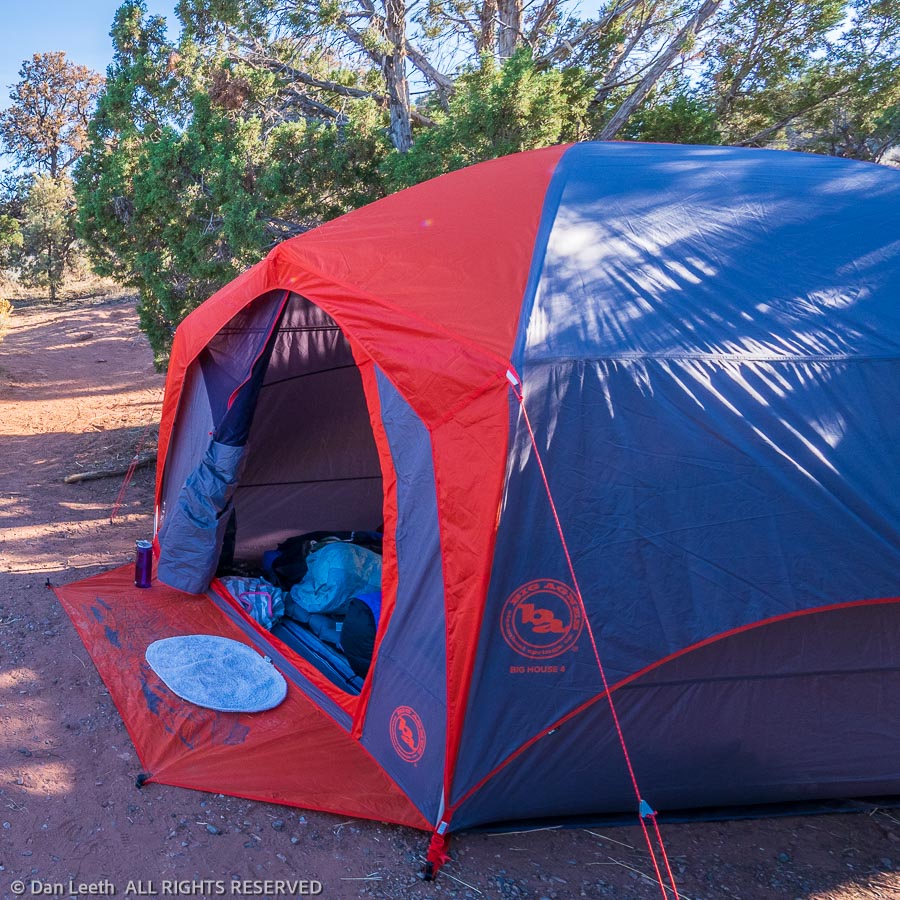
It didn’t make sense to drag the trailer up for such a short stay. Instead, we packed up the tent, filled a cooler with beer (and food) and headed for the hills.
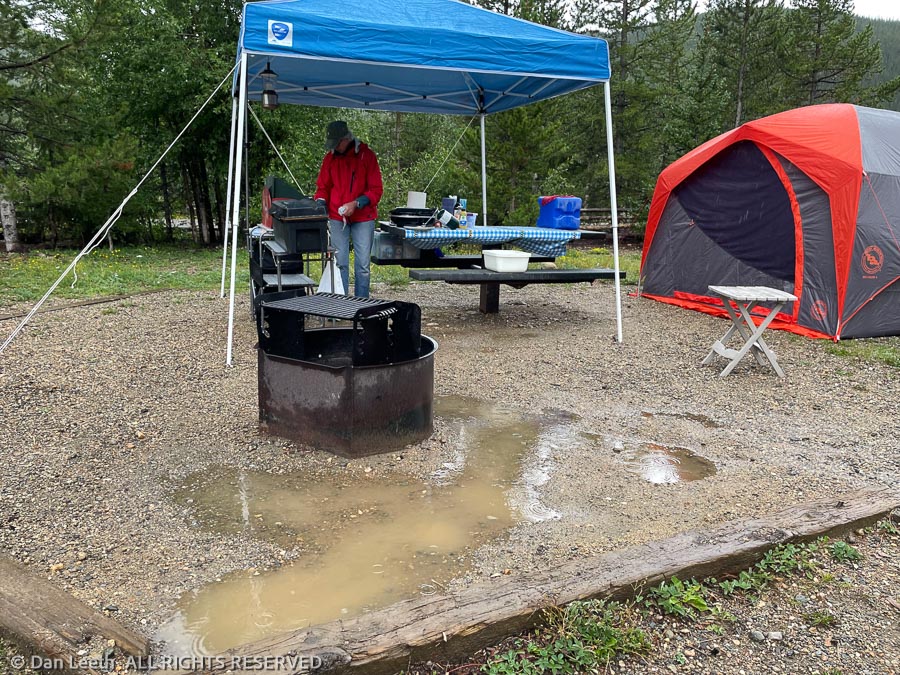
Naturally, it rained before we got there, and it was still sprinkling as we set up the tent. We brought along a fold-up sun canopy, which served as a rain umbrella over the picnic table and kitchen. The campground wally came over with a broom and swept water from a depression in front of the campfire ring.
The soft, overcast light made the wildflowers glisten. Chipmunks scurried around grabbing seeds from low-hanging plants. They were soon joined by a bevy of jack-style rabbits. I threw a telephoto lens on the camera and shot dozens and dozens of photos, hoping to capture the perfect pose. Unfortunately, the critters proved to be more than a bit camera shy.
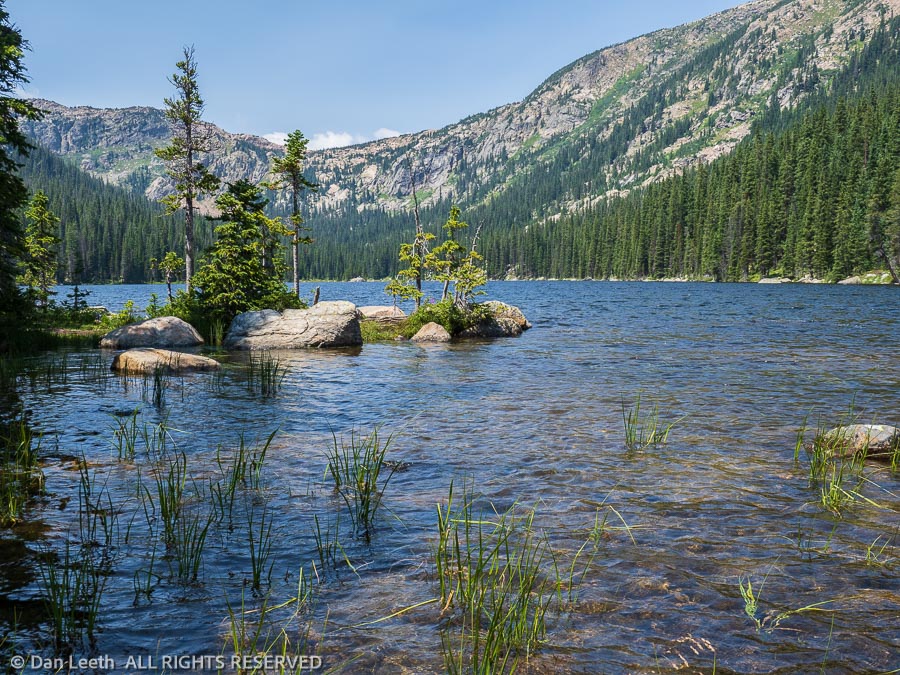
The rain stopped and the next day we went for a hike. Our destination was Timberline Lake, located a few miles away in the Holy Cross Wilderness. Other than one stream crossing where we had to strip off hiking boots and wade across, the route was scenic and easy to follow. Unfortunately, smoke from California wildfires smothered distant views.
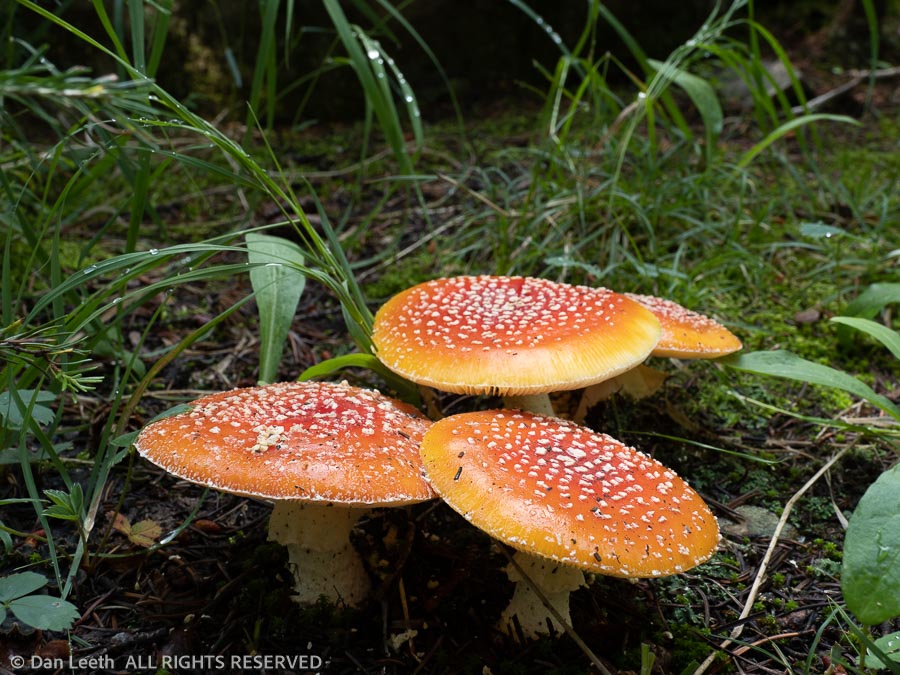
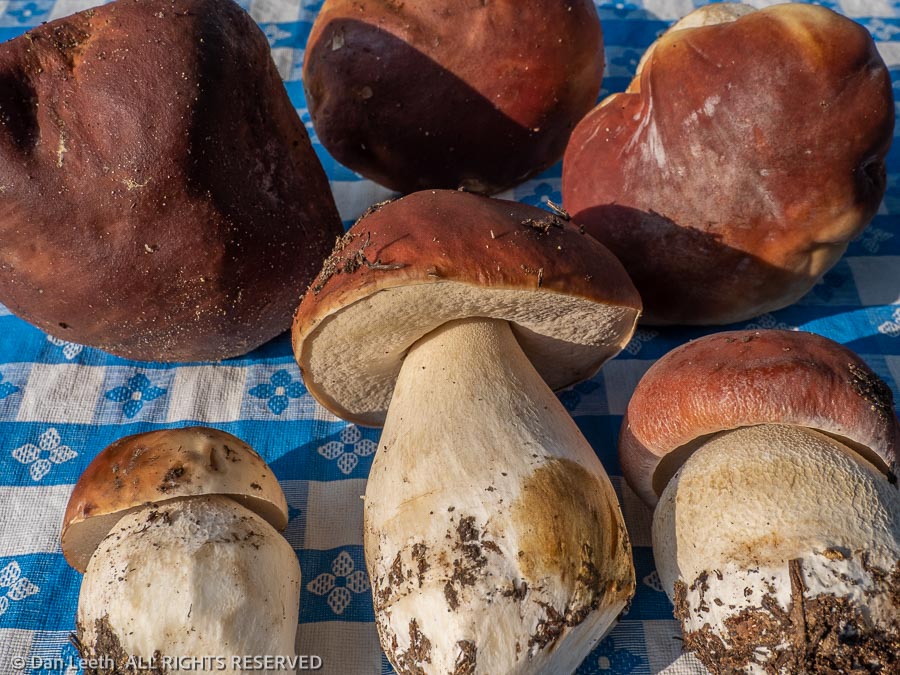
Along the way, my fungus-loving wife noted a preponderance of mushrooms growing beside the trail. She bemoaned not bringing her mushroom book and knife.
One of the nice things about camping is the willingness of fellow campers to share information and experiences. The couple camped directly across from us had come specifically to harvest the fungus and invited Dianne to join them on a short mushroom-harvesting hike. My lovely wife came back with over four pounds of tasty Boletes mushrooms.
Besides providing a sanity break, a second purpose for our camping trip was to gather material and photographs for my Colorado Camping column in Colorado Life magazine. We spent our second day driving around Turquoise Lake, shooting shots and checking out alternative campgrounds. This travel writing is tough work, but somebody’s got to do it.
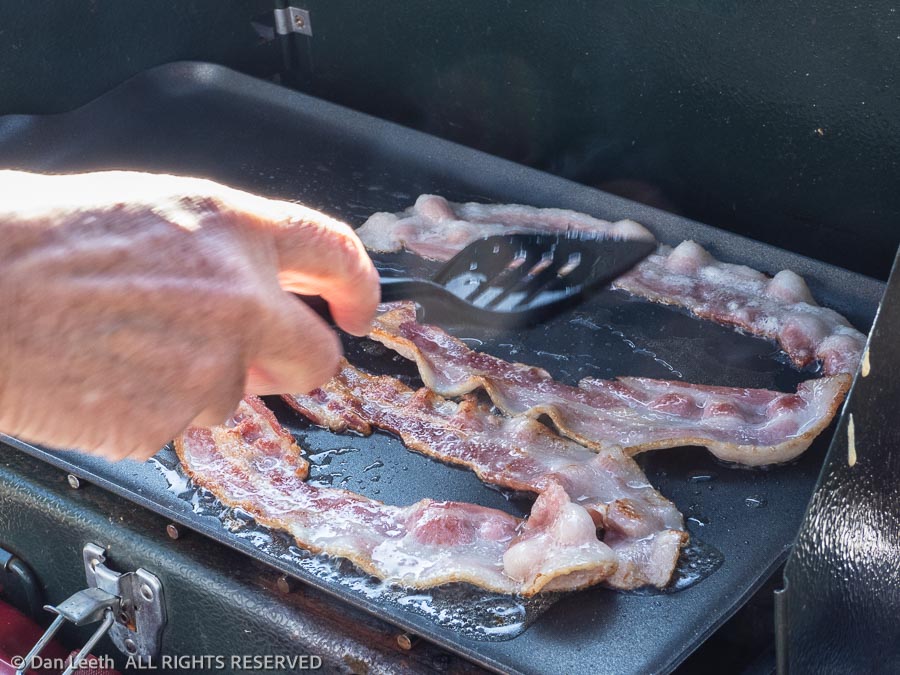
After the traditional camper’s breakfast of bacon and eggs on our final morning, we packed up the tent and cooler (no beer in it now) and headed for home.
As fate would have it, this would be the second and last time we would use this Big Agnes tent.
All our tent camping gear (and everything else from our soon to be sold house) was placed in climate-controlled storage lockers at Extra Space Storage in Aurora. On the night of August 25-26, someone drilled out the lock to our unit and stole a few thousand dollars’ worth of our possessions. The missing items included our tent, sleeping pads, cooking gear, a portable Coleman grill and our Yeti and RTIC coolers (fortunately with no beer inside).
Hopefully, the insurance company will come through and we will be able to replace the camping gear. Until then, we’ll only be camping in the luxury of our trailer.
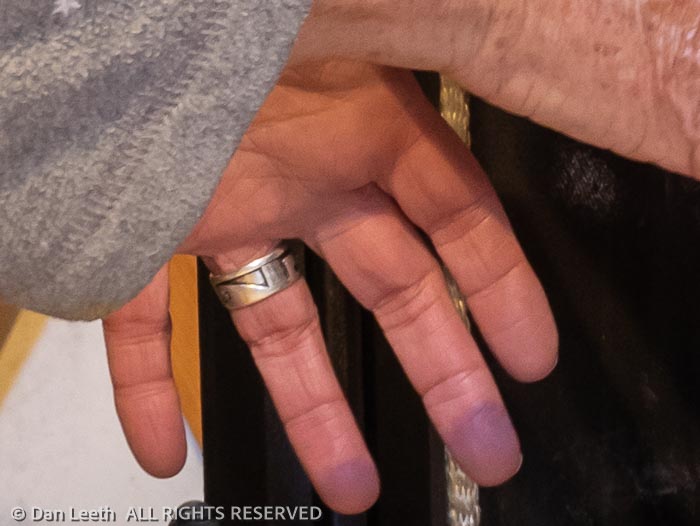
Dianne must have had fat pinkies when we married nearly 39+ years ago. Now that she’s matured, her fingers have apparently shrunk. Her Hopi-crafted silver wedding band became so loose, it could slip off while she simply washed her hands.
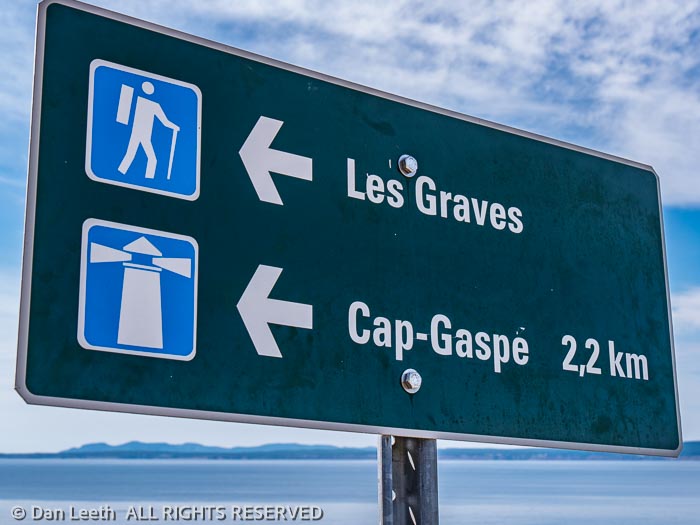
That’s what happened at a campground on the Gaspe Peninsula in French Canada. Naturally, the sink she was using did not have a grid to keep falling rings from dropping down the drainpipe. A young man from the camp office worked on the drainpipe for over an hour before finally succeeding in removing the P-trap and retrieving the ring.
In America, they would have closed down the ladies’ shower/restroom while the man worked inside. But this was French Canada. None of the female campers seemed the least bit concerned that there was an adult male working in the female restroom.
Now, one would think that dropping the ring down the drain would be a fair warning for us to either get it resized or at least feed Dianne more finger-fattening food. We didn’t do either.
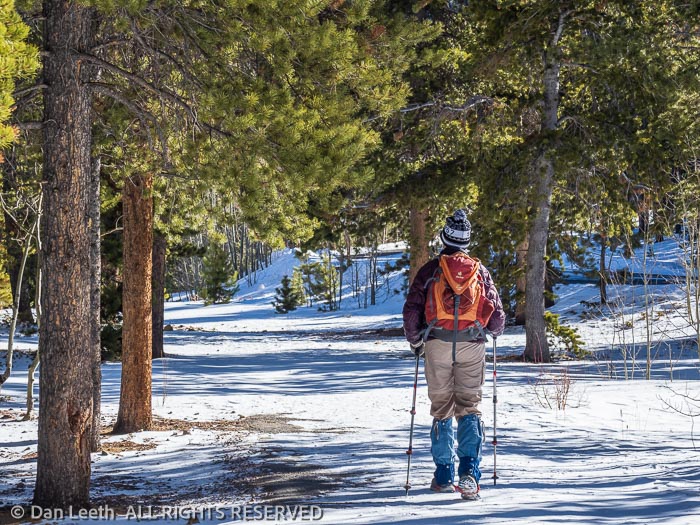
Last winter we camped for two nights in a yurt in the mountains west of Golden, Colorado. On our layover day, we went for a hike over the snowy terrain. Somewhere along the way, Dianne took off her gloves and the ring came off, too. It would have been tough to find in the snow if she’d immediately realized it was gone, but she didn’t.
Sometime in the middle of the night, my lovely wife realized that her ring finger was ringless. We searched the yurt and the park restroom in the hopes she had just taken it off and set it down somewhere. No such luck.
It would have been futile to try to find a tiny ring somewhere along a five-mile, snow-plastered trail. That left us with two choices. Get a divorce or buy a new ring. Dianne chose the latter, it being the lesser expensive option.
With Covid shutting down the Hopi reservation, we would have to wait. Our opportunity for ring replacement came in late June when the reservation partially reopened. Dianne contacted a Hopi silver-craftsman and commissioned him to craft a ring with a design matching mine. Rather than having the ring mailed to us, we agreed to pick it up at his shop in Second Mesa, Arizona.
By the shortest route, Second Mesa is a 1,265-mile roundtrip drive from our home in Aurora. Being the travelers that we are, we chose to make it a four-night journey. Instead of camping, it would be a road trip with us dining on local fare in non-chain restaurants and bunking down in classic motels/hotels with character.
Our route to the ring would be a four-state loop through the mountains and deserts of the Four Corners region of the American Southwest. The first stint involved crossing the Front Range over Kenosha Pass across South Park and on to the Arkansas River Valley.
Doing the local food thing, we stopped for Mexican food in Del Norte. Then it was over Wolf Creek Pass on U.S. 160, which some call the North Texas Scenic Byway. Out here, one typically sees more Texas license plates than Colorado ones.
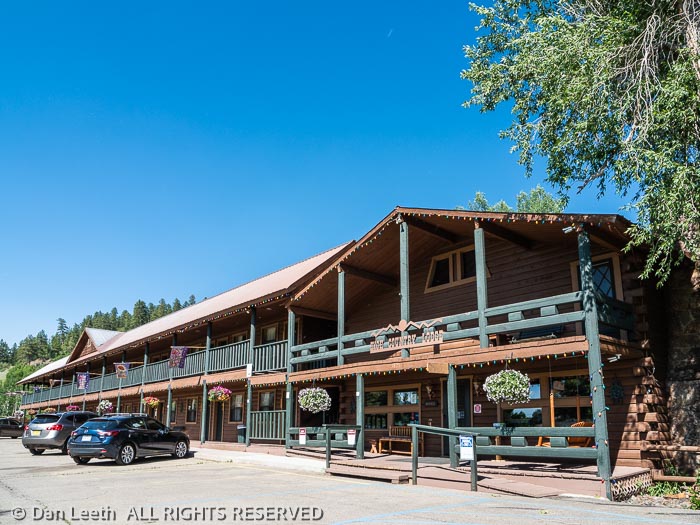
Our first motel stop was the High Country Lodge located a few miles east of Pagosa Springs, Colorado. We did a brief tour of the property years ago when I was researching lodging options for a magazine article. This time, we would actually stay.
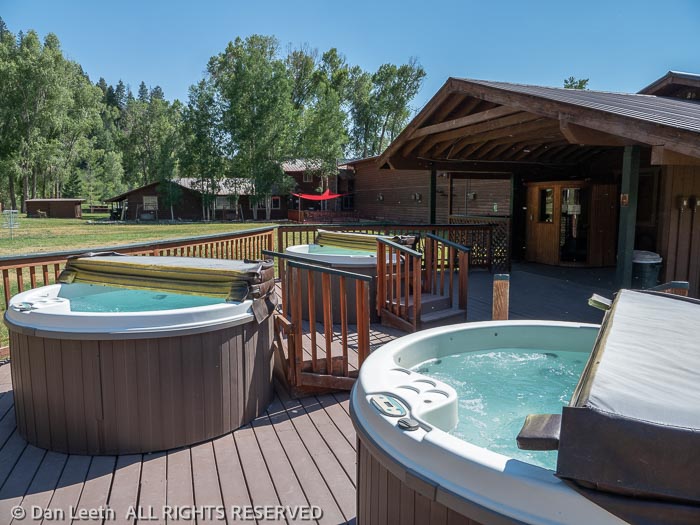
The wood-paneled, two-story lodge sits in the woods not far off the highway. Rooms are comfortable and quiet. Out back sits a deck with a trio of hot tubs, each of which can be reserved for private use.
Inside, there’s a seating area for the free hot breakfast and a small bar, with Mona, the lodge owner, serving as bar tender. Her margaritas (two ounces of Cuervo 1800 and one ounce of orange brandy combined with a bottled mix of key lime and grapefruit juice) are outstanding.
Next door to the lodge sits the Old Miner’s Steak and Chophouse. We were told that they require advance reservations for dinner. A fellow lodge guest without dining reservations did go over and ate at their bar, but we chose otherwise.
Still stuffed from lunch, we just stayed in our room and ate a bag of Smart Food popcorn while watching a Hallmark Channel chick-flick (cute girl falls in love with studly guy, screws up, gets rejected, but then gets the guy back for a happy ending).